
The Architecture of Intelligence: How ComfyUI is Rewriting the VFX Pipeline
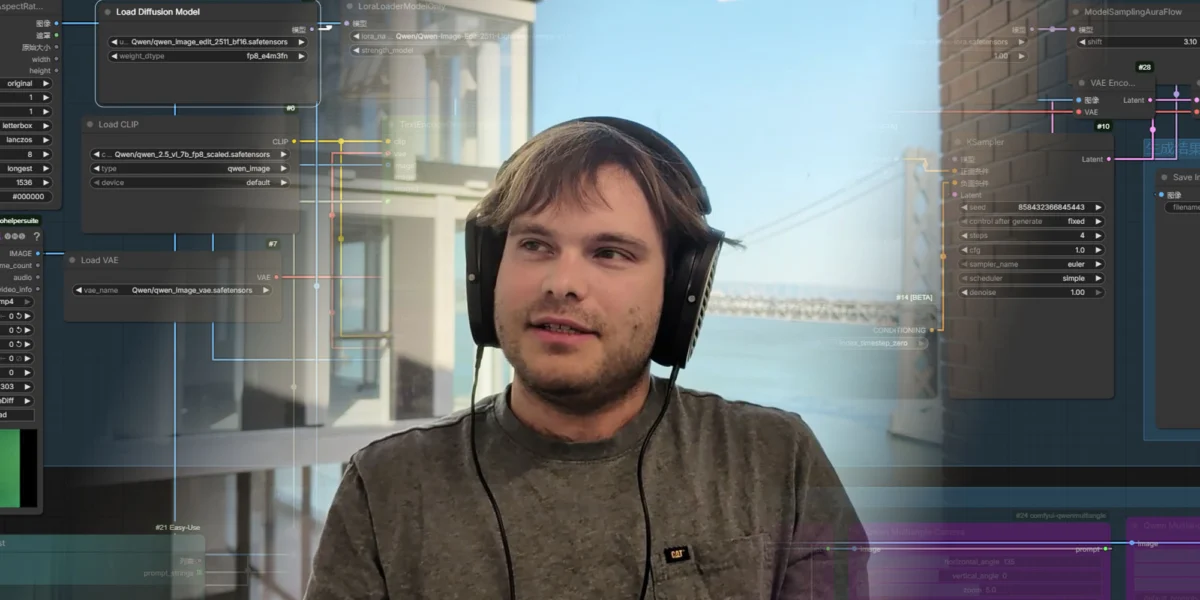
In the rapidly shifting landscape of visual effects, a quiet revolution is occurring. For years, the integration of Artificial Intelligence into professional pipelines was viewed with skepticism—a curiosity relegated to isolated demos or experimental hobbyist projects. Today, that perception has been shattered. At the epicenter of this transformation is ComfyUI, a node-based generative interface that has evolved from a solo, two-week coding project into the backbone of a new, AI-integrated production paradigm.
In the latest episode of the fxpodcast, we sat down with Yannik Marek, the enigmatic developer known as "ComfyAnonymous," to discuss the origins, the explosive growth, and the future trajectory of the software that is currently redefining how artists, TDs (Technical Directors), and researchers interact with generative models.
The Genesis of a Pipeline Catalyst
The story of ComfyUI begins not in a Silicon Valley laboratory, but in a dental implant factory. Marek, a C++ programmer by trade, did not come from a traditional machine learning background. His entry into the space was born of necessity and frustration. In early 2023, as the first wave of Stable Diffusion interfaces hit the public, Marek found himself constrained by the lack of granular control. He wanted to manipulate the diffusion process at every stage—using different models and samplers for different passes—rather than settling for the "black box" approach of existing tools.
Marek’s background in systems architecture became his greatest asset. He approached AI not as a magic wand, but as a modular component in a larger machine. He spent a mere two weeks building the first version of ComfyUI, adopting a node-based, flowchart-style interface that mirrors the visual logic used in established industry software like Nuke or Houdini. By allowing users to visualize and control the data flow between disparate AI models, Marek inadvertently built the "connective tissue" that the VFX industry desperately needed.
Chronology: From Solo Experiment to Global Standard
The trajectory of ComfyUI is nothing short of exponential. What started as an open-source experiment with zero funding has transformed into a global phenomenon in less than three years.
- Q1 2023: Yannik Marek launches the initial version of ComfyUI, focusing on modularity and multi-stage generation.
- Late 2023: The community begins to rally around the project, with developers writing the first wave of custom nodes, expanding the platform’s capability far beyond the base Stable Diffusion implementation.
- 2024: The tool gains significant traction in the professional sector. Studios begin testing it for concept art, texture generation, and R&D pipelines.
- Early 2026: ComfyUI hits a milestone of over 4 million users, with daily downloads reaching an staggering 150,000. The community-contributed node ecosystem swells to over 60,000 unique modules.
- Present Day: ComfyUI is increasingly viewed as the standard interface for "Day Zero" support, with leading ML labs partnering with the platform to ensure their latest models are immediately accessible to professional users.
Data-Driven Growth and Professional Adoption
The figures surrounding ComfyUI suggest that it is no longer just a hobbyist tool. With 150,000 daily downloads, the scale of adoption is comparable to major software suites. However, the true metric of its success lies in the quality of the ecosystem. The 60,000+ community-built nodes represent a massive collaborative R&D effort that no single company could replicate.
This growth has caught the attention of industry giants. Much like the recent acquisition of GripTape by Foundry, there is a clear market signal that "AI-native" workflows are the future of post-production. As studios look to integrate generative tools into their existing infrastructure, they are seeking platforms that offer more than just "prompt-to-image" capabilities; they require auditability, version control, and professional-grade color science.
Bridging the Gap: The Radiance Innovation
One of the most significant barriers to AI adoption in VFX has been the lack of high-fidelity data support. Historically, generative AI tools have been clamped to 8-bit color depth, which is insufficient for the requirements of modern cinematic pipelines.
This is where projects like the Radiance plugin from FXTD Studios represent a pivotal turning point. Radiance introduces full IEEE 754 floating-point precision to the ComfyUI ecosystem. By eliminating the banding and data loss associated with 8-bit workflows, Radiance brings AI-generated assets into the realm of professional 32-bit linear pipelines.
Features like the "Radiance Workspace" node—which handles project paths, versioning, and state management—signal a shift toward "production-aware" AI. We are seeing a move away from the "generate and throw away" workflow toward a "generate, edit, and track" workflow. This is the hallmark of a tool that is maturing into a legitimate member of the VFX software stack.
Official Insights: The Vision of Yannik Marek
In our conversation on the fxpodcast, Marek emphasized that the speed of ComfyUI is a direct result of its openness. "We provide ‘Day Zero’ support," Marek noted, explaining that by maintaining a lean, flexible architecture, the platform can pivot as fast as the AI research labs themselves.
However, this flexibility brings inherent tension. When asked about the challenges of vetting 60,000 community nodes, Marek admitted that while there is a baseline of oversight, the ecosystem’s strength lies in its permissionless nature. For enterprise users, this creates a "stability vs. innovation" dilemma.
To resolve this, the ecosystem is branching out. Initiatives like Comfy Cloud provide a standardized, controlled environment where hardware and software stacks can be locked down, addressing the primary concern of studio IT departments. Additionally, the emergence of "App Mode"—a feature that hides the complex node graph behind simplified, user-friendly interfaces—is helping to democratize the technology for artists who may not have a background in technical direction but need to integrate AI into their creative workflow.
Implications for the Future of VFX
The implications of ComfyUI’s ascent are profound. We are witnessing a fundamental shift in the definition of a "VFX tool." In the past, software was a closed box, defined by the feature roadmap of a single vendor. Today, ComfyUI represents a "composable" future.
1. The Death of the "Black Box"
Artists no longer have to accept the output of an AI model as final. Through node-based control, they can intervene at every stage of the diffusion process, layering AI generation with traditional compositing techniques.
2. Pipeline-Aware AI
As demonstrated by the Radiance plugin, AI is finally beginning to speak the language of professional VFX. By supporting floating-point data and proper versioning, these tools are becoming compatible with the rigorous standards of major post-production facilities.
3. The Community as a R&D Department
The sheer velocity of the ComfyUI ecosystem proves that open-source collaboration can outpace even the largest corporate R&D teams. When a new research paper is published, a custom node is often available within days, if not hours.
4. The Challenge of Governance
The transition from experimental tool to production powerhouse brings new responsibilities. The industry must now grapple with how to manage security, provenance, and legal compliance in a world where nodes are built by thousands of anonymous contributors.
Conclusion: A Platform in Transition
ComfyUI has successfully moved past the "hype" phase and into the "infrastructure" phase of its lifecycle. It is no longer just about generating images; it is about building sustainable, repeatable, and high-fidelity pipelines.
As Yannik Marek and his community continue to push the boundaries of what is possible, the question for studios is no longer if they should use AI, but how they will structure their pipelines to accommodate the unprecedented flexibility that tools like ComfyUI provide. For the technical artist, the future is clear: it will be node-based, it will be modular, and it will be increasingly intelligent. The "quiet shift" is over; the new production paradigm has arrived.
