
A New Era in Hollywood: The $110 Billion Skydance Merger Reshapes the Global Media Landscape
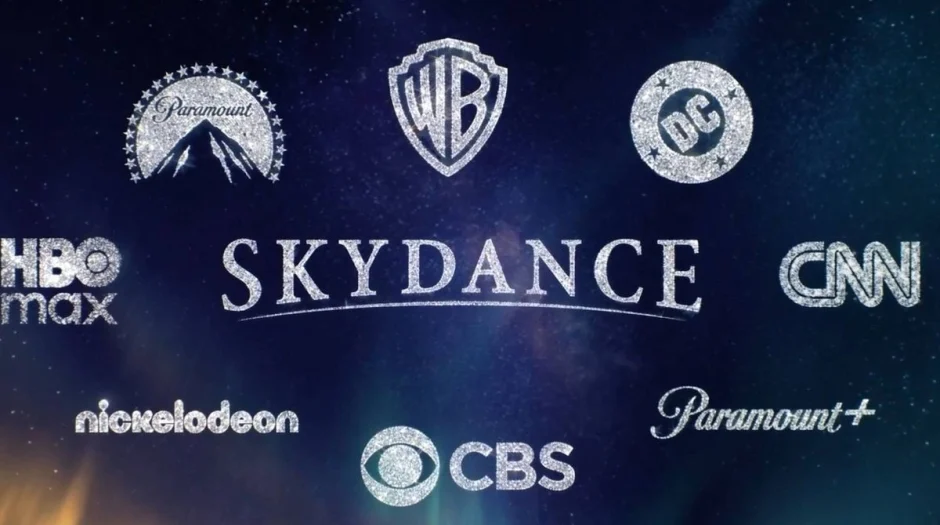
In a move that fundamentally alters the architecture of the entertainment industry, Paramount CEO David Ellison has officially announced that the combined powerhouse of Paramount and Warner Bros. Discovery will operate under a singular, legacy-conscious banner: Skydance.
The revelation, shared by Ellison via social media platform X, marks the culmination of one of the most complex, contentious, and closely watched corporate mergers in modern history. Valued at a staggering $110 billion, the deal is set to officially close on Tuesday, October 6, 2026. This consolidation brings together two of the most storied names in Hollywood, creating an unrivaled content juggernaut that houses an vast library of intellectual property, spanning from the golden age of cinema to the cutting edge of digital animation.
The Chronology of a Mega-Merger
The path to the creation of the new Skydance was neither short nor simple. It was defined by intense bidding wars, regulatory friction, and a high-stakes legal battle that threatened to derail the deal entirely.
The Bidding War
The saga began in late 2025 when the industry was rocked by the news that Netflix had entered into an $82.7 billion acquisition agreement with Warner Bros. Discovery. The prospect of a streaming giant absorbing a legacy studio sent shockwaves through the talent guilds and traditional media houses. In a bold defensive move, Paramount countered with a hostile takeover bid, aiming to keep Warner Bros. Discovery within the traditional studio ecosystem. After months of volatile market maneuvering, the boards reached an agreement in February 2026, valuing the deal at $31 per share in cash, with an equity value of $81 billion and a total enterprise value of $110 billion.
Legal and Antitrust Hurdles
For months, the merger faced significant opposition. A coalition of attorneys general from 12 states, alongside the Writers Guild of America (WGA), filed antitrust suits, arguing that the concentration of power would result in an illegal monopoly, stifling competition and harming creative labor.
The WGA successfully negotiated a settlement earlier this year, but the states’ litigation continued until this past Wednesday, when U.S. District Judge Araceli Martínez-Olguín finally granted approval for a settlement agreement. This judicial greenlight removed the final barrier to the October 6 closing date.
Strategic Vision: Why "Skydance"?
The decision to brand the massive combined entity as "Skydance" is a calculated move to preserve the individual prestige of Paramount and Warner Bros. Pictures.

"What once was the peak, is now just the beginning," Ellison wrote in his announcement. "Paramount and Warner Bros. shaped over a century of culture. By combining them, we aren’t rewriting history—we’re equipping these iconic studios with a more powerful engine. Together, we are Skydance: a creative-first home for bold, quality storytelling."
Industry analysts note that the choice of the Skydance name serves a dual purpose: it provides a fresh, forward-looking identity for the parent company while ensuring that the "Paramount" and "Warner Bros." brands remain untarnished and distinct in the consumer’s mind. By keeping the legacy studio names in the spotlight, the company hopes to avoid the brand dilution that often plagues mega-mergers.
The Anatomy of the New Content Empire
The sheer scale of the animation and production assets now under the Skydance umbrella is unprecedented. The company effectively controls the most comprehensive animation pipeline in the world.
- From the Paramount side: The entity inherits Paramount Animation, the deep archives of Nickelodeon, and the existing Skydance Animation unit.
- From the Warner Bros. Discovery side: The entity adds Warner Bros. Pictures Animation, Warner Bros. Animation, the Cartoon Network, and Adult Swim.
This consolidation places the legendary animation leadership of John Lasseter—who heads Skydance Animation—at the center of a much larger creative ecosystem. Notably, while Skydance Animation recently concluded its feature film deal with Netflix, projects currently in the pipeline, such as Brad Bird’s Ray Gunn and Rich Moore’s untitled Jack and the Beanstalk film, will continue to stream on Netflix as previously contracted.
Implications of the Five-Year Consent Decree
The path to approval was not without significant concessions. The settlement reached with the 12 states and the WGA includes a stringent five-year consent decree that serves as a check on the company’s massive market share.
Key Requirements of the Decree:
- Theatrical Output: The combined company is mandated to release at least 30 films theatrically in each of the first two years, increasing to 32 films annually for years three through five.
- Theatrical Window: To protect the theatrical experience, the company must maintain a 45-day exclusive window for all wide releases.
- Production Investment: The company is required to commit an additional $300 million per year toward U.S. film production, a move intended to bolster domestic jobs and content creation.
- Real Estate Preservation: The company is strictly barred from selling the historic Paramount and Warner Bros. studio lots for the next five years, preventing a potential liquidation of industry landmarks.
- Operational Independence: Crucially, the company must maintain internal firewalls regarding the negotiation of carriage deals for their basic cable channels, ensuring that they do not leverage their combined size to unfairly squeeze distributors.
These safeguards are designed to prevent the company from becoming a "closed shop," ensuring that the vast library and distribution power of the new Skydance do not stifle the independent film market or disadvantage smaller competitors.
Industry Impact and Future Outlook
The birth of the new Skydance Corporation represents a pivot point for Hollywood. For the past year, the industry has been in a state of flux, fueled by rumors of "WarnaMount" or "ParaBros" consolidations. By settling on the Skydance moniker—a name that reflects David Ellison’s vision—the company is signaling a transition away from the debt-heavy, fragmented era of "Discovery" and into a period defined by integrated production.

A New Model for Media
The removal of "Discovery" from the corporate title is symbolic of a strategic shift. While the discovery-era focus was on unscripted content and cost-cutting, the new Skydance identity suggests a renewed emphasis on premium, high-budget storytelling.
"We never wanted a new corporate identity to diminish, alter or overshadow either one," Ellison explained. "Instead, we wanted a name that would give the combined company an identity of its own while allowing Paramount and Warner Bros.—and all our extraordinary brands—to remain in the spotlight."
Challenges Ahead
Despite the optimism surrounding the merger, significant challenges remain. Integrating two massive, disparate corporate cultures is a monumental task. The company must navigate the complexities of union contracts, the ongoing evolution of the streaming model, and the pressure to deliver returns on an $110 billion investment.
Furthermore, the consent decree imposes significant operational costs. The requirement to produce a high volume of films, coupled with the inability to sell off real estate or consolidate certain business units, means that the new Skydance will have less flexibility than typical post-merger entities.
Conclusion
As the clock ticks toward October 6, the industry is bracing for a new reality. The creation of Skydance is not merely a financial transaction; it is a cultural consolidation that will dictate the flow of content, from theatrical blockbusters to television staples, for the next generation.
For now, the focus shifts to the executive team led by David Ellison. They have secured the approval, established the name, and defined the mission. The question remains whether this "more powerful engine" can successfully navigate the volatile winds of modern media, or if the sheer weight of its own history will prove to be a friction point in the years to come. One thing is certain: the landscape of global entertainment has been permanently altered, and all eyes are now on the sky.
