
Beyond the Jump Scare: How Stephen King Rewrote the Blueprint of Modern Psychological Horror
By Staff Literary Correspondent
Published October 12, 2026
Main Facts
To the casual observer or the cinematic tourist browsing the horror aisles of a local bookstore, the name Stephen King has long served as a catch-all brand for ghosts, ghouls, and things that go bump in the night. Yet, flattening a career spanning over half a century into a monolithic genre of "cheap thrills and haunted houses" does a profound disservice to one of America’s most astute social architects.
Across his most enduring works, King does not merely deploy monsters; he maps the quiet, suffocating contours of everyday human dread. He isolates ordinary people—teachers, writers, grieving parents, ostracized teenagers—within worlds built entirely out of their own psychological vulnerabilities, leaving them nowhere left to run.
While pop culture often reduces his bibliography to iconic imagery—a bucket of pig’s blood at a high school prom, a rabid St. Bernard, or a bloody axe in a snowbound hotel corridor—King’s true genius lies in narrative precision. In his finest novels, every character’s doom is meticulously earned, every sentence performs structural heavy lifting, and narrative economy leaves zero room for waste. This retrospective examines six masterworks that prove King’s supreme mastery is rooted not in the supernatural, but in the harrowing mechanics of human frailty.
Chronology: The Evolution of a Literary Master
6. Carrie (1974)
The Anatomy of Systematic Cruelty

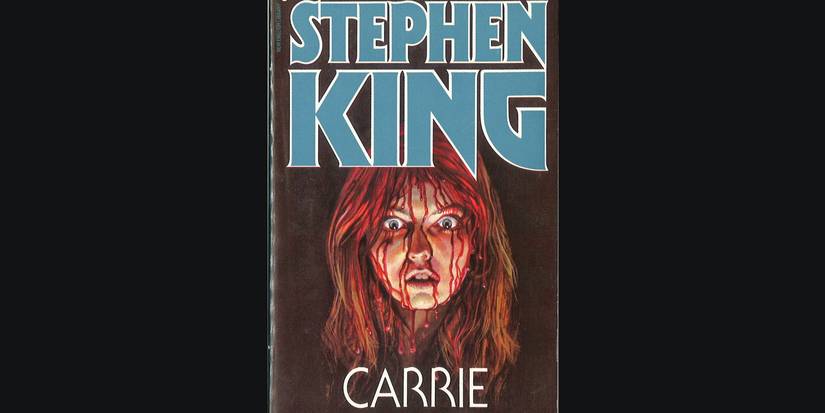
Long before it became a pop-culture touchstone, the prom scene in Carrie was never actually the point of the book. Far too many readers walk into King’s debut novel expecting the telekinetic massacre to be the narrative’s core. In reality, that fiery bloodbath is merely the inevitable psychological aftermath of two hundred pages of domestic and social terror that is far more devastating than any supernatural manifestation.
The story follows Carrie White, a sixteen-year-old outcast who experiences her first menstrual cycle in the communal high school showers—an igniting spark for her peers to pelt her with tampons and chant, "Plug it up!" Raised by a fanatically religious mother, Margaret, Carrie has been kept in a dark ecosystem where biology is classified as unholy sin, and love is expressed via a locked prayer closet and a crucifix.
When Carrie finally attends her senior prom in a modest pink dress—her crown secured alongside Tommy Ross—the reader’s desperate yearning for her to experience five minutes of unburdened happiness becomes suffocating. That emotional vulnerability is precisely why the metallic tilt of the bucket overhead feels so catastrophic. King meticulously constructs every door that slams in Carrie’s face, ensuring the tragedy feels structural rather than accidental.
5. The Dead Zone (1979)
The Burden of Foreknowledge
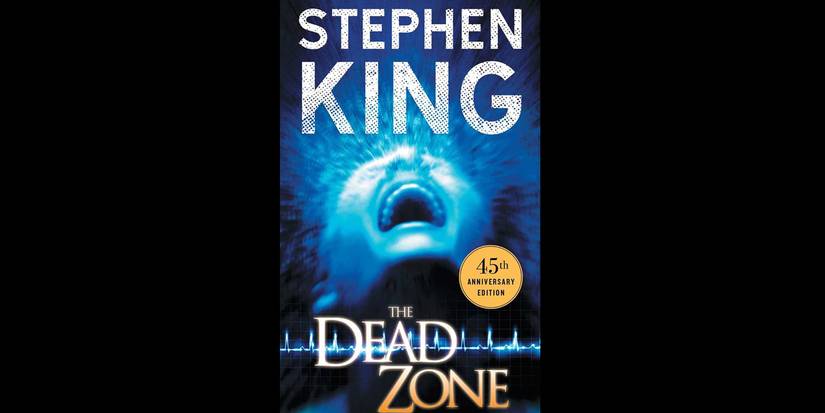
In The Dead Zone, Johnny Smith does not want his extraordinary, terrifying ability—a distinction that forms the moral heartbeat of the novel. Awakening from a five-year coma, Johnny finds that his fiancée has married another man, his teaching career has evaporated, and his body operates at a fractured capacity. Worse still, physical contact with others acts as a live electric wire, flooding his mind with vivid, inescapable visions of impending deaths and future tragedies.
King dedicates a deliberate, unhurried stretch of the novel to painting Johnny as a broken man who would gladly trade his psychic gift for a single year of quiet obscurity. That desperation, however, dissolves the moment Johnny shakes the hand of Greg Stillson, a charismatic political candidate. Through a momentary touch, Johnny sees Stillson standing with his finger on a nuclear launch button, laughing as the world burns.
Johnny cannot walk away. What begins as a localized tragedy about a man stripped of his life transforms instantly into one of the most morally crushing philosophical questions King ever posed: What do you do when you are the sole person standing between humanity and a preventable apocalypse?
4. Pet Sematary (1983)
The Geometry of Grief and Desperation
The true horror of Pet Sematary does not originate in the ancient, sour earth of the woods, but rather along the paved ribbon of Route 150 outside the Creed family home. King describes the roaring semi-trucks barreling down the highway with an insatiable, almost predatory hunger.
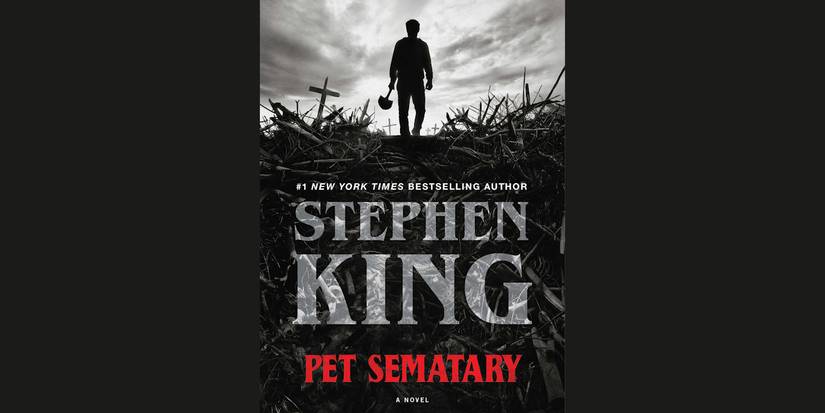
When Louis Creed—a rational-minded physician who treats death as a clinical, unbending fact—loses the family cat to the asphalt, his cold logic fractures. Urged on by his neighbor Jud, Louis buries the animal in a cursed burial ground. The cat returns with a stiff, unnatural gait and dead, flat eyes. Louis recognizes the perversion of natural law, yet when that same hungry highway inevitably claims his toddler son, Gage, maternal and paternal grief override every instinct of self-preservation.
Louis knows the horrifying toll exacted by the earth. He proceeds anyway. The novel becomes a chilling exploration of a father driven so mad by the vacuum of loss that he is willing to dismantle the universe to bring his child home.
3. 11/22/63 (2011)
The Unforgiving Architecture of History
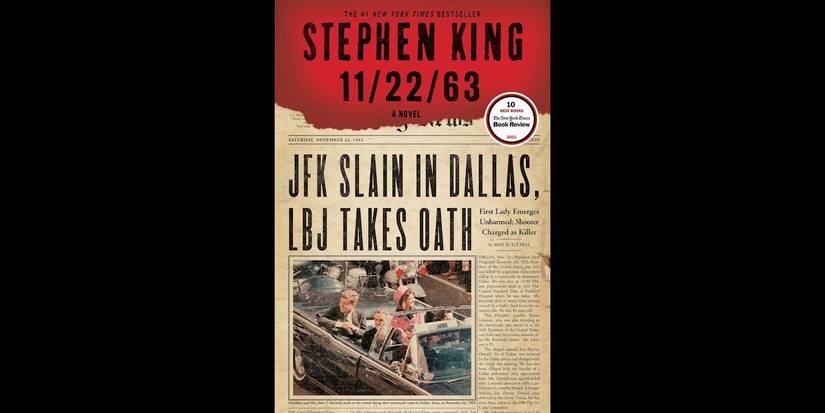
Shifting gears from traditional horror to speculative historical fiction, 11/22/63 follows Jake Epping, an ordinary high school English teacher who discovers a temporal portal tucked away in the pantry of a local diner. Every journey through the portal drops him into the exact same afternoon in the year 1958. Tasked by the diner’s dying owner, Jake accepts an impossible mission: live quietly in the past for five years and prevent the assassination of John F. Kennedy.
What elevates the novel is the richness of Jake’s suburban exile in Texas. While surveilling Lee Harvey Oswald, Jake inadvertently builds a genuine life, falling deeply in love with librarian Sadie Dunhill. King paints the late 1950s and early ’60s with tactile, sensory detail—the heavy steel of classic automobiles, the crisp scent of filtered cigarettes, and an era’s fragile optimism.
Yet, as the calendar ticks toward November 22, 1963, the past begins to push back with violent immunity. History defends itself through sudden illness, falling trees, and catastrophic accidents. This seamless synthesis of true-crime pacing and tragic romance culminates in an ending that tests the absolute limits of emotional endurance.
2. Misery (1987)
The Ultimate Captivity Thriller
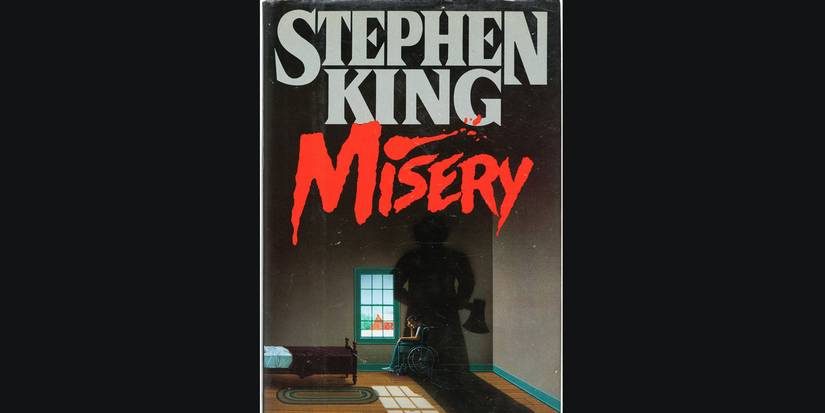
Stripped down to its sharpest, most claustrophobic shape, Misery remains the definitive literary study of confinement. Bestselling author Paul Sheldon awakens after a devastating car crash with shattered legs, held captive in a remote farmhouse by Annie Wilkes—a self-proclaimed "number one fan" whose saccharine sweetness can curdle into homicidal rage in a microsecond.
The physical geography of the novel is brilliantly restricted: a small guest room, a rusted bedframe, a single heavy door, and the ominous thud of Annie’s boots approaching down the hallway. What makes the premise pure genius is that Paul’s survival is entirely dependent on his capacity to produce creative work. He must write his way out of execution, navigating missing typewriter keys, dwindling painkillers, and the psychological tightrope of keeping his captor placated. Every paragraph Paul hammers out is simultaneously high art and a desperate hostage negotiation.
1. The Shining (1977)
The Implosion of the Self
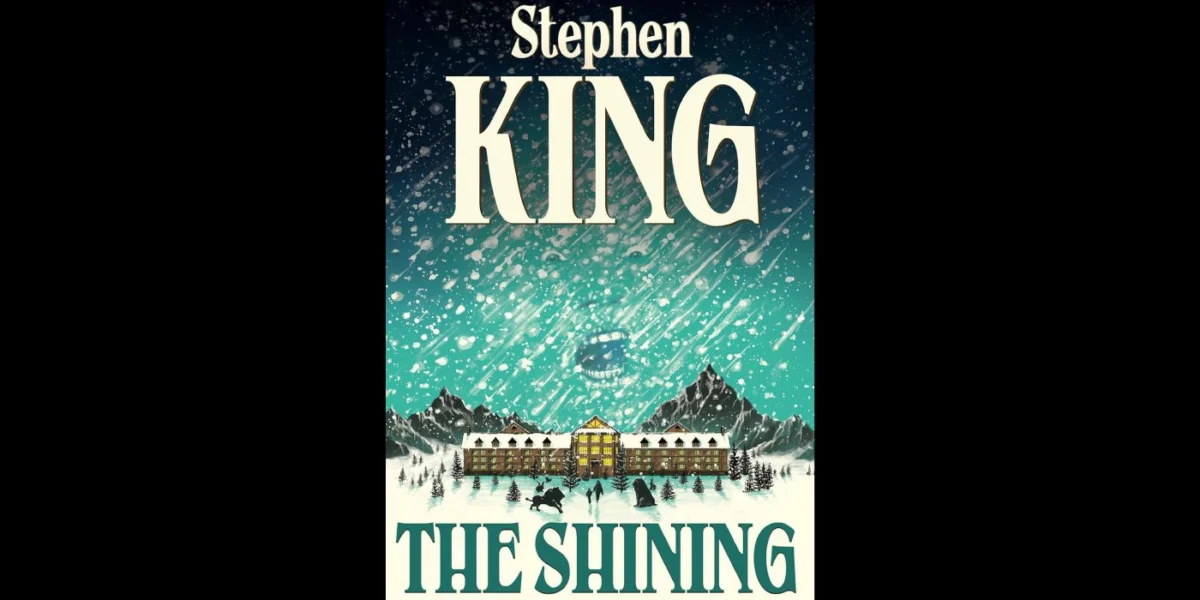
Regarded by many as King’s crowning achievement, The Shining succeeds as a haunted house masterclass because the Overlook Hotel does not need to invent Jack Torrance from whole cloth; it merely acts as an accelerant for what is already smoldering inside him.
Jack arrives at the isolated mountain resort alongside his wife, Wendy, and their gifted son, Danny, desperate for a fresh start. Burdened by a history of alcoholism, professional failure, and a volatile temper, Jack views the caretaker position as his final opportunity to prove his worth as a husband and a father.
The true terror of the Overlook—its empty corridors, subterranean boiler, and blood-soaked history—lies in how it weaponizes Jack’s own insecurities, resentments, and bruised pride. As the winter snows seal the family off from civilization, Jack’s physical decline mirrors his moral collapse. When he finally picks up a roque mallet to hunt his own family through the drifts, the thudding blows do not just echo through the hotel; they sound the death knell of a family imploding from within.
Supporting Data & Literary Impact
To understand Stephen King’s enduring cultural footprint, one must look past mere sales figures—though his bibliography has sold over 400 million copies worldwide. His structural influence on modern psychological fiction can be broken down into three critical metrics:
- Character-Driven Pacing: Unlike traditional pulp horror that front-loads visceral scares, King’s masterworks typically allocate 60% to 75% of their page count to mundane character development, social dynamics, and interpersonal friction.
- The Domestic Threat Vector: In King’s universe, the most dangerous entity is rarely a supernatural monster; it is the domestic sphere—dysfunctional households, abusive parents, and repressed trauma.
- Adaptability Quotient: Novels like The Shining, Misery, and Carrie have successfully transitioned into cinematic masterpieces because their underlying dramatic conflicts—addiction, obsession, and bullying—remain universally relatable across mediums.
Official Responses & Critical Reception
Critical consensus surrounding King has evolved dramatically over the decades. Once dismissed by high-brow literary critics as a commercial hack, King received the National Book Foundation’s Medal for Distinguished Contribution to American Letters in 2003, signaling a major institutional shift in how genre fiction is evaluated.
Academics frequently praise The Shining and Pet Sematary as profound explorations of generational trauma and grief. In retrospective reviews, literary critics have frequently highlighted King’s acute ear for dialogue and his ability to anchor fantastical premises in the blue-collar realities of working-class America. As cultural historian and critic assessments note, King’s longevity stems from his ongoing commitment to treating his characters’ emotional lives with absolute seriousness, regardless of how absurd or terrifying their external circumstances become.
Implications: The Enduring Legacy of King’s Blueprint
The implications of Stephen King’s literary methodology extend far beyond the horror genre. By proving that genre fiction could serve as a legitimate vehicle for profound psychological exploration, King paved the way for contemporary literary-horror hybrids that dominate modern publishing and prestige television.
Authors working today in speculative fiction, psychological thrillers, and domestic noir owe a massive debt to the blueprint King refined in the 1970s and 1980s: start with a recognizable human wound, salt it with ordinary societal pressures, and introduce the fantastic only when the protagonist’s emotional defenses have been completely stripped away.
Ultimately, Stephen King’s stories endure because they remind readers of an uncomfortable truth: the monsters lurking in the shadows may terrify us, but the monsters we carry inside our own minds are the ones we can never truly outrun.
