
Driving Advocacy to the Border: How Charlotte’s Web Mobilized "Route CBD" to Combat Restrictive California Legislation
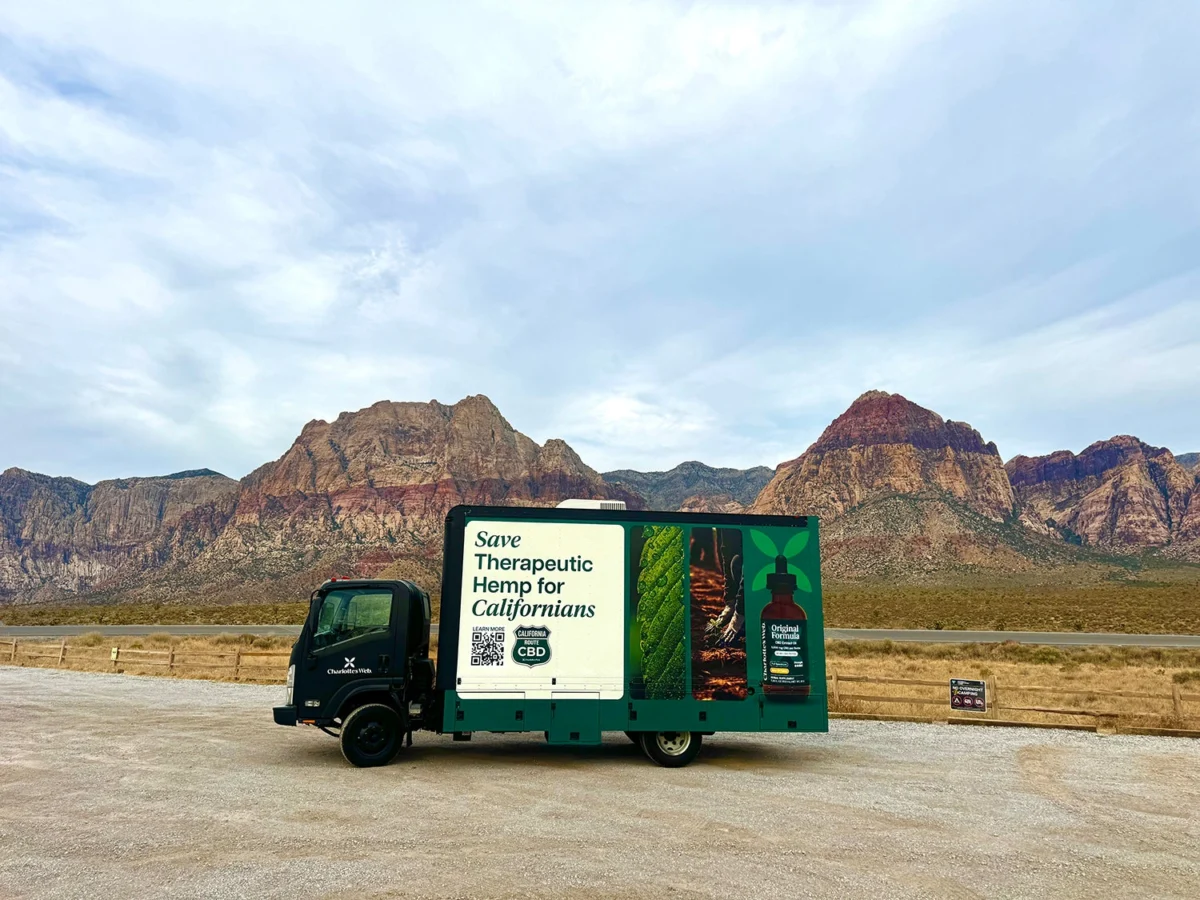
In the ever-shifting regulatory landscape of the botanical wellness industry, brands often find themselves caught in the crossfire of evolving state laws. When California enacted a sweeping legislative package in July that effectively eliminated consumer access to full-spectrum hemp and CBD products, Colorado-based wellness pioneer Charlotte’s Web faced an existential crisis on behalf of its customer base. Rather than accepting the sudden closure of digital and traditional retail channels in the nation’s most populous state, the company engineered a bold, experiential response.
Turning regulatory adversity into an agile cause-marketing campaign, Charlotte’s Web launched “Route CBD,” a high-profile, seven-city mobile tour that crossed state lines to bring legal therapeutic hemp directly to stranded Californians, while simultaneously transforming everyday consumers into vocal advocates. Developed in partnership with experiential agency Moment, the campaign demonstrated how modern brands can leverage experiential marketing, grassroots activism, and mobile retail to fight back against restrictive public policy.
Main Facts: The Anatomy of the Route CBD Campaign
The Route CBD initiative was built upon a clear, three-pillar strategy: Awareness, Advocacy, and Access.
- The Catalyst: In July, new California bills severely restricted and virtually eliminated local access to full-spectrum hemp CBD products, cutting off thousands of residents who relied on these non-intoxicating remedies for daily wellness and therapeutic support.
- The Creative Solution: When online and brick-and-mortar channels were blocked within state lines, Charlotte’s Web adopted a frontier mindset. As Chief Commercial Officer Mindy Garrison succinctly put it: "We thought to ourselves, ‘Well, if we can’t sell it online or in retail, we’ll sell it across the border.’"
- The Itinerary & Timeline: The campaign deployed a custom-branded tour truck that traveled extensively across Nevada and California from August 10 to September 11, strategically hitting seven major markets.
- The Dual Purpose: The truck operated simultaneously as a mobile retail dispensary—allowing consumers to legally purchase their trusted products—and as an advocacy hub, empowering visitors to share personal testimonies, sign petitions, and write direct appeals to California Governor Gavin Newsom and state legislators.
- Measurable Impact: The campaign successfully galvanized public opinion, generating over 9,000 direct emails and advocacy messages to lawmakers, and creating a robust multimedia archive of consumer stories.
Chronology: From Legislative Shock to Mobile Resistance
The rapid realization of the Route CBD tour stands as a masterclass in agile experiential marketing. Moving from a legislative setback to an active, cross-state tour in a matter of weeks required meticulous planning, swift execution, and cross-channel coordination.
Phase 1: The Legislative Blow and Strategic Pivot (July)
In early summer, the California legislature passed bills placing stringent bans on full-spectrum hemp extracts. For Charlotte’s Web, a brand rooted in hemp advocacy and wellness solutions, the decision threatened to sever ties with a massive core audience. Instead of pursuing lengthy, purely legal channels initially, leadership recognized that the human element was missing from the legislative debate. The decision was made to take the product—and the consumer narrative—directly to the borderlands.
Phase 2: Route Conception and Agency Partnership (Late July – Early August)
Teaming up with experiential agency Moment, the Charlotte’s Web marketing team rapidly designed the operational framework for Route CBD. The goal was to establish a mobile destination that felt safe, welcoming, and educational rather than transactional or overtly political. Logistics were mapped out to position the truck just across state lines and in accessible border-adjacent zones, maximizing convenience for Californians willing to make the drive.
Phase 3: The Tour Deployment (August 10 – September 11)
For roughly a month, the Route CBD truck traversed its designated seven-city route through Nevada and California. To maximize foot traffic and community engagement, the vehicle maintained a highly dynamic schedule, frequently relocating to different spots within each city once or twice a day. Real-time updates were pushed out via the brand’s website and social media channels to guide loyal customers to the truck’s exact coordinates.
Phase 4: Amplification and Documentation (Post-Tour)
With the physical tour concluded in mid-September, Charlotte’s Web transitioned into the next phase of the campaign: policy pressure. The brand began compiling hours of video testimonies and user stories—such as the viral account of the Morales family—into an upcoming short documentary intended for submission directly to federal and state regulators.
Supporting Data and Operational Logistics
Executing a mobile tour across multiple state jurisdictions under intense regulatory scrutiny requires extraordinary logistical precision. Charlotte’s Web and agency Moment left no stone unturned in ensuring that accessibility remained the hallmark of the campaign.
- 9,000+ Actions Generated: Through on-site digital kiosks and guided letter-writing stations, the tour successfully captured more than 9,000 emails and direct advocacy messages addressed to California lawmakers and Governor Newsom.
- Hyper-Dynamic Scheduling: Recognizing that consumers would be traveling varying distances to reach the truck, the logistics team engineered a flexible footprint. The vehicle moved locations within cities up to twice daily, maximizing reach across dense metropolitan zones and remote border points.
- Radical Accessibility: To ensure no consumer fell through the cracks, the tour manager and driver went above and beyond standard protocols, distributing personal cell phone numbers to attendees and passersby to coordinate product pickups, answer questions, and provide guidance on navigating the changing laws.
- Agency Collaboration: The seamless execution of the tour was anchored by Moment, an experiential agency known for designing immersive brand environments that foster genuine human connection.
Official Responses and Human Stories
At its core, Route CBD was never just about moving merchandise; it was about humanizing a policy debate that had largely ignored the everyday lives of botanical wellness users.
Mindy Garrison, Chief Commercial Officer of Charlotte’s Web, emphasized the emotional and community-centric design of the activation:
"We set out from the very beginning with the idea that Route CBD needed to feel like a refuge, like a destination, somewhere where you’re welcome, you can receive education, be a part of a community and not feel ostracized. We are giving them that platform."
The emotional resonance of the campaign was validated on day one of the tour in Las Vegas. The very first visitors to arrive at the activation were a family who had driven three hours straight from San Bernardino, California, simply to secure the full-spectrum hemp products their daughter medically depended on.
This encounter, alongside hundreds of others, was captured on camera. The Charlotte’s Web team utilized the interior of the tour truck as a professional content studio, recording the unfiltered testimonies of families and individuals whose wellness routines had been upended by the state’s legislative decisions. These compelling narratives are now being synthesized into a documentary project designed to challenge policymakers directly.
Reflecting on the whirlwind campaign, Garrison noted that while the execution was a resounding success, the sheer velocity of the project offered a valuable operational lesson: "The only thing I’d change is starting the planning a little earlier."
Broader Implications for Brand Advocacy and Experiential Marketing
The success of Charlotte’s Web’s Route CBD tour establishes a groundbreaking precedent for how brands can respond to sudden, hostile regulatory shifts through experiential marketing and cause-driven activations.
1. The Evolution of Mobile Tour as a Policy Tool
Traditionally, mobile tour trucks have been deployed for product sampling, brand awareness, or experiential retail during product launches. Route CBD flips this script, utilizing a mobile footprint as a tactical instrument for political mobilization. By bridging retail access with immediate civic action (letter-writing, data collection), Charlotte’s Web turned a mobile storefront into a democratic town square.
2. Emotional Resonance Over Corporate Lobbying
While traditional corporate lobbying happens behind closed doors in Sacramento or Washington, D.C., Route CBD brought the boardroom to the pavement. By highlighting real human stakes—such as families traveling hours across state lines—the campaign bypassed sterile policy debates and grounded the issue in tangible human need. This grassroots storytelling creates immense public pressure that traditional lobbyists struggle to replicate.
3. Content-First Experiential Design
By embedding a content studio directly into the mobile tour footprint, Charlotte’s Web ensured that the physical activation had an infinite digital shelf life. The video assets captured on the road are not only fueling social media engagement across Instagram and YouTube but are also being packaged into a targeted documentary meant to influence decision-makers at the highest levels of government.
4. A Blueprint for Controlled-Substance and Botanical Brands
As state and federal regulations continue to create a patchwork of legality for hemp, CBD, and other botanical products, brands face persistent volatility. Charlotte’s Web has proven that agility, direct-to-consumer mobility, and transparent community advocacy can successfully sustain a brand through legislative blackouts while transforming loyal customers into an active, mobilized coalition.
