
High-Stakes Legal Drama Goes Global: Ryan Murphy’s ‘All’s Fair’ Season 2 to Premiere at Rome Film Festival
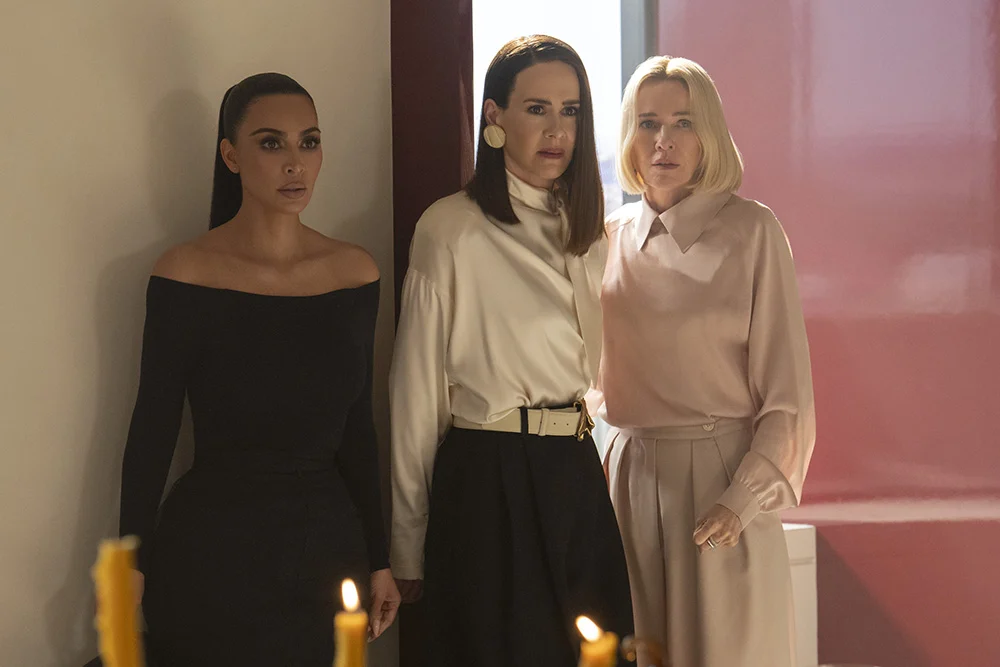
The television landscape is bracing for a return to the chaotic, glitzy, and notoriously sharp-tongued world of Grant, Ronson & Greene. Ryan Murphy’s polarizing legal dramedy, All’s Fair, is officially set to command the international stage, with the highly anticipated second season slated for a world premiere at the upcoming Rome Film Festival. This prestigious debut marks a significant moment for the series, which has successfully straddled the line between critical derision and massive commercial success.
The premiere, scheduled for the evening of October 24 at the Eternal City’s Auditorium Parco della Musica, will serve as a centerpiece for the festival’s "Freestyle" section. The event promises to be a star-studded affair, with leading ladies Kim Kardashian, Naomi Watts, Niecy Nash-Betts, and Sarah Paulson expected to grace the red carpet, bringing a touch of Hollywood glamour to the historic Italian capital.
The Rome Premiere and International Strategy
The choice of Rome for the global unveiling of Season 2 is a calculated move by 20th Television and Disney/Hulu. By premiering at a major European film festival, the production team is signaling that All’s Fair is not merely a domestic streaming play but a global brand.
Following the Rome screening, the series is scheduled to arrive on streaming platforms this November. It will be available exclusively on Disney+ for international markets, including Italy, while maintaining its status as a Hulu original in the United States. This synchronized rollout underscores the growing trend of high-profile streaming series leveraging the prestige of film festival circuits to build buzz before the digital drop.
Chronology of a Camp Phenomenon
To understand the trajectory of All’s Fair, one must look back at its explosive debut on November 4, 2025. Upon its release, the show was met with a chorus of critical skepticism, with many reviewers pointing to its erratic pacing and over-the-top narrative choices. However, the "Murphy Effect"—a phenomenon where the showrunner’s hyper-stylized aesthetic overrides traditional critical consensus—proved stronger than ever.
Despite the negative reviews, the audience response was immediate and overwhelming. The show launched at No. 1 on the Hulu viewership charts, shattering records to become the streamer’s biggest original scripted series premiere in three years, based on the first three days of streaming data.
The series follows a team of female divorce attorneys who break away from a stifling, male-dominated firm to establish their own powerhouse practice. While the premise suggests a standard procedural, the execution is anything but. The show has earned a reputation as a "camp classic," a label that seems to delight its creative team rather than deter them. By leaning into the absurdity of its legal maneuvers and the sheer velocity of its dialogue, All’s Fair has cultivated a devoted cult following that treats every episode like a cultural event.
Supporting Data: The Powerhouse Ensemble
The success of All’s Fair is undeniably tethered to its ensemble cast. The roster for Season 2 is a veritable "who’s who" of contemporary acting talent, featuring the returning core of Kardashian, Watts, Nash-Betts, and Paulson. They are joined by Teyana Taylor, Matthew Noszka, and the legendary Glenn Close.
The series has gained notoriety for its "deliriously absurd" dialogue, a hallmark of the writing room’s commitment to heightened reality. The script frequently pivots from high-stakes legal maneuvering to insults that have become viral fodder on social media. From graphic, shock-value jabs to Sarah Paulson’s infamous delivery of the line, "see you in court, cuntburger," the show refuses to play by the rules of traditional network drama.
This commitment to the bizarre has become the series’ calling card. The writers, led by executive producers Jon Robin Baitz, Joe Baken, and Jamie Pachino, seem to understand that the audience is not looking for a realistic portrayal of divorce law, but rather a visceral, stylized fantasy of professional dominance.
Production and Creative Vision
Behind the scenes, the series is a massive logistical operation produced by 20th Television. Ryan Murphy, who directs several episodes, maintains a tight grip on the show’s visual identity, which is defined by high-fashion aesthetics and claustrophobic, high-tension staging.
The executive production team is unusually deep, reflecting the star-power involved in the project. Along with Murphy, the executive producer credits include Kardashian, Close, Watts, Nash-Betts, and Paulson, all of whom have taken an active role in the creative direction of the firm’s latest scandals. They are joined by veteran producers Lyn Greene and Richard Levine, as well as Anthony Hemingway, who also shares directing duties. The involvement of Kris Jenner as an executive producer adds an extra layer of meta-commentary, further blurring the lines between reality television fame and scripted prestige drama.
Implications for the Future of Streaming
The continued success of All’s Fair poses interesting questions for the streaming industry. In an era where platforms are increasingly cautious about greenlighting risky, divisive content, the show’s performance proves that there is a massive, untapped appetite for "hate-watchable" television that can be converted into high-engagement metrics.
By choosing to premiere in Rome, the team behind All’s Fair is effectively elevating the show’s profile, attempting to bridge the gap between "trashy" camp and high-art cinema. If the premiere is successful, it could pave the way for other streaming giants to use film festivals as a launchpad for their most commercial—and controversial—projects.
Furthermore, the "scandals, secrets, and stilettos" promised in the new season synopsis suggest that the writers have no intention of tempering their approach. As the firm of Grant, Ronson & Greene faces a "shocking revelation" that threatens its very existence, the show is doubling down on the stakes. Whether this will lead to a third season or a grand, chaotic finale remains to be seen, but for now, the momentum is entirely in their favor.
Conclusion: The "All’s Fair" Paradox
As the Rome Film Festival approaches (running from October 13-25), all eyes will be on the Auditorium Parco della Musica. The premiere of All’s Fair Season 2 is a testament to the changing tides of television. It represents a victory for the "creator-first" model, where a singular voice like Ryan Murphy’s can command global attention regardless of traditional critical metrics.
The show is, at its heart, a mirror reflecting the absurdity of modern celebrity, legal power, and gender dynamics in the workplace. While critics may continue to find fault with its lack of restraint, the audience has made it clear: they are here for the drama, the absurdity, and the stilettos. As the legal eagles of Grant, Ronson & Greene prepare for their return, one thing is certain—the season will be anything but quiet.
For the fans, the wait is almost over. For the critics, it is time to prepare for another round of discourse. And for the industry, the success of this season will provide the definitive answer on whether the "camp legal drama" is the future of the streaming powerhouse model.
