
A Masterclass in Human Fragility: Mike Leigh’s Tender Loving Care Defines the 64th New York Film Festival
The 64th New York Film Festival (NYFF) has played host to many masterworks over the decades, but few have arrived with the quiet, devastating precision of Mike Leigh’s latest feature, Tender Loving Care. Known for his rigorous, workshop-based approach to character development, Leigh has once again proven why he remains one of the most vital observers of the human condition in contemporary cinema.
Tender Loving Care is not a film of grand gestures or explosive plot twists. Instead, it is a profoundly intimate exploration of the domestic sphere, focusing on the friction between aging, the professional burdens of caregiving, and the enduring, often messy nature of familial love.
The Genesis of a Character Study
Mike Leigh’s process is legendary within the industry. By eschewing traditional scripts in favor of months of collaborative improvisation with his cast, he builds characters from the inside out. In Tender Loving Care, this method pays dividends. The film follows the intersecting lives of a family and their social circles, anchored by the poignant performances of Marion Bailey and Paul Jesson as Birdie and Geoff.
The central conflict of the film is rooted in the inevitable decline of health. As Birdie and Geoff navigate their sunset years, they find themselves grappling with the onset of dementia—a subject Leigh approaches with startling, unvarnished honesty. One of the most striking sequences in the film depicts a "frozen state" experienced by Geoff; it is a moment of profound vulnerability that captures the terror of losing one’s cognitive faculties, handled with a delicate balance of humor and heartbreak.
A Chronology of Care
The narrative trajectory of Tender Loving Care is deceptively simple. It mirrors the mundane, often draining cycles of daily life, particularly for those working in the social services sector. We are introduced to the couple’s daughter, Amy (played with career-defining brilliance by Kate O’Flynn), a dedicated social worker who spends her days attempting to provide support to a system that is often indifferent to its own beneficiaries.
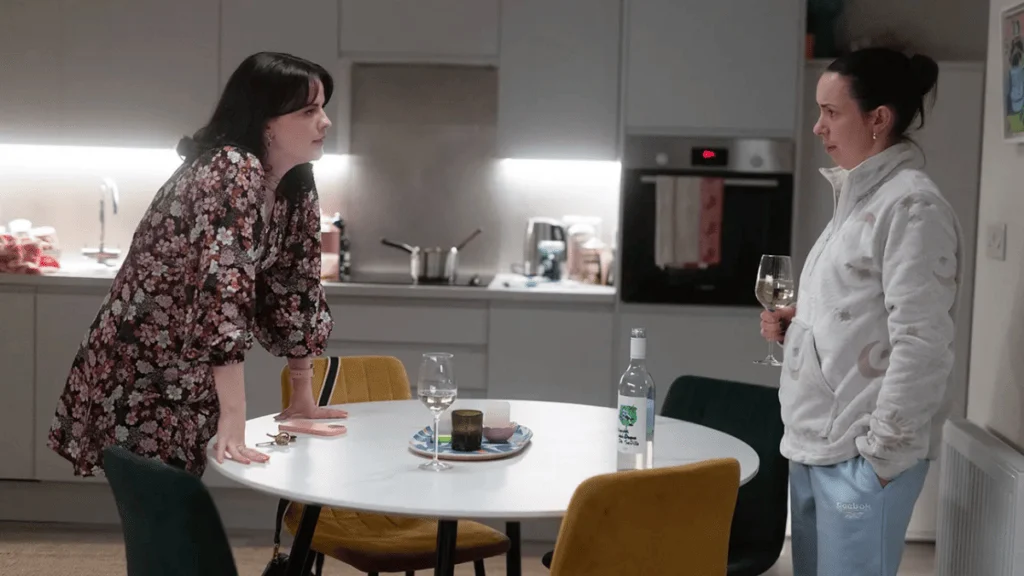
As the story progresses, the film shifts between the domestic front—where Birdie and Geoff struggle to maintain their dignity amidst health crises—and the professional front, where Amy and her best friend/colleague, Rosie (Alice Bailey Johnson), find solidarity in the trenches of their demanding, often thankless jobs.
The middle act of the film serves as a masterclass in tone. Leigh intercuts the harrowing, high-stakes frustrations of Amy’s workplace with the more personal, low-stakes anxieties of the characters’ romantic lives. In a world that feels increasingly cold and bureaucratic, the friendship between Amy and Rosie acts as the film’s emotional heart, a warm, comedic anchor that prevents the weight of the central drama from becoming suffocating.
Supporting Data: The Architecture of Performance
The strength of Tender Loving Care lies in its ensemble. While the entire cast—including Tilly Vosburgh, Alan Williams, Diveen Henry, Amanda Lawrence, Sandy Foster, Ashna Rabheru, Brid Brennan, and Peter Wight—delivers performances of startling naturalism, the spotlight inevitably falls on Kate O’Flynn.
O’Flynn’s portrayal of Amy is a revelation. Whether she is navigating the abrasive personality of a difficult client or sharing a quiet moment of vulnerability with her friend, O’Flynn brings a rare, palpable authenticity to the screen. Her performance is not merely a display of craft; it is a total immersion. Industry insiders and critics at the NYFF have already begun to whisper about an Academy Award nomination for Best Supporting Actress. It is a rare performance that commands the screen with such effortless grace that it makes the audience forget they are watching a constructed narrative.
Furthermore, the casting of Alice Bailey Johnson—who is the real-life daughter of Marion Bailey—adds a layer of metatextual resonance to the film. The chemistry between the two is authentic and unforced, lending the scenes involving Birdie and her daughter a level of emotional truth that is difficult to manufacture.
![Film Review: TENDER LOVING CARE: Mike Leigh Creates a Warm, Moving, Well-Acted Character Study [NYFF 2026]](https://film-book.com/wp-content/uploads/2026/09/Alice-Bailey-Johnson-Kate-OFlynn-Tender-Loving-Care-01-1200x675-1.png)
Official Perspectives and Artistic Vision
In discussions surrounding the film, Mike Leigh has remained characteristically humble about his process, often deferring to the work of his actors. His direction is invisible, yet omnipresent. He does not impose a vision upon his characters; he invites them to exist.
The film’s cinematography, marked by a penchant for long, lingering close-ups, allows the audience to sit with the characters in their moments of silence. Leigh concludes the film with a final, lingering shot that speaks volumes about the passage of time and the wisdom he has accrued over his decades-long career. It is a signature Leigh moment: a quiet, unassuming image that carries the emotional weight of a thousand words.
When asked about the balance of humor and tragedy in his work, Leigh has noted that in real life, the two are rarely separate. Tender Loving Care is a testament to this philosophy. He finds the humor in the absurdity of a failed date or a bureaucratic nightmare, just as he finds the profound tragedy in a spouse forgetting their partner’s name.
Implications for Modern Cinema
The release of Tender Loving Care serves as a stark reminder of the power of grounded, character-driven storytelling. In an era dominated by high-concept blockbusters and digital artifice, Leigh’s commitment to the working-class experience—the dignity of the mundane, the struggle of the individual against the impersonal—is more relevant than ever.
The film has significant implications for how we view the "social problem" film. By focusing on the experience of social work rather than the politics of it, Leigh humanizes a profession that is often treated as a statistic. We see the toll it takes, not just on the patients, but on the practitioners.
Moreover, the film stands as a benchmark for acting. The performances, particularly those of O’Flynn and Bailey, set a high bar for the remainder of the awards season. If the reception at the 64th New York Film Festival is any indication, Tender Loving Care will be regarded as one of the definitive films of 2026.
Conclusion: A Masterpiece of Empathy
Tender Loving Care is an essential watch for anyone who believes in the transformative power of cinema. It is a film that demands nothing from the viewer other than their presence, and in return, it offers a deeply moving reflection on the realities of aging, the strength of female friendship, and the quiet heroism required to live a life of integrity.
Mike Leigh has not just made a film about a family; he has captured a universal truth about the human condition. It is warm, it is devastating, and it is, quite possibly, one of the most important works of his career. As we leave the theater, we are reminded that while life may be uncontrollable and often cruel, there is a profound beauty in the effort to care for one another—the "tender, loving care" that sustains us all.
Rating: 8/10
For those interested in the ongoing discourse surrounding the 64th New York Film Festival, further analysis, interviews with the cast, and deep dives into the festival’s retrospective programs can be found on the FilmBook official portal. We invite our readers to join the conversation in the comments section below and consider supporting independent film journalism through our Patreon community.
