
The Anatomy of Consent: Deconstructing the "Gray Space" in Juliette Strangio’s Learning to Eat Cake

In the modern discourse surrounding intimacy, we have become adept at identifying the black-and-white extremes of misconduct. We recognize the danger of the predator and the clear violation of the assault. Yet, there remains a pervasive, haunting territory—a "gray space"—where the lines of consent are not crossed with a shout, but eroded through a series of quiet, polite concessions.
Juliette Strangio’s 15-minute drama, Learning to Eat Cake, serves as a surgical examination of this phenomenon. By contrasting the visceral reality of an uncomfortable sexual encounter with the sanitised, comedic version of the same event told later to friends, the film interrogates why so many women find themselves trapped in situations they wish to exit, yet feel compelled to endure.
The Core Narrative: A Study in Diminishing Boundaries
The film centers on Tweety (played by Molly Ledbetter), a young woman who reunites with Julian (Hayden Burke), a charismatic peer from her high school years. On the surface, the date is a success. Julian is affable, funny, and seemingly respectful. He possesses the social intelligence to ask for permission before a kiss and even verbalizes a performative commitment to her comfort, stating he would never want her to do anything she didn’t want to do.
However, once the setting shifts to the privacy of Julian’s apartment, the dynamic undergoes a subtle but seismic shift. The "sweet" and "goofy" persona begins to fray. A kiss, initially consensual, becomes progressively more forceful. Julian’s persistence is not marked by aggression, but by a relentless, grinding pressure that slowly strips Tweety of her agency. She pulls away, changes the subject, and attempts to decelerate the momentum, but Julian—convinced of his own benevolence—maneuvers around these boundaries with a persistence that makes direct confrontation feel increasingly difficult, and perhaps, to the victim, "rude."
Chronology of Coercion: The "Cake" Metaphor
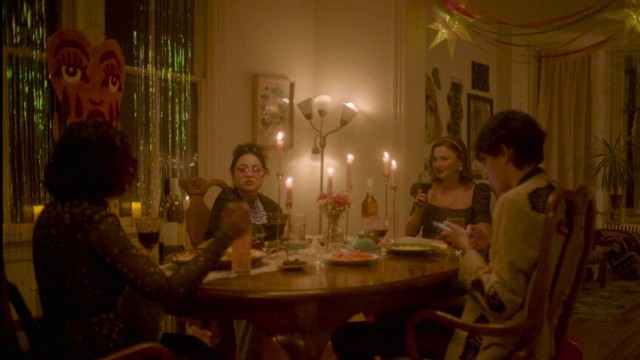
Strangio’s narrative structure is defined by its duality. The film intercuts between the night of the incident and a later, lighthearted dinner party where Tweety recounts the events to her friends.
The Symbolic Power of the Cake
The film’s central metaphor is established through a scene involving a slice of cake. Tweety, who is diabetic, repeatedly declines an offer of dessert. Julian, ignoring her stated boundary, persists. He asks again, and again, and again, until the social fatigue of saying "no" outweighs the physical cost of saying "yes."
Tweety eats the cake.
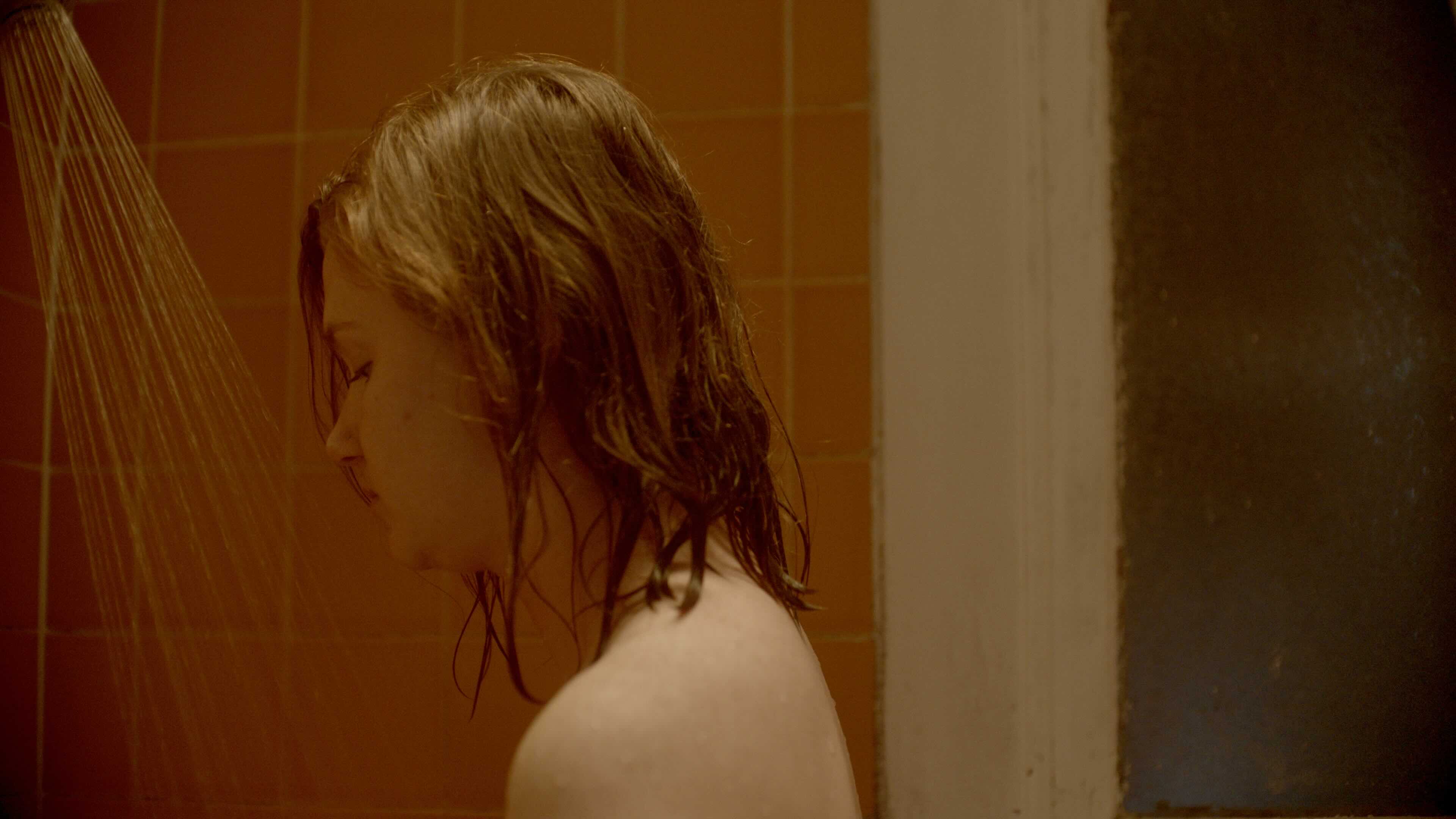
This moment serves as a microcosm for the entire encounter. The "cake" is not merely a dessert; it represents the accumulation of small, forced surrenders. It highlights the psychological reality that, for many, it eventually becomes easier to submit to an unwanted action than to continue the exhausting labor of justifying one’s own boundaries to someone who refuses to hear them.
The Retelling: Weaponizing Humor
The second timeline—the dinner party—demonstrates the social pressure to perform. By the time Tweety shares her story with friends, the edges of the experience have been sanded down. It is now a "funny story," a punchline designed to entertain. The film posits that this is a defense mechanism: if one can frame a violation as a comedy, one does not have to confront the reality of the harm done. It is an attempt to rewrite the trauma into something digestible, sparing both the teller and the listener the discomfort of a serious conversation about what occurred.
Supporting Perspectives: The Psychology of the "People-Pleaser"
The resonance of Learning to Eat Cake lies in its familiarity. Many viewers will recognize the "sour aftertaste" of having abandoned one’s own desires to prevent an awkward social moment.
The Societal Conditioning
Strangio’s work touches upon deep-seated cultural scripts. Many young women are socialized to be "polite" and to view men as "Very Sexual Creatures" whose impulses are uncontrollable. This conditioning creates a "people-pleasing" default that often overrides self-preservation. In the film, Tweety’s internal struggle is not with a villain, but with the expectation that she should remain "nice" even as her physical and emotional autonomy is being systematically dismantled.
The Problem with "Nice"
Julian is perhaps the film’s most unsettling character because he is not a caricature of evil. He is a "nice guy." He creates a dissonance that is difficult to resolve: if the perpetrator is not an obvious predator, the victim often questions whether they have the right to feel violated. This, Strangio suggests, is the trap. The lack of overt violence makes it harder for the victim to claim the narrative of "victimhood," leading to a state of perpetual self-doubt.
Official Reflections: Insights from the Director
When asked about the genesis of the project, Juliette Strangio emphasized the prevalence of this "gray space." She recalled the confusion she felt when speaking to older generations of women who, upon hearing stories like Tweety’s, responded with victim-blaming questions: Why didn’t she just leave? Why didn’t she say no?
Strangio argues that these questions are rooted in a fundamental misunderstanding of the power dynamics at play. She notes:
"I’ve lost count of how many times I’ve heard cool, bright women tell stories about those kinds of nights, but framed them as comedy, because if you don’t laugh about it you have to admit that maybe something you wanted to feel fun, actually felt terrible. There’s something really confusing and difficult about encounters that aren’t criminal but still feel violating—and you’re left wondering how to even define the experience."
Her film serves as a rejoinder to the idea that there must be a "moment of violence" to validate an experience of coercion.
Implications: Defining Consent in the 21st Century
The implications of Learning to Eat Cake reach far beyond the screen. The film forces an uncomfortable confrontation with the reality of "negotiated" consent.
The Illusion of Choice
If one is pressured repeatedly, is the final "yes" really a choice? The film suggests that coercion does not require a threat of physical violence. It can be built out of the refusal to accept a "no," the exhaustion of the victim, and the social pressure to maintain a polite facade.
The Cost of Silence
The film’s most devastating takeaway is the cost of the "funny story." When we laugh about situations that hurt, we inadvertently signal to ourselves and others that our boundaries are optional. By deconstructing this process, Strangio encourages a more rigorous standard of consent—one that requires an active, enthusiastic "yes" rather than the absence of a "no."
A Call for Cultural Re-evaluation
For audiences, Learning to Eat Cake is a catalyst for introspection. It challenges the viewer to recognize the "tiny surrenders" in their own lives. It asks us to consider whether we have been the Julian—ignoring the subtle cues of discomfort in favor of our own desires—or the Tweety, eating the cake just to end the conversation.
Ultimately, the film succeeds because it refuses to offer easy answers. It acknowledges that the hardest thing to swallow is not the event itself, but the admission that it "counted." By validating these experiences, Strangio provides a path toward a more honest, empowered, and truly consensual way of navigating intimacy. The film is a sobering reminder that while some boundaries are broken with a bang, many are lost in the quiet, insistent hum of a culture that prioritizes politeness over autonomy.
