
The Master Manipulator: Inside the Two-Decade Legal Odyssey of "The Widower" Thomas Randolph
By John Serba | September 30, 2026
Netflix’s latest true-crime offering, The Widower: ’Til Death Do Us Part, is more than just another entry in the platform’s sprawling library of sensationalized investigations. It is a chilling, 91-minute character study of Thomas Randolph, a man whose charisma was matched only by a calculated, predatory instinct that left a trail of six marriages, four deceased spouses, and two decades of legal theater in his wake.
While audiences may recognize the narrative from Dan Slepian’s 2021 Dateline docuseries or Investigation Discovery’s The Black Widower, this new film distinguishes itself by placing the journalist front and center. Slepian, a veteran Dateline producer and Pulitzer-nominated documentarian, shifts from observer to participant, offering an unprecedented look at his decade-long access to a man who viewed the American justice system not as a threat, but as a chessboard.
The Anatomy of a Narcissist: A Case Study in Manipulation
The documentary opens with a blunt assessment from Slepian: the Randolph case is “bizarre, insane, and surprising.” It is a claim that could be applied to a dozen Netflix originals, yet here, the evidence makes it an understatement.
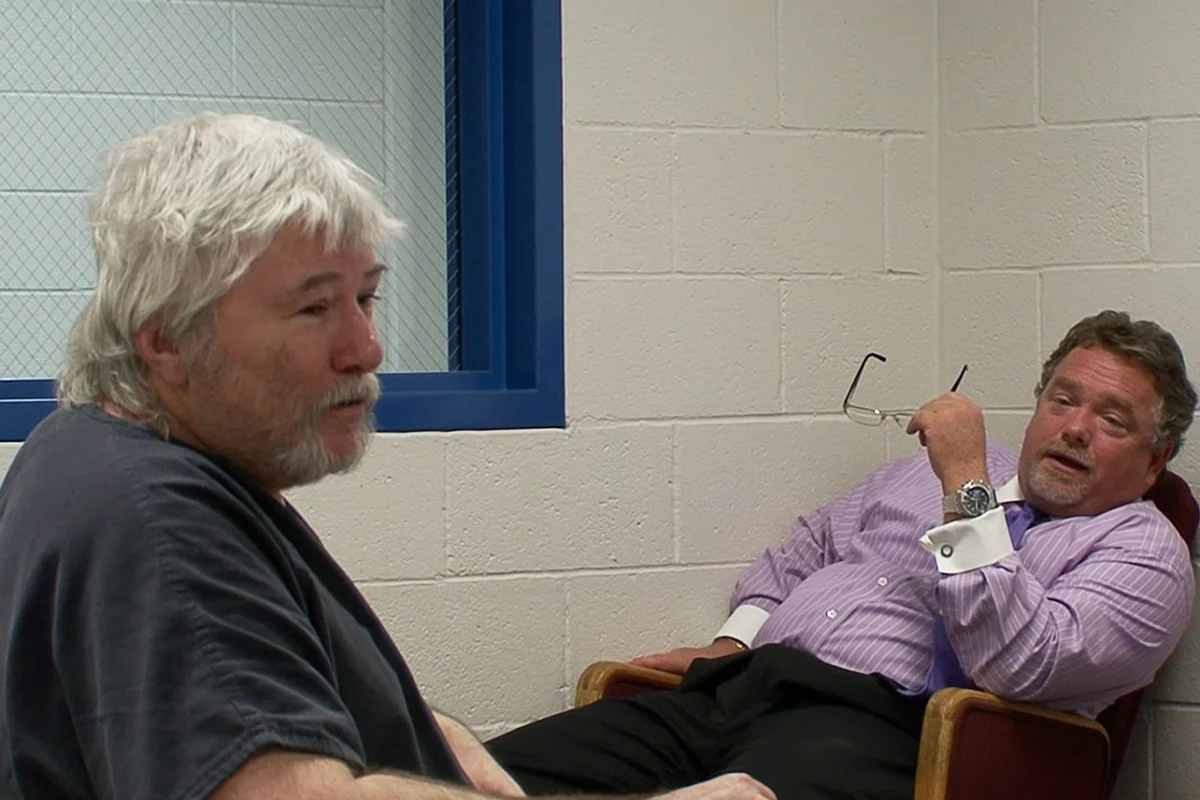
Thomas Randolph is portrayed as a textbook narcissist. His “cocky” demeanor, as he describes it himself, is not merely a personality quirk; it is a weapon. Throughout the film, Slepian’s footage captures a man who seems to feed off the attention of the camera, treating his own murder trials as performance art. Over ten years of phone calls—some lasting several hours—Randolph maintained a level of confidence that bordered on the surreal, even while facing the death penalty on multiple occasions.
Chronology of a Deadly Pattern
To understand the gravity of Randolph’s crimes, one must look at the grim timeline of his marital history. The pattern is strikingly consistent: marriage, isolation, the acquisition of life insurance policies, and, eventually, a suspicious death.
The Early Years
Randolph’s history of domestic tragedy began long before his 2008 arrest. Out of his six wives, two remain alive today. A third died of cancer. However, the others were not so fortunate. His second wife was found shot to death, with the scene staged to mimic a suicide. Randolph was tried for that death, acquitted, and narrowly escaped the death penalty—a brush with the law that appeared to embolden rather than deter him. His fifth wife died under mysterious circumstances following heart surgery, a death for which Randolph actually successfully sued the hospital, collecting a financial settlement that further padded his coffers.
The 2008 Catalyst: Sharon Causse
The turning point for investigators was the 2008 murder of Randolph’s sixth wife, Sharon Causse. Randolph’s story was cinematic in its implausibility: he claimed a handyman he had hired, Mike Miller, had shot Sharon, and that he subsequently killed Miller in a heroic act of self-defense.
Las Vegas detectives, led by Dean O’Kelley, were immediately skeptical. Slepian, having been tipped off by the police, was granted rare, unfettered access to the investigation. The footage captures the “nutty, performative” nature of the case, including a scene where police forced Randolph to reenact the shooting—a moment captured by Slepian’s lens that serves as one of the film’s most surreal sequences.
The Emotional Heart: The Victims Left Behind
While the film is fixated on the pathology of Thomas Randolph, it finds its emotional grounding in the story of Colleen Beyer, Sharon Causse’s daughter. As the investigation unfolded, it was revealed that Causse had become increasingly terrified of her husband’s aggressive behavior. She had gone so far as to remove him from her will, naming her daughter as the sole beneficiary—a move that likely sealed her fate.
Beyer’s journey throughout the documentary serves as a stark counterpoint to Randolph’s sociopathic detachment. Her trauma, compounded by a legal process that dragged on for nearly twenty years, highlights the human cost of a justice system that often prioritizes the rights of the accused over the closure of the victims.
The Legal Odyssey: Playing the System
The middle act of the documentary serves as a harrowing lesson in how the American legal system can be manipulated by a defendant with enough time and guile.
Stalling for Time
Following his 2009 arrest—where he was captured on film being tasered by police at his mother’s home—Randolph spent seven years in custody playing a tactical game. By cycling through defense attorneys and firing them on the eve of trial, he successfully stalled the proceedings, keeping the specter of a verdict at bay.
The 2017 Conviction and 2020 Overturn
In 2017, the state finally secured a conviction and a death sentence. Slepian was there, believing the case had finally reached its conclusion. However, as Randolph had boastfully hinted in earlier interviews, the system had loopholes. In 2020, the Nevada Supreme Court overturned the conviction, ruling that the jury had been unfairly prejudiced by information regarding Randolph’s previous trial in Utah. It was a crushing blow for the prosecution and for Colleen Beyer, who saw a decade of work evaporate in a single ruling.
Implications for the Justice System
The documentary does not shy away from editorializing on the fragility of justice. Slepian’s concluding commentary strikes a nerve, noting the irony that while he has dedicated his career to advocating for the wrongly imprisoned, he spent a decade watching a man who was demonstrably guilty exploit the same system to avoid accountability.
The film underscores a broader issue: the vulnerability of the judicial process to “professional defendants” who understand how to navigate the appellate process. Randolph’s ability to delay justice for nearly two decades is not just a failure of a specific trial, but a reflection of a system that often struggles to distinguish between procedural fairness and the abuse of rights.
The Final Verdict
The saga of Thomas Randolph reached a definitive, if overdue, conclusion. Following a second trial, where the prejudicial evidence from his past was excluded, Randolph was convicted once more. In September 2026, the Nevada Supreme Court rejected his request for a third trial.
At 71 years old, Thomas Randolph is currently serving a 60-year prison sentence.
The Widower: ’Til Death Do Us Part is a disturbing look at the intersection of journalism and crime. By documenting the rise, fall, and repeated resurgence of a man like Randolph, the film forces the viewer to confront the limits of the law and the enduring resilience of those left to pick up the pieces.
John Serba is a veteran film critic based in Grand Rapids, Michigan. His work focuses on the intersection of true crime media and the legal realities of the American justice system.
