
The Telekinetic Shift: Deconstructing Mike Flanagan’s Radical Reimagining of ‘Carrie’
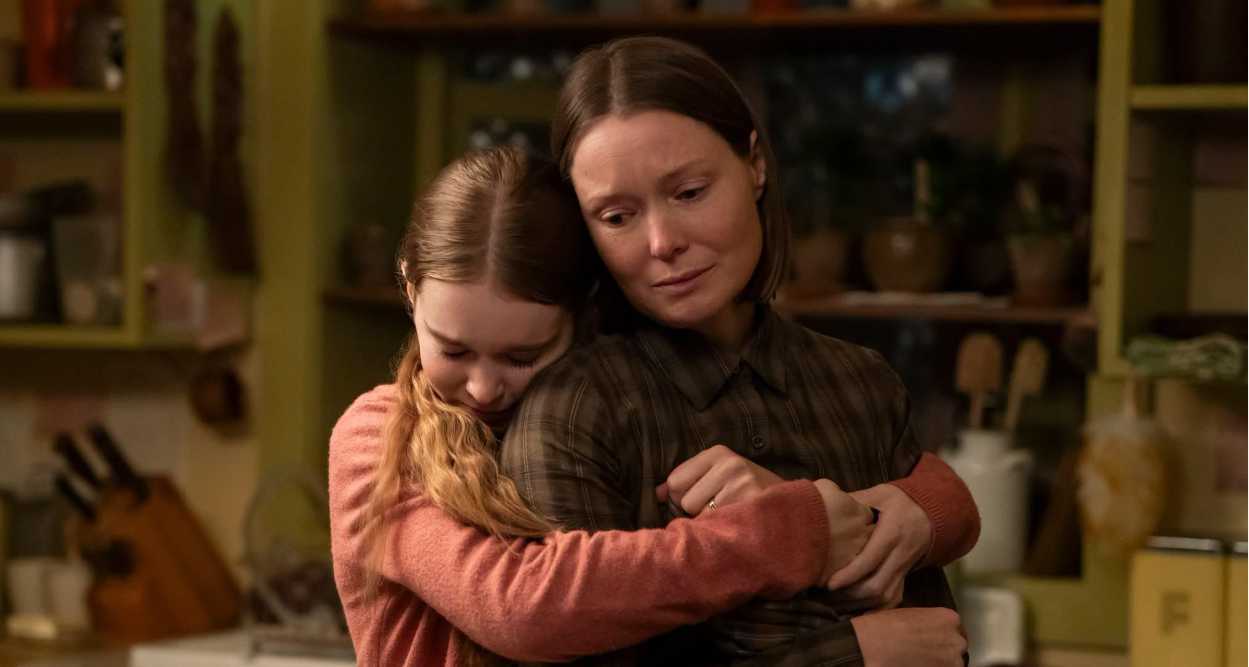
When it was first announced that Mike Flanagan—the auteur behind The Haunting of Hill House and Midnight Mass—would be tackling Stephen King’s 1974 literary touchstone Carrie, the news was met with a mixture of intense anticipation and trepidation. King’s debut novel is more than just a horror story; it is a cultural monolith, codified by Brian De Palma’s 1976 cinematic masterpiece, which remains the gold standard for genre adaptation. For decades, the "Carrie mythos" has been trapped in a cycle of diminishing returns, ranging from lackluster sequels to a 2013 remake that struggled to justify its own existence.
Flanagan’s Prime Video series, however, has discarded the concept of a faithful retread. Instead, it offers a radical, expansive, and deeply polarizing reimagining that treats the source material as a foundation rather than a blueprint. With the first season now available in its entirety, the series has proven to be a seismic shift in how we perceive the telekinetic teenager. The following is a comprehensive breakdown of the major creative departures that define this new iteration of Carrie.
The Setting: A Digital Crucible for 2026
The most immediate change is temporal. While the novel is firmly rooted in the late 1970s, Flanagan shifts the narrative to the year 2026. This is not a superficial coat of paint; it is a fundamental reconfiguration of the story’s central thesis. By placing Carrie in the hyper-connected, volatile environment of 2026, the series pivots from the localized bullying of a small Maine town to the relentless, omnipresent nature of cyberbullying.
In this version, social media is a character in its own right. The series introduces the "Carrie Red" account, a digital clearinghouse for harassment spearheaded by the antagonist, Chris Hargensen. This account serves as a nexus for the school’s toxicity, acting as a platform to disseminate rumors and unauthorized content about both students and faculty. Flanagan’s commentary here is stark: by modernizing the setting, he highlights how bullying has transitioned from the hallways of Ewen High School into the permanent, searchable record of the internet. The presence of metal detectors and the constant surveillance of the modern school environment serve as visual shorthand for a generation of students living in a state of perpetual, low-level dread.
Chronology and Character Origins: A New Foundation
The series recontextualizes Carrie’s upbringing through several key narrative adjustments. Notably, the show positions Carrie as a child who has been homeschooled for the entirety of her formative years. Her entry into public school is not a natural progression, but a mandate enforced by authorities following the death of her father, Ralph White.
In the original novel, Ralph White is a distant memory—a deceased figure who perished in a construction accident before Carrie was even born. In the Prime Video series, Ralph remains alive until Carrie is a teenager, also dying in a workplace accident, but leaving behind a far more complex legacy. Portrayed as a military veteran with survivalist tendencies, his influence on Carrie is profound. He is the architect of her sheltered, paranoid existence, appearing to her throughout the series as an apparition. This change transforms Carrie from a shy girl born of pure religious fanaticism into someone groomed for a world she was never allowed to inhabit, adding a layer of psychological trauma that shifts the audience’s sympathy toward her isolation.
The Evolution of Antagonists: Chris and Margaret White
Perhaps the most daring choice in the series is the decision to move away from binary morality. Chris Hargensen, traditionally the archetype of the "mean girl" bully, is granted a more textured backstory. Through glimpses into her home life—marked by financial instability and a crumbling family structure—the audience is invited to see the desperation behind her malice. She is no longer just a villain; she is a product of the same pressurized environment she creates for others.
However, the most significant departure involves Margaret White. Actress Samantha Sloyan delivers a performance that frames Margaret not as a one-dimensional zealot, but as a deeply disturbed, terrified protector. The series posits that Margaret’s cruelty is an over-correction—a desperate attempt to suppress a power she knows all too well. It is revealed that Margaret herself possesses dormant telekinetic abilities, a trait inherited through a bloodline that she is terrified will lead to her daughter’s destruction. This genetic framing changes the narrative from one of religious abuse to one of inherited trauma, suggesting that Margaret’s "poisonous" love was, in her eyes, a survival strategy.
Supporting Data: The Network of Psychics
The series expands the scope of the universe by introducing a recurring character named Emaline, a student who befriends Carrie. For much of the first half of the season, the show plays with the audience’s perception, hinting that Emaline is a psychological manifestation—an imaginary friend born of Carrie’s loneliness.
The reveal is twofold: first, Emaline is a real person; second, she is a psychic who has been using astral projection to locate and guide Carrie. This shifts the genre of the show from a psychological horror character study to something bordering on a sci-fi conspiracy thriller. By establishing that Carrie is not an anomaly but part of a global, hidden population of psychics, the series moves away from the intimate tragedy of the book toward a broader, serialized conflict.
Official Responses and Thematic Implications
Mike Flanagan has been vocal regarding these changes, particularly the controversial ending. In various interviews, he has noted that his goal was to explore the "genetics of horror." By linking the telekinetic power to a hereditary trait, he forces the audience to confront the fear of what we inherit from our parents.
Critics of the series have pointed out that these changes risk diluting the central tragedy of Carrie. By introducing a secret organization—a clandestine shadow group hunting psychics—the series arguably loses the "small-town isolation" that made the original story so claustrophobic. However, proponents argue that this structure provides the necessary momentum for a multi-season arc. The decision to have Carrie survive the prom massacre is the ultimate testament to this shift. She does not die; she evolves, leaving the town behind to join forces with Emaline and confront the very organization that sought to exploit her.
Implications: The Death of the "One-Off"
The decision to have Carrie survive and enter a larger world has profound implications for the future of the franchise. It signals that this series is not interested in being a definitive adaptation of the 1974 novel, but rather an expansive "Carrie-verse."
This transition has ignited a fierce debate regarding the depiction of school violence in media. In the 1976 film, the prom massacre is a cathartic, albeit horrific, conclusion. In the 2026 series, it is presented as a turning point in a larger conflict, with the showrunners suggesting that Emaline’s influence may have directed the violence. This ambiguity—whether Carrie is a perpetrator or a pawn—is clearly intended to navigate the sensitivities of contemporary discourse surrounding school shootings.
Ultimately, the Prime Video series succeeds by being utterly fearless in its subversion of expectations. Whether or not it remains true to the spirit of Stephen King’s work is a question that will be debated for years. What is undeniable, however, is that Mike Flanagan has successfully taken a story we thought we knew and transformed it into a complex, terrifying, and entirely new chapter in the history of the horror genre. By prioritizing a "collective" psychic mythos over the solitary descent into madness, the series ensures that the legacy of Carrie White is no longer a closed book, but a series of haunting possibilities yet to be written.
