
The Ultimate Starfleet Retrospective: Why Season 6’s ‘Tapestry’ Remains the Pinnacle of Star Trek: The Next Generation
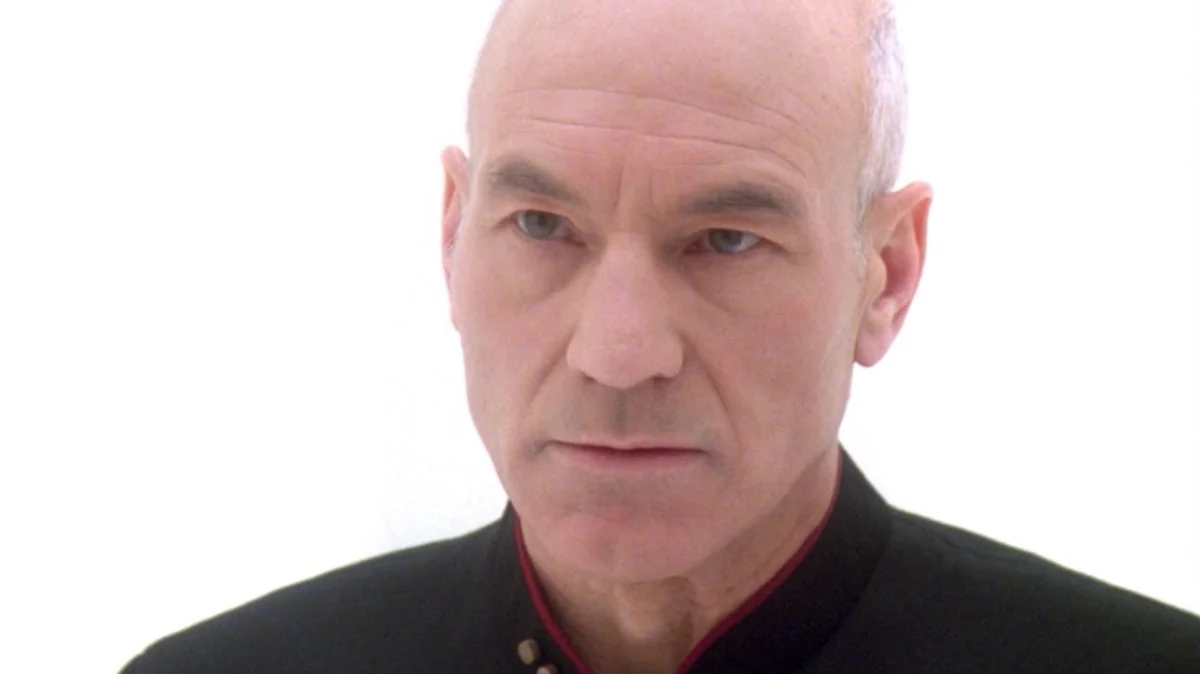
Main Facts: The Enduring Legacy of "Tapestry"
For decades, the sprawling tapestry of Star Trek: The Next Generation (TNG) has offered viewers an expansive look at philosophy, morality, and the human condition. Spanning 178 episodes across seven critically acclaimed seasons, the series tackled everything from artificial intelligence rights to political intrigue in the Alpha Quadrant. Yet, among the vast catalog of deep-space adventures, time-travel anomalies, and diplomatic crises, one specific installment stands head and shoulders above the rest.
Season 6, Episode 15, "Tapestry," functions as a masterclass in television writing, character study, and existential exploration. Written by veteran Star Trek scribe Ronald D. Moore and directed by Les Landau, the episode transcends the traditional boundaries of science fiction to deliver a miniature morality play.
At its core, "Tapestry" posits a simple yet profound question: Would we truly be better off erasing the reckless mistakes of our youth? For Captain Jean-Luc Picard, brought to life with trademark gravity and emotional resonance by Sir Patrick Stewart, the answer is a resounding and terrifying "no." Having watched every single frame of Star Trek: The Next Generation, critics and dedicated Trekkies alike continually return to "Tapestry" not merely as a high point of the show’s sixth season, but as the absolute pinnacle of the entire series.
Chronology of an Astral Awakening: From the Afterlife to Alternative Realities
To understand the profound impact of "Tapestry," one must trace the chronological sequence of events that catalysts Picard’s existential journey—a narrative arc rooted in canonical history long before Season 6 aired.
The Ghost of Nausicaa Past
Longtime fans of TNG were already intimately familiar with Picard’s greatest youthful regret. In the second-season episode "Samaritan Snare," Picard revealed a defining moment from his days as a fresh graduate of Starfleet Academy. Brash, arrogant, and flush with the invincibility of youth, a 21-year-old Picard found himself in a violent altercation with a group of Nausicaans in a starbase lounge. When a Nausicaan drew a long, jagged blade and stabbed Picard through the back, the puncture pierced his heart.
While Starfleet medical technology saved his life, it required the implantation of an artificial replacement—a mechanical heart that Picard carried with him for the rest of his days, serving as a literal and figurative ticking reminder of his youthful folly.
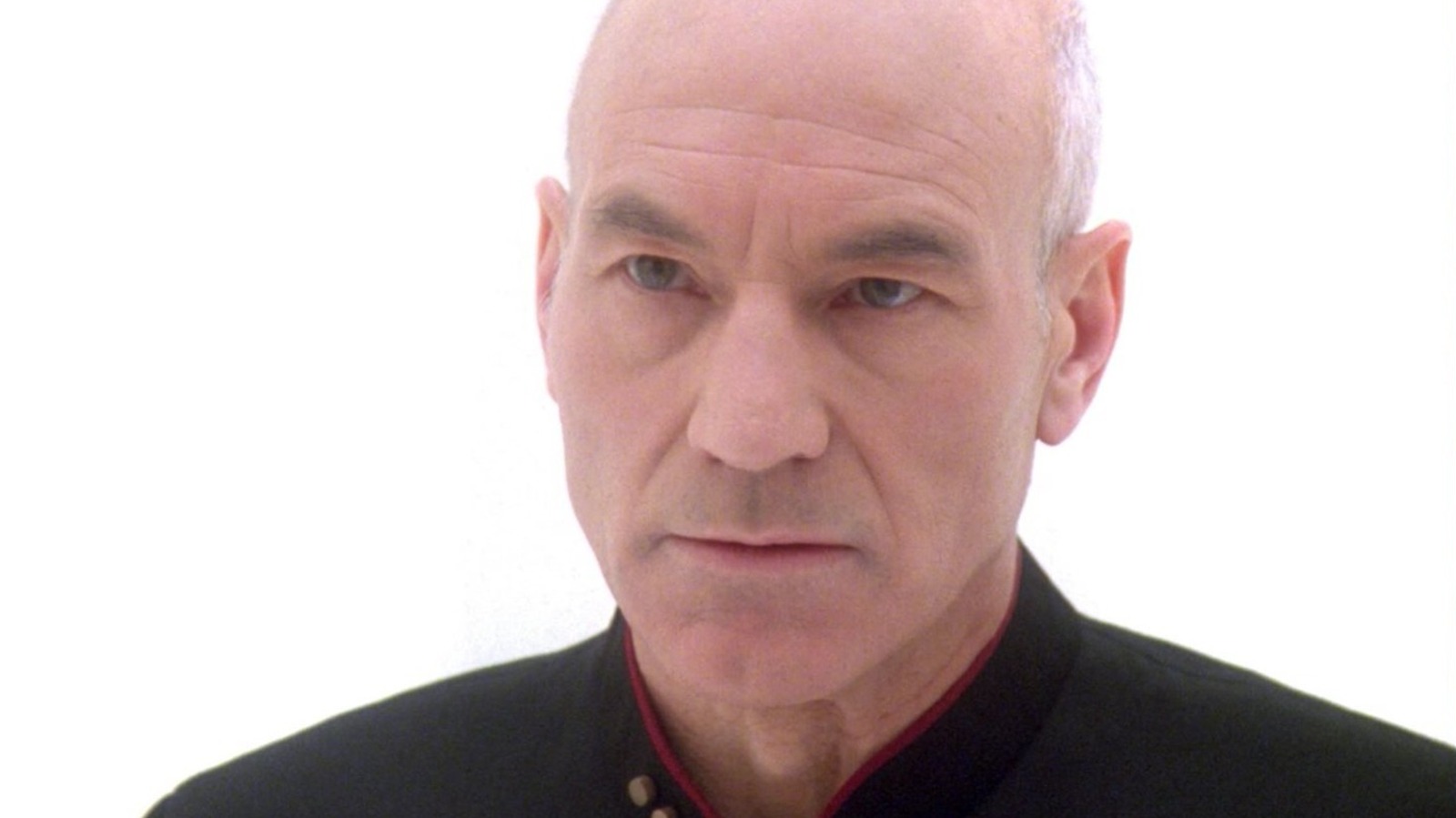
The White Void and the Trickster God
Fast forward to Season 6. During an away-team mission, Picard is struck in the chest by an energy weapon. Despite the valiant efforts of Dr. Beverly Crusher (Gates McFadden), his artificial heart fails completely, and he dies on the operating table.
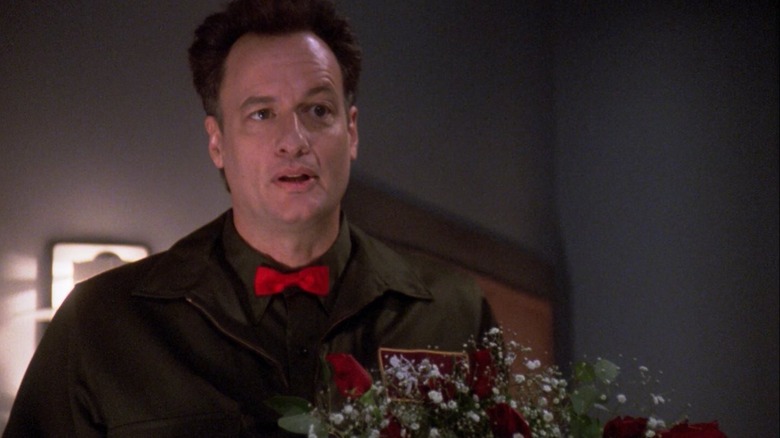
Instead of an eternity of peace, Picard awakens in an ethereal, silent, blindingly white space. Standing before him is Q (John de Lancie), the omnipotent, mischievous entity who has served as both tormentor and unexpected mentor to the crew of the USS Enterprise-D throughout the series. In typical fashion, Q offers a twist of cosmic irony: Picard is dead, but Q is willing to grant him a second chance. He can step backward through the veil of time, alter the events leading up to the fateful bar fight, and avoid the Nausicaan blade altogether.
Rewriting History: The Cautious Cadet
Transported back to his Academy days, Picard finds himself inside his 21-year-old body. While he perceives his reflection as an experienced, bald man in his 50s, to the rest of the universe, he appears as a young cadet. Armed with decades of wisdom, Picard quickly realizes how obnoxious and self-destructive his younger self truly was.
He attempts to steer clear of the reckless behavior that defined his early twenties. He counsels his close friends, Corey Zweller (Ned Vaughn) and Marta Batanides (J.C. Brandy)—both eager Academy grads itching to leave their mark—against their more volatile impulses. However, rather than appreciating his newfound wisdom, his friends view his lectures as nagging and tedious. Furthermore, Picard acts on a long-repressed romantic crush, engaging in a fling with Marta.
When the day of the infamous bar brawl arrives, Picard successfully prevents Corey from throwing the first punch. The fight is averted, the Nausicaan blade remains in its sheath, and Picard’s organic heart is spared. Satisfied that he has cheated death, Picard accepts Q’s invitation to return to the present day.
The Price of Safety: The Alternate Present
Upon returning to the 24th century, Picard expects to find his life as the celebrated captain of the flagship Federation vessel intact. Instead, reality has warped. He finds himself still aboard the USS Enterprise-D, but his rank and station have drastically plummeted. He is now a lowly science officer with the rank of Lieutenant, junior grade—a desk-bound, uninspired drone.
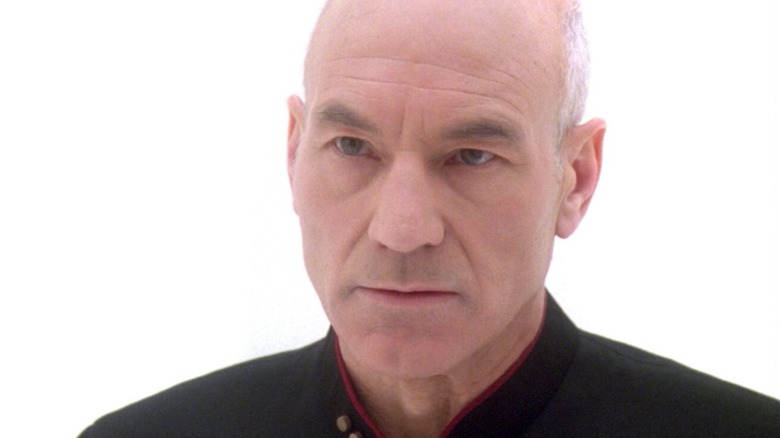
Horrified, Picard seeks out Commander William Riker (Jonathan Frakes) for answers. Riker delivers a sobering evaluation: Lieutenant Picard has always been a risk-averse, hyper-cautious officer who actively avoids standing out, lacks initiative, and settles consistently for the path of least resistance.
Realizing that stripping away his mistakes has also stripped away his ambition, passion, and capacity for greatness, Picard faces a devastating epiphany. He would rather have died on the operating table with a faulty heart than live a long, safe, and utterly unremarkable life.
With Q’s guidance—or perhaps waking from what may have been a near-death vision—Picard confronts his past not with shame, but with gratitude. He accepts the scar on his chest as the very map that led him to who he was meant to become.
Supporting Data and Production Insights
The success of "Tapestry" was no accident; it was the product of a creative team operating at the absolute height of its powers during TNG’s golden era.
- Critical Reception: "Tapestry" frequently dominates fan polls and critical retrospectives, regularly ranking alongside masterpieces like "The Inner Light" and "All Good Things…" as the finest hours of 1990s television science fiction.
- Thematic Resonance: The episode draws heavily on classic literature, specifically mirroring the existential themes of Charles Dickens’ A Christmas Carol and Akira Kurosawa’s cinematic masterpiece Ikiru ("To Live"), which explores the awakening of a dying man to the true value of existence.
- Character Dynamics: The episode provides vital depth to the relationship between Picard and Q. While Q is often played for comedic relief or cosmic antagonism, "Tapestry" highlights a surprisingly tender, albeit cynical, pedagogical streak in the entity, proving that Q genuinely cares about Picard’s psychological evolution.
- Production Craft: Patrick Stewart delivers one of his most emotionally vulnerable performances of the series. Despite playing a younger man, Stewart relies entirely on physical posture, facial expressions, and vocal modulation to convey the jarring dissonance of a seasoned captain trapped inside the impulsive psyche of his youth.
Official Perspectives and Creator Commentary
Reflecting on the episode years after its broadcast, the creative minds behind Star Trek: The Next Generation noted that "Tapestry" represented everything the franchise strived to achieve in its syndicated run.
Ronald D. Moore, who penned the teleplay, frequently cited "Tapestry" as one of his personal favorites among his contributions to the Star Trek franchise. In various interviews and DVD special features, Moore emphasized that the episode was designed to subvert traditional sci-fi tropes about time travel. Usually, in science fiction, changing the past is framed as a triumph or a perilous mission to fix a broken timeline. In "Tapestry," however, the mechanics of time travel serve purely as an internal, psychological vehicle for self-acceptance.
Sir Patrick Stewart has similarly praised the episode for anchoring Picard’s god-like status as a Starfleet captain back into the realm of flawed humanity. By showing that Picard was once a arrogant, hot-headed youth who made poor choices, the writers humanized a character who could easily have drifted into infallible archetype territory.
Furthermore, John de Lancie’s performance as Q was lauded by directors for grounding the god-like entity in a quiet, conversational gravity during the white-void sequences, proving that the antagonist was a multi-dimensional mirror for Picard’s soul rather than a mere cartoonish villain.
Broader Implications: Why "Tapestry" Resonates Beyond Science Fiction
The enduring brilliance of "Tapestry" extends far beyond the confines of science fiction fandom or the lore of the Star Trek universe. At its core, the episode tackles a universal psychological burden: human regret.
In modern society, individuals are constantly bombarded with messages about optimization, perfection, and the avoidance of failure. Social media algorithms, professional pressures, and personal anxieties often trick us into believing that every misstep is a fatal flaw that ruins our trajectory. "Tapestry" offers a vital, counter-cultural antidote to this anxiety.
By demonstrating that Captain Jean-Luc Picard—a man synonymous with wisdom, diplomacy, and moral authority—needed his youthful arrogance, his bar fights, and his near-death experiences to forge his character, the episode offers viewers permission to forgive their own past mistakes.
Mistakes are not dead ends; they are the raw materials of emotional maturity. As Picard ultimately learns, the dark threads of our misdeeds are just as necessary to the grand design of our lives as the golden threads of our triumphs. Without the shadows, the picture loses all its depth. Decades after its initial airing, "Tapestry" remains not just the best episode of Star Trek: The Next Generation, but a timeless philosophical guide on how to live an authentic, daring, and deeply human life.
