
Zach Cregger’s ‘Resident Evil’ Shatters Box Office Records with a Massive $108 Million Global Debut
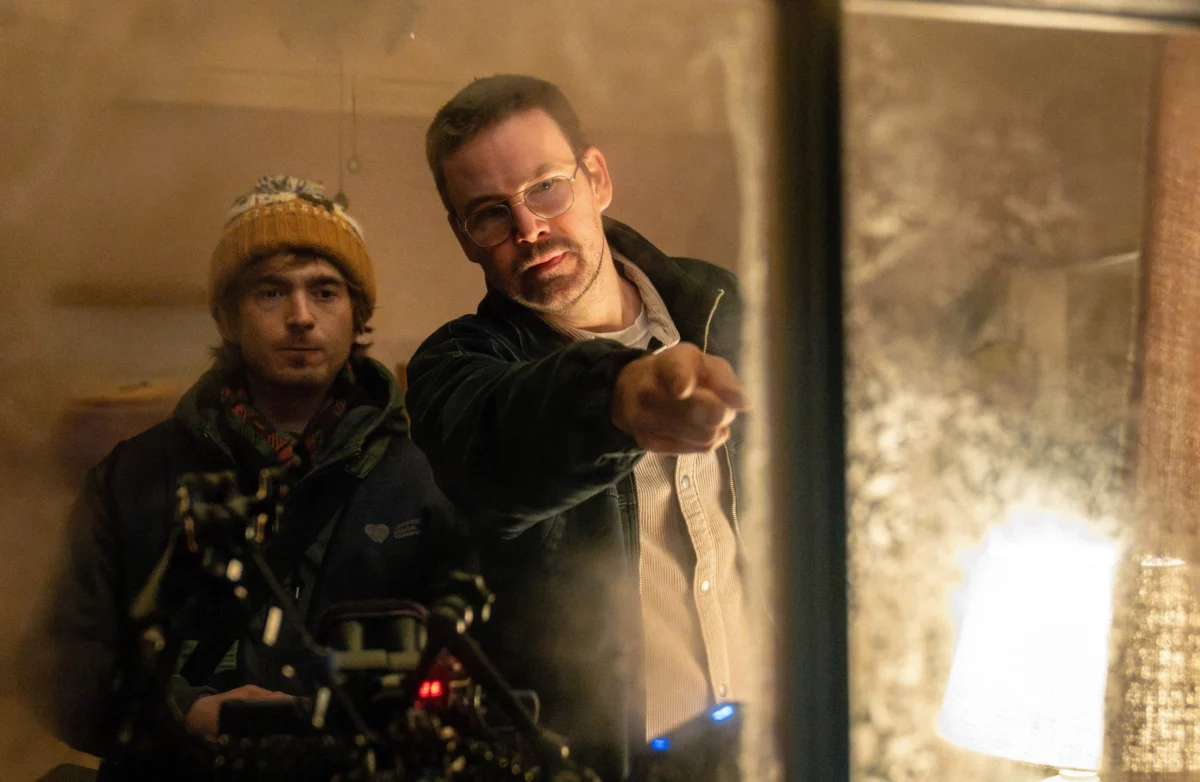
LOS ANGELES — In what is rapidly shaping up to be one of the most defining box office runs of the decade, writer-director Zach Cregger has officially cemented his status as a premier cinematic powerhouse. His bold, visionary reimagining of the iconic survival-horror franchise Resident Evil has grossed an astounding $108.3 million worldwide in its opening weekend alone.
To contextualize the sheer magnitude of this debut, the new film’s global opening weekend outpaced the entire theatrical lifetime gross of the original 2002 Resident Evil adaptation directed by Paul W.S. Anderson, which wrapped its global run just under $103 million unadjusted. While inflation naturally shifts the goalposts of historical comparisons, the sheer velocity of Cregger’s opening—comprising $60 million domestically and $48.3 million internationally across various global markets—signals a massive cultural and commercial triumph for Sony’s TriStar Pictures, Constantin Film, and Davis Film.
More than just a profitable venture for a studio that locked down the filmmaker before his meteoric rise, the film’s massive launch breathes new life into a dormant intellectual property, revitalizes the cinematic zombie genre, and positions Cregger as an elite player in the Hollywood hierarchy.
Main Facts: The Numbers Behind the Opening Weekend
The commercial performance of Resident Evil has exceeded even the most optimistic box office tracking.
- Global Opening Weekend: $108.3 million
- Domestic Box Office: $60 million
- International Box Office: $48.3 million
- Production Budget: Estimated at $75 million
- The Milestone: Surpassed the lifetime global theatrical gross of the 2002 franchise starter in just 72 hours.
Carrying a production budget of $75 million, the film is well on its way to achieving swift profitability, comfortably clearing the traditional box office thresholds required to offset marketing and distribution expenditures. For TriStar Pictures, Constantin Film, and Davis Film, the strategic gamble to hand the keys of a major multi-media franchise to an emerging horror auteur has paid off exponentially.
Chronology: The Rise of Zach Cregger and the Genesis of the Reboot
To understand how Resident Evil achieved these historic numbers, one must examine the meticulous trajectory of Zach Cregger’s career over the past several years, a timeline defined by calculated risks, breakout hits, and industry-shaking momentum.
The Indie Breakthrough: Barbarian (2022)
Before he was commanding major studio IP, Cregger shocked the industry with Barbarian, a tightly wound, structurally unpredictable indie horror film distributed by 20th Century Studios. Produced on a microscopic budget of just $4.5 million, the film became a word-of-mouth phenomenon, ultimately pulling in $46.2 million worldwide. It introduced audiences to Cregger’s knack for narrative misdirection, sharp social satire, and relentless tension.

Securing the Franchise
Sensing a rare talent before his market value skyrocketed, executives at TriStar Pictures, Constantin Film, and Davis Film moved swiftly. In the golden window after Barbarian established Cregger as a fresh voice in horror, but before his next massive project could alter his industry standing, they hired him to write and direct a ground-up reimagining of Resident Evil.
The Juggernaut: Weapons (2025/2026)
Before Resident Evil made it to the silver screen, Cregger dropped his sophomore studio feature, Weapons. If Barbarian was a calling card, Weapons was a seismic event. Operating on a $38 million budget, the film turned into an outright box office juggernaut, accumulating a staggering $270 million globally. The film’s critical and awards acclaim culminated in an Academy Award win for Amy Madigan, whose gonzo, unforgettable performance as "Aunt Gladys" captured the zeitgeist. The cultural footprint of Weapons was so vast that a prequel tracking the origins of Aunt Gladys was quickly rushed into development, a milestone highlighted at major fan conventions.
The Triumphant Arrival of Resident Evil (2026)
Arriving hot on the heels of his Oscar-winning success, Cregger’s Resident Evil hit theaters as one of the most anticipated horror events of the year, immediately shattering box office projections and validating the studio’s early faith in his unique directorial voice.
Supporting Data: Rebuilding a Franchise from the Ashes
The triumph of Cregger’s film is even more pronounced when viewed against the backdrop of the franchise’s recent history, which was sputtering just a few short years ago.
The live-action cinematic landscape for Capcom’s legendary video game property had reached a low ebb with the release of 2021’s Resident Evil: Welcome to Raccoon City. Marketed as an attempt to return the films closer to the survival-horror roots of the games, the reboot stumbled critically and commercially, grossing just $42 million against a modest $25 million production budget. Because exhibitors typically retain roughly half of all ticket sales, Welcome to Raccoon City failed to make a meaningful dent.
Compounding the fatigue, Netflix’s ambitious live-action Resident Evil television series debuted in July 2022 to mixed audience reception and was swiftly canceled after a single season. The intellectual property appeared creatively exhausted, prompting industry analysts to wonder if the cinematic well had officially run dry.
Enter Zach Cregger. By injecting auteur-driven style, psychological terror, and pristine technical execution into a property plagued by derivative action-sequel fatigue, the new film proved that audiences were not tired of Resident Evil—they were simply tired of uninspired adaptations.

Official Responses and Industry Standing
Hollywood has taken swift notice of Cregger’s trajectory. In Vulture’s recent, highly scrutinized power rankings of the industry’s most influential filmmakers, Cregger landed at number 17, buoyed by the dual successes of Barbarian and Weapons. Following the historic global opening of Resident Evil, industry insiders note that his ranking—and more importantly, his quote and backend leverage—will climb even higher.
Studio executives and talent agents alike are marveling at his rare commercial clout. In an era where intellectual property usually dictates box office returns, Cregger has evolved into a rare "name-above-the-title" director—a filmmaker whose distinct artistic signature can single-handedly drive general audiences to the multiplex.
As one prominent distribution executive remarked off the record:
"Zach has reached that stratospheric tier of filmmaking where he has total creative autonomy. If he walked into a board meeting tomorrow and pitched a three-hour, black-and-white art-house drama starring Austin Abrams as a corporate accountant during tax season, a major studio would wire him the money by sunset."
Implications: What This Means for Hollywood and the Future of Horror
The success of Resident Evil carries profound implications for the film industry at large:
- The Rise of Auteur-Driven IP: Studios are learning a valuable lesson from Cregger’s success: hiring visionary independent filmmakers to handle established intellectual property yields far better dividends than relying on factory-line, committee-driven studio product. Expect a renewed land-grab for indie horror and genre directors.
- Franchise Continuation: A sequel to Cregger’s Resident Evil is no longer just a possibility; it is a commercial inevitability. Sony and its co-financiers will undoubtedly look to lock down the director for future installments, though his packed development slate—including the Weapons prequel centered on Aunt Gladys—may require some creative scheduling.
- The Health of Original vs. Adapted Horror: Cregger has proven he can conquer both domains. Having delivered a massive original hit (Weapons) and a record-breaking franchise reboot (Resident Evil) back-to-back, he stands alongside Jordan Peele and Ari Aster as defining architects of modern American horror.
Ultimately, Resident Evil has transformed from a flagging franchise into a crown jewel once more, all thanks to a director who treats popcorn entertainment with the rigor, ambition, and cinematic flair of high art.
