
Beyond the Swagger: Re-Examining Mick Jagger’s Cinematic Footprint at 80
Main Facts: The Ageless Icon and His Silver Screen Ambitions
As Mick Jagger crossed the monumental threshold of his 80th birthday, the world celebrated him as he has always been perceived: an immortal force of rock ‘n’ roll, a masterclass in perpetual motion, and the quintessential frontman of the Rolling Stones. His legendary contributions to music—defined by his electrifying vocals, gravity-defying stage choreography, and timeless songwriting—have long been etched into the cultural canon.
Yet, as cultural historians and film buffs look back at his illustrious career, a fascinating yet historically under-appreciated facet of his artistry demands attention: his work as an actor.
While contemporaries and rock peers often dipped into cinema as a superficial extension of their pop-star branding, Jagger approached acting with a distinct, if erratic, sense of artistic risk. Rather than playing safe, conventional heroes, he deliberately subverted his public persona, diving headfirst into psychological dramas, historical westerns, and avant-garde projects. Though he never secured the universally lauded, career-defining cinematic masterpiece that peers like David Bowie found in The Man Who Fell to Earth or Cher in Moonstruck, Jagger’s cinematic footprint remains a compelling study in star power, countercultural rebellion, and cinematic near-misses.
Chronology: A Timeline of Rebellion on Film
1970: The Double-Feature Baptism of Fire
Jagger’s cinematic journey commenced in earnest in 1970 with the simultaneous release of two high-risk, radically different feature films. The first to hit theaters was Ned Kelly, directed by Tony Richardson, in which the British rocker donned the heavy armor of the legendary 1870s Australian outlaw. Though the project boasted prestige direction and a magnetic subject, the execution faltered.
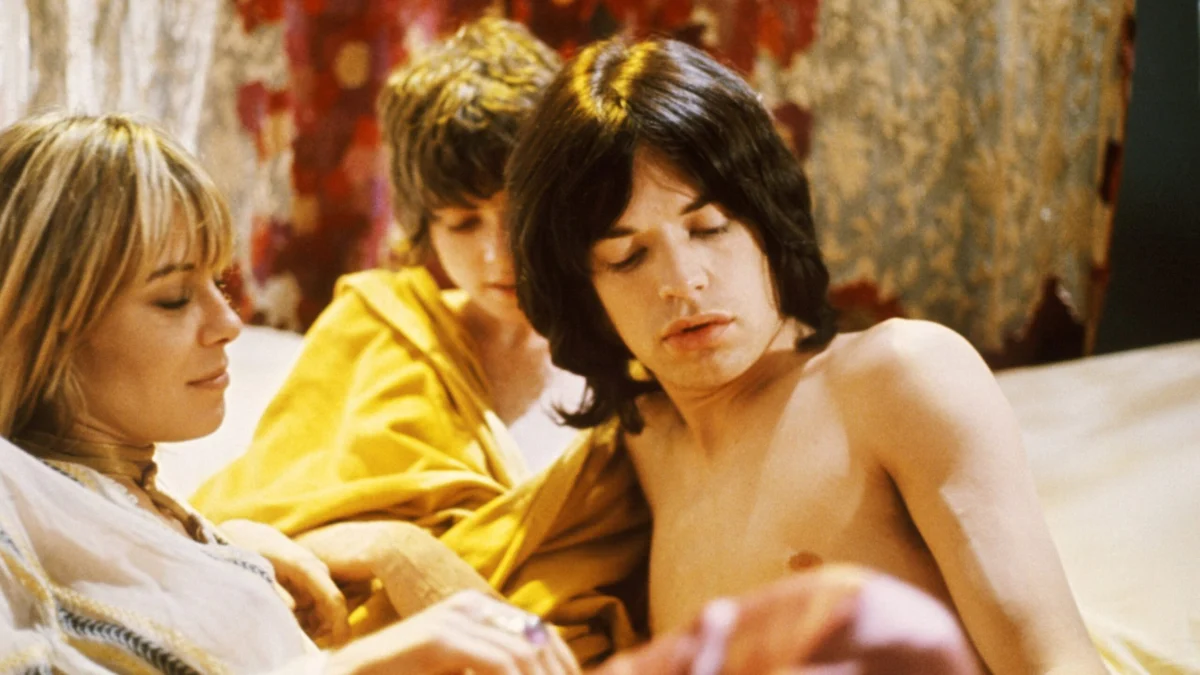
Months later, Performance arrived, marking the breathtaking and disorienting directorial debut of Donald Cammell and Nicolas Roeg. In it, Jagger played Turner, a reclusive, burned-out, and decadent rock star who has retreated from the world—a role that deliciously blurred the lines between fiction and his own reality.
The Shelving and Resurrection of Performance
Long before it mesmerized cult audiences, Performance was trapped in studio purgatory. In October 1969, Variety reported that Warner Bros. executives had kept the film on the shelf since 1968, famously dismissing it as "unintelligible."
However, a changing of the guard at the studio—brought on by incoming executives like the esteemed John Calley—shifted the tide. Studio insiders suddenly whispered that they viewed the film as one of the hottest assets in their catalog.
When Variety finally reviewed the picture in August 1970, critic A.D. Murphy echoed the skepticism of the previous studio regime, panning it as a "substandard crime meller" (melodrama) meant strictly "for the psychedelic set," while characterizing the performances as "flat."
Despite the tepid commercial reception upon release, Performance grew into a monumental cult classic. Audiences fell under the spell of Roeg’s elliptical, visually striking cinematography—a harbinger of his later directorial triumphs. Furthermore, Jagger’s performance captivated viewers. Oozing androgynous beauty and raw magnetism, he also delivered the hypnotic track "Memo From Turner," effectively pioneering the modern music video format.
The Critical Reception of Ned Kelly
Though filmed after Performance, Ned Kelly premiered two months earlier. Reviewing the western for Variety, critics noted the undeniable dichotomy of Jagger’s screen presence: "No one who has ever seen Jagger in action playing to a live audience can question that he is a natural actor and performer with a wide range of expressions and postures at his instinctive command."
However, the reviewer found Jagger "curiously static" within the parameters of the narrative, largely placing the blame on Richardson’s sluggish direction.
Gimme Shelter and the Reality of Rock Tragedy
Jagger’s third cinematic offering of 1970 provided a jarring, unvarnished look at reality rather than fiction. The Maysles brothers’ documentary Gimme Shelter chronicled the Rolling Stones’ turbulent 1969 U.S. tour, culminating in the tragic events at the Altamont Free Concert, where four people died. The film captured Jagger not as a character in a script, but as a real-time corporate and artistic ringleader caught in the unraveling chaos of the counterculture movement.
The Later Years: Selective Cameos and Mature Roles
Rather than capitalizing on Hollywood momentum, Jagger maintained a highly selective approach to acting over the subsequent decades. He chose roles sparingly, opting for character parts that challenged his image:
- 2001: He portrayed a jaded, worldly business executive running an underground escort agency in George Hickenlooper’s The Man From Elysian Fields.
- 2015: He stepped into the role of a drag queen in the Holocaust drama Bent.
- 2019: He appeared as a manipulative, wealthy art dealer in Giuseppe Capotondi’s neo-noir thriller The Burnt Orange Heresy.
Supporting Data: Variety’s 1970 British Talent Prospectus
To understand how the film industry perceived Mick Jagger at the dawn of his acting career, one must look back at a May 1970 Variety roundup. Published just prior to the theatrical rollouts of both Ned Kelly and Performance, the trade publication evaluated a fresh crop of emerging British acting talent.
The list featured actors who would go on to shape global cinema:
- Anthony Hopkins: Hailed as a "strong, good-looking actor in his 30s with big potential."
- Ian McKellen: Noted for his formidable theatrical training.
- Dudley Moore, Helen Mirren, and Charlotte Rampling: All singled out for their distinct screen magnetism.
Nestled among these luminaries was Mick Jagger. Assessing his cinematic viability before audiences had even seen his feature work, Variety astutely predicted:
"His film work is not yet seen but may well surprise those who play him down as just a wacky warbler."
While few cultural historians would ever genuinely characterize Jagger as "wacky," his off-screen life during this era generated far more headlines than his scripts. From his high-profile relationships, one marriage, and eventual family of eight children across five women, to tabloid tales of Dionysian excess, Jagger embodied the dangerous allure of the 1960s.
While the Beatles initially marketed themselves as clean-cut lads, the Rolling Stones embraced the mantle of rock’s ultimate bad boys. Jagger stood at the epicenter of that scandal, keeping fans in a perpetual state of affectionate shock.
Official Responses and Industry Near-Misses
Jagger’s cinematic journey is equally defined by the monumental projects that almost were. Throughout the 1970s and 1980s, visionary directors sought out his unique brand of hyper-charismatic energy for groundbreaking films that ultimately disintegrated or required him to walk away.
Two high-profile near-misses stand out in film history:
- Alejandro Jodorowsky’s Dune: Before David Lynch tackled Frank Herbert’s sci-fi epic, surrealist auteur Jodorowsky attempted to mount a legendary, star-studded adaptation. Jagger was officially signed to the project alongside Orson Welles, Salvador Dalí, and Pink Floyd. When the financing collapsed, the ambitious cinematic fever dream vanished into the ether.
- Werner Herzog’s Fitzcarraldo (1982): Jagger was initially cast alongside Jason Robards in Herzog’s grueling jungle epic about a man attempting to build an opera house in the Amazon. However, severe production delays—including illnesses and logistical nightmares—pushed the shooting schedule back by months. Bound by prior touring and recording commitments with the Rolling Stones, Jagger was forced to drop out of the production entirely. Herzog subsequently scrapped Jagger’s character, rewriting the script to accommodate Klaus Kinski.
Implications: The Legacy of a Part-Time Actor
How should film history evaluate Mick Jagger’s legacy on the silver screen?
In the pantheon of rock stars turned actors, artists have generally fallen into two categories. There are those who forged extensive, critically acclaimed cinematic careers—such as Frank Sinatra (who won an Oscar for From Here to Eternity), Doris Day, and later crossover success stories like Will Smith and Lady Gaga. On the other end of the spectrum are musicians who merely dabbled out of vanity or curiosity, yielding mixed results (ranging from Björk in Dancer in the Dark to Eminem in 8 Mile and Joan Jett).
Mick Jagger occupies a unique space between these worlds. He never chased the validation of a full-time Hollywood career, preferring instead to anchor his identity to the unrelenting engine of the Rolling Stones. Consequently, he missed out on that singular, career-defining crossover role that might have cemented him as a heavyweight dramatic actor in the public consciousness.
Yet, to dismiss his film work as a mere footnote would be a mistake. In Performance, he captured the terrifying, psychedelic narcissism of late-60s counterculture with an authenticity that no classically trained actor could replicate. In his later character turns, he leaned into his aging visage with self-awareness and understated menace.
As Jagger navigates his ninth decade, the door remains wide open. While music remains his eternal vocation, his cinematic experiments prove that he was never just a singer performing on a stage. He was, and remains, an endlessly fascinating cultural artifact—one who proved that even the greatest rock icon in the world could occasionally step out of the spotlight and into someone else’s shoes.
