
Breaking the Industry Mold: How an 186-Page Amateur Screenplay Smashed Its Way Into the Scriptshadow Top 25
In the hyper-accelerated ecosystem of modern Hollywood, screenwriting is governed by rigid, unyielding parameters. The golden rule of the contemporary spec market is a lean 110 pages—anything longer is frequently met with an immediate, knee-jerk rejection by executive readers who view high page counts not as an ambitious canvas, but as a red flag signaling an inexperienced writer.
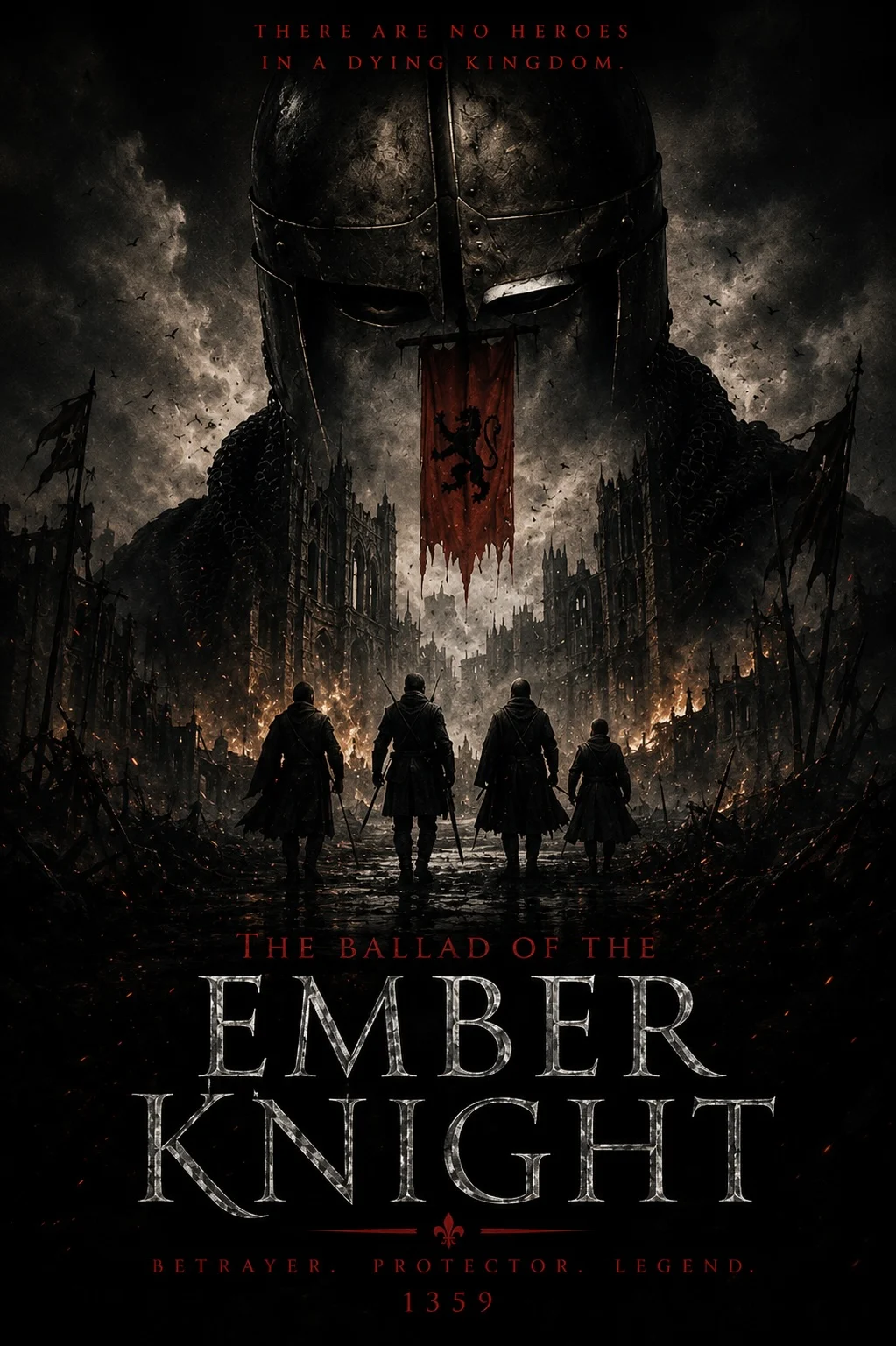
Enter The Ballad of the Ember Knight, an epic period-adventure written by the sibling duo Kieran and Brennan O’Dea. Clocking in at a staggering 186 pages, this sweeping historical drama has accomplished the seemingly impossible: defying industry conventions, captivating veteran script analysts, and punching its way straight into the prestigious Scriptshadow Top 25 list.
Chronology of an Unlikely Success Story
The journey of The Ballad of the Ember Knight from a daunting digital manuscript to a celebrated critical darling is a masterclass in grassroots industry persistence.
- The Query Phase: Like countless aspiring writers, Kieran and Brennan O’Dea initially struggled to gain traction for their monumental script. Sending a 186-page period piece to modern executives—whose attention spans have been thoroughly fractured by digital media—proved to be an uphill battle.
- The Consultation Hail Mary: Facing a brick wall of industry apathy, the O’Dea brothers submitted their script to Scriptshadow for a paid professional consultation. Because the platform charges incrementally for every page over 130, the sheer bulk of the manuscript presented an immediate financial and mental hurdle.
- The Critical Read: Upon opening the document, reviewers braced themselves for an exhausting exercise in world-building exposition, convoluted timelines, and bloated subplots. Instead, they discovered a tightly paced, emotionally resonant narrative that fundamentally challenged their preconceptions about long-form storytelling.
- The Top 25 Induction: Following an overwhelmingly positive internal evaluation, the reviewer asked the writers for permission to feature the script publicly. The resulting critique catapulted the amateur project past countless professional screenplays into the elite Tier of the Top 25.
Supporting Data and Structural Anatomy
Set against the bleak, ash-choked backdrop of 14th-century France during the Hundred Years’ War, The Ballad of the Ember Knight navigates a landscape where societal collapse is total. The narrative’s core strength lies not merely in its historical scope, but in its meticulous adherence to classical screenwriting architecture mixed with subversive character dynamics.
The Premise and Key Players
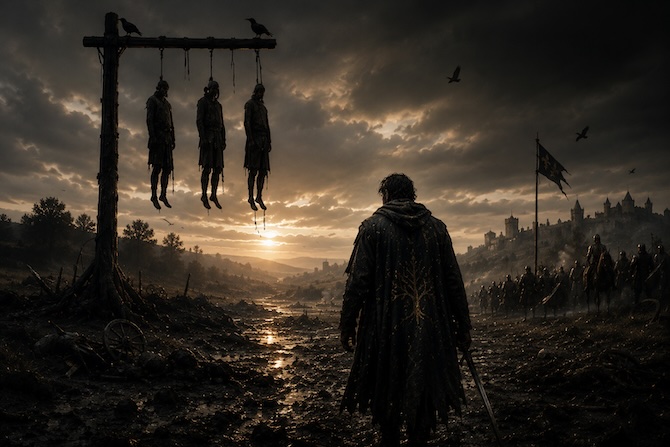
- The Era: 1359 France, a war-torn wasteland overrun by corrupt warlords, opportunistic mercenaries, and encroaching English forces. Hanging bodies function as common street furniture; institutional safety is entirely nonexistent.
- The Antihero: "The Prisoner"—a filthy, broken wanderer attempting to flee his past. He is later revealed to be Roland Chandos, the legendary Ember Knight and the king’s most trusted confidant, who is rumored to have massacred the royal family.
- The Inciting Incident: While bunking at a local inn, Roland overhears a ruthless royal, Sir Jean Devar, inform an inn assistant named Marie of his intention to assault her later that night. Driven by a suppressed moral code, Roland intervenes, beats Devar to death, and inadvertently alters the geopolitical fate of France.
- The Supporting Cast: Thomas, Devar’s young squire who pledges allegiance to Roland; Prince Charles, the sole surviving royal heir traveling undercover as a young monk; Bernard, the prince’s loyal protector; and an eccentric hermit who guides them through the hazardous backroads toward Avignon.
The Mechanics of Engagement
The script avoids the common pitfall of long-form writing—sagging second acts—by introducing relentless, cascading conflict. When Roland steals the dead royal’s uniform to bypass military checkpoints, his tactical advantage immediately mutates into a liability. Wearing the vestments of a universally hated rapist means Roland is constantly recognized, hunted, and forced into high-stakes physical confrontations.
Official Analysis and Craft Insights
In professional script coverage, industry veterans frequently debate the limits of exposition versus dramatic pacing. The Ballad of the Ember Knight offers a textbook study in how to handle pivotal dramatic sequences.
According to industry evaluations, amateur writers are frequently taught to rush through dramatic beats to keep the narrative moving forward. However, the O’Dea brothers successfully utilize the opposite technique: they milk their high-tension sequences for maximum emotional texture.
"When you have a really juicy scene, you want to get the most out of it possible," notes professional analysis of the script. "The O’Dea brothers know that they have something here. So they let it sit. They let it build. They let us worry… That’s exactly what you want to do if you’ve got something good."
Furthermore, the script achieves what few modern screenplays manage: it constructs an authentic, adult-oriented "hero’s journey." While modern cinema has largely abandoned sprawling, geographically vast adventure narratives in favor of static, franchise-locked universes (such as the Matrix, Harry Potter, and Avatar franchises), The Ballad of the Ember Knight recaptures the primal, wandering momentum that made foundational epics like Star Wars and The Lord of the Rings iconic.
Implications for the Spec Market and Streaming Future
The ascension of The Ballad of the Ember Knight sends powerful shockwaves through the contemporary development landscape, carrying significant implications for both writers and studios.
1. The Death of the Rigid Page-Count Dogma?
While traditional Hollywood theatrical studios remain terrified of long runtimes for unproven intellectual property, the success of this script highlights a growing hunger for depth over brevity. However, due to its unconventional length, industry insiders project that the project’s most natural home is the streaming ecosystem—specifically a platform like Netflix. Unfettered by traditional theatrical window constraints and flush with capital, streamers are uniquely positioned to adapt sprawling historical epics that traditional studios deem too risky.
2. The Power of "Ride or Die" Characterization
The script provides a crucial lesson in protagonist introduction. Writers are often advised to make their heroes likable in scene one; The Ballad of the Ember Knight proves that true engagement requires putting the hero in a position of profound sacrifice. By having Roland risk his entire escape plan, his freedom, and potentially his life to save Marie—knowing full well that murdering a royal will unleash a nationwide manhunt—the writers force the audience into a state of absolute allegiance.
3. Raising the Bar for Amateur Writers
For the broader community of aspiring screenwriters, this milestone serves as both a cautionary tale and an inspiring beacon. Crafting an 186-page period piece is statistically a fool’s errand in today’s market. Yet, The Ballad of the Ember Knight proves that if the foundational elements—compelling stakes, flawless character motivations, relentless conflict, and emotional resonance—are executed with supreme competence, the gatekeepers’ arbitrary rules suddenly cease to matter.
