
The Audacity of the Absurd: A Deep Dive into Giselle Bonilla’s ‘The Musical’ (2026)
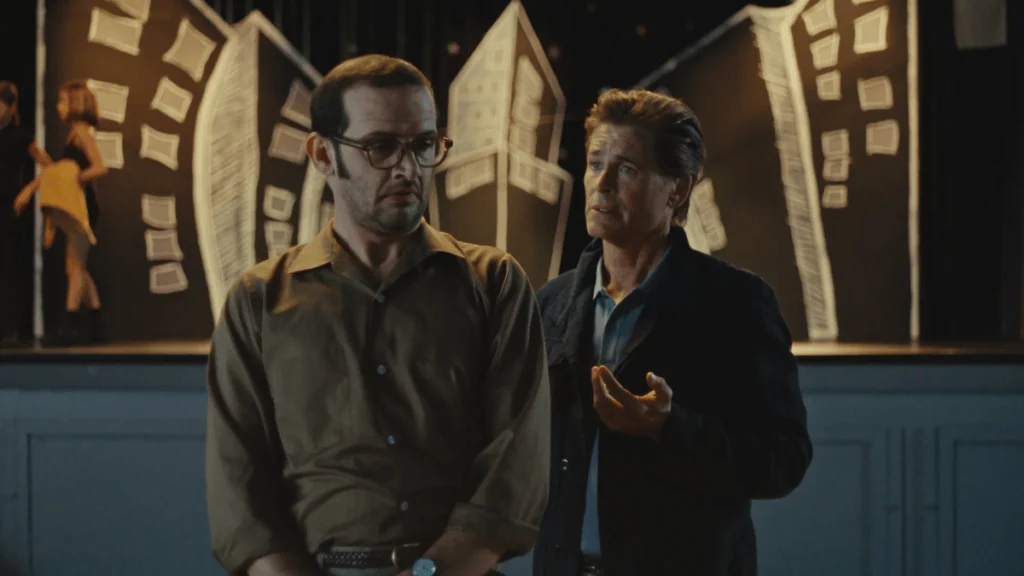
In the landscape of 2026 cinema, few films have managed to provoke as much visceral discomfort and intellectual curiosity as The Musical. Directed by Giselle Bonilla and scripted by Alexander Heller, the film occupies a precarious space between dark, biting satire and psychological drama. It is a work that dares to challenge audience sensibilities, testing the boundaries of "bad taste" while simultaneously offering a cynical, yet compelling, commentary on the intersection of institutional vanity, childhood innocence, and the manipulative power of authority figures.
With a cast led by the mercurial Will Brill and the ever-charismatic Rob Lowe, The Musical has drawn immediate, if somewhat uneasy, comparisons to Alexander Payne’s 1999 classic Election. Like its predecessor, Bonilla’s film serves as a harsh dissection of the educational system, though it ventures into far more transgressive territory, choosing to explore the grotesque rather than the merely petty.
The Premise: A High-Stakes Subversion
At the heart of the film is Doug, played with a chilling, frantic energy by Will Brill. Doug is a middle-aged, deeply disgruntled middle school teacher who views his position not as a vocation, but as a consolation prize for a career in the arts that never materialized. His plan is as elaborate as it is deranged: he orchestrates a two-tier musical production. To the outside world—parents, faculty, and the press—his students are rehearsing a standard, heartwarming production of West Side Story.
However, in the shadows, Doug is molding these same students into a secret, twisted performance art piece that reinterprets the September 11th terrorist attacks. The goal is to swap the innocuous West Side Story for his dark, conspiratorial opus at the eleventh hour, forcing the unsuspecting community to witness a spectacle that centers on a student portraying Rudy Giuliani and peddling bizarre, revisionist historical narratives.
Chronology of a Breakdown: From Rehearsal to Reckoning
The narrative arc of The Musical is a slow-motion car crash that demands the viewer’s attention. Early scenes establish the mundane, bureaucratic environment of the school, where Rob Lowe’s character, Principal Brady, presides over the chaos with an oblivious, ego-driven smile. Brady, a man more concerned with securing a "Blue Ribbon" award for his institution than the actual welfare of his students, provides the perfect foil for Doug’s machinations.
As the rehearsal process progresses, the film shifts from standard school drama into psychological thriller. We watch as the children, despite their initial confusion, are slowly indoctrinated into Doug’s vision. They are manipulated through a combination of flattery, artistic pretension, and the desire to please a mentor figure.
The middle act of the film focuses on the friction between the two competing productions. Principal Brady’s involvement provides a necessary comic relief; he is so desperate for acclaim that he frequently praises the students’ progress, completely misinterpreting their rehearsal behavior as artistic dedication to West Side Story. The tension reaches a boiling point when Abigail, a fellow teacher and former flame of Doug’s (played by Gillian Jacobs), begins to suspect that something is deeply amiss. Her presence introduces a layer of interpersonal history that underscores Doug’s instability, as his professional failures are inextricably linked to his personal resentments.
The climax, which sees the secret play come to fruition, is a masterclass in tonal dissonance. By utilizing Enigma’s "Return to Innocence" as a backdrop, Bonilla juxtaposes the haunting, atmospheric song with the jarring, amateurish, and offensive snippets of the 9/11 production. It is here that the audience is forced to confront the core theme: how easily children can be led into the darkness when their innate desire for approval is exploited.
Supporting Data: Character Dynamics and Artistic Choices
The strength of The Musical lies in its casting, which prevents the material from collapsing under its own weight.
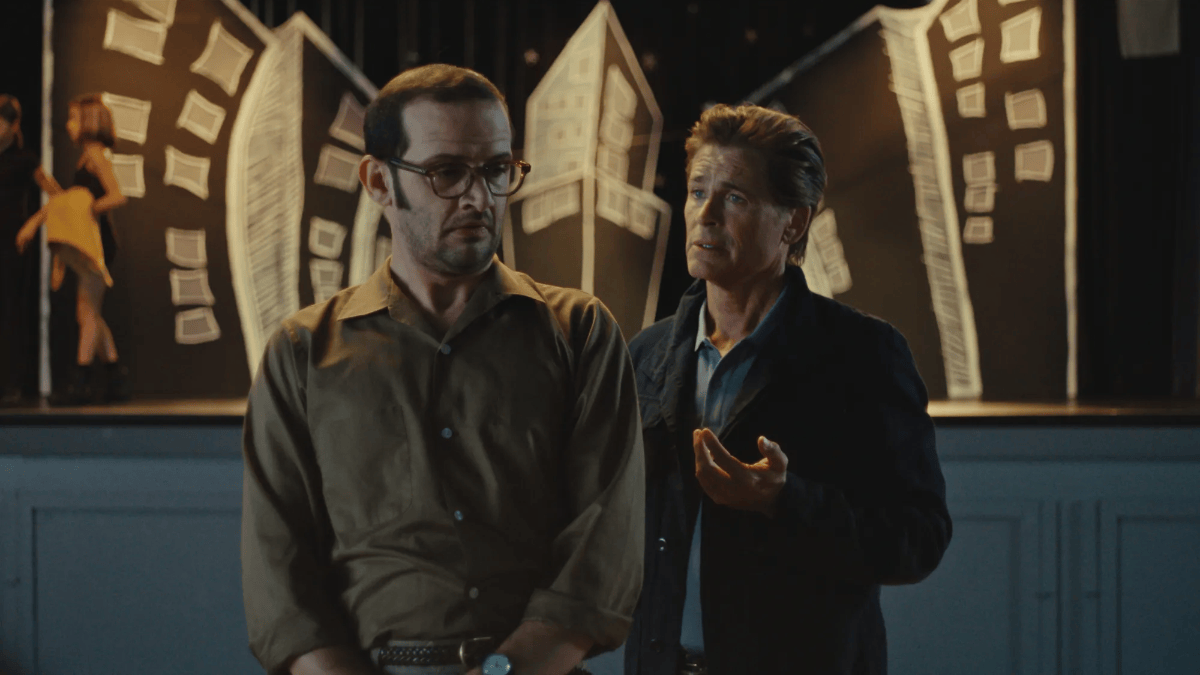
- Will Brill (Doug): Brill delivers a performance that is nothing short of harrowing. He avoids the temptation to play Doug as a moustache-twirling villain, instead opting for a portrayal of a man who genuinely believes he is a misunderstood genius. His descent into open hostility toward the faculty in the final act serves as the film’s most aggressive sequence, leaving the viewer to wonder why he was ever allowed to remain in the classroom.
- Rob Lowe (Principal Brady): Lowe’s turn as the narcissistic administrator is a career highlight. He manages to be both infuriatingly self-centered and genuinely funny, particularly when he takes credit for the "creative direction" of a production he fundamentally does not understand.
- Gillian Jacobs (Abigail): Though her screen time is limited, Jacobs provides the necessary moral anchor. Her character’s evolution from an ex-partner to an adversary highlights the isolationist nature of Doug’s mental state.
Technically, the film’s use of sound and editing is key to its success. The "9/11 play" segments are intentionally poorly shot and staged, reflecting the distorted lens through which Doug sees the world. This stylistic choice creates a sharp contrast with the more traditional, polished look of the "public" school environment, emphasizing the duality of the plot.
Official Responses and Public Reception
Since its debut, The Musical has polarized audiences and critics alike. The "9/11 play" sequences, in particular, have been a lightning rod for controversy. Some critics have lauded the film as a courageous, risk-taking exploration of how political trauma is commodified and distorted by those in power. Others, however, have questioned whether the subject matter is handled with sufficient sensitivity, or if the film’s "edginess" is a stylistic crutch for a lack of genuine depth.
The film’s refusal to provide a tidy resolution—or to see Doug receive a traditional, punitive "comeuppance"—has also sparked debate. By leaving the protagonist’s fate somewhat ambiguous, Bonilla challenges the audience to consider the systemic failures that allowed such a person to flourish in an educational setting in the first place.
The Broader Implications: Teaching and Manipulation
Beyond the shock value, The Musical functions as a cynical critique of the adage "those who can, do; those who can’t, teach." The film argues that for individuals like Doug, teaching is not a service, but a power trip—a way to exert control over an impressionable demographic when they are denied validation in the wider world.
The film poses a haunting question: how much of what our children learn is filtered through the unprocessed trauma and unfulfilled ambitions of the adults in charge? By showing the children performing these bizarre, politically charged scenes with genuine sincerity, Bonilla illustrates the tragedy of manipulation. The students are not necessarily "in on the joke"; they are merely vessels for their teacher’s neuroses, performing his twisted reality as if it were a standard school play.
Conclusion: A Curious, Uncomfortable Achievement
The Musical is not a film for the faint of heart. It is a work that deliberately pushes buttons and lingers in the uncomfortable spaces of the human psyche. While it may falter in its pacing during the second act, and while the premise requires a significant "leap of faith" from the viewer, it remains a vital piece of 2026 cinema.
It is a film that demands to be discussed, debated, and dissected. In an era of increasingly sanitized media, Giselle Bonilla’s willingness to take such massive, potentially alienating risks is worthy of note. Whether one views it as a brilliant satire or an over-the-top exercise in bad taste, one thing is certain: The Musical will not be easily forgotten. It stands as a testament to the idea that sometimes, the most effective way to hold a mirror up to society is to make that mirror as distorted and uncomfortable as possible.
Rating: 6/10
