
Disney’s High-Stakes Gamble: How ‘Infinity Vision’ Aims to Redefine the Blockbuster Viewing Experience
Main Facts
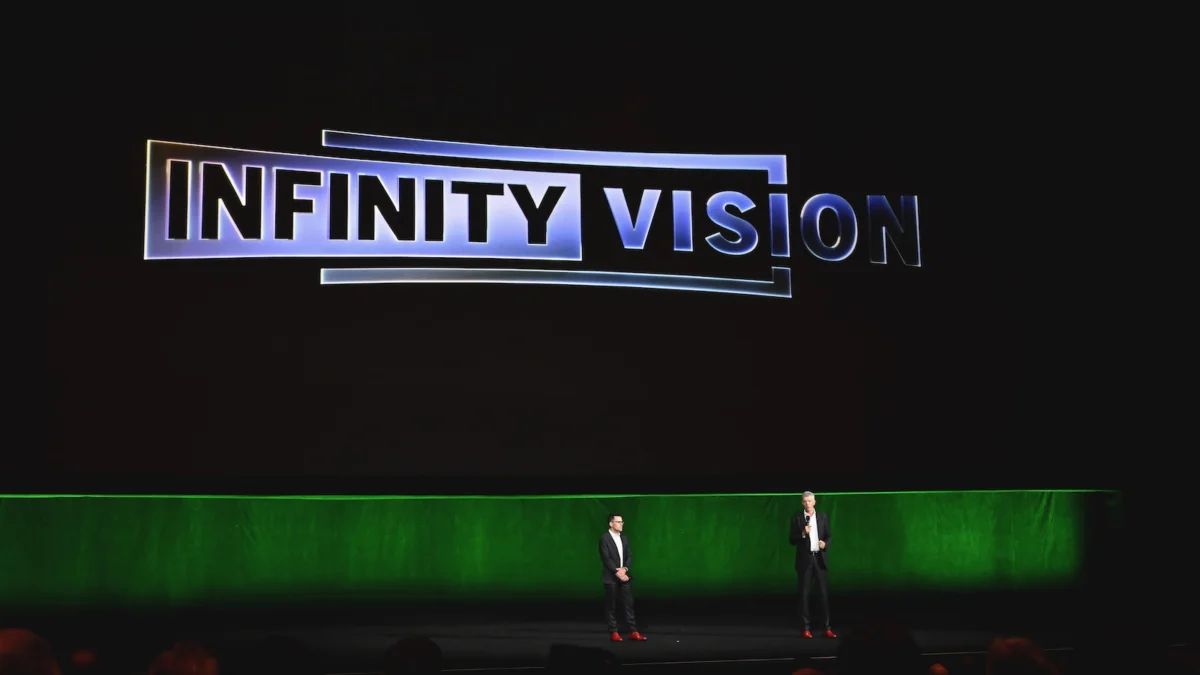
The domestic box office recently crowned an unexpected champion: a seven-year-old film. Walt Disney Studios’ re-release of Avengers: Endgame: Encore captured the No. 1 spot in America over the weekend, pulling in a robust $26 million. However, the figure that has industry insiders and Disney executives genuinely energized is $13.5 million—the amount generated exclusively on screens bearing Disney’s new proprietary branding: Infinity Vision.
Infinity Vision is Disney’s newly minted designation for theater screens that meet its rigorous, self-certified standards for audio and visual playback. Crucially, it is not a distinct technical projection format, nor does it inherently qualify as a traditional Premium Large Format (PLF) screen, and it is certainly not IMAX.
The strategic impetus behind Infinity Vision is born out of necessity. When Avengers: Doomsday premieres on December 18, it will be locked out of IMAX screens. Those premium locations have already been claimed by Warner Bros. and Denis Villeneuve’s Dune: Part Three, which was shot natively on IMAX cameras, securing premier placement for the return to Arrakis.
Faced with a high-profile scheduling conflict that sidelined its premier superhero franchise from the most lucrative exhibition format on the market, Disney engineered Infinity Vision. By test-driving the branding with Avengers: Endgame: Encore, the studio hoped to convince moviegoers that an Infinity Vision screening is a distinct, high-quality event worth seeking out—and crucially, that it represents a premier alternative to IMAX.
Chronology: The Road to Infinity Vision
The genesis and rapid rollout of Infinity Vision reflect a calculated, high-speed corporate pivot designed to protect Disney’s box office dominance during a congested holiday release window.
- April 2026 (CinemaCon): Disney and other major studios outline their upcoming slates at CinemaCon, where early rumblings of the upcoming theater exhibition logjam begin to take shape. Industry analysts note that Disney’s late-year crown jewel, Avengers: Doomsday, lacks guaranteed access to premium PLF real estate.
- Late Summer 2026: Disney officially introduces the "Infinity Vision" brand to exhibitors and consumers. The studio builds a dedicated consumer-facing website featuring frequently asked questions, marketing banners for ticketing platforms, and establishes protocols for theater screen certification.
- Mid-Fall 2026: Pre-sales for Avengers: Doomsday shatter expectations, bringing in an unprecedented $50 million early on. Disney structures ticket sales strategically, releasing Infinity Vision-designated seats ahead of general ticket sales to capture core fandom engagement.
- The Recent Weekend: Disney deploys Avengers: Endgame: Encore across more than 3,000 screens nationwide as a live-fire stress test for the branding. More than 1,300 of those participating screens are officially certified under the Infinity Vision standard. The re-release pulls in $26 million total, with nearly 52 percent of that gross originating from Infinity Vision-certified hardware.
Supporting Data: Breaking Down the Numbers
The metrics coming out of the Avengers: Endgame: Encore weekend provide Disney with the empirical validation it desperately sought. Out of the 3,000+ total screens playing the re-release, approximately 1,300—or roughly 43 percent—bore the Infinity Vision certification.
Despite making up less than half of the total footprint, those specific screens accounted for $13.5 million, translating to 52 percent of the film’s total domestic box office earnings. For studio accountants, this positive yield-to-screen ratio signals that consumers are actively noticing the branding on ticketing platforms and choosing those specific auditoriums.
The data for Avengers: Doomsday is even more staggering. According to figures previously reported by IndieWire, a massive chunk of the film’s $50 million in advance pre-sales has been driven by consumers snapping up Infinity Vision inventory. Currently, Infinity Vision screens account for a commanding 73 percent of all Avengers: Doomsday pre-sales.

Furthermore, analysts point out that while Avengers: Endgame: Encore had access to a small handful of IMAX screens that Doomsday will ultimately be barred from using, the sheer volume of participating Infinity Vision screens for Doomsday means its ultimate format-specific box office share could easily surpass the benchmark set by the Endgame re-release.
Crucially, pricing structure remains a flexible variable. Many Infinity Vision screens do not feature an automatic consumer upcharge. Disney does not dictate ticket pricing to exhibitors; an upcharge is only applied if the theater operator already classified that specific auditorium as one of their legacy PLF locations.
Official Responses: What Industry Leaders Are Saying
Andrew Cripps, Disney’s head of theatrical distribution, spoke candidly with IndieWire about the rollout, acknowledging that consumer education takes time.
"I think we’re all going to learn more about this," Cripps told IndieWire. "This is the first time out for Infinity Vision. We have marketed it, and we’ve had our exhibitor partners very engaged with this. If you go on the ticketing websites, there’s Infinity Vision banners on them. We’ve set up an Infinity Vision website with frequently asked questions so people can understand. But as you know, it takes a while to launch a brand and a new concept. So hopefully over time, people will become familiar with it and seek out Infinity Vision theaters."
Cripps highlighted the aggressive engagement from theater operators who see financial incentives in upgrading their infrastructure. Exhibitors are actively pursuing certification to capture early-bird ticket buyers. Cripps noted that at least two major theatrical circuits are making concerted pushes to upgrade their hardware, pointing to several Cinemark locations in Latin America actively working to upgrade their audio configurations to Dolby 7.1 standards to meet certification thresholds.
Regarding the core audience behavior, Cripps expressed profound satisfaction with how fans have mobilized:
"We want those first audiences to see it in the best possible environment, and the fact that they’re snapping up the biggest and best screens is a very positive thing."
When pressed on long-term projections, Cripps maintained a pragmatic stance: "Long-term expectations are still evolving. We’ll learn with every release that we have. We’re doing a deep dive with all of our markets around the world, and with our exhibitor partners, and we will get to a good place with all of this."

Implications: What Infinity Vision Means for the Future of Exhibition
The introduction and initial success of Infinity Vision carry profound implications for the broader theatrical landscape, challenging traditional understandings of premium moviegoing formats.
1. Redefining "Premium" Without Proprietary Hardware
Historically, premium cinema experiences required distinct, patented technologies—think IMAX’s massive curved screens and specialized film print formats, or Dolby Cinema’s advanced spatial audio and high-dynamic-range laser projection. Infinity Vision disrupts this paradigm. By operating essentially as a quality-assurance seal of approval rather than a hardware manufacturer, Disney has created a pseudo-PLF brand out of existing theater infrastructure. If a screen meets Disney’s threshold for brightness, contrast, and acoustic performance, it can sport the badge.
2. Mitigating the IMAX Blockbuster Bottleneck
As studios increasingly concentrate their marketing budgets on a handful of mega-blockbusters released during peak holiday windows, the competition for premium screens has grown cutthroat. With IMAX screens frequently booked months—sometimes years—in advance by auteur-driven event films like Denis Villeneuve’s Dune franchise, Disney needed a mechanism to prevent its Marvel tentpoles from feeling second-rate. Infinity Vision successfully frames non-IMAX auditoriums as elite destinations, mitigating the revenue loss of being locked out of traditional PLF formats.
3. Shifting Power Dynamics Between Studios and Exhibitors
By tying early ticket access directly to Infinity Vision screen selections, Disney has incentivized theater chains to invest capital into upgrading their mid-tier auditoriums. Exhibitors are responding by retrofitting sound and projection systems to secure the designation, knowing that core Marvel fans will seek out the badge on ticketing apps like Fandango.
4. Potential Industry-Wide Adoption
While Disney has not yet scheduled subsequent non-Avengers titles to utilize the branding, the commercial success of the Endgame re-release and the astronomical pre-sale figures for Doomsday suggest that the model works. If Infinity Vision continues to convert casual ticket buyers into intentional seekers of certified auditoriums, other major Hollywood studios may eventually pressure exhibitors to adopt similar quality-tier frameworks—or even license Disney’s terminology—for their own non-IMAX blockbusters.
As the industry marches toward the high-stakes December 18 showdown between Avengers: Doomsday and Dune: Part Three, all eyes will be on the box office returns. If Disney’s manufactured premium brand can successfully hold its own against genuine IMAX real estate, the cinematic exhibition business may never look at a standard theater screen the same way again.
