
The Spectacle vs. The Story: Why Nicolas Cage’s Critique of the MCU Resonates
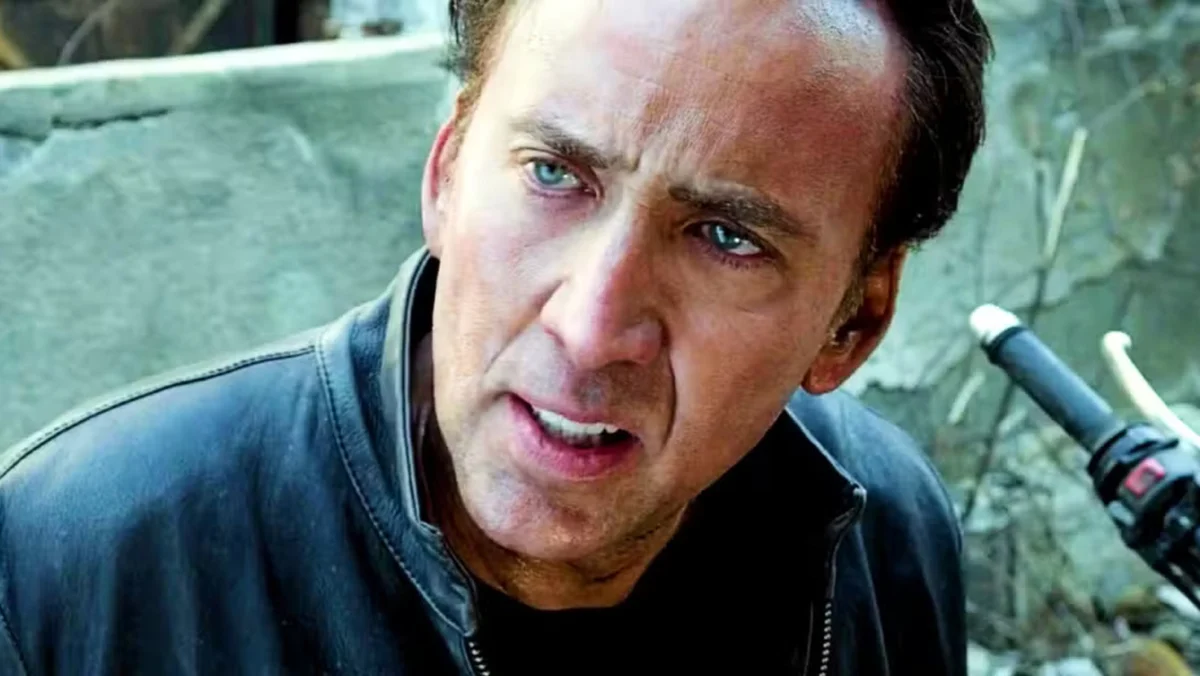
In the landscape of modern blockbuster filmmaking, few figures possess the idiosyncratic authority of Nicolas Cage. An actor whose career has spanned high-octane action, experimental independent cinema, and iconic comic book portrayals, Cage is uniquely positioned to comment on the evolution of the superhero genre. Recently, during an appearance at Fan Expo Dallas, the Ghost Rider star delivered a candid assessment of the Marvel Cinematic Universe (MCU), characterizing the franchise as a "well-funded and glorified WWE."
While the statement has ignited predictable sparks among the fandom, it serves as a critical entry point into a larger debate regarding the future of cinematic storytelling, the dilution of the acting craft, and the encroaching dominance of spectacle over substance.
The Core Critique: A "Glorified WWE"
During the Fan Expo event, Cage offered his perspective on the current state of Marvel’s output. While he emphasized that his comments were made "with love," he did not pull his punches regarding the mechanics of these productions.
"When I see these 50-plus, otherwise intelligent, remarkably gifted thespians putting on these ridiculous outfits and getting ready for the fight—and let’s face it, it’s cutting all to the fight—it’s hard for me not to be reminded that the MCU is becoming a well-funded and glorified WWE," Cage remarked.
His critique touches on a fundamental shift in the industry: the transition from narrative-driven films to event-based "matches." In professional wrestling, the performance is centered on the physical confrontation, with the plot often serving as a thin connective tissue between sequences of athleticism. Cage argues that the MCU, in its current iteration, has adopted this structure. The talent of the performers—many of whom are Academy Award winners or nominees—is frequently sidelined in favor of choreographed brawls, rapid-fire editing, and the inevitable dominance of CGI.
Chronology: From Character-Driven Roots to Franchise Expansion
To understand the weight of Cage’s statement, one must look at the trajectory of the MCU.
The Foundational Era (2008–2012)
The inception of the MCU with 2008’s Iron Man was predicated on character development. Robert Downey Jr.’s performance was grounded in the personal evolution of Tony Stark. The stakes were personal, and the action sequences were tethered to the protagonist’s emotional journey. During this phase, the spectacle felt like a reward for the audience’s investment in the character.
The Expansion Era (2013–2019)
As the franchise grew with The Avengers and its subsequent sequels, the scope broadened significantly. The introduction of the "Infinity Saga" required a greater reliance on ensemble dynamics. While critics began noting the "Marvel Formula"—a specific pacing and tone that permeated every film—the emotional payoff in Avengers: Endgame successfully synthesized character arcs with the grandiosity of the spectacle.
The Current Era (2020–Present)
Following the climax of the Infinity Saga, the MCU entered a period of rapid expansion through Disney+ series and a deluge of theatrical releases. It is here that Cage’s critique finds its strongest footing. The focus has shifted toward "multiversal" stakes, cameo-driven nostalgia, and a relentless cadence of releases that prioritize brand maintenance over narrative intimacy. The recent trailers for Avengers: Doomsday, for instance, have been criticized for prioritizing kinetic, incomprehensible visuals over the thematic depth that defined the franchise’s earlier chapters.
Supporting Data: The Devaluation of the "Thespian"
Cage’s argument rests on the observation that top-tier acting talent is being underutilized. In the modern MCU, the role of an actor has arguably shifted from a "performer" to a "physical avatar."
- The CGI Barrier: Modern superhero films rely heavily on post-production. Many of the most iconic "performances" in these films are actually a composite of a stunt double’s movement, a digital artist’s animation, and a voiceover recorded months later.
- The "Fight-First" Pacing: Analysis of recent trailers and film segments shows an increase in the frequency and duration of action sequences at the expense of dialogue-heavy, character-defining scenes. When the story is "cut to the fight," the actor’s ability to convey nuance via expression and subtlety is rendered redundant.
- The Talent Trap: The MCU has historically recruited acclaimed actors (such as Christian Bale, Cate Blanchett, and Mahershala Ali) for roles that often lack the narrative space for deep exploration. When the script demands that an actor stand in front of a green screen and "act at a tennis ball," the craft is arguably subordinated to the technical requirements of the spectacle.
Official Responses and Industry Reception
The response to Cage’s comments has been polarized. Hardcore fans of the MCU have defended the franchise’s roots in comic book culture—a medium that has always relied on the "punch-up" as a primary narrative device. From this perspective, calling the MCU a "glorified WWE" is not a critique but a description of the genre’s DNA.
Conversely, industry critics and fellow filmmakers have echoed Cage’s sentiment. Directors like Martin Scorsese and Francis Ford Coppola have previously questioned whether these films constitute "cinema" in the traditional sense, arguing that they lack the human vulnerability that distinguishes art from product.
Marvel Studios has not issued a formal rebuttal, as they typically view these critiques as part of the broader conversation surrounding their cultural dominance. However, behind the scenes, there is evidence that the studio is aware of "superhero fatigue." Reports of shifting creative strategies, the hiring of more auteur-driven directors, and a focus on "quality over quantity" suggest that Disney and Marvel are attempting to course-correct in response to exactly the kind of malaise Cage describes.
Implications: The Future of the Superhero Genre
The implications of Cage’s critique are significant for the future of the industry. If audiences continue to view these films as repetitive spectacles, the long-term sustainability of the superhero genre is at risk.
The Risk of Saturation
The "WWE" model of filmmaking relies on audience enthusiasm for the brand itself rather than the quality of the individual product. If that enthusiasm wanes—as seen in recent box-office fluctuations—the lack of deep, character-driven storytelling provides no "safety net" to keep audiences engaged.
A Potential Renaissance?
Alternatively, the criticism could serve as a catalyst for evolution. If Marvel pivots toward more contained, story-focused projects—similar to Logan or Joker, which prioritized character study over franchise connectivity—it could silence the critics and revitalize the genre. The success of more grounded, character-driven entries indicates that there is an audience hungry for exactly what Cage is calling for.
The Role of the Actor
Nicolas Cage’s own career demonstrates that an actor can flourish in high-concept genres while still delivering profound performances. His work in Pig or Longlegs proves that he values the art of acting above the size of the production budget. His commentary is a challenge to his peers and the industry at large: to demand better scripts, to insist on more character-focused directing, and to ensure that the spectacle remains a servant to the story, not its master.
Conclusion
Nicolas Cage’s assessment of the MCU is not a dismissive rant from an outsider, but a professional observation from a veteran of the craft. Whether one agrees that the MCU has become a "glorified WWE" or views it as the pinnacle of modern mythological storytelling, the underlying point remains: cinema is at its best when it prioritizes the human condition.
As the MCU moves into its next phase, it stands at a crossroads. It can continue to prioritize the "fight" and the "spectacle," catering to the excitement of the moment, or it can heed the warnings of actors like Cage and return to the roots of character-driven narrative. For the sake of the medium, one hopes that the future of the superhero genre involves more than just a well-funded wrestling match.
