
Beyond the Megablockbusters: Five Forgotten ’80s Action Thrillers That Still Pack a Punch
Main Facts: Revisiting the Undervalued Gems of an Era
The 1980s remain universally recognized as the golden age of high-octane action cinema. Fueled by the turbulent, full-throttle momentum of 1970s New Hollywood classics like Bullitt, The French Connection, and Vanishing Point, the subsequent decade took the formula and injected it with steroids, pyrotechnics, and unapologetic machismo. By 1980, action-thrillers were the undisputed titans of the global box office. Megastars like Sylvester Stallone, Chuck Norris, Charles Bronson, and Arnold Schwarzenegger commanded the cinematic landscape, delivering Reagan-era spectacles that often favored brutal vigilante justice and fast-paced, practical stunt-work over conventional due process.
Yet, for every iconic blockbuster that cemented its place in pop culture history, dozens of equally thrilling, brilliantly inventive genre pictures slipped through the cracks of time. While mainstream culture remembers the cultural footprints left by Terminator, Rambo, and Die Hard, a rich underground ecosystem of subversive, brilliantly paced, and uniquely crafted action thrillers has been largely relegated to the shadows of film history.
Examining these overlooked titles reveals that the decade’s cinematic output was far more diverse and daring than cultural memory suggests. From meta-commentaries on filmmaking and genre-bending police procedurals to gleefully unhinged B-movie masterpieces and shocking legacy sequels, these five forgotten 1980s action thrillers prove that invigorating, masterfully executed storytelling loses none of its power across the decades.
Chronology and Evolution: From Grindhouse Grit to Neon Spectacle
To understand how these specific films fit into the cultural tapestry of the 1980s, one must trace the chronological evolution of the action-thriller genre during the twentieth century.
- The 1970s Foundation: The groundwork was laid by gritty urban crime dramas and gravity-defying car-chase epics such as Gone in 60 Seconds, Dirty Mary, Crazy Larry, and Smokey and the Bandit. These films glorified vehicular recklessness and established a raw, grounded aesthetic.
- The Early 1980s Shift: As the decade turned, studios realized audiences craved heightened escapism combined with visceral danger. Early 1980s releases began bridging the gap between traditional detective stories and grand-scale stunt spectacles. Films like Richard Rush’s The Stunt Man (1980) arrived at the absolute vanguard of this transition, playfully deconstructing the physical risks actors and crews took to satisfy the public’s bloodlust.
- The Mid-1980s Peak: By the middle of the decade, the genre leaned heavily into high-concept premises, international drug syndicates, and unbridled camp. Independent productions and exploitation houses found ways to maximize minimal budgets, leading to anarchic cult favorites like Andy Sidaris’s Hard Ticket to Hawaii (1987). Simultaneously, major studios pushed established franchises into unexpected psychological territory, as seen in Richard Franklin’s Psycho II (1983).
- The Late 1980s Deconstruction: As the decade wound down, action cinema began addressing its own tropes. Clint Eastwood’s final outing as Inspector Harry Callahan in The Dead Pool (1988) and James Glickenhaus’s explosive urban thriller Shakedown (1988) demonstrated a self-awareness that foreshadowed the ironic, postmodern action blockbusters of the 1990s.
Supporting Data: Breaking Down the Five Masterworks
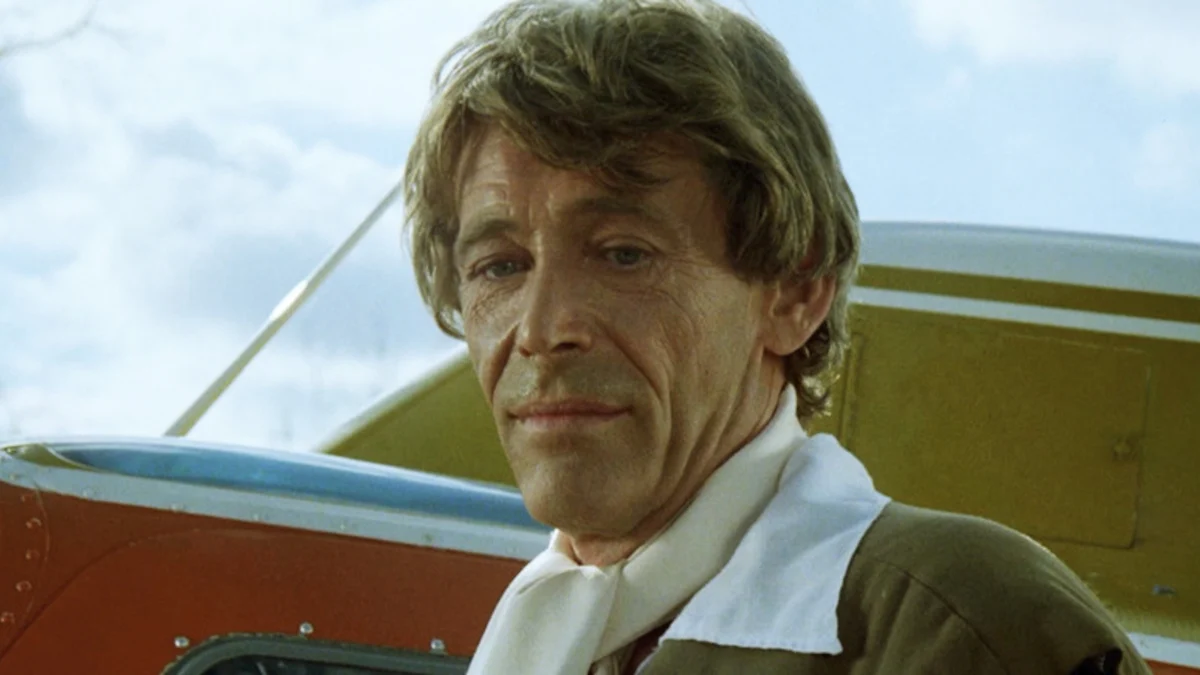
1. The Stunt Man (1980)
- Director: Richard Rush
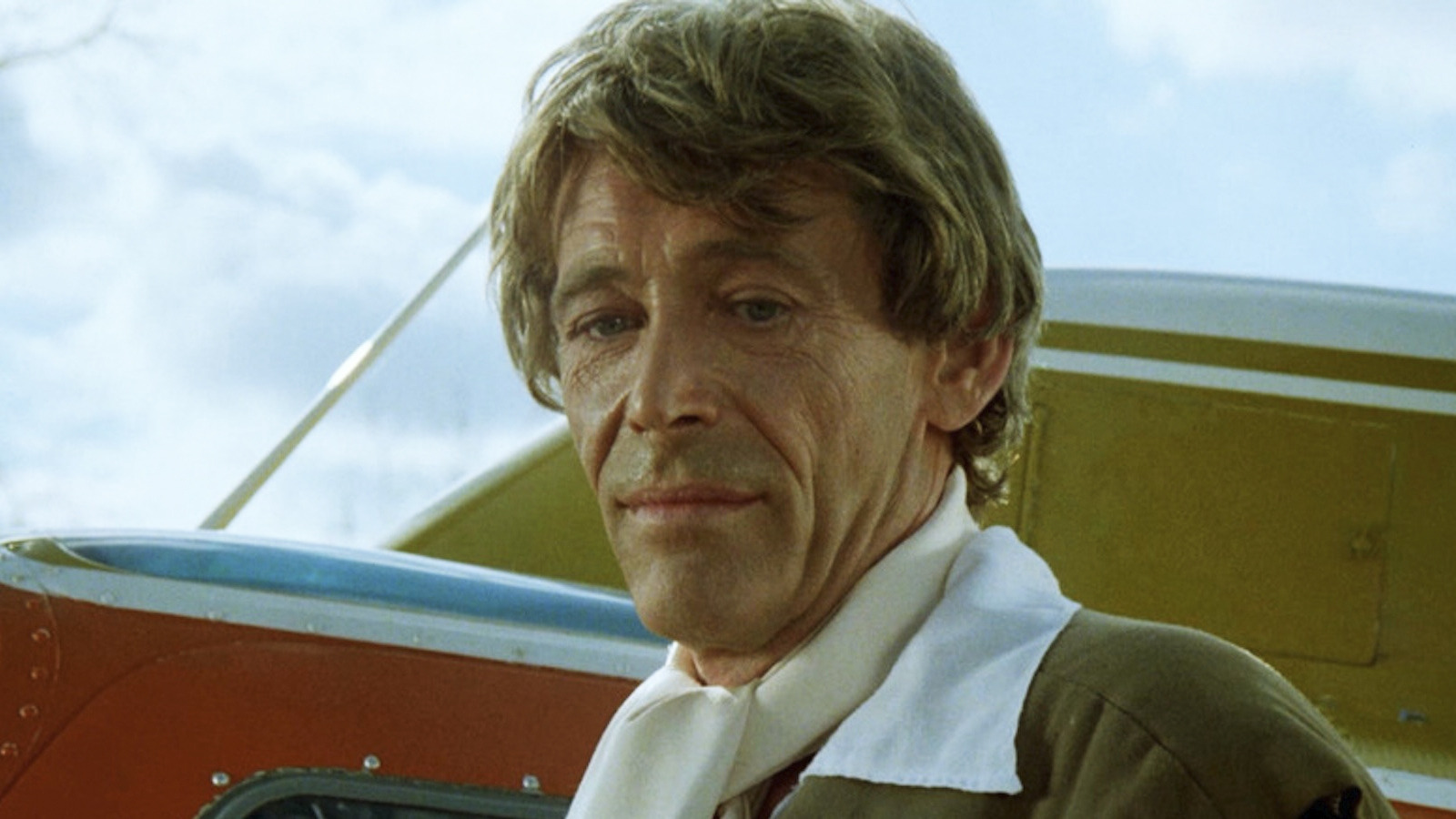
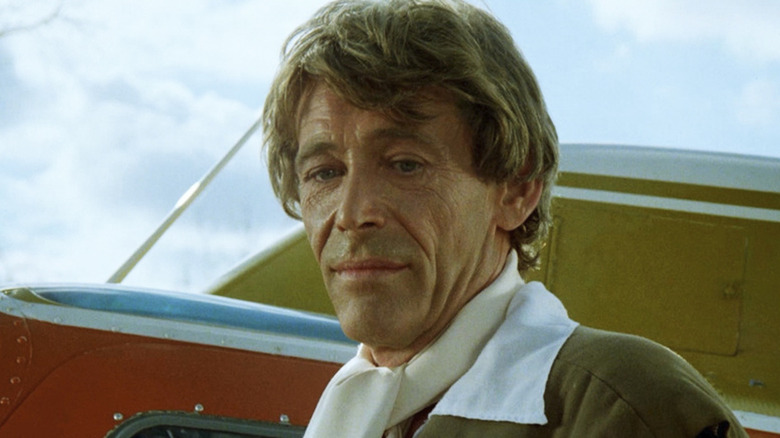
- Starring: Peter O’Otoole, Steve Railsback, Barbara Hershey
- The Hook: A fugitive on the run stumbles onto a movie set and is pressed into service as a stunt double by a tyrannical, possibly homicidal director.
- Critical Reception: Despite being largely forgotten by millennial and younger generations, the film was a critical darling upon release, earning three Academy Award nominations: Best Director (Rush), Best Adapted Screenplay (Rush and Lawrence B. Marcus), and Best Actor (Peter O’Toole).
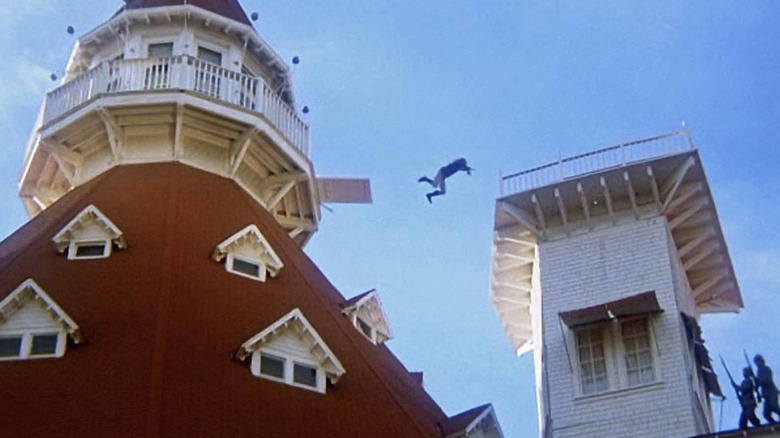
- Why It Holds Up: O’Toole delivers a masterclass in sly, eccentric authority as director Eli Cross. The practical stunt work—including vertigo-inducing rooftop leaps across unstable tiles—would be entirely prohibited on modern computer-generated film sets, giving the picture an authentic, stomach-churning edge.
2. Psycho II (1983)
- Director: Richard Franklin
- Starring: Anthony Perkins, Vera Miles, Meg Tilly
- The Hook: Twenty years after the original murders, Norman Bates is released from a psychiatric institution and attempts to reclaim a normal life at the infamous Bates Motel.
- Critical Reception: Initially dismissed by purists as a cynical cash-grab, the film surprised critics with its psychological depth, atmospheric tension, and clever script by Tom Holland. Famed director Quentin Tarantino has famously ranked it above Alfred Hitchcock’s original classic.
- Why It Holds Up: Anthony Perkins returns with a heartbreaking, nuanced performance that expands Norman’s character arc. Instead of relying on cheap jump scares, the film functions as a tightly wound psychological thriller that respects the legacy of its predecessor while carving out its own distinct identity.
3. Hard Ticket to Hawaii (1987)
- Director: Andy Sidaris
- Starring: Dona Spier, Hope Marie Carlton, Ronn Moss, Harold Diamond
- The Hook: Two undercover secret agents intercept a diamond shipment earmarked for a ruthless drug lord, sparking an explosive, island-wide retaliation.
- Critical Reception: Produced by Malibu Bay Films, it was initially branded as low-brow grindhouse schlock. Over the decades, it has achieved legendary status within the cult film community as the pinnacle of unintentional cinematic joy.
- Why It Holds Up: It represents the absolute zenith of uninhibited B-movie excess. Featuring delightfully cheesy dialogue, over-the-top practical violence (including a bazooka blast directed at a remote-controlled model airplane), and an unmatched sense of fun, it proves that boundless enthusiasm can substitute for a massive budget.
4. Shakedown (1988)
- Director: James Glickenhaus
- Starring: Peter Weller, Sam Elliott, Antonio Fargas, John C. McGinley
- The Hook: A weary public defender and a rough-around-the-edges narcotics detective form an unlikely alliance to clear a wrongly accused client in New York City.
- Critical Reception: Helmed by James Glickenhaus—known for operating the schlock factory Shapiro-Glickenhaus Entertainment—Shakedown stands as a surprisingly polished, high-craft exception in a career otherwise defined by gritty exploitation cinema.
- Why It Holds Up: The electric chemistry between Peter Weller (fresh off RoboCop) and Sam Elliott anchors the film’s wild set pieces. From rollercoasters to jumbo jets landing on Manhattan thoroughfares, Glickenhaus balances physical impossibility with undeniable cool.
5. The Dead Pool (1988)
- Director: Buddy Van Horn
- Starring: Clint Eastwood, Patricia Clarkson, Liam Neeson, Jim Carrey
- The Hook: San Francisco inspector Harry Callahan investigates a mysterious serial killer who is systematically murdering celebrities featured in a local underground betting pool.
- Critical Reception: Often ranked near the bottom of traditional Dirty Harry franchise retrospectives, the film has enjoyed a critical reappraisal for its breezy pacing, meta-textual Hollywood satire, and early star power.
- Why It Holds Up: Serving as Eastwood’s final farewell to his most iconic role, Dead Pool trades some of the earlier films’ heavy grittiness for a sharper mystery. Notably, it features a remarkably unhinged, high-energy early performance by a young Jim Carrey lip-syncing to Guns N’ Roses.
Official Responses and Industry Perspectives
Film historians, repertory cinema programmers, and surviving creators have frequently spoken out about the shifting fortunes of 1980s genre cinema. In retrospective interviews, directors like Richard Rush have noted that mid-budget adult thrillers occupy a precarious space in Hollywood history—too sophisticated for pure exploitation markets, yet too unconventional for major studio safety nets.
Industry analysts point out that the home video revolution of the 1980s and ’90s initially saved many of these titles from total obscurity, allowing films like Hard Ticket to Hawaii and Shakedown to find passionate second-life audiences via VHS rentals. Today, boutique physical media labels (such as Arrow Video, Shout! Factory, and Vinegar Syndrome) serve as the official vanguard for these forgotten works, funding high-definition restorations that bring critical acclaim back to previously discarded genre exercises. Contemporary filmmakers frequently cite these exact titles as masterclasses in practical filmmaking, emphasizing that the physical danger, tangible locations, and palpable sweat captured on 35mm film stock can rarely be replicated by modern digital pipelines.
Implications: What These Films Tell Us About Modern Cinema
The enduring appeal—and current rediscovery—of these five forgotten 1980s action thrillers carries significant implications for the contemporary film landscape.
First, they highlight a growing industry fatigue with homogenized, green-screen-heavy blockbusters. As audiences increasingly yearn for tactile filmmaking, the practical stunts in The Stunt Man, the on-location New York grit of Shakedown, and the sunny, low-fi explosions of Hard Ticket to Hawaii offer a refreshing reminder of what physical production can achieve.
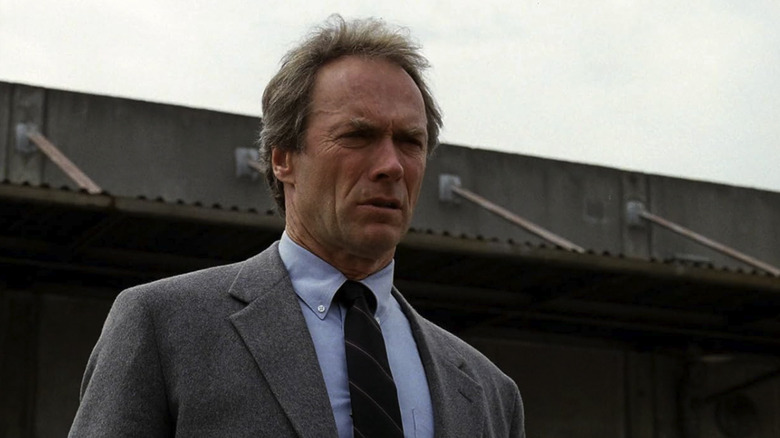
Second, these films challenge conventional definitions of "prestige." While prestige cinema is often equated with high-minded drama, works like Psycho II and The Dead Pool prove that genre pictures can successfully engage with complex themes—such as institutional rehabilitation, aging, and media exploitation—while delivering high-stakes entertainment.
Ultimately, the rediscovery of these hidden gems suggests that cinematic value is rarely determined by initial box office receipts or contemporary critical consensus. As streaming platforms and physical media boutiques continue to unearth the forgotten corners of cinematic history, masterpieces of grit, sweat, and adrenaline will continue to find the audiences they always deserved.
