
The Hollow Hype: Why Verity Fails to Translate Colleen Hoover’s Literary Phenomenon to the Big Screen
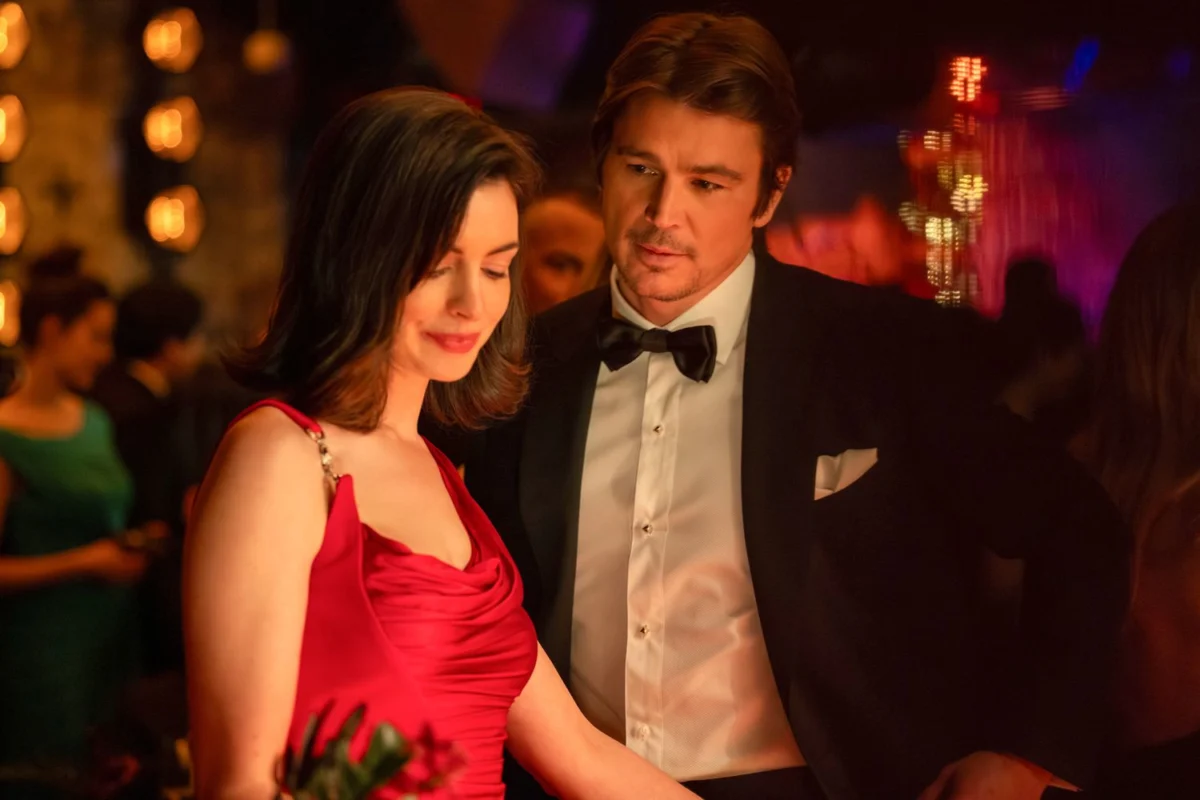
The literary world has long been under the spell of Colleen Hoover. With a publishing footprint that dominates bestseller lists and a fan base characterized by its near-fervent devotion, the arrival of a Hoover adaptation is typically met with seismic anticipation. Yet, despite the half-billion-dollar cumulative box office success of her previous cinematic outings—It Ends With Us, Regretting You, and Reminders of Him—Hollywood has yet to produce an adaptation that captures the raw, albeit polarizing, magnetism that defines her prose.
The latest attempt, Verity, arrives with a clearer narrative hook than its predecessors, aiming to graft the gothic tension of a modern Rebecca onto the skin of a 1990s-style erotic thriller. Directed by Michael Showalter and featuring a high-profile cast led by Dakota Johnson, Josh Hartnett, and Anne Hathaway, the film promises a descent into psychological madness. Instead, it delivers a flat-footed, overwrought exercise in stylistic dissonance that leaves its A-list stars looking visibly adrift.
A Chronology of Artistic Misfires
To understand why Verity fails, one must look at the structural trajectory of the production. The film’s narrative engine is built on a series of increasingly bizarre coincidences. We are introduced to Lowen Ashleigh (Dakota Johnson), a struggling novelist whose career is defined by critical acclaim but abysmal sales. The film’s inciting incident is a "meet-uncute" that borders on the grotesque: Lowen and potential love interest Jeremy Crawford (Josh Hartnett) share a Manhattan sidewalk when a cyclist is killed by a vehicle, leaving Lowen drenched in blood.
In a moment of staggering tonal deafness, Jeremy cleans her up in a nearby café, only to offer the unsolicited, bizarre comfort: “I’ve seen worse… I pulled my eight-year-old girl’s body out of a lake.”
The sequence sets the stage for a film that demands total suspension of disbelief, only to lose the audience’s trust immediately. Minutes later, in a professional meeting, Lowen discovers that Jeremy is the husband of the legendary, now-catatonic author Verity Crawford (Anne Hathaway). Because Verity’s thriller series remains unfinished, Jeremy hires Lowen to complete the manuscripts.
Lowen moves into the sprawling, opulent Crawford estate, where she discovers a secret, disturbing memoir penned by Verity before her accident. As Lowen begins to unravel the truth—or what she perceives to be the truth—the film devolves into a series of wintry lifestyle shots, soft-carpeted stalking sequences, and voiceovers that oscillate between arch melodrama and unintended comedy.
Supporting Data: The Aesthetic Disconnect
The technical craft of Verity highlights a fundamental disconnect between the director’s sensibilities and the source material. Michael Showalter, an auteur known for his sharp comedic timing—as seen in the vibrant and witty The Idea of You—seems fundamentally ill-equipped to handle the high-camp, po-faced eroticism required here.
- Production Design: Amy Williams provides a visual palette that is undeniably expensive. Every room is perfectly lit, every piece of furniture is curated to evoke a sense of high-end dread. However, the gloss only emphasizes the hollowness of the plot.
- The Score: Composer Volker Bertelmann attempts to bridge the gap with zithery, Bernard Herrmann-esque stylings. Yet, the music feels like an empty pastiche, desperately trying to signal "suspense" where the screenplay provides only lethargy.
- Performance Metrics: Dakota Johnson, whose passive screen presence served her well in the Fifty Shades trilogy, is miscast in a role that requires more than just "resting bored face." Anne Hathaway, while visually striking, is relegated to a role of glassy hauteur, while Hartnett remains a cipher, trapped in a performance that lacks the necessary grit to ground the absurdity of the script.
The Problem with "Luridity"
The film’s marketing leans heavily into the "scandalous" nature of the narrative, yet it fails to produce a single moment of genuine heat. A masturbation scene in a rock-carved bathtub and a desperate, ill-fated encounter in the back of a limo feel like contractual obligations rather than organic extensions of character.
The film’s dialogue—which includes the line, “I have resting bored face,” an attempt at self-awareness that only serves to highlight the actor’s detachment—is consistently undermined by its own seriousness. When a character delivers a monologue about the necessity of writing being "ugly and honest and bloody," it is impossible not to note the irony: the film itself is none of these things. It is clean, safe, and profoundly uninvested.
Implications for the Colleen Hoover Cinematic Universe
The failure of Verity carries significant implications for the future of the "Hooververse" on screen. While her books consistently prove that there is a massive, untapped demographic for this specific brand of melodrama, the Hollywood machine is currently struggling to translate the experience of reading a Hoover novel into a cinematic language.
Why the Gap Persists:
- Tone Deafness: Adaptations often lean into the "prestige" angle, ignoring the fact that Hoover’s popularity stems from a raw, unfiltered emotionality that requires a certain level of camp to work on film.
- The "Prestige" Trap: By hiring directors like Showalter or using high-gloss production values, the films become "stiff." They aim for Rebecca but end up with a Lifetime movie that has been given a massive budget it doesn’t know how to use.
- Audience Cynicism: As seen in the comparison to Paul Feig’s The Housemaid, audiences are willing to accept pulpy, "slumming it" material if the cast and director lean into the absurdity. Verity takes itself too seriously to be fun, but is too underplotted to be taken seriously.
Official Responses and Industry Outlook
While no official statements have been released regarding the film’s tepid reception, industry insiders suggest that the "Hoover formula" is reaching a point of diminishing returns. The reliance on A-list stars to prop up thin, derivative scripts is a strategy that worked for the first two films but is clearly faltering as audiences become more discerning.
For the unconverted, Verity offers no insight into why the source material is so beloved. If the intention was to validate Hoover’s vast popularity, the film does the opposite—it makes the books appear as shallow, trope-heavy exercises in melodrama.
Final Verdict
Verity is a film of surface-level aesthetics with zero narrative liftoff. It is a product of a Hollywood that recognizes the sales numbers of an author but fundamentally misunderstands the "why" behind them. By trying to dress up a lurid, pulp thriller in the clothes of an upscale psychological drama, the production team has created a cinematic experience that is neither ugly, nor honest, nor bloody. It is simply a polished, expensive, and deeply indifferent piece of streaming fodder.
For fans of the genre, it is a reminder that a high-profile cast and a beautiful setting cannot substitute for a coherent vision. Until a filmmaker arrives who is willing to treat the source material with the "bloody, honest" intensity it supposedly demands—rather than trying to "fix" it into something it isn’t—these adaptations will likely continue to leave audiences and critics alike feeling cold.
