
Scaling the Pulse: How Whoop’s Everyday Consumer Pivot and Supply Chain Overhaul Fuel a $10.1 Billion Health Tech Empire
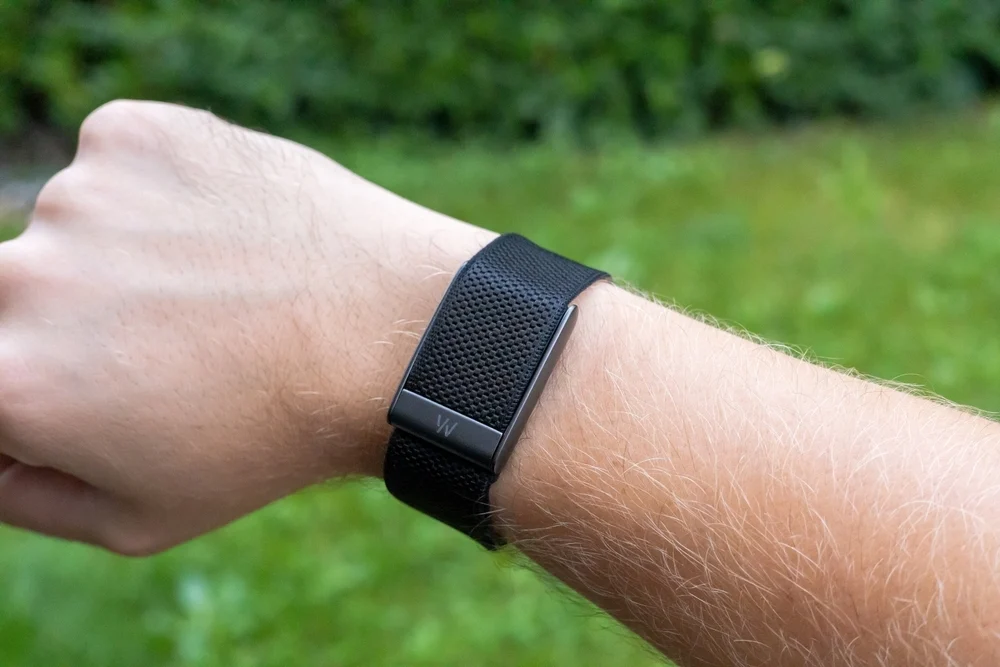
Main Facts
In the high-stakes arena of health wearables, hypergrowth is the ultimate double-edged sword. For Whoop, the premier human performance and biometric tracking company, a strategic pivot toward everyday wellness consumers has ignited unprecedented demand. Boasting an 85% year-over-year surge in membership—marking its third consecutive year of over 70% growth—the brand now serves more than 3 million daily active subscribers spanning 200 countries.
This meteoric rise culminated in a staggering $575 million Series G funding round, pushing the company’s valuation to an elite $10.1 billion. Yet, this commercial triumph has exposed the friction points inherent in rapid global expansion. Managing retail partnerships, international market entries, and enterprise agreements across borders where Whoop ships to 58 nations has shifted the corporate bottleneck from customer acquisition to back-end operational complexity.
To bridge the gap between explosive marketing success and supply chain execution, Whoop is currently executing a massive operational overhaul. By replacing fragmented, manual Excel-based planning with an enterprise-grade digital platform from o9 Solutions, the company aims to transform a historically chaotic fulfillment apparatus into a streamlined, agile machine capable of responding to market demands within hours rather than weeks.
Chronology
2012–2020: The Elite Athlete Foundation
Whoop was founded in 2012 by Will Ahmed during his tenure as a Division I athlete at Harvard University. The initial vision was laser-focused: build a high-end performance wearable designed specifically for elite athletes to monitor strain, sleep, and recovery, thereby unlocking peak human potential. This playbook succeeded brilliantly. Whoop secured high-profile partnerships and investments from sporting legends such as LeBron James, Cristiano Ronaldo, and Rory McIlroy, establishing deep credibility within the professional sports ecosystem.
2021–2024: The Strategic Pivot to Everyday Consumers
Recognizing the finite ceiling of the elite sports market, Whoop initiated a strategic pivot. The brand broadened its marketing scope to target everyday consumers seeking better overall health, longevity, and everyday vitality. This transition catalyzed compounding growth. By 2024, Marie Fodness joined Whoop as the Assistant Vice President of Global Operations. Within her first three months on the job, Fodness spearheaded an aggressive international retail and wholesale expansion, landing the brand in 26 new countries in a matter of weeks and driving a 300% increase in wholesale bookings.
Late 2024–September 2025: The Hypergrowth Bottleneck
As retail partnerships and international brick-and-mortar storefronts multiplied, Whoop’s internal operational infrastructure was pushed to its limits. The breaking point arrived in late 2024 when the commercial team returned from a conference with an unforecasted, emergency holiday order: retailers demanded an additional 300,000 units before the close of the fourth quarter. Lacking integrated planning tools, the supply chain team required a grueling 25-day investigation to determine chip availability, manufacturing feasibility, and cost viability before greenlighting the production run.
September 2025–Present: The o9 Solutions Digital Transformation
Following the logistical scramble of the holiday season, Whoop evaluated seven supply chain vendors before partnering with o9 Solutions in late 2025. Currently underway and slated for a one-year completion window, the implementation of o9’s demand and enterprise planning software is designed to unify disparate data streams. Once fully active, the system aims to slash decision-making windows for massive, last-minute demand signals down from nearly a month to just 48 hours.
Supporting Data
The scale of Whoop’s recent commercial expansion is illustrated by a robust set of operational and financial metrics:
- Valuation: Reached $10.1 billion following a $575 million Series G funding round finalized in March 2025.
- Member Base: Over 3 million active members globally, generating predictable recurring subscription revenue.
- Growth Trajectory: 85% year-over-year membership growth, marking the third consecutive year of exceeding 70% annual expansion.
- Global Reach: Members span 200 countries, with direct-to-consumer shipping currently established across 58 nations.
- Wholesale Surge: Wholesale bookings have skyrocketed by 300% over the past year, closing the gap with the core direct-to-consumer channel.
- Product Evolution: The May 2025 launch of the fifth-generation Whoop device expanded the product’s health mandate to include blood pressure insights, women’s health tracking, and integrated bloodwork lab result uploads.
- Operational Agility Goal: The upcoming o9 software integration targets reducing emergency order evaluation times from 25 days to 48 hours.
Official Responses
Industry leaders and corporate executives have been vocal about the strategic imperative behind Whoop’s operational evolution. Speaking at the o9 Solutions Aim 10x Summit in Chicago, Marie Fodness, Assistant Vice President of Global Operations, did not mince words regarding the challenges of unchecked growth:
"We’ve grown really fast in a lot of different directions," Fodness told summit attendees. "That includes retail channels, new countries, new markets, enterprise deals. And it has not just been more units, it’s been more complexity."
Reflecting on the brand’s shift from exclusive athletic performance to broad consumer wellness, Fodness noted how crucial the messaging transition was:
"This transition into the everyday person, connecting people to how they can make their bodies feel better, led to an incredible amount of growth. Growth like this does not come in a clean forecast. There’s no Excel sheet that has modeled out how we’re going to grow in all of these different directions."
Addressing the logistical trials of the past, Fodness recounted the scramble to fulfill the unexpected 300,000-unit holiday surge:
"We pulled it off, but it was a really chaotic way to achieve additional growth. There are so many ways for us to do this better and we need to get cleaner as a business to make sure that the next time we are asked to support hypergrowth and exciting opportunities, we’re not costing the business resources and eventually some margin."
Santiago Garcia-Poveda Maria, Senior Vice President of Retail, Distribution, Apparel and Footwear at o9 Solutions, emphasized that Whoop’s timeline for digital transformation aligns with standard industry parameters for enterprises of this magnitude:
"Building a unified enterprise planning system from the ground up typically takes about a year for an organization experiencing this level of multi-channel complexity."
Implications
Whoop’s current trajectory offers a masterclass in the operational realities of scaling a high-growth consumer technology brand. By transitioning its focus from elite athletic optimization to longevity, proactive health, and everyday wellness—bolstered by advanced biometric features like blood pressure tracking and lab integrations—the company unlocked a massive total addressable market (TAM). However, this pivot exposed the structural limitations of legacy supply chain management.
For years, reliance on manual Excel spreadsheets and localized "tribal knowledge" served as an operational crutch. Yet, as wholesale partnerships expanded by 300% and retail shelf space multiplied internationally, fragmented data systems transformed routine business agility into high-stakes crises. The 25-day evaluation period required to approve 300,000 unforecasted holiday units highlighted a dangerous vulnerability: without real-time visibility, hypergrowth risks eroding profit margins and burning internal corporate resources.
By deploying o9 Solutions’ enterprise platform, Whoop is signaling a mature pivot from reactive firefighting to proactive, data-driven orchestration. Consolidating global inventory, shipping data, and demand signals into a single source of truth will not only empower leadership to capitalize on sudden market surges within 48 hours, but it will also ensure localized compliance—such as translated packaging and region-specific regulatory adherence—is handled seamlessly.
Ultimately, Whoop’s $10.1 billion valuation proves that consumer appetite for continuous, data-driven health tracking is stronger than ever. The true test of the company’s next decade will not be whether it can capture consumer imagination, but whether its back-end operations can run as smoothly as the biometric insights delivered on its members’ wrists.
