
The Diamond Jubilee of Resilience: Inside the 60th Karlovy Vary International Film Festival
Main Facts: Celebrating Eighty Years of Cinematic Survival
The Karlovy Vary International Film Festival (KVIFF) stands as a unique monument in European cultural history. Walking an improbable path of geopolitical occupation, ideological compromise, and steadfast survival, the festival marked its diamond jubilee edition this year. Commemorating sixty editions across eighty years, the milestone "Vary Special" festival cemented the spa-town event’s status as a cornerstone of international cinema.
Founded in 1946—the year after Czechoslovakia was restored from Nazi rule and just weeks before the inaugural Cannes Film Festival—KVIFF has evolved into a proudly progressive European gathering. It preserves select aesthetic artifacts of its Communist-era inheritance while discarding its ideological baggage. The Brutalist façade of its primary headquarters, the Hotel Thermal, still grants the festival the nostalgic, otherworldly vibe of a Soviet-era sanatorium. Inside its screening rooms, a rigorous ticketing cap of three entries per day encourages thoughtful curation over audience burnout. Attendees are treated to a dual-menu programming strategy: regional debuts of major hits from Sundance, Berlinale, and Cannes on one side, and deep dives into Eastern European cinema, both historical and contemporary, on the other.

Chronology: From Post-War Origins to the 60th Anniversary
The historical trajectory of KVIFF mirrors the turbulent political shifts of Central and Eastern Europe over the past century:
- 1946: The festival holds its inaugural edition in post-Nazi Czechoslovakia, rapidly establishing itself as a vital European cultural hub.
- 1958: Following a communist coup and a decade of state transformation, KVIFF achieves Category-A festival status from the International Federation of Film Producers Associations (FIAPF), denoting the highest tier of international film impact.
- 1959–1994: Dictated by the Soviet Union, the festival is forced into a biennial rotation with the Moscow International Film Festival. This arrangement persists until 1994, two years after the peaceful dissolution of Czechoslovakia and the birth of the independent Czech Republic.
- 1964–1970: Czech and Slovak masters capture international acclaim. Ján Kadár and Elmar Klos win the Crystal Globe for The Defendant (1964), followed shortly by Ken Loach capturing the top prize for Kes (1970) immediately after the traumatic events of the Prague Spring.
- 1969–1990: The repressive state apparatus silences dissident voices. Juraj Jakubisko’s Birds, Orphans and Fools (1969) is banned and shelved, remaining unseen until the fall of communism in 1990.
- Present Day: Marking its 60th edition over 80 years of history, KVIFF embraces its complex past through retrospectives like "Out of the Past – KVIFF 60/80," proving its enduring capacity to reconcile history with modern cinematic innovation.
Supporting Data: Highlights from the 60/80 Retrospective and Competitions
The heartbeat of the anniversary edition was the "Out of the Past – KVIFF 60/80" retrospective, which curated crucial milestones from the festival’s archive alongside pristine digital restorations. Highlights included Powell and Pressburger’s fabulist war melodrama A Matter of Life and Death (1946) and Glauber Rocha’s foundational Brazilian Cinema Novo debut, Barravento (1962). Repertory screenings drew massive crowds, most notably for ultra-crisp restorations of Jonathan Glazer’s Sexy Beast (2000) in the packed Grand Hall and Věra Chytilová’s psychosexual AIDS-era tragicomedy Tainted Horseplay (1988).

The Crystal Globe and Proxima Competitions
KVIFF’s competitive sections balanced established global auteurs with boundary-pushing emerging voices:
- Proxima Competition: Reframed five years ago to replace the region-locked "East of the West" section, Proxima now casts a borderless net for youthful artistic energy. The Grand Prix was awarded to Slovak director Martina Buchelová for her debut feature, Lover, Not a Fighter (2026). The film follows 20-year-old Andrej against a backdrop of personal self-destruction and looming family bunker life, utilizing a scrappy, fragmented montage of vertical phone footage and reflexive subtitled one-liners.
- Crystal Globe Competition: Focused on veterans of the craft, the top prize went to Aung Phyoe’s tender Yangon-set romance, Fruit Gathering. Meanwhile, Slovak auteur Ivan Ostrochovský claimed the FIPRESCI prize for Only Beautiful Things to Look At.
Standout Features from the Festival Circuit
- A Man of His Time (Emmanuel Marre): Running a demanding 155 minutes, this Cannes transfer screened in an idiosyncratic hall beneath massive crystal chandeliers. Swann Arlaud delivers an entrancing, morally ambiguous performance as Henri, a man climbing the ranks of the Vichy regime through a toxic cocktail of ambition and mediocrity. Olivier Boonjing’s stationary, corner-framed cinematography captures the chilling banality of creeping fascism.
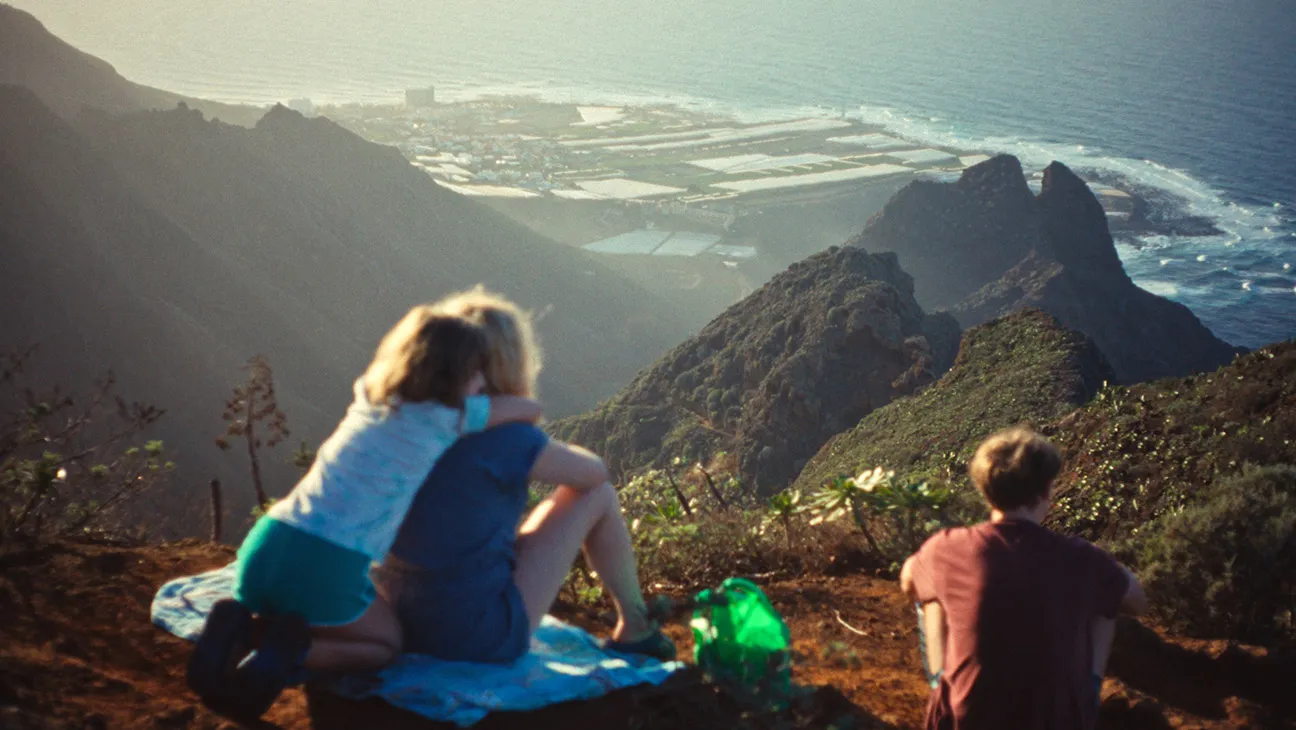
- Everytime (Sandra Wollner): Sharing cinematographer Gregory Oke and thematic DNA with Charlotte Wells’s Aftersun (2022), Wollner’s Berlin-to-Tenerife memory piece uses a hallucinogenic register to frame childhood grief, deploying fiction as a balm for brutal reality.
- Black Money for White Nights (Kristina Grozeva and Petar Valchanov): Easily the most provocative entry of the festival, this Bulgarian tragicomedy follows elderly couple Marina and Gosha, who pocket minor workplace bribes to fund a dream trip to St. Petersburg. Their plans collide with Russia’s full-scale invasion of Ukraine, which they willfully ignore by turning down the television volume. The film functions as a brilliant fable on political denialism, punctuated by surreal set design featuring living-room wallpaper depicting classic Russian birch forests that metaphorically collapse upon the characters.
Official Responses and Festival Lore
The institutional identity of KVIFF relies heavily on self-awareness and institutional humor. Artistic Director Karel Och continued his multi-year masterclass tradition, dedicating a screening slot to John Cassavetes—sacrificing his own viewing of The Killing of a Chinese Bookie (1976) to oversee the anniversary retrospectives.

Festival organizers have equally embraced the tongue-in-cheek tradition of Ivan Zachariáš’s black-and-white festival trailers. These eccentric short films, starring recipients of the Crystal Globe, have become legendary. Past installments featured armed robbers attempting to steal Mel Gibson’s award only to be thwarted by blowguns, and Stellan Skarsgård using his statuette as fishing bait while keeping the worm for himself.
These lighthearted rituals provide a vital counterweight to the weightier geopolitical undertones of the programming, allowing the festival to honor its heavy history without crushing its audience under solemnity.

Implications: Reclaiming the Past on Own Terms
The resonance of films like Black Money for White Nights—which surprisingly walked away empty-handed from the jury—highlights KVIFF’s unique position in the global festival circuit. By refusing to shy away from narratives exploring political complicity, willful ignorance, and the legacy of the Soviet bloc, the festival acknowledges its own historical entanglements.
KVIFF’s diamond jubilee proves that an international film festival can successfully metabolize a complicated, heavily policed past into a vibrant, progressive present. By discarding ideological baggage while retaining its architectural and cultural memory, Karlovy Vary has charted a resilient course. It stands today not merely as a museum of Central European cinema, but as a dynamic laboratory for what can grow when an institution dares to honestly and creatively reconsider its own history.
