
The Last Picture Show: Inside the Enduring Mystery of Montreal’s Cinéma L’Amour
How does one "recommend" a porn theater? It is an invitation fraught with social complexity, a query that requires navigating the blurry line between curiosity and scandal. For Steve Koltai, the proprietor of Montreal’s historic Cinéma L’Amour, the pitch is not about the content on the screen—which, in an age of pocket-sized streaming, he readily admits is no longer his primary commodity.
"You want to watch the newest movie out there? Watch it on your cell phone," Koltai told IndieWire. "That’s not my business anymore. My business is giving you social interaction, fulfilling a fantasy."
In the heart of one of North America’s most vibrant cultural hubs, Cinéma L’Amour stands as a paradoxical monument. It is a place of carnal reality, yes, but it is also a site of architectural preservation, a community space for diverse subcultures, and, unexpectedly, an international fashion label. To step inside is to participate in an immersive experience that defies the sterile, solitary consumption of modern media.

A Century of Transformation: From The Globe to The L’Amour
The history of the venue is a mirror of the 20th century’s shifting urban appetites. Originally opening its doors as "The Globe" in 1914, the theater was a cornerstone of Montreal’s burgeoning Jewish community, serving as a venue for live entertainment and the era’s burgeoning film industry. During the 1920s and 30s, the programming was rich with Yiddish cinema, anchoring the theater in the cultural fabric of the neighborhood.
The mid-century brought rapid evolution. Renamed "The Hollywood" in 1932, the venue eventually pivoted to adult titles in 1969, adopting the moniker "The Pussycat" during the golden age of grindhouse cinema. Despite the shift in genre, the building’s architectural soul remained intact. Its signature horseshoe balcony and ornate, regal interior—relics of a time when movie-going was a grand, theatrical event—survived the transition, creating a striking contrast to the grit of the content on display.
When the Koltai family assumed control in 1981, they were not just inheriting a business; they were curating a legacy. Steve’s father, Ivan, had already established himself in the erotic film distribution market in the 1970s, operating adult cinemas in cities like Hull, Québec. For Steve, the theater represented a tradition of "elegant exhibition." He recalls watching audiences arrive in the 1970s for 7:00 p.m. or 9:00 p.m. shows, dressed as if they were attending a high-end dinner—a stark departure from the casual, often anonymous nature of today’s adult entertainment.

The Business of Fantasy: Merchandising and Beyond
Today, the business model of Cinéma L’Amour has diversified in ways that would have baffled the original owners. While the weekly changing film program continues to draw patrons, the theater’s true cultural footprint has expanded into the world of apparel.
"I’d say a majority of the people that buy our merchandise have never been here," a tour guide noted during the 30th annual Fantasia International Film Festival. The brand has achieved a level of "cool" that transcends its origins, with celebrities like Dakota Johnson being spotted wearing the theater’s branded gear. In Montreal, however, the logo carries a local significance that requires no Hollywood validation; it is a badge of hometown pride and a nod to the city’s inherent "weirdness."
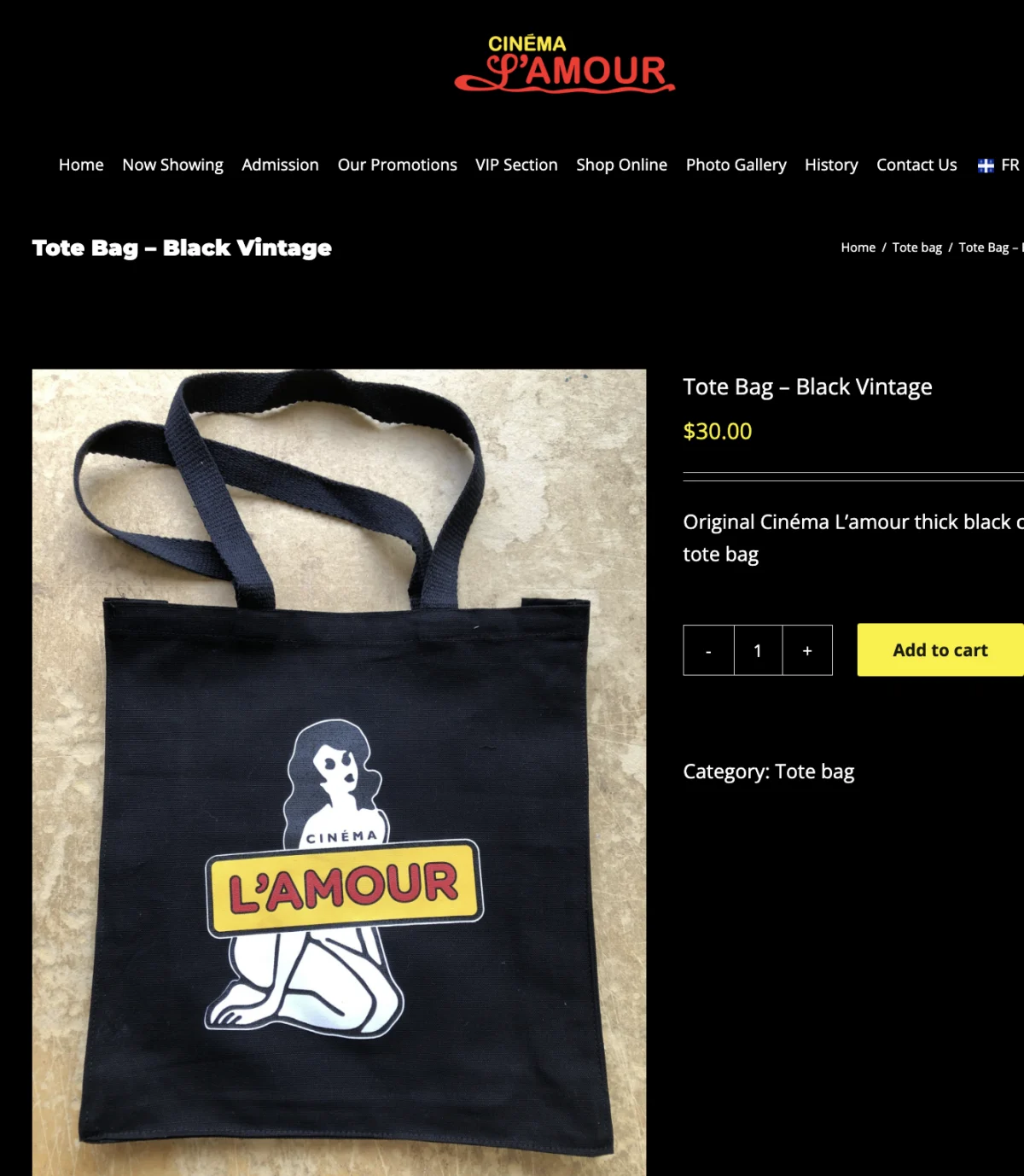
The unexpected success of their merchandise—particularly the thousands of tote bags that Steve Koltai initially doubted would sell—has turned the theater into a global brand. Shipping to customers in Japan, Australia, New Zealand, and beyond, the theater has survived not through the sale of movie tickets alone, but through the sale of an aesthetic. Even as the business navigated the complexities of international trade and shifting U.S. tariffs, the demand for the L’Amour brand has remained robust.

The Social Tapestry: A Hub for Diverse Communities
While the theater is fundamentally an adult venue, its function within the community is remarkably multifaceted. It is not merely a place for, as one employee put it, "half Cheers, half Cruising."
The theater provides space for specialized community programming, including nights dedicated to lesbian and trans audiences, as well as recurring rentals by local feminist organizations. These events highlight the theater’s role as a "third space"—a location where marginalized communities can find privacy and a sense of collective belonging.
Nicolas Archambault, Director of Asian Programming at the Fantasia International Film Festival, believes this receptivity is baked into Montreal’s DNA. "I think it’s been acquired without us knowing it because we’re a land of immigration," he said. He describes the city as a place where the collision of Caribbean music, rock and roll, and diverse cultural practices makes the act of engaging with "unfamiliar art" a daily habit. In this environment, a venue like L’Amour is not an outlier, but a piece of the city’s complex, open-minded puzzle.

Operational Realities and Ethical Boundaries
Maintaining a venue of this nature in the 21st century is a labor-intensive endeavor. The Koltai family owns the building, which includes apartments used for short-term rentals, allowing the business to weather the volatility of the exhibition market. The staff manages everything from facility maintenance to the delicate task of policing boundaries.
The theater operates under a strict, clearly posted code of conduct. Emblazoned in both English and French, the rules are blunt: "No means no—and silence also means no." While Koltai acknowledges that it is impossible to monitor every interaction in the dimly lit balcony or the open downstairs area, the emphasis on consent is a central pillar of the theater’s current operation. It is an acknowledgment that to keep the fantasy alive, the reality of the space must be governed by mutual respect.
Looking Toward the Future
The challenge for the future is one of succession and endurance. Ivan Koltai, still active at 93, remains a symbol of the business’s longevity, but the day-to-day operations now fall squarely on Steve’s shoulders. With his son having left the business recently, Steve admits he is "consumed" by the workload—the merchandise, the rentals, and the theater management all demand his constant attention.

"Actually, I want to slowly fade out of it," Steve admitted, though he holds firm to his commitment: "As long as I can keep it open and survive and it’s feasible, I’ll keep it open."
For those who visit, the appeal remains constant. Recent conversations with patrons—some attracted by the allure of vintage, some by the Reddit-fueled reputation of the site—reveal that the experience is often transformative. One couple who visited during the Fantasia festival described the "charmingly seedy" red-lit environment as an catalyst for their own intimate experiences. Despite a critique that the film program itself felt like "basic contemporary pornography," they noted that the atmosphere alone made the trip worth it.
The Implications of Preservation
What, then, is being kept alive? At its core, Cinéma L’Amour is a preservation project. It is a rebellion against the atomization of pleasure that has occurred in the digital age. By providing a physical space for intimacy and community—a space that refuses to be purely transactional or purely digital—the theater preserves a specific, tactile form of human engagement.

When asked how to describe the theater to the uninitiated, Steve Koltai offered a final, fitting piece of advice: "Just keep a little bit of a mystery, OK?"
In a world that demands everything be searchable, quantifiable, and accessible, the enduring success of Cinéma L’Amour suggests that there is still a market for the mysterious. Whether through a tote bag or a ticket to the couples’ balcony, the theater remains a defiant, red-lit testament to the idea that some experiences still require a place, a time, and a physical presence. As long as the lights stay on in that historic Montreal building, the fantasy—and the business of keeping it alive—will continue.
