
The Wild Silence: Exploring the Domestic Paradox in Delphine Priet-Mahéo’s Le Chevreuil
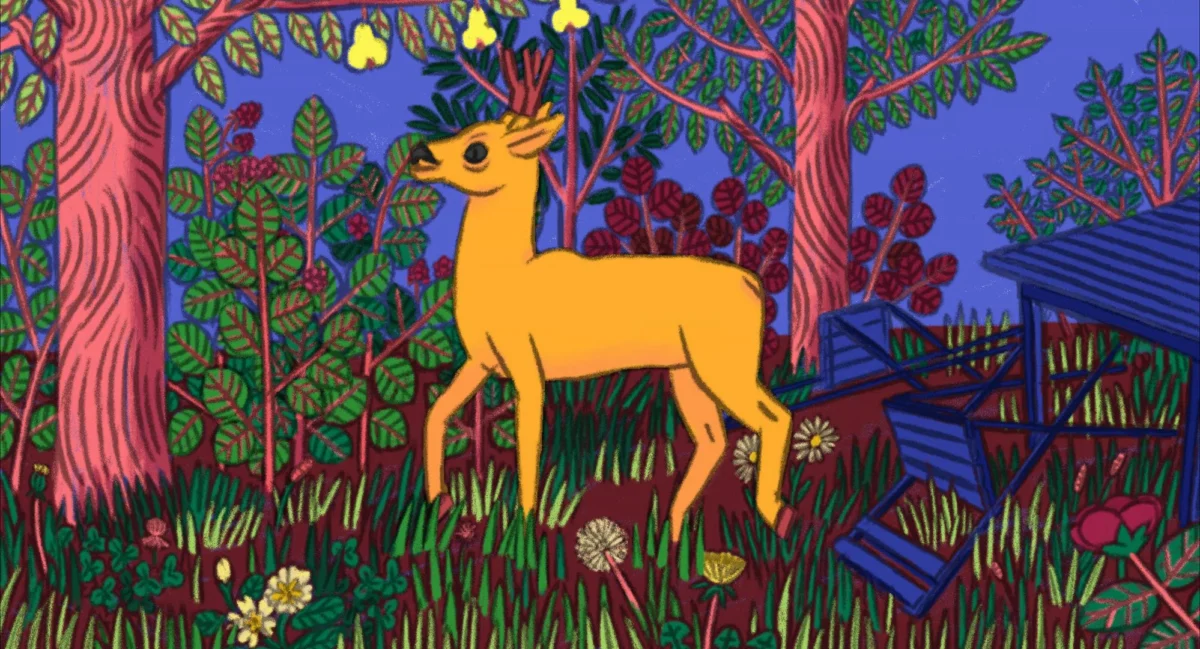
In the intricate tapestry of modern family life, there exists a silent, universal pressure—the relentless hum of domestic responsibility that, for many parents, can manifest as a quiet, desperate yearning for solitude. It is this exact emotional landscape that animator Delphine Priet-Mahéo explores in her evocative short film, Le Chevreuil (The Roe Deer). By blending the mundane grit of household chaos with the ethereal, dreamlike logic of a fairy tale, Priet-Mahéo crafts a poignant meditation on the contradictions of parenthood: the suffocating weight of unconditional love and the transient, often guilty, desire to simply step out of the frame.
The Genesis of the Domestic Myth
To understand the resonance of Le Chevreuil, one must first acknowledge the universal experience of the "breaking point." Growing up in a traditional household, the threshold of parental patience is a boundary constantly tested by the exuberant, often thoughtless energy of youth. For many, the memory of a mother’s exhaustion—a look not of anger, but of a profound, hollowed-out need for silence—remains etched in the mind.
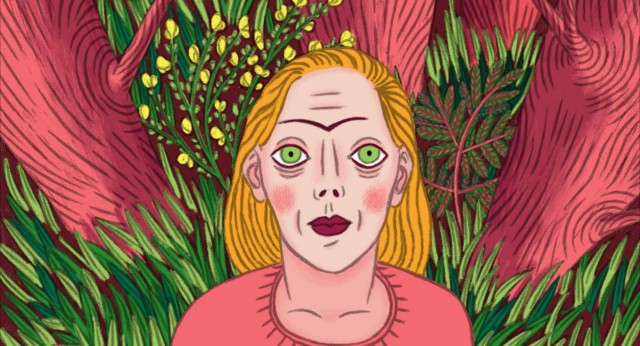
This film acts as an externalization of that internal state. Priet-Mahéo does not frame the protagonist’s desire for escape as a rejection of her family, but rather as a biological imperative to reclaim a sense of self that has been subsumed by the "endless demands" of domesticity. The film asks a radical question: What happens when the anchor of home begins to feel like a tether?
Chronology of a Quiet Escape
The narrative trajectory of Le Chevreuil is deceptively simple, echoing the structure of a classic fable. It follows a mother, submerged in the sensory overload of raising children, who finally reaches a point of sensory saturation.
- The Saturation: The opening act establishes the familiar chaos of the household—the noise, the demands, and the microscopic frustrations that, when accumulated, create a mountain of stress.
- The Appearance: Into this domestic environment wanders the titular roe deer. In the tradition of literary catalysts—much like the White Rabbit in Lewis Carroll’s Alice in Wonderland—the deer represents a departure from the rational, ordered world of the home.
- The Pursuit: Drawn by the promise of the unknown, the mother follows the creature into the woods. This transition marks a shift in the film’s aesthetic and tone, moving from the sharp lines of domestic reality into a lush, painterly, and surreal forest landscape.
- The Realization: The escape is short-lived. The introduction of external threats—hunters in the woods—serves as a jarring reminder of the vulnerability of the wild.
- The Return: The tension between the freedom of the wilderness and the security of the home resolves when the mother realizes that while the forest offers silence, the home offers the profound, life-affirming safety of belonging.
Supporting Data: The Psychology of "Parental Burnout"
While Le Chevreuil is a work of animation, its narrative arc is supported by contemporary psychological research regarding parental burnout. According to studies conducted by organizations such as the Parental Burnout Research Lab, the phenomenon is characterized by emotional exhaustion, distancing from one’s children, and a sense of inefficacy.
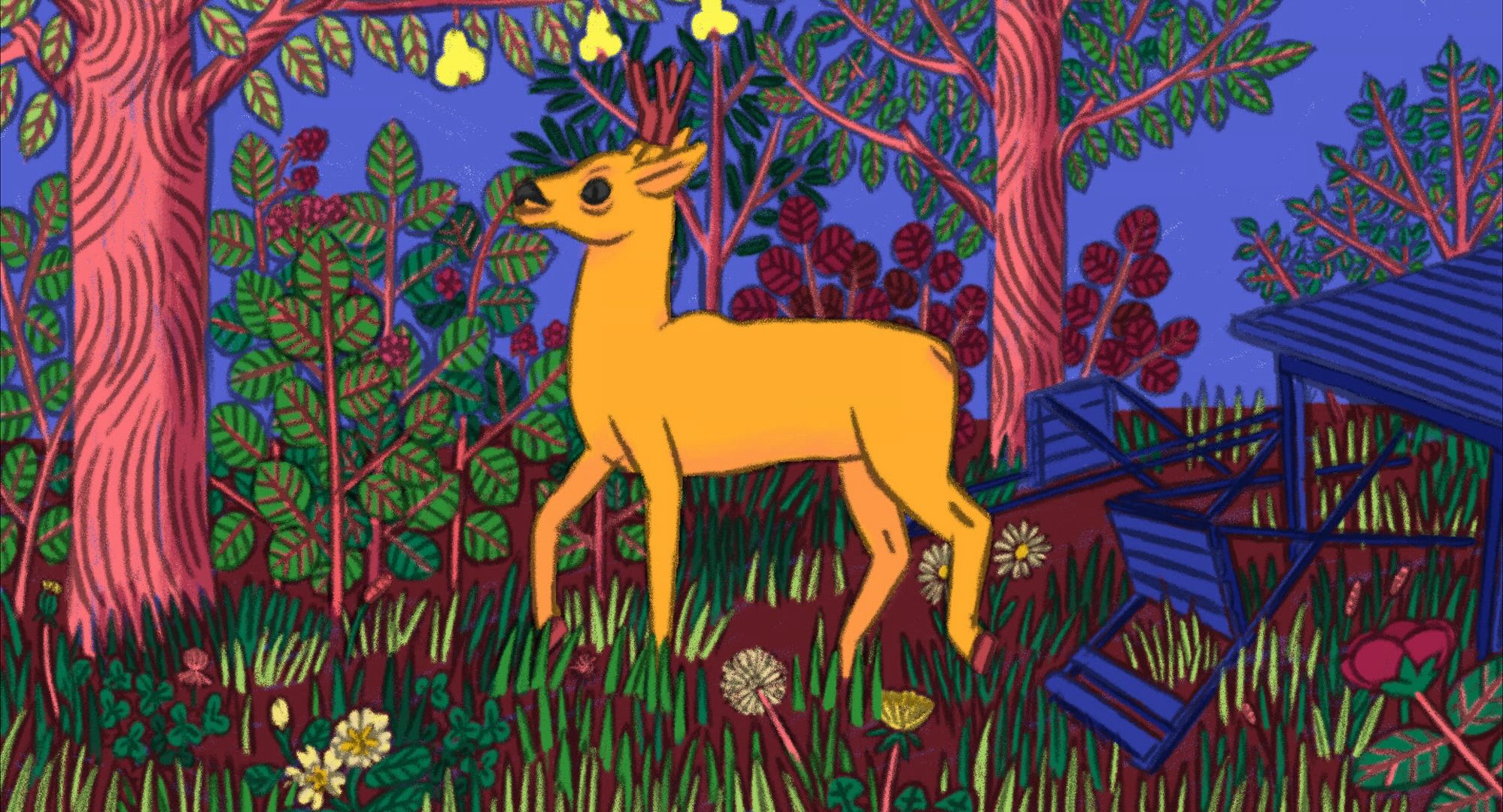
The film captures the "distancing" phase with startling clarity. When the mother follows the roe deer, she is physically and mentally distancing herself from the role of the caregiver. This is not an act of malice, but a survival mechanism. The "hunt" that she encounters in the forest acts as a metaphor for the unpredictable dangers of the outside world, contrasting sharply with the "controlled" dangers of a messy living room. Data suggests that the primary reason parents return from such moments of "escapism" is the inherent biological drive to protect the unit, validating the film’s conclusion that the home, for all its noise, remains the primary site of human security.
Artistic Intent: The Aesthetic of the Fairy Tale
Delphine Priet-Mahéo’s visual choices are central to the film’s impact. The animation style is reminiscent of illustrated children’s books, utilizing a vibrant yet soft color palette that invites the viewer into a space of nostalgia. By grounding the film in an aesthetic that feels inherently "safe" and "childlike," Priet-Mahéo makes the protagonist’s internal crisis feel more jarring.
The roe deer itself is a masterful piece of character design. It is neither fully animal nor fully spirit; it serves as a mirror for the mother. In early interviews regarding the film’s production, Priet-Mahéo noted that she wanted to capture the "otherness" of nature—the way it exists entirely outside the framework of human obligation. The deer does not demand, it does not negotiate, and it does not need. It simply is. For a parent whose life is defined by the needs of others, this state of existence is the ultimate temptation.
Implications: A New Lens on Parental Representation
The implications of Le Chevreuil in the broader landscape of animated storytelling are significant. Historically, parents in animation are often relegated to secondary roles—the providers, the disciplinarians, or the absent figures. Rarely is the internal, psychological struggle of the parent the primary focus of the narrative.
By centering the story on the mother’s need for five minutes of silence, Priet-Mahéo challenges the cultural taboo that equates motherhood with total, unadulterated self-sacrifice. The film posits that it is possible to love one’s children with an overwhelming intensity while simultaneously feeling the urge to run into the woods to escape them. This is a vital, healthy, and often-suppressed truth of the parenting experience.
The Role of the Father
Interestingly, the film touches upon the shift in household dynamics as the mother departs. The children, left in the care of the father, experience a different kind of parental interaction. This subtle inclusion prevents the film from becoming a one-sided commentary, instead presenting the family as a dynamic ecosystem where the absence of one pillar forces the others to adjust. It highlights that the "chaos" is not a fault of the mother, but a byproduct of the family unit itself.
Conclusion: The Anchor and the Sea
Le Chevreuil is more than a story about a woman chasing a deer; it is a profound exploration of the tension between the individual self and the communal self. The film’s success lies in its refusal to offer a simple resolution. The mother does not "solve" her burnout; she returns to it, but she does so with a changed perspective.
She has realized that the suffocating noise of her family is, paradoxically, the very thing that prevents her from being truly lost. The forest, while beautiful, is indifferent to her existence. The home, with all its mess and madness, is where she is known, and where she is vital.
As we continue to navigate a world that places increasingly high demands on parents, films like Le Chevreuil serve an essential function. They provide a mirror for our own quiet, desperate moments, validating the exhaustion that comes with love. Priet-Mahéo has managed to take a private, almost shameful feeling—the desire to leave—and turn it into a universal piece of art that affirms the complex, difficult, and beautiful reality of being part of a family. In the end, we are all just looking for the balance between the wild, silent woods and the warm, noisy house.
