
Sony Faces Supply Chain Pressure: FE 600mm F6.3 GM OSS Orders Exceed Projections
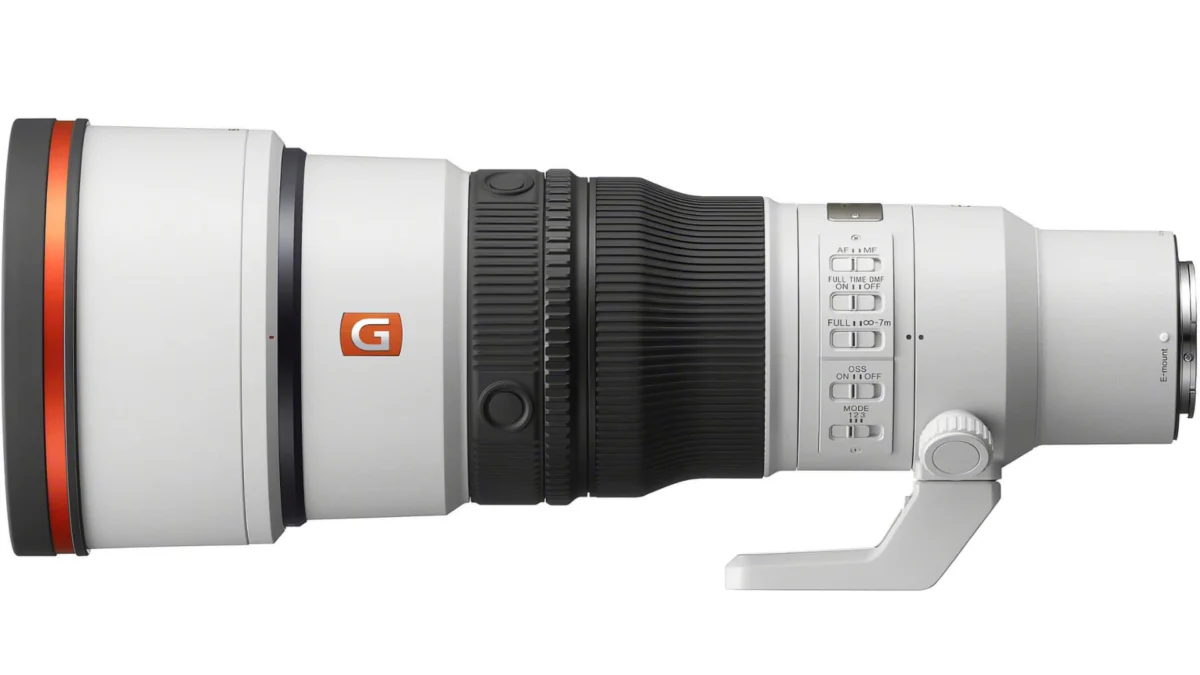
The landscape of professional photography and cinematography is currently witnessing a period of intense hardware anticipation, tempered by the sobering realities of global supply chain logistics. Sony, a dominant force in the imaging sector, has officially confirmed that it is struggling to keep pace with overwhelming consumer demand for its latest piece of elite optical glass: the FE 600mm F6.3 GM OSS G Master super-telephoto lens.
This development, while framed by the manufacturer as a "success of demand," highlights a growing trend of production bottlenecks affecting the company’s fall 2026 release cycle. As enthusiasts and professionals alike clamor for the new hardware, the delta between announcement and acquisition is widening, raising questions about Sony’s manufacturing scalability in an era of high-precision optics.
The Core Conflict: Demand Outstripping Supply
Sony Japan issued a formal statement on September 29, 2026, confirming that the pre-order volume for the newly announced FE 600mm F6.3 GM OSS has significantly eclipsed the company’s initial market forecasts. In the optics industry, where production cycles are measured in months rather than weeks due to the complexity of grinding, coating, and assembling G Master-grade elements, such surges in demand are rarely met with immediate inventory scaling.
The statement, released to the Japanese domestic market, was direct: "Orders for the FE 600mm F6.3 GM OSS (SEL600F63GM) have opened… We have received significantly more orders than we anticipated, so delivery may take some time. We are doing everything we can to meet our customers’ needs, and we ask for your patience."
For many, the $3,699 price point was expected to act as a natural filter, limiting the lens to high-end sports, wildlife, and aviation photographers. Instead, it appears the market has been starved for a high-performance, lightweight super-telephoto option, leading to a "run" on the product that has effectively cleared the initial production batch before it even left the factory floor.
Chronology of the Release and Subsequent Delays
To understand the current bottleneck, one must look at the timeline of the Fall 2026 product rollout. Sony’s strategy was to capitalize on the autumn season—a prime window for wildlife photographers and the beginning of the professional sports calendar.
- Mid-September 2026: Sony announces the dual-launch of the FE 400mm F4.5 GM OSS and the FE 600mm F6.3 GM OSS. Initial messaging suggests an "October delivery window" for both units.
- September 29, 2026: Official pre-orders open globally. Within hours, regional retailers report massive spikes in traffic, with shipping estimates for the 600mm variant beginning to shift.
- Early October 2026: Sony Japan issues its official cautionary statement regarding the 600mm lens.
- Mid-October 2026 (Projected): The FE 400mm F4.5 GM OSS is currently tracking for an October 7 shipment, appearing to avoid the supply issues plaguing its longer-reach sibling.
- October 23, 2026: Sony Europe updates its digital storefront to reflect this specific ship date for the 600mm lens, a date that industry analysts are watching closely as a bellwether for global availability.
While the October 23 date still technically falls within the original "October delivery" promise, the necessity for a formal warning suggests that Sony is bracing for further slippage. In the world of high-end manufacturing, once a product is "backordered" at launch, the waiting list typically grows exponentially, often pushing delivery dates into the following quarter.
The Shadow of the FX5: Dissecting the Parallels
The conversation surrounding the 600mm lens is inextricably linked to the ongoing saga of the Sony FX5 cinema camera. The FX5, which faced a public and well-documented delay, has become the benchmark for how Sony handles production volatility.
There is a distinct difference in the narrative surrounding these two products. For the FX5, Sony’s communication has been vague, citing "production-related circumstances." Insiders and industry rumors have pinned the FX5 delay on a critical failure regarding the integration of the rear LCD panel, a hardware flaw that necessitated a last-minute redesign or a change in component suppliers.
Conversely, the situation with the FE 600mm F6.3 GM OSS is explicitly framed as a "demand-side" issue. Sony maintains that the lens is ready to be produced, but simply cannot be produced fast enough. While skeptics might argue that any manufacturing delay could be interpreted as a technical bottleneck, there is no current evidence suggesting that the 600mm lens suffers from a design flaw similar to the FX5.
However, the psychological impact on the consumer is the same. When a flagship product is delayed, it ripples through the professional ecosystem. Photographers who committed to the Sony E-mount ecosystem based on the promise of these specific focal lengths now find themselves in a precarious position, waiting on hardware that is essential for their professional workflow.
Supporting Data: Regional Variance and Retail Trends
Retailers in Europe have historically served as the most accurate barometer for Sony’s global supply chain health. Because European distribution networks are often more centralized and transparent than in other regions, their shipping estimates are frequently used by analysts to predict when North American or Asian markets might see relief.
The discrepancy between the FE 400mm F4.5 and the FE 600mm F6.3 is particularly telling. The 400mm lens is currently moving through the supply chain with fewer reported hurdles. This suggests that the production line for the 600mm is either more complex, or the demand for that specific focal length was vastly underestimated by Sony’s data science teams.
For the $3,699 600mm lens, the October 23 date is the "best-case scenario." If component shortages—specifically regarding the specialized glass elements or the Optical SteadyShot (OSS) stabilization motors—occur, that date could easily shift into November. Investors are currently monitoring these delays, as Sony’s stock price and brand reputation are sensitive to the company’s ability to deliver on "premium" promises.
Implications for the Sony Ecosystem
The implications of these delays are threefold:
1. The "Lock-in" Effect and Brand Loyalty
Sony’s strength lies in its expansive lens ecosystem. However, that strength becomes a vulnerability when customers cannot access the tools they have invested in. If a professional photographer cannot acquire the 600mm lens in time for a major project, they may be forced to rent competing glass or consider switching systems entirely. While unlikely for established Sony users, prolonged delays erode the competitive advantage of the E-mount.
2. The Optics Manufacturing Bottleneck
The production of G Master lenses involves some of the most sophisticated engineering in the imaging world. These are not mass-market consumer goods; they require artisanal-level calibration. The current surge in demand suggests that the market for "super-telephoto" photography is growing faster than Sony’s production capacity. This may force Sony to invest in more automated, high-precision assembly lines, or potentially raise prices to suppress demand and match production levels.
3. Communication Strategy
Sony’s decision to issue a proactive statement is a calculated attempt at damage control. By acknowledging the delay early, they hope to preserve trust. However, if the October 23 date passes without fulfillment, the company risks a crisis of credibility. In the modern era of social media, the "fanbase" is vocal and unforgiving. A delay of several weeks can result in thousands of negative reviews and forum posts, which can have a lasting impact on the perceived value of the product.
Conclusion: The Path Forward
As of mid-October, the outlook for the Sony FE 600mm F6.3 GM OSS remains fluid. The company has made it clear that they are "doing everything they can" to expedite production. For the professional photographer, the reality is one of cautious waiting.
The broader lesson of the 2026 fall season is that even the most sophisticated supply chains are fragile. As Sony balances the production of its flagship cinema cameras with its elite optical range, the company is learning that in a high-demand market, having the best product is only half the battle. The other half is ensuring that those products can actually reach the hands of the people who rely on them to create.
Whether the October 23 shipment date holds firm or proves to be another milestone in a longer, more frustrating delay remains to be seen. For now, the optics industry is watching Sony, waiting to see if they can clear their backlog and restore confidence in their logistics capabilities.
