
The Mastermind Behind the Madness: Jeff Tremaine and the Unlikely Art of Jackass
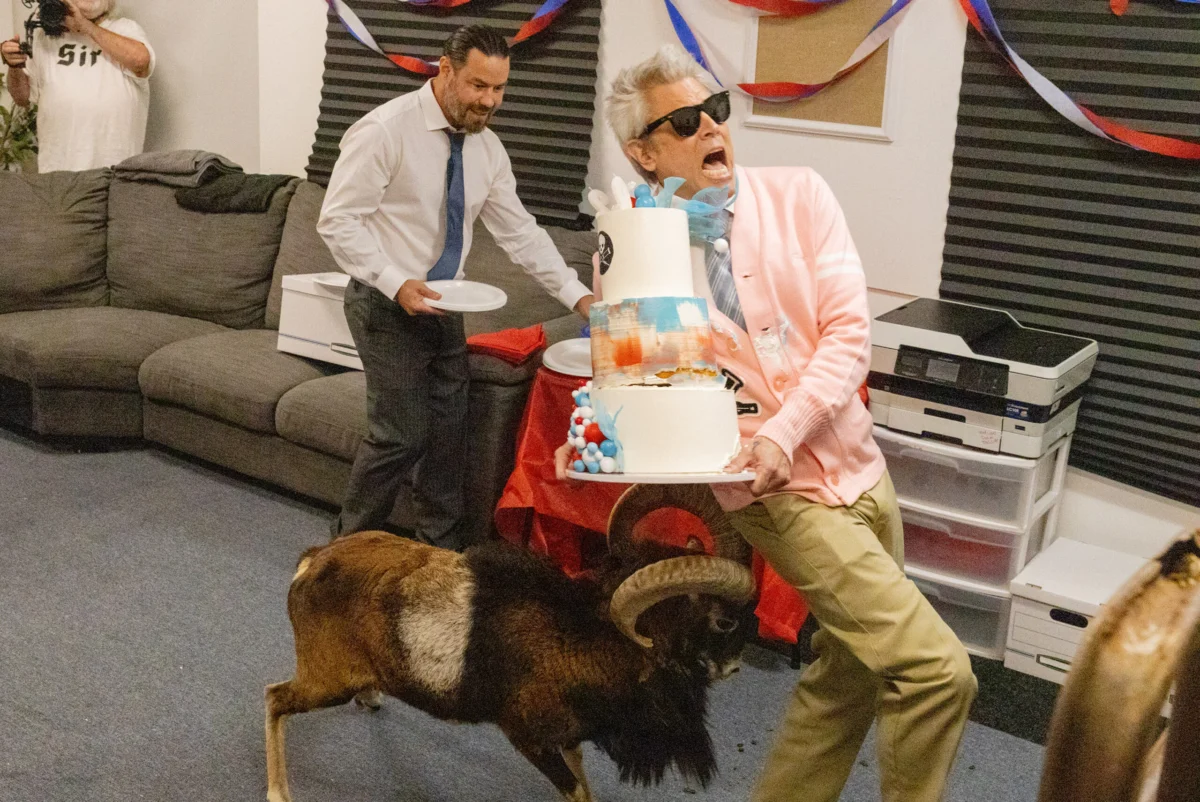
As the cultural juggernaut that is Jackass prepares to potentially hang up its Depends and drop its final safety pads with Jackass: Best and Last (2026), a strange wave of nostalgia has washed over its creators. For Jeff Tremaine, the man who has operated the camera and orchestrated the chaos from the very beginning, the milestone has brought deep reflection.
Sitting down for an interview last Thursday, wearing a vintage Smiths T-shirt and sporting a boyish, impish grin beneath a crown of gray hair, Tremaine looked remarkably unburdened by his status as an architect of modern counterculture. Yet, as he sifted through decades of footage for the franchise’s final chapter, the reality of the journey set in.
“I really felt it in the edit bay when we started opening up the old footage and looking back on how long we’ve been doing this,” Tremaine shared. “Seeing all these guys as babies, that hit me a little bit. We thought that we would get one episode on TV—if we did—and it would just get shut down. We weren’t built to run long-distance, but somehow we did.”
Despite cultivating a background in fine arts with an undergraduate degree in painting and drawing, Tremaine has rarely been written about as a traditional filmmaker. Instead, media and fans alike have often cast him as just another knucklehead in a troupe of professional idiots. But beneath the surface of gross-out gags, groin hits, and public humiliation, Tremaine has quietly shaped a franchise known just as much for its joyous, life-affirming celebration of healthy male friendship as it is for its juvenile stunts.
Main Facts: The End of an Era
The release of Jackass: Best and Last marks the twilight of a revolutionary media experiment that transitioned from a renegade skateboarding magazine insert to a global multi-hundred-million-dollar entertainment empire.
- The Franchise Origin: What started as localized, guerilla-style footage shot for Big Brother magazine eventually ballooned into a phenomenon.
- The Core Creative Trio: Alongside co-creators Johnny Knoxville and Spike Jonze, Jeff Tremaine defined the raw, uninhibited aesthetic of the series.
- The Critical Evolution: Once universally panned by critics as a corrosive influence on youth, the franchise has undergone a massive critical re-evaluation, eventually being celebrated by high-brow institutions like the Museum of Modern Art (MoMA).
- The Final Chapter: Jackass: Best and Last offers an intimate retrospective, including never-before-seen outtakes and emotional reflections from a cast that grew up in front of the lens.
Chronology: From Underground Zine to Global Phenomenon
To understand how Jackass evolved from a localized counterculture video into a cinematic staple, one must trace the timeline of its accidental architects.
The Big Brother Era (Late 1990s)
Long before Paramount Pictures came knocking, Tremaine was happily living out his career pinnacle as the art director for Big Brother, a subversive skateboarding magazine. Tasked with curating the most outrageous personalities in the skating community rather than necessarily the best technical skaters, Tremaine fostered an environment of unbridled anarchy.
The turning point arrived when Johnny Knoxville shot himself with a handgun while wearing a bulletproof vest for a magazine segment. Recognizing Knoxville’s magnetic, slightly deranged charisma alongside early pranksters like Steve-O, Wee Man, and Chris Pontius, Tremaine realized they had captured lightning in a bottle.
The MTV Explosion (2000–2002)
Picked up by MTV, the Jackass television series instantly captured the zeitgeist of early-2000s youth culture. However, the show’s intense public scrutiny, battles with network censors, and copycat incidents led to its eventual voluntary cancellation after just three seasons.
The Cinematic Transition (2002–2010s)
Rather than letting the project die, the team pivoted to the silver screen. Jackass: The Movie (2002) proved that audiences were willing to pay theatrical ticket prices to watch grown men fling themselves into traffic, wrestle alligators, and subject themselves to biological warfare.
As the films evolved—culminating in Jackass 3D (2010) and Jackass Forever (2022)—production budgets swelled, camera technology advanced, and the cast transitioned from reckless twenty-somethings into battered middle-aged men performing stunts with an underlying layer of poignant brotherhood.
Supporting Data and Production Insights
Transitioning from a guerrilla video crew operating out of a single van to a heavily regulated Hollywood studio machine came with significant growing pains.
The Logistics of Chaos
“We used to all fit in one van. The cameraman, the sound guy and the cast—and I’m driving the van… for a Paramount movie!” Tremaine recalls of the early cinematic days. He often found himself doubling as a medical transport driver, driving Ryan Dunn to the hospital without the aid of union drivers.
Over the years, the footprint expanded exponentially. Productions that once relied on absolute spontaneity—such as impulsively kidnapping Brad Pitt to drop him into a line at Pink’s Hot Dogs—gradually morphed into complex, highly orchestrated operations.
Navigating Studio Censorship
Operating within a major studio framework required constant negotiation, particularly with the MPAA regarding nudity and bodily humor. Tremaine recalls a famous battle during Jackass 3D:
"We had this scene where it was the super-slow-motion camera shooting Chris Pontius’s penis hitting a ping-pong ball like a baseball bat… Paramount came back: ‘No, it’s got to be shorter.’ I’m like, ‘Tell me the number,’ and they’re like, ‘You can have ten seconds of penis exposed.’ So we ended up putting a black bar over it, and then the black bar slides away and the dick hits the ping-pong ball… and then the black bar comes back in and covers it."
Official Responses: The MoMA Sea Change and Critical Reception
For years, the cultural establishment treated Jackass as a lowbrow blight on society. However, a significant cultural shift occurred when Jackass 3D premiered at the Museum of Modern Art (MoMA) in 2010, reframing the franchise as performance art.
When asked about his reaction to the intellectualization of his work, Tremaine maintains a self-deprecating perspective:
"I thought it was hilarious, and you are picking up on something—I’ve always struggled with intellectualizing what we do. To me, it is just so surface-level: ‘This is what we do and it’s stupid. We’re magnifying stupid.’ That’s all it is to me."
Despite his resistance to high-art labels, Tremaine acknowledges that the critical reception flipped entirely by the time Jackass Forever debuted in 2022. While initial reviews were universally scathing—a fact that once fueled his rebellious "fuck you" attitude—the sudden influx of glowing, psychological analyses left him momentarily disoriented.
“I’m like, ‘This doesn’t feel right. Either we’ve been doing it too long and now the kids that we raised up are now the critics—or maybe we’re just not fucking punk anymore,’" Tremaine jokes.
Implications: The Legacy of a Generational Institution
As the Jackass era draws to a close, its broader cultural and cinematic implications become clearer.
- Redefining Male Friendship: Cultural critics frequently note that Jackass stands as one of the most positive depictions of modern masculinity in media. Free of toxic posturing, competitive rivalry, or homophobia, the cast displays a radical, unconditional love for one another, comforting each other through brutal injuries with profound tenderness.
- The Death of Guerilla Filmmaking: The franchise highlights the increasing difficulty of capturing spontaneous, unauthorized public comedy in an age of hyper-surveillance, security permits, and corporate liability.
- An Unchanged Artistic Voice: Despite branching out into unexpected projects—such as directing an ultra-stylish, musical-esque safety video for American Airlines—Tremaine’s core creative identity remains rooted in the punk rock ethos of his youth.
Approaching 60 years old, Tremaine continues to express mock-frustration over his refusal to culturally mature. “I’m almost 60 years old, and I still like to draw dicks on things. It’s weird to me that that is still funny to me. I’m waiting to grow up.”
If Jackass: Best and Last truly serves as the final curtain call for television and film’s most infamous daredevils, it leaves behind a legacy built not just on broken bones and projectile vomiting, but on an enduring, unvarnished authenticity that Hollywood may never see again.
