
Revenge, Rage, and 9/11: Inside Giselle Bonilla’s Audacious Feature Debut The Musical at the 2026 Sundance Film Festival
PARK CITY, Utah — Who among us has not harbored a fleeting, secret fantasy about orchestrating the cinematic downfall of an irritating, overly successful enemy? Nobody is entirely perfect. Yet, while most of civilized society keeps these bitter impulses locked safely away in the darkest corners of the mind, fictional characters are under no such obligation. Enter Doug Leibowitz.
Played by Will Brill with a tightly wound, hyper-caffeinated energy that suggests he is constantly one minor inconvenience away from a total psychological collapse, Doug stands at the volatile center of The Musical. Marking the feature-length directorial debut of Sundance Institute Ignite program alumna Giselle Bonilla, the dark comedy had its world premiere on January 25, 2026, at the Eccles Theatre during the U.S. Dramatic Competition at the Sundance Film Festival.
Screening to a packed and frequently stunned audience in Park City, the film presents an uncompromisingly brazen premise: a beleaguered middle school drama teacher enacts an elaborate, jaw-droppingly tasteless revenge scheme designed to humiliate his romantic and professional rivals, using an original student production about the events of September 11 as his weapon of choice.
Main Facts: The Anatomy of a Cinematic Sabotage
At its core, The Musical is a study in petty vengeance, exploring the lengths to which a deeply insecure man will go when life systematically dismantles his fragile ego.
The narrative kicks off as Doug’s life enters a downward spiral. Fresh off a painful breakup with his long-term girlfriend, Abigail (portrayed with grounded frustration by Gillian Jacobs) — who also happens to be the art teacher at the middle school where they both work — Doug finds himself drowning in professional inadequacy. His romantic prospects are nonexistent, and his applications for prestigious theater fellowships that might serve as his ticket out of local obscurity and into New York City continue to meet with rejection letters.
Then arrives the final, unforgivable straw: Doug discovers that Abigail has moved on and is now dating the school’s fiercely ambitious, effortlessly charismatic principal. Principal Brady, brought to life through a masterclass in smug perfection by Rob Lowe, has set his sights firmly on securing the coveted Blue Ribbon of Academic Excellence for the institution, a milestone that would cement his legacy and bring prestige to the school district.
Following a visual gag that is as impeccably timed as it is offensive, Doug experiences a moment of toxic clarity. He realizes precisely how he can dismantle Principal Brady’s aspirations, torpedo his professional standing, and exact his revenge. His master plan? He will direct his unsuspecting middle school drama students in an original, boundary-shattering musical about 9/11.
Chronology: From Concept to the Eccles Theatre Stage
The journey of The Musical from an unproduced screenplay to one of the most talked-about premieres of the 2026 Sundance Film Festival reflects a remarkable alignment of bold creative choices and guerrilla-style filmmaking logistics.
Phase One: Conception and Development
Screenwriter Alexander Heller penned the script, infusing it with a biting, self-aware cynicism. When Heller approached Giselle Bonilla to direct, the first-time feature filmmaker initially weighed the sheer audacity of the material. However, the alignment of their creative sensibilities proved irresistible. Bonilla, whose background includes the Sundance Institute’s Ignite program, saw the film not merely as a provocation, but as an honest reflection of contemporary emotional landscapes.
Phase Two: The Covert Production
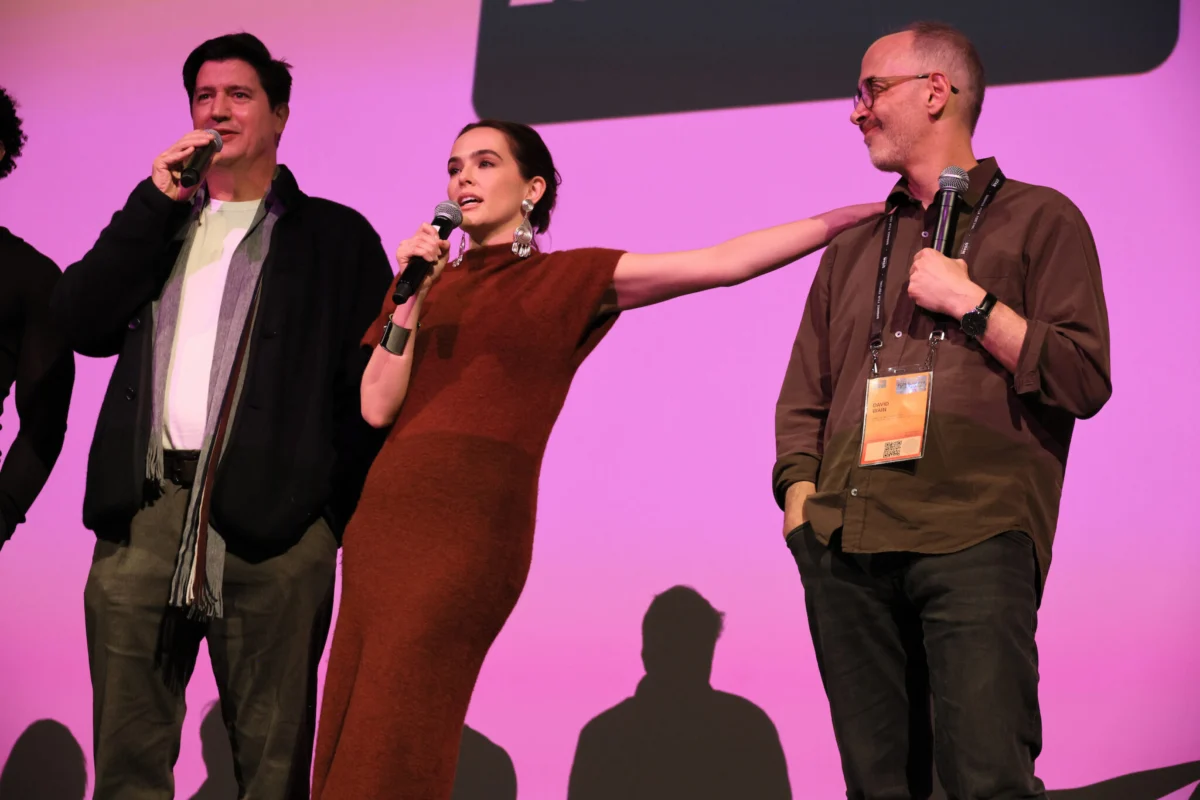
Production logistics on The Musical mirrored the clandestine nature of Doug’s own plot within the film. Speaking at the post-premiere Q&A session at the Eccles Theatre, Bonilla revealed the unique challenges of shooting with a cast of minors.
"What’s crazy is that we shot at the school without them knowing what it was about," Bonilla told the audience, drawing murmurs of astonishment. To maintain the secrecy of the narrative, the production crew engineered mobile sets that could be rapidly packed up at the conclusion of each shooting day. "We all kind of turned into Doug, every department head, in the actual making of the film."
Furthermore, Bonilla faced the challenge of casting youthful talent that felt grounded rather than overly manicured. "I was extremely nervous about casting kids because I didn’t want it to feel like Disney kids," the director noted. "I wanted it to feel like real kids, and I wanted their personalities to shine through."
Phase Three: The World Premiere
On January 25, 2026, the culmination of these efforts manifested on the grand stage of Park City’s Eccles Theatre. Joined by stars Will Brill, Alexander Heller, Nevada Jose, and Giselle Bonilla, the premiere established The Musical as a lightning rod for festival discourse, sparking immediate debates regarding the limits of satire, the psychology of spite, and the ethics of artistic exploitation.
Supporting Data and Production Insights
The production of The Musical relied heavily on the distinct chemistry between its ensemble cast and the thematic explorations embedded within Heller’s script.
Character Dynamics and Performances
- Doug Leibowitz (Will Brill): Brill’s portrayal of Doug relies on a delicate balance between pathos and unmitigated selfishness. When asked during the Q&A how he prepared for such a fractured character, Brill joked, "I mean, it was a lifetime of preparation. Every moment of my life has led to this. Everything has been a challenge. What can I say? It was fraught with doubt, everything was hard, and everything was fun. And these guys made it eminently easier, too," he added, gesturing warmly toward the young actors who played his students.
- Principal Brady (Rob Lowe) and Abigail (Gillian Jacobs): Lowe’s embodiment of institutional ambition provides a polished, infuriating foil to Brill’s ragged desperation. Jacobs anchors the film’s periphery with a weary realism, representing the collateral damage of Doug’s emotional turbulence.
- The Student Ensemble: Led by young actors like Aidyn James Ahn, the middle school students in the film are far from passive props. Unaware of Doug’s malicious true motivations, the kids view the project as an opportunity to make an authentic artistic statement and "stick it to the man." Moreover, the internal politics of middle school theater ensure that, even in a production about a major historical tragedy, the struggle for a leading role remains paramount.
Official Responses and Creator Statements
During the post-screening panel discussion moderated by Festival programmer Heidi Zwicker, the creative team addressed the inevitable questions surrounding the film’s provocative subject matter.
When asked by Zwicker what compelled her to tackle such a daring project for her feature directorial debut, Bonilla offered a blunt, laugh-inducing assessment of the contemporary sociopolitical climate.
"I don’t know, look at the frickin’ world," Bonilla responded. "Like, my neutral is rage, but people don’t really listen to me when I’m yelling, so if I can make them laugh first, then sometimes they listen."
Addressing the thematic inspiration behind the screenplay, Alexander Heller deflected any notion of a direct autobiographical school trauma, choosing instead to lean into self-deprecating humor.
"I think just every experience of mine somehow becomes traumatic," Heller quipped, drawing robust laughter from the Eccles Theatre crowd. "I’m not very good at dealing with stuff."
When confronted directly about the choice of a 9/11 musical as the narrative vehicle for revenge, Heller clarified the film’s satirical boundaries:
"It’s not a 9/11 comedy, I think, for any of us. It’s a comedy about this guy who’s selfish and petty and would, you know, stop at nothing, even exploiting a tragedy, for his own ends, and I happen to know quite a bit about being a selfish, petty guy, so I felt pretty good about that."
The young cast members were equally quick to defend the emotional honesty underpinning the dark humor. Aidyn James Ahn, reflecting on the thematic resonance of the movie, encapsulated the sentiment of the younger ensemble:
"I love this movie so much, because nobody really talks about the power of, like, spite and rage."
Implications: Where The Musical Fits in Contemporary Cinema
As the 2026 Sundance Film Festival unfolds, The Musical has firmly established itself as a litmus test for modern cinematic boundaries. In an era where audiences increasingly crave moral clarity, Giselle Bonilla’s film defiantly plunges into the murky, uncomfortable waters of unadulterated human pettiness.
By utilizing a national tragedy as the playground for a middle-school teacher’s petty romantic and professional grievances, the film forces viewers to confront the uglier mechanics of motivation. Doug Leibowitz is not a traditional anti-hero; he is a cautionary tale of what happens when emotional immaturity collides with unbridled creativity. Yet, because Brill infuses him with a desperate, deeply human yearning to be seen, the character remains compulsively watchable.
Furthermore, The Musical serves as a striking arrival for Bonilla as a feature director capable of handling high-wire tonal balancing acts. The success of the film hinges on its ability to prevent its central premise from collapsing into mere shock value, grounding the absurdity in the genuine dynamics of middle school politics, institutional pressure, and individual narcissism.
As the credits rolled at the Eccles Theatre, leaving audiences to grapple with the chaotic fallout of Doug’s theatrical crusade, one reality became abundantly clear: The Musical is not interested in playing it safe. In an artistic landscape frequently dominated by calculated formulas, Bonilla, Heller, and their cast have delivered a cinematic hand grenade disguised as a school play — proving that sometimes, the most effective way to address the rage of the modern world is to laugh directly in the face of absolute bad taste.
