
The Case for Wile E. Coyote: How Coyote vs. Acme Bridges Animation, Live-Action, and VFX Physics
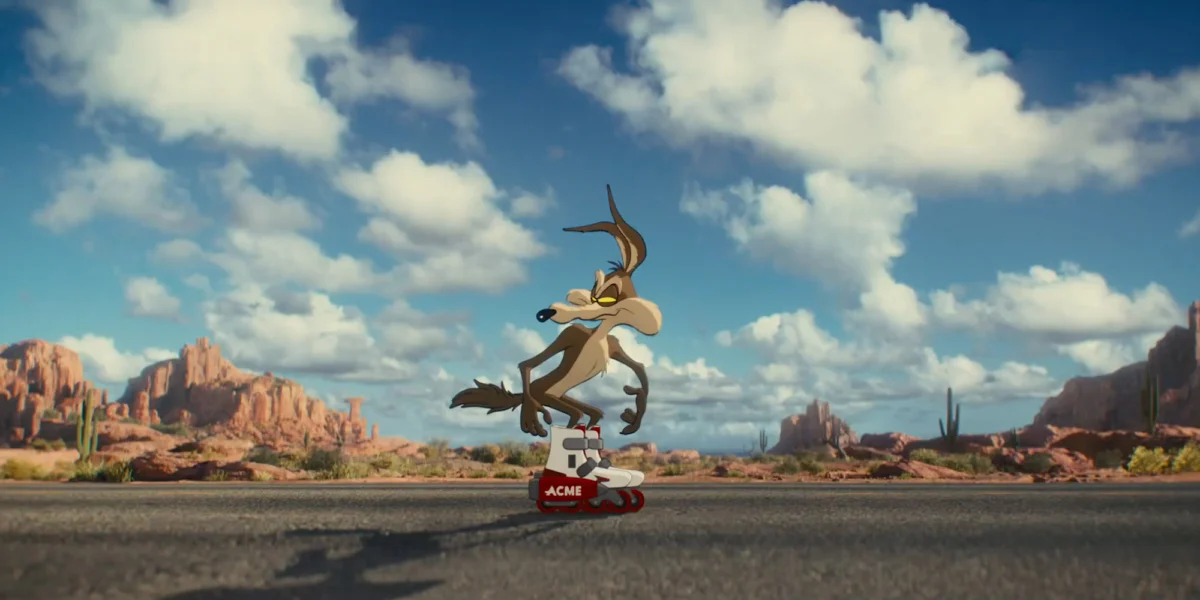
After decades of falling anvils, backfiring rockets, and catastrophic customer service, Wile E. Coyote finally gets his day in court. This week, the legal and creative teams behind the VFXShow—featuring Matt Wallin, Jason Diamond, and Mike Seymour—take Coyote vs. Acme to the stand. The panel examines the movie’s groundbreaking animation, state-of-the-art visual effects, and the immense artistic challenges of translating the chaotic, gravity-defying universe of Looney Tunes into a believable live-action hybrid world.
Main Facts: Taking the Ultimate Underdog to Court
Directed by Dave Green from a screenplay by Samy Burch, Coyote vs. Acme draws its creative inspiration from Ian Frazier’s celebrated 1990 New Yorker satirical article. The narrative centers on Kevin Avery, a down-on-his-luck personal injury attorney played by Will Forte, whose newest client—Wile Ethelbert Coyote—possesses an unusually extensive, highly documented history of product-related workplace accidents.
With enthusiastic encouragement from his niece and legal intern, Paige (played by Lana Condor), Avery takes on the monopolistic Acme Corporation and its slick corporate counsel, Buddy Crane (played by John Cena). Naturally, the litigation hits immediate roadblocks, not least of which is the logistical nightmare of serving a legal subpoena on a notoriously fast-moving Road Runner.
Behind the comedy and courtroom drama lies a massive technical undertaking. The production required the digital integration of classic cartoon physics with live-action cinematography. Spearheaded primarily by visual effects house DNEG, the film blends cutting-edge computer-generated (CG) character animation with traditional hand-drawn techniques. To preserve Wile E. Coyote’s iconic silhouette, timing, and gloriously impossible physical logic within a live-action frame, the creative team had to pioneer new ways of thinking about digital puppetry, on-set blocking, and cartoon compositing.
Chronology: From Satirical Page to Silver Screen
The journey of Coyote vs. Acme from literary parody to cinematic spectacle spans over three decades, marked by creative reinventions, shifting studio strategies, and technical milestones.
1990: The Literary Foundation
Ian Frazier publishes his satirical legal brief in The New Yorker, titled "Coyote v. Acme." Written in the dense, formal prose of a personal injury lawsuit, the document itemizes dozens of defective products manufactured by the Acme Corporation—ranging from dehydrated boulders to earthquake pills—that invariably backfired on the plaintiff, causing severe bodily harm and psychological distress. The piece immediately resonated with readers, establishing the comedic premise that Wile E. Coyote was not merely a clumsy predator, but a victim of corporate negligence.

Development and Scripting
Decades later, Warner Bros. recognized the cinematic potential of Frazier’s premise. A creative team comprising screenwriter Samy Burch, James Gunn, and Jeremy Slater crafted a feature-length narrative arc. They transformed the simple gag-driven cartoon character into the emotional and thematic center of a live-action hybrid film. Dave Green signed on to direct, envisioning a courtroom comedy that would treat the Looney Tunes universe with genuine dramatic weight while honoring its anarchic roots.
Production and Technical Execution
Principal photography brought together human actors and invisible cartoon co-stars. To achieve this, the production utilized a multi-layered approach to visual effects. Instead of relying solely on post-production guesswork, the team deployed illustrated “SketchViz” sequences to map out performances and guide complex camera shots. Furthermore, veteran puppeteer Dave Barclay constructed a life-size physical puppet of Wile E. Coyote. This prop gave actors Will Forte and John Cena a tangible physical partner for eye-lines, blocking, and spatial awareness during filming.
Post-Production and Visual Effects Integration
Following principal photography, DNEG took the lead on breathing digital life into the coyote. The core challenge was maintaining the character’s traditional 2D cartoon appeal—such as squash-and-stretch dynamics and impossible silhouettes—while rendering him with realistic fur, lighting, and interaction within a live-action environment. The VFXShow breakdown highlights how the team navigated the delicate balance between cartoon design and photorealistic compositing.
Supporting Data: The Mechanics of Hybrid Filmmaking
Bringing a classic Looney Tunes character into a live-action world required a hybrid workflow that bridged old-school practical effects with cutting-edge digital pipelines.
- The SketchViz Pipeline: Before committing to expensive full-scale CG rendering, the production relied heavily on "SketchViz"—detailed, animated storyboards and rough sketches. This allowed director Dave Green and the editorial team to test comedic timing, framing, and pacing, ensuring that the interaction between live-action actors and animated characters worked structurally before visual effects artists touched the shots.
- Practical On-Set References: The inclusion of puppeteer Dave Barclay’s life-size Wile E. Coyote puppet was vital for maintaining continuity and actor performance. In live-action hybrid films, actors often struggle to act opposite empty space or tennis balls on C-stands. Having a physical proxy allowed actors to gauge scale, reactions, and physical proximity accurately.
- Character Fidelity: DNEG’s CG department faced the unique challenge of translating a character designed for non-Euclidean, flat cartoon logic into a three-dimensional space. Wile E. Coyote’s anatomy frequently stretches, flattens, and shatters. The visual effects pipeline had to incorporate flexible rigging systems that permitted cartoon deformations while maintaining physical consistency with real-world lighting, shadows, and atmospheric effects.
Official Responses and Expert Commentary
The intricacies of bringing Coyote vs. Acme to life were thoroughly dissected on the VFXShow, where industry professionals broke down the artistic and technical hurdles of the production.
The expert panel featured on the podcast includes:

- Matt Wallin (Counsel for the Coyote): Bringing his extensive background in visual effects and digital media arts, Wallin analyzed how the technical pipeline managed to preserve the comedic timing inherent in classic animation while adapting it to modern cinematic pacing.
- Jason Diamond (Expert Witness): A specialist in visual storytelling and production design, Diamond explored the aesthetic choices involved in bridging the gap between stylized Looney Tunes art direction and live-action cinematography.
- Mike Seymour (Acme Product Tester): As a veteran of fxguide, Seymour evaluated the technical execution of the visual effects, focusing on how compositing artists integrated hand-drawn techniques with modern CG assets to achieve a seamless final image.
While studio executives and marketing departments have closely guarded specific box-office projections and distribution strategies, the creative community has universally praised the film’s ambition. Directors and VFX supervisors across the industry have noted that Coyote vs. Acme represents a rare instance where a studio property successfully respects its source material’s surrealism rather than forcing it into a gritty, overly realistic mold.
Implications: The Future of Hybrid Animation and IP Adaptation
The release and technical breakdown of Coyote vs. Acme carry significant implications for the broader entertainment industry, particularly regarding intellectual property adaptation and hybrid filmmaking.
1. Honoring Cartoon Physics in Live-Action
For years, Hollywood’s approach to translating 2D or stylized animated characters into live-action environments leaned heavily toward hyper-realism—often stripping away the expressive exaggeration that made the characters famous in the first place (as seen in various live-action animal remakes). Coyote vs. Acme demonstrates that audiences respond better when filmmakers embrace stylized physics rather than forcing cartoons to conform strictly to the laws of real-world physics. By retaining squash-and-stretch mechanics, impossible body deformations, and classic gag timing, the film proves that CGI can be used to amplify animation roots rather than erase them.
2. Elevating the "Underdog" Narrative
By reframing Wile E. Coyote as a wronged consumer taking on a corporate monopoly, the film elevates a silent slapstick short subject into a feature-length narrative with emotional resonance. This storytelling model opens new avenues for adapting classic, dialogue-free cartoon characters. It suggests that timeless IP can be revitalized not by modernizing them into edgy action heroes, but by leaning into clever, high-concept genre mashups—such as turning a cartoon chase into a courtroom procedural.
3. Workflow Innovations in VFX
The combination of SketchViz, physical puppetry on set, and advanced CG-to-2D compositing used on Coyote vs. Acme provides a blueprint for future hybrid productions. As studios increasingly look to blend animation with live-action environments, the methods highlighted by DNEG and the VFXShow creative team offer a sustainable, actor-friendly framework that mitigates the traditional disconnect between on-set performances and post-production animation.
Ultimately, Coyote vs. Acme proves that even after countless exploding tunnels and plummeting cliffs, Wile E. Coyote—and the artists who bring him to life—still have plenty of bounce left in them.
