
The Revolution in Motion: How the Dykstraflex Changed Cinema Forever

The history of visual effects is punctuated by singular inventions that fundamentally altered the language of film. Among these, few hold as much gravity as the Dykstraflex. Developed by John Dykstra and his team at Industrial Light & Magic (ILM) for George Lucas’s 1977 masterpiece, Star Wars: A New Hope, this motion-control camera system did more than just capture space battles; it redefined the spatial possibilities of science fiction filmmaking.
In a recent deep-dive exploration, befores & afters has spotlighted the Dykstraflex, illustrating how a hybrid of mechanical engineering and computer science turned static miniature photography into a dynamic, fluid art form.
Main Facts: The Genesis of a Motion-Control Giant
Prior to 1975, the visual effects industry was largely reliant on "locked-off" cameras. If a filmmaker wanted a shot of a spaceship, the camera remained stationary while the model was moved or filmed against a blue screen. The result was often stiff, lacking the kinetic energy required to sell the illusion of massive, fast-moving vessels in a vacuum.
Enter John Dykstra, a pioneer who recognized that the solution lay in repeatability. The Dykstraflex was the first practical, computer-controlled camera rig that could execute the exact same camera move multiple times with pinpoint accuracy. This allowed for the layering of multiple passes—a "composite"—where different elements (the ship, the engine glow, the background stars) could be filmed separately and combined later without the jitter or misalignment that plagued previous effects work.
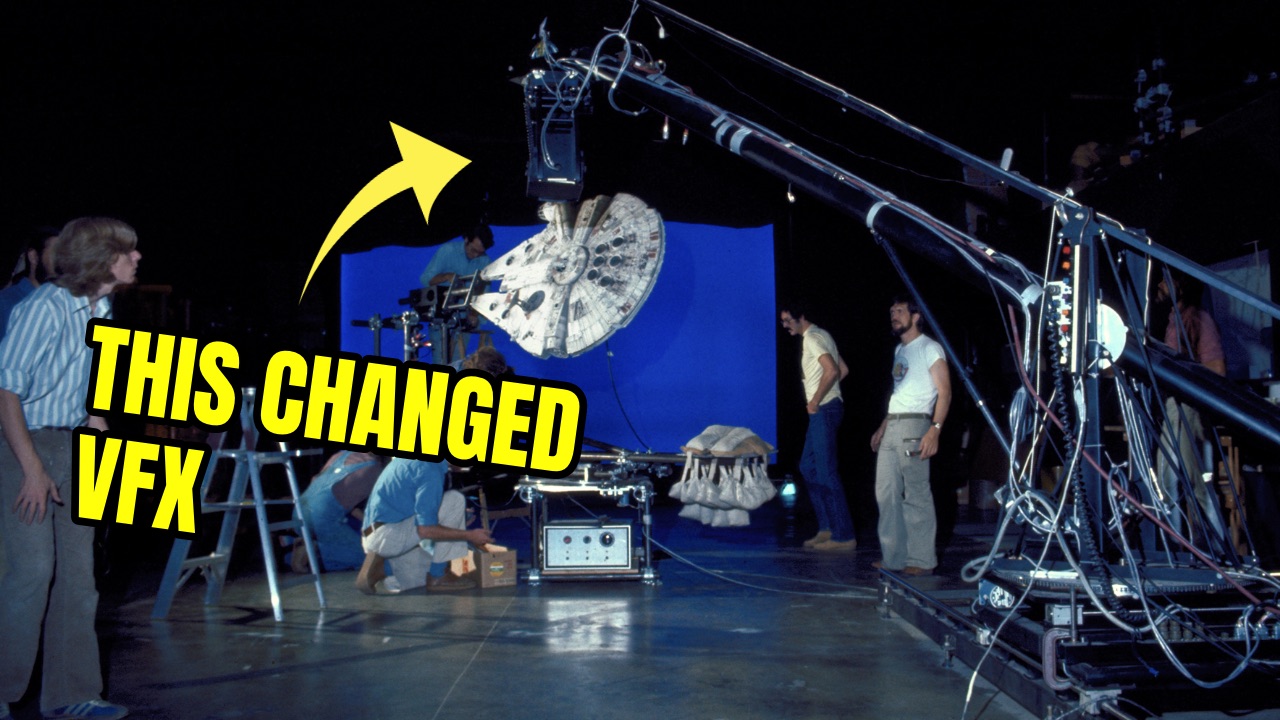
The system utilized a proprietary computer system to record the camera’s movements—pan, tilt, track, and zoom—allowing the operator to "play back" the move for subsequent passes. This technical breakthrough turned the camera into a participant in the action rather than a passive observer.
Chronology: From Concept to Galactic Icon
The journey of the Dykstraflex was one of high-stakes improvisation.
- 1975 (Pre-production): George Lucas founded Industrial Light & Magic in a warehouse in Van Nuys, California. The initial challenge was monumental: Lucas had a vision for space combat that looked like World War II dogfights, but the available technology could not capture that level of motion.
- 1976 (The Build): John Dykstra and a team of engineers, including Al Miller and Jerry Jeffress, began retrofitting a VistaVision camera onto a motion-control rig. They scavenged parts and repurposed equipment, essentially inventing the field of modern motion control as they went.
- 1977 (The Release): Star Wars: A New Hope premiered, stunning audiences with its unprecedented visual fidelity. The shots of the X-wings navigating the Trench Run were only possible because the Dykstraflex allowed the camera to "fly" alongside the models.
- 1978 (Industry Recognition): The Academy of Motion Picture Arts and Sciences awarded the Oscar for Best Visual Effects to the team behind Star Wars, effectively cementing the Dykstraflex as the new industry gold standard.
- Post-1980s (Legacy): The technology was refined and eventually scaled down and digitized, leading to the sophisticated motion-control rigs used in modern blockbusters.
Supporting Data: The Mechanics of Magic
The Dykstraflex operated on the principle of a seven-axis computer-controlled movement. By recording the physical position of the camera at every frame, the computer could ensure that every element of the scene occupied the exact same relative space in the frame across multiple passes.
Consider the complexity of a single shot of the Millennium Falcon. To achieve the desired depth and detail, ILM might perform:

- The Background Pass: Filming the star field.
- The Model Pass: Filming the ship itself under controlled lighting.
- The Interactive Light Pass: Filming specific light sources (like engine exhausts) that would reflect off the hull.
- The Masking Pass: Creating "mattes" to ensure that the ship didn’t become transparent when layered over the stars.
Without the repeatability of the Dykstraflex, these layers would be misaligned by even a fraction of a millimeter, ruining the illusion. The system effectively turned the camera into a robot, removing human error from the equation and allowing for a level of complexity previously seen only in static photography.
Official Responses and Industry Impact
The impact of the Dykstraflex was instantaneous and widespread. Industry veterans at the time initially questioned the viability of an effects house run by "kids" in a warehouse, but the success of Star Wars silenced all critics.
"It wasn’t just about making the ships move," noted visual effects historian Ian Failes, whose recent work highlights these moments in history. "It was about making the camera feel like it was hand-held by a cameraman sitting in the cockpit. It introduced a sense of ‘documentary’ realism to a genre that had previously felt like a puppet show."
The Dykstraflex became the "secret sauce" of ILM, leading to its dominance in the industry for decades. Even as computer-generated imagery (CGI) began to take over in the 1990s, the principles of motion control established by Dykstra remained the foundation for "virtual cinematography." When digital cameras are moved through a virtual 3D environment today, they are effectively utilizing the logic and spatial mathematics that the Dykstraflex pioneered in the physical world.

Implications: A Legacy in Every Pixel
The implications of the Dykstraflex extend far beyond 1977. By proving that mechanical systems could be integrated with filmmaking to create high-end visual effects, the Dykstraflex paved the way for the modern VFX industry. It transformed ILM from a small, struggling startup into the global powerhouse that would eventually define the aesthetic of films like Jurassic Park, Terminator 2, and the Marvel Cinematic Universe.
Furthermore, the Dykstraflex serves as a poignant reminder of the importance of "practical" innovation. In an era where AI and procedural generation are beginning to dominate the creative workflow, the story of Dykstra’s rig reminds us that the most significant leaps forward often come from a fusion of artistic intent and rigid, physical logic.
Why This Matters Today
As we look back at the origins of modern cinema, the Dykstraflex stands as a testament to the idea that technological limitations are often the greatest catalysts for creativity. If George Lucas had been satisfied with the existing effects technology of the mid-70s, Star Wars would have been a different, perhaps lesser, film. Instead, the team pushed the hardware until it broke, rebuilt it, and in doing so, changed how the world sees stories.
For those interested in exploring this history further, befores & afters continues to curate essential resources. From Ian Failes’s new book, WOAH! Great Moments in Effects History Vol. 1, to deep-dive video breakdowns, the effort to preserve the "how" of filmmaking is a vital endeavor for students and fans alike.

The Dykstraflex was not just a tool; it was the bridge between the analog past and the digital future. Every time a camera swoops through a modern action sequence, it is flying in the wake of the machine that made the impossible look real for the very first time.
Further Reading and Resources:
- Book: WOAH! Great Moments in Effects History Vol. 1 by Ian Failes (Available at Amazon in Print/Kindle).
- Video: Explore the full breakdown of the Dykstraflex on the official befores & afters YouTube channel.
- Community: Support the ongoing preservation of VFX history via the befores & afters Patreon.
- Education: Enhance your technical skills through industry-standard courses at fxphd.
