
The Cinematic Geography of Disdain: How Outsiders and "Tourists" Have Mapped Los Angeles
By Editorial Staff
For decades, the cinematic representation of Los Angeles has been a battlefield of perception. While the city functions as the global engine of film production, its portrayal on screen has frequently been dictated by those who view it not as a home, but as a subject to be dissected, often with a scalpel of condescension. In an expansive essay written in 2018—a supplemental chapter to his seminal work Los Angeles Plays Itself—filmmaker and critic Thom Andersen explores the divide between directors who inhabit the city and those he classifies as "tourists."
These "tourist" directors—a cohort ranging from Billy Wilder to Wim Wenders and Clint Eastwood—often approach Los Angeles with a singular agenda: to emphasize its fundamental difference from the European or East Coast cities they call home. By analyzing this cinematic "tourist gaze," we can trace a history of how the city has been misrepresented, ignored, or actively destroyed for the sake of a narrative that favors the "picturesque" over the authentic.
The Taxonomy of the "Tourist" Director
Andersen posits a hierarchy of cinematic visitors, distinguishing between "high tourists" and "low tourists." The distinction is largely one of engagement and intent.
Low tourist directors, according to Andersen, tend to exhibit a palpable disdain for the sprawl of Los Angeles, often preferring the more condensed, aesthetically "manageable" beauty of San Francisco or the northern California coastline. A quintessential example of this is the 2001 film Crocodile Dundee in Los Angeles, which relies on a shallow collection of tourist tropes—Universal Studios, Rodeo Drive, and celebrity cameos—to construct a version of the city that is essentially a postcard devoid of soul.
In contrast, directors like Michael Bay represent a more aggressive form of "low tourism." Bay’s relationship with Los Angeles is characterized by a desire to obliterate the city’s historic core. In the original Transformers (2007), the city’s downtown district is not a character or a setting, but a backdrop for technological nihilism—a playground to be leveled by CGI robots. This film, Andersen argues, embodies an "anti-nostalgia" ethos, where the historic fabric of Los Angeles is deemed expendable in favor of a sleek, consumerist future.
Chronology of Misrepresentation: From Eastwood to Hitchcock
The historical trajectory of how Los Angeles is filmed reveals a recurring pattern of avoidance or misunderstanding.
Clint Eastwood: The Northern Bias
Clint Eastwood’s filmography provides a stark case study in regional favoritism. Eastwood consistently directs his creative affection toward the Monterey Peninsula and San Francisco. His debut, Play Misty for Me (1971), utilized a low-tourist montage of the coast, while his Dirty Harry series cemented his association with San Francisco. When Eastwood does venture south, as seen in his Charlie Parker biopic Bird (1988), his portrayal of Los Angeles is reductive. The film characterizes L.A. as a place where bebop goes to die, systematically omitting the vibrant, successful jazz culture that actually thrived in mid-century Hollywood and Little Tokyo.
Alfred Hitchcock: The Literalism of the Outsider
Alfred Hitchcock stands as the ultimate "low tourist," yet he remains a fascinating study in cinematic literalism. While Hitchcock famously preferred the San Francisco Bay Area for his thrillers—using the geography of Santa Rosa to represent "small-town Americana" in Shadow of a Doubt (1942)—his attempts to capture Los Angeles were often marked by failure. When he did use Los Angeles, he frequently obscured the city, preferring to build exact replicas of real-world locations (like the restaurant Ernie’s for Vertigo) on soundstages rather than embracing the authentic, messy landscape of the actual city.
The Woody Allen Effect
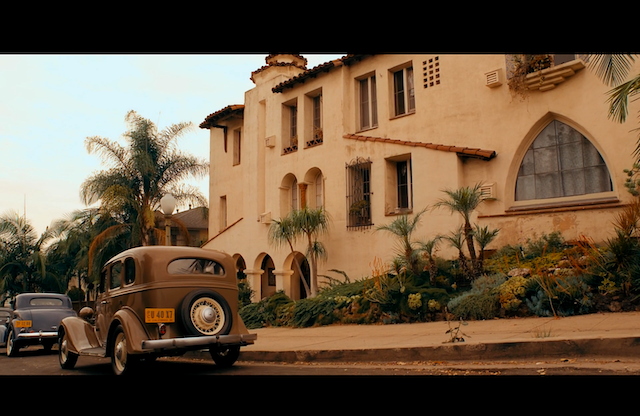
Perhaps no director has been as vocal about his aversion to the city as Woody Allen. In Annie Hall (1977), Allen famously declared that Los Angeles offered no cultural advantage beyond the right turn on a red light. This sentiment reflected a broader East Coast intellectual prejudice, where the architectural eclecticism of Los Angeles—a mix of Spanish Colonial, Tudor, and Modernist styles—was viewed as a symptom of cultural confusion rather than a reflection of the city’s unique, sprawling history.
Supporting Data: The Conflict of Realities
The friction between the "cinematic L.A." and the "real L.A." often manifests in the press and the public record. A glaring example occurred in July 2018, when the Los Angeles Times published a travel guide titled "L.A. Reverential." The piece, written by an outsider, was riddled with errors—misidentifying the subway system, getting the location of the Huntington Gardens wrong, and making culturally insensitive remarks about downtown landmarks.
The subsequent fallout, involving multiple corrections and a formal apology from the Times editors, underscored a deep-seated frustration among Angelenos: the city is frequently subject to a narrative written by people who refuse to look at a map or understand the culture they are visiting.
This tension extends to the business world, where figures like Donald Sterling (the "Little Donald") have historically mirrored the real estate and discriminatory practices of other high-profile developers. The public outcry surrounding Sterling’s racist remarks—which eventually led to his forced sale of the L.A. Clippers—highlights how the city’s internal realities often clash violently with the image presented by its elite institutions.
Official Responses and Cultural Critiques
The response to this cinematic alienation has come from both within the industry and from critics who demand a more nuanced perspective.
- The "Graduate" Lens: Mike Nichols, when directing The Graduate (1967), viewed Los Angeles as a "parody of everything that’s most dangerous" to the East Coast intellectual. Yet, as Andersen notes, even this "poisoned arrow" directed at L.A. culture relied on locations like La Verne to stand in for the city, further distancing the film from the actual geography of the region.
- The Jaglom Counter-Narrative: Filmmakers like Henry Jaglom have attempted to capture the "true" Los Angeles through a lens of hermetic, narcissistic, and often self-indulgent storytelling. While Jaglom’s work is arguably flawed by its own solipsism, it offers a starkly different, albeit insular, vision of the city that is entirely unconcerned with the tourist’s perspective.
Implications: The Future of the Los Angeles Image
The implications of this long-standing cinematic bias are significant. When a city is perpetually framed through the eyes of the outsider—someone who treats it as a transit point, a joke, or a set to be destroyed—it creates a disconnect between the city’s residents and its global image.
Andersen’s critique serves as a call for a more "literalist" and grounded approach to filmmaking. He champions directors like Jim Jarmusch, who, in Night on Earth (1991), demonstrates a willingness to engage with the mundane, "seedy," and ordinary aspects of the city rather than the hyper-stylized landmarks. Jarmusch’s eye for the local takeout stand or the ordinary mini-mall suggests that there is a cinematic beauty in the everyday life of Los Angeles that the "tourist" directors are too blinded by their own prejudices to see.
Ultimately, the battle for the image of Los Angeles is not just about geography; it is about respect. As the city continues to evolve, the challenge for filmmakers is to move beyond the tropes of the "tourist gaze" and to capture the complex, multifaceted identity of a place that is much more than the sum of its swimming pools and celebrity sightings. Whether the industry will ever fully grasp this "true Los Angeles" remains an open, and perhaps appropriately, elusive question.
