
The Return of the Mock: How the Wayans Family Reclaimed Scary Movie and Rewrote Hollywood’s Satirical Playbook
Main Facts
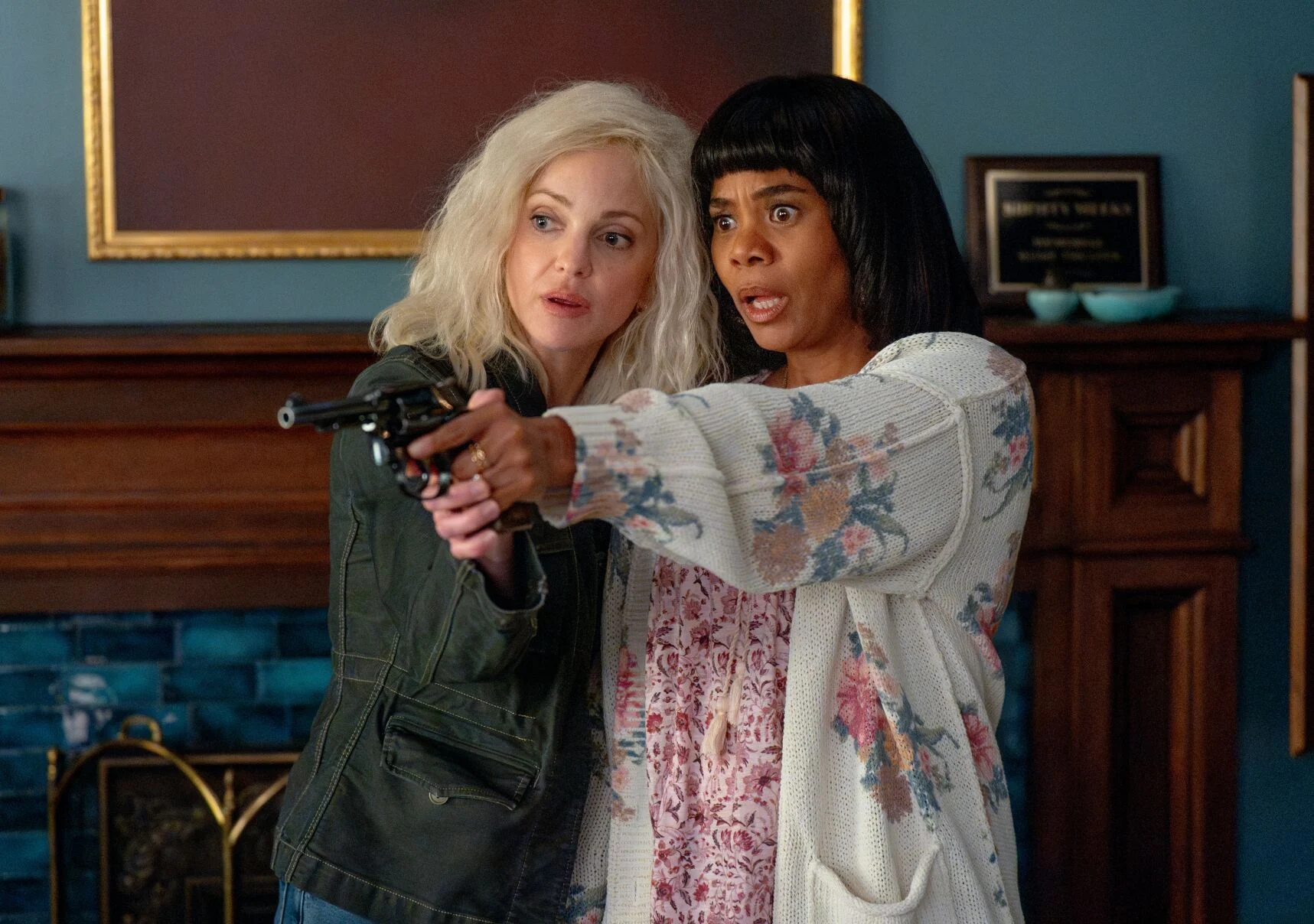
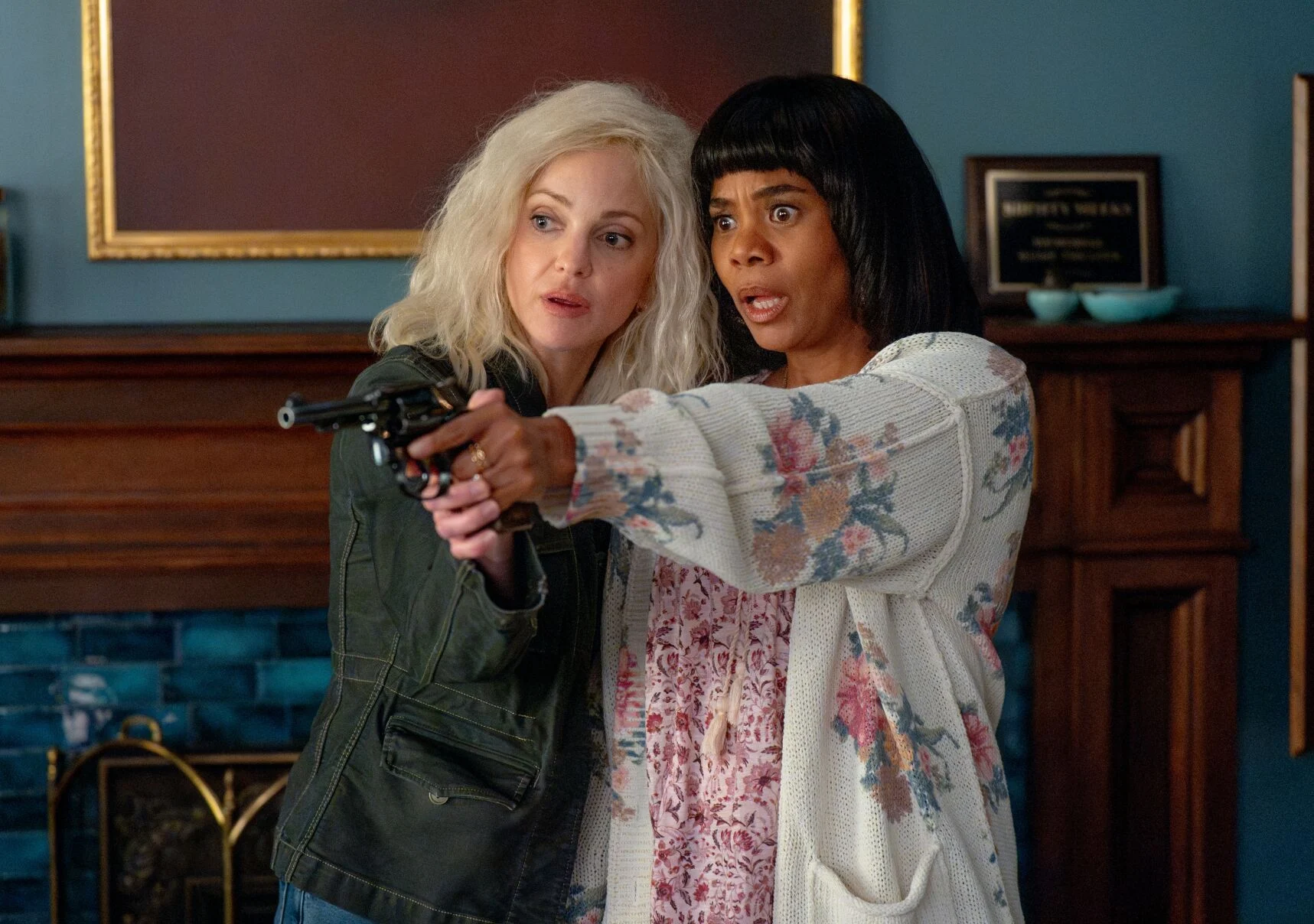
The cinematic landscape of 2026 bears witness to a triumphant, albeit chaotic, family reunion. Scary Movie (released without a numerical digit in a deliberate act of stylistic and corporate defiance) has returned to theaters, reuniting nearly the entire original creative ensemble for the first time in 25 years.
This legacy sequel/horror-comedy hybrid lampoons contemporary genre conventions while launching an incisive, multi-layered critique of the entertainment industry that birthed it. At its core, the film addresses a bitter chapter in Hollywood history: the 2001 compensation dispute with the Weinstein organization that led the Wayans family to collectively disown the three subsequent sequels (Scary Movie 3 through 5, released between 2003 and 2013).
Infused with the trademark brand of aggressive, boundary-pushing physical comedy and gross-out gags that defined the original 2000 blockbuster, the new film grossed a staggering $172 million globally in its first two weeks alone. Yet, beneath the flatulence jokes and rapid-fire object-permanence callbacks lies a profound emotional current. For the core cast—spearheaded by Marlon, Shawn, and Keenen Ivory Wayans—this project is not merely a cash grab; it is a reclamation of a cinematic empire they built, lost, and have now fiercely taken back.
Chronology: A Lineage of Subversive Satire
To understand the cultural weight of the new Scary Movie, one must trace a comedic lineage that spans nearly half a century, moving from the anti-authoritarian sketch formats of the 1970s to the revolutionary Black-led cinematic subversions of the late 20th century.
The Foundation: ZAZ and the Counter-Programming of the 1970s
The modern cinematic spoof—characterized by hyperactive, joke-a-minute, reference-dense narratives wrapped in a distinct genre framework—was largely pioneered by the team of David Zucker, Jim Abrahams, and Jerry Zucker (ZAZ). Influenced by the Marx Brothers, Mad magazine, and Ken Shapiro’s Groove Tube (1974), ZAZ’s The Kentucky Fried Movie (1977), directed by John Landis, established a plotless sketch reel format that blended slightly racy, absurdist humor with commercial and pop-cultural parodies.
Reflecting on that era, Jim Abrahams noted that their irreverent style served as deliberate counter-programming to a turbulent political climate:
"Vietnam was still going on. You had all these political elements: Nixon, Watergate, feminism, Black Power. And we just steadfastly ignored all politics. And I think that’s part of why people liked it."
This approach culminated in 1980 with Airplane!, a film that, in Abrahams’ words, "elevated stupidity to an art form."
The Wayans and Robert Townsend: Adding Cultural Bite
While ZAZ ignored politics, subsequent Black comedy pioneers recognized that humor could be weaponized for cultural criticism. Robert Townsend and Keenen Ivory Wayans, whose sensibilities were shaped by comedy legends like Sid Caesar, Mel Brooks, and Paul Mooney, sought to inject the biting racial satire of The Richard Pryor Show (1977) into the spoof formula.
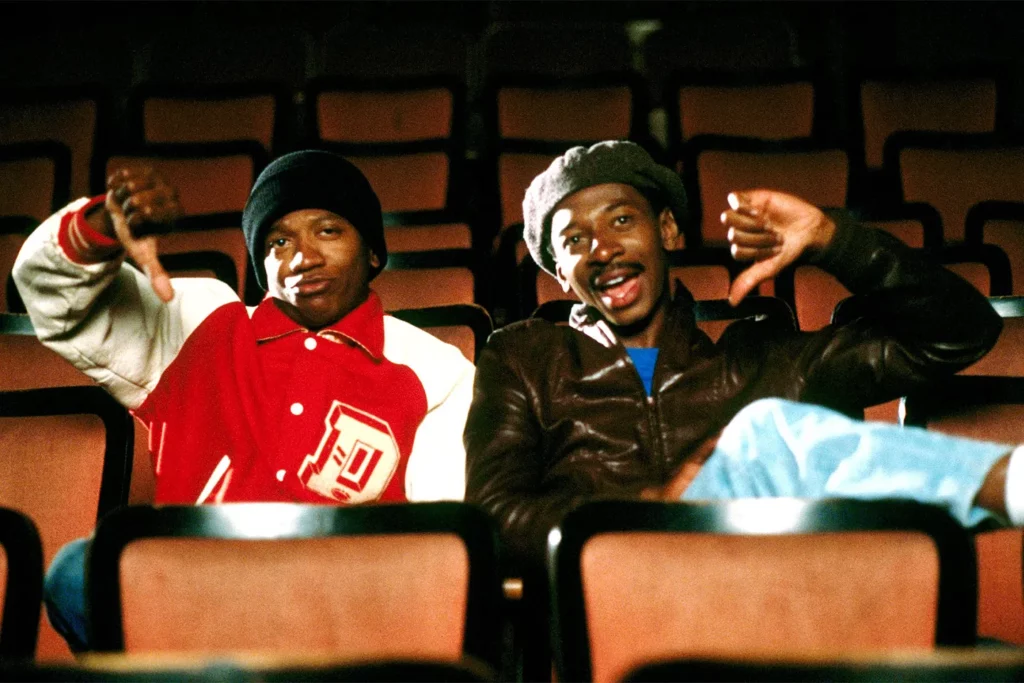
Their breakthrough arrived with Hollywood Shuffle (1987). Born from disconnected sketches like "Sneakin’ in the Movies"—a Siskel and Ebert–style clip show skewering white racist fantasies like Dirty Harry (1971)—the film evolved into a coherent narrative examining the Black actor’s daily struggle for creative fulfillment and honest representation. By targeting Blaxploitation, the "hood flick," and Hollywood’s wider racial casting tropes, Townsend and the Wayans proved that low-budget satirical films could carry immense critical and commercial weight.
In Living Color and the 1990s Revolution
The critical success of Hollywood Shuffle provided Keenen Ivory Wayans with the cultural clout to launch two defining projects: I’m Gonna Git You Sucka (1988) and the monumental sketch comedy series In Living Color (1990–1994).
In Living Color served as a finishing school for the Wayans siblings, refining a style of satire that did not merely call out systemic racism, but smartly critiqued how Black culture was mediated, packaged, and commodified by the white Hollywood power structure. Sacred cows—from Michael Jackson to Mike Bolton—were slaughtered weekly.
This momentum carried back to the silver screen with Don’t Be a Menace to South Central While Drinking Your Juice in the Hood (1996). The film took direct aim at the diagrammatic, inner-city coming-of-age dramas that studios had aggressively commercialized in the wake of masterpieces like Boyz n the Hood (1991), Juice (1992), and Menace II Society (1993). Rather than celebrating these gritty narratives, studio executives had begun mining Black trauma, poverty, and systemic violence for popcorn entertainment.
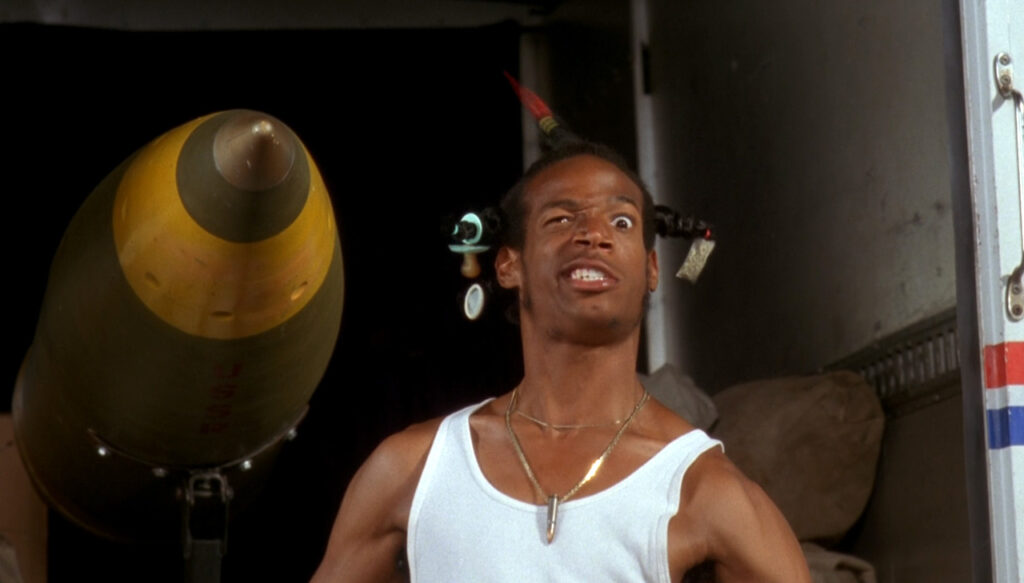
In the film, Marlon Wayans plays Loc Dog—an absurdist spoof of Larenz Tate’s O-Dog from Menace II Society—complete with braided armpit hair and a nuclear arsenal stashed in a stolen mail truck. It was a sharp rejection of the mandatory "hood flick" caricatures that Black actors were routinely forced to audition for.
The Peak and the Usurpation: Scary Movie (2000–2013)
In 2000, the Wayans formula reached its hyper-efficient peak with Scary Movie. Riffing on the late-90s teen slasher revival (primarily Scream and I Know What You Did Last Summer), the film mixed highbrow and lowbrow elements: shot-for-shot parodies, meta-cameos, gross-out humor, and edgy social critique. Placing Black actors—specifically Regina Hall, Shawn Wayans, and Marlon Wayans—at the dead center of a genre famously critiqued for sidelining minority characters (echoing Roger Ebert’s famous 1997 observation, "The Brother Always Dies First") added layers of meta-commentary.
The film was a seismic box-office phenomenon, turning a modest $19 million budget into $278 million for Dimension Films. However, following the 2001 compensation disputes with the Weinsteins, the Wayans family walked away.
Dimension promptly hired David Zucker to direct Scary Movie 3 and 4, replacing Shawn and Marlon with mainstream actors like Simon Rex and Charlie Sheen. In a recent interview with GQ, Marlon Wayans did not mince words regarding that era, likening the studio-driven sequels to "watching your child become a crackhead." It was a painfully familiar narrative of institutional displacement for Black creators in Hollywood.
Supporting Data & Box Office Performance
The financial and cultural trajectory of the Scary Movie intellectual property highlights both the commercial viability of the franchise and the unique drawing power of its original creators:
- Original Scary Movie (2000): Produced on an estimated budget of $19 million, grossed approximately $278 million worldwide.
- The Franchise Nadir (Scary Movie 3 & 4): While commercially profitable under studio-appointed directors, fan and critical sentiment plummeted, alienating the core demographic that established the franchise’s identity.
- The 2001 Schism: Marked a multi-decade freeze on the Wayans family’s involvement with the IP, rendering subsequent sequels controversial among purists.
- Scary Movie (2026) Return: Racked up an impressive $172 million globally in its first two weeks, signaling robust audience appetite for the original creative team’s return.
- Comparative Industry Milestones: The broader appetite for auteur-driven Black horror-comedy and social critique is underscored by recent triumphs like Ryan Coogler’s Sinners, which cleared $370 million and broke Oscar nomination records for its exploration of artistic freedom and the exploitation of Black art.
Official Responses and Industry Perspectives
The resurrection of the franchise has prompted rare, candid reflections from industry veterans regarding the cost of creative integrity within a risk-averse studio system.
Reflecting on his early days, Robert Townsend shared an enlightening encounter he had with Hollywood legend Sidney Poitier. When Townsend asked how Poitier managed to retain his dignity during an era when Hollywood systematically denied basic respect to Black performers, Poitier’s advice was absolute:
"I said no. I made sacrifices to do it, but I had the power to say no."
That philosophy of refusal and creative autonomy defines the Wayans family’s decades-long journey. For years, they utilized the spoof genre not merely as a vehicle for juvenile laughs, but as a Trojan horse to deliver sharp cultural commentary on representation, systemic exploitation, and artistic ownership.
While studio executives historically viewed Black-led satirical properties as disposable cash cows—swapping out creators when contract disputes arose—the unprecedented global response to the 2026 installment suggests a shifting tide. Whether Hollywood is genuinely absorbing these institutional critiques or merely capitalizing on nostalgia remains to be seen, but the box office receipts make one thing clear: the audience is listening.
Implications for Modern Hollywood
The triumphant return of the original Scary Movie creative team carries profound implications for the contemporary film industry:
- The Power of Legacy Reunions: Nostalgia is no longer confined to dramatic franchises like Star Wars or Jurassic Park. Audiences are actively craving the return of counter-cultural comedy ensembles that defined eras of modern cinema.
- IP Ownership and Creator Rights: The Wayans family’s successful reclamation of their satirical universe highlights the ongoing struggle for creator equity. By refusing to let corporate-mandated sequels write the final chapter of their legacy, they have set a precedent for independent and minority filmmakers fighting for ownership of their intellectual property.
- The Evolution of the Spoof: Modern horror has evolved significantly, incorporating complex metaphors, elevated trauma narratives (courtesy of studios like A24), and self-aware meta-commentary. The success of the 2026 Scary Movie proves that the traditional spoof can adapt, remaining a vital instrument for puncturing the self-seriousness of contemporary prestige cinema.
- Shifting Industry Gatekeeping: With works like Coogler’s Sinners and the new Scary Movie dominating global box offices, the traditional Hollywood power structure is increasingly forced to recognize that culturally specific, unapologetic Black storytelling possesses massive, universal commercial power.
As the Wayans family laughs all the way to the bank once more—while successfully pissing and farting on genre conventions—they have proven that true satirical genius cannot be easily replaced by studio substitutes.
