
Before The Carol Burnett Show and Mel Brooks: How Harvey Korman Brought Bedrock’s Most Divisive Alien to Life
Main Facts: The Legacy of Harvey Korman and the Great Gazoo
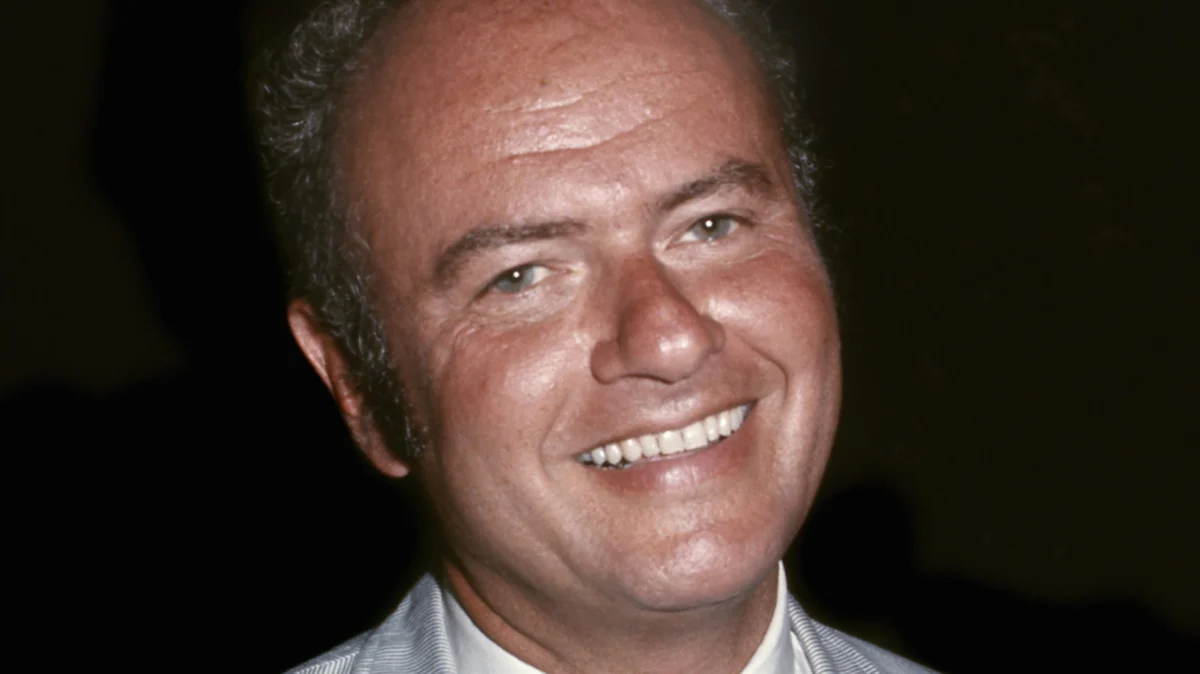
In the pantheon of American comedy legends, few names command the historic reverence and timeless affection reserved for Harvey Korman. For a decade, Korman served as the comedic anchor of The Carol Burnett Show, acting as the brilliant, unflappable straight man to Tim Conway’s wonderfully unhinged characters—a notoriously difficult feat that required exquisite timing and immense patience. Beyond his television triumphs, Korman cemented his cinematic legacy with unforgettable, tour-de-force performances in Mel Brooks’ classic satirical masterpieces, including Blazing Saddles and History of the World: Part I.
Yet, long before he was winning Emmy Awards for sketch comedy or chewing the scenery as Hedley Lamarr, Korman lent his distinctive vocal talents to a project that would permanently alter television animation history: voicing the Great Gazoo during the sixth and final season of ABC’s The Flintstones.
Introduced as an exiled extraterrestrial banished to prehistoric Earth from his home planet as punishment for building a dangerous doomsday weapon, the small, green, helmeted floating alien became an instant lightning rod for controversy. Armed with reality-bending powers—including levitation, time travel, matter manipulation, and the annoying habit of appearing out of thin air—Gazoo spent 12 episodes tormenting, mentoring, and belittling Fred Flintstone and Barney Rubble, whom he frequently and condescendingly referred to as "dumb clods."
While Korman’s performance was undeniably memorable, the character he brought to life remains one of the most divisive figures in the history of prime-time animation. To this day, fans and television historians remain sharply split over whether the Great Gazoo represents a creative nadir for the iconic series or a delightfully eccentric caper that pushed the boundaries of cartoon surrealism.
Chronology: From Primetime Staple to Alien Invader
To understand the arrival of the Great Gazoo, one must examine the state of The Flintstones by the mid-1960s. Having premiered in 1960, Hanna-Barbera’s flagship production had already achieved the impossible: proving that an animated series could sustain a prime-time audience. Modeled loosely after The Honeymooners, the show successfully transposed mid-century suburban American life into a wacky, stone-age pastiche.
However, by Season 6, the creative well was beginning to run dry. The writers and creators, William Hanna and Joseph Barbera, were under immense pressure from ABC executives to introduce fresh gimmicks to keep the ratings afloat in an increasingly competitive television landscape.
Enter the Great Gazoo, making his debut late in the show’s final run. The timeline of Gazoo’s involvement with the franchise unfolded as follows:
- Late 1965 (Season 6 Premiere Arc): The Great Gazoo is introduced to audiences. Only Fred and Barney can see and hear him initially, leading to widespread confusion and escalating domestic tension with Wilma and Betty.
- 1965–1966 (The Final Season Run): Over the course of 12 episodes, Gazoo uses his supreme technological powers to intervene in the everyday mundane lives of the Quarry residents, usually resulting in chaotic moral lessons and slapstick disasters.
- May 1966: The Flintstones officially concludes its prime-time run on ABC, having broadcast 166 episodes. Gazoo’s tenure, though brief in episode count, looms large over the final season’s identity.
- Post-Television Era: Despite the show’s cancellation, Gazoo’s cultural footprint expanded. He transitioned seamlessly into Saturday morning cartoon spin-offs, comic books, cereal commercials, and promotional tie-ins.
- 2000: The character makes a nostalgic, live-action/CGI cinematic cameo in the prequel film The Flintstones in Viva Rock Vegas.
- 2021–2024: Fox announces development on Bedrock, an adult-oriented animated sequel series executive-produced by and starring Elizabeth Banks. Fans speculate wildly about whether the Great Gazoo will return, only for Fox to officially scrap the project in 2024.
Supporting Data: Harvey Korman’s Perspective and Fan Reception
Despite the cultural permanence of the Great Gazoo, the man behind the floating green head harbored deep-seated insecurities about his capabilities as a voice actor. In a candid archival interview with the Television Academy Foundation, Korman reflected on his time in the Hanna-Barbera recording booth with startling humility.
"I didn’t know what to do," Korman confessed to the interviewer. "I’m really not a very good voiceover actor. That’s a special, special talent that these people have."
Voice acting requires an actor to convey complex emotions, physical presence, and comedic timing using strictly the vocal apparatus, often without a scene partner to bounce off of in real-time. For a seasoned stage and television sketch comedian accustomed to physical comedy, facial expressions, and studio audiences, the isolated animation recording booth felt alien.
To compensate for his perceived shortcomings, Korman developed an intensely meticulous preparation routine. "I would like to get the script beforehand… I make notes for myself," he explained. "I have different colors for different symbols that only I understand." This fastidious dedication is precisely what allowed his vocal performance to punch through the animation, giving Gazoo his signature arrogant, high-pitched snark and haughty intellectual superiority.
The Great Divide: Innovation or "Jumping the Shark"?
When analyzing viewer reception, public opinion on the Great Gazoo is starkly polarized into two distinct camps:
- The Detractors (The "Jump the Shark" Argument): Many purists and long-term fans of The Flintstones argue that introducing a sci-fi alien with magic-like technology into a prehistoric setting fundamentally broke the internal logic of the show. For the first five seasons, the comedy derived from finding stone-age equivalents to modern conveniences (mammoth vacuum cleaners, pelican record players, dinosaur garbage disposals). Bringing in a hyper-advanced space alien felt like a desperate, jarring departure from the grounded, domestic satire that made the show a classic. To these critics, Gazoo represented narrative bankruptcy.
- The Apologists (The Surrealist Appreciation): Conversely, modern animation historians and camp enthusiasts view Gazoo as a stroke of wonderfully weird genius. By the mid-1960s, psychedelic culture and space-race paranoia were infiltrating American media. Gazoo tapped directly into that zeitgeist. His absurd superiority complex, combined with his frequent exasperation at Fred Flintstone’s stubborn ignorance, generated some of the hardest laughs of the series’ twilight era.
Interestingly, public perception evolved significantly over time. While contemporary viewers were occasionally vocal about their distaste for the character, Korman noted a massive swing in sentiment decades later. During personal appearances and conventions hosted by Hanna-Barbera, Korman was stunned to discover the immense commercial and sentimental value placed on the character.
"They had these huge conventions and seminars where collectors collect [animation] cells, and the cells with the Great Gazoo on it are worth lots of money," Korman recalled with mild astonishment. "It was a very popular character, the Great Gazoo."
Official Responses and Industry Impact
The inclusion of the Great Gazoo sparked quiet debates behind the scenes at Hanna-Barbera as well. William Hanna and Joseph Barbera were famously unafraid of experimenting with high-concept premises to keep their syndicated and network properties fresh. By 1965, the animation landscape was shifting toward more fantastic elements—shows like The Jetsons had proven that audiences welcomed futuristic settings, so why not merge the prehistoric past with the distant future?
While network executives at ABC never issued formal public statements lamenting or praising the character’s introduction, the sheer volume of merchandise, toy licenses, and comic book adaptations greenlit featuring the Great Gazoo speaks volumes about the network’s internal metrics. Gazoo was a merchandising goldmine, proving that divisive characters often drive engagement more effectively than universally accepted bland ones.
Furthermore, Korman’s work on The Flintstones served as a valuable boot camp for his transition into the broader annals of television history. The meticulous discipline required to mark up scripts with color-coded symbols honed his professional rigor, traits he would carry forward into his legendary collaboration with Carol Burnett, where scripts changed by the minute and quick-witted improvisation was a nightly requirement.
Implications: What Gazoo Means for Modern Animated Sitcoms
The legacy of Harvey Korman’s performance as the Great Gazoo extends far beyond a piece of television trivia; it offers a fascinating case study in how long-running television series manage creative fatigue.
When a sitcom—live-action or animated—approaches its final seasons, writers frequently face the temptation to introduce "jump-the-shark" elements to artificially spike interest. From Cousin Oliver on The Brady Bunch to scrappy new pets or sci-fi interlopers, the introduction of external characters often alienates core fans. Yet, as the endurance of the Great Gazoo proves, calculated absurdity can sometimes transcend its initial backlash to become an iconic piece of pop-culture iconography.
Today, adult animated series—from The Simpsons and Family Guy to BoJack Horseman and Rick and Morty—routinely cross genres, blending domestic suburban realism with high-concept science fiction, surrealism, and existential philosophy. In many ways, the Great Gazoo was a trailblazer. Long before animated fathers were dealing with clones, alien parasites, or dimensional travel, Fred Flintstone was arguing with a floating green extraterrestrial who treated him like a pet primate.
Though Harvey Korman initially felt out of his depth in a recording booth surrounded by seasoned voice professionals, his unforgettable vocal cadence, razor-sharp delivery, and commitment to the material ensured that the Great Gazoo would echo through television history for nearly six decades. Whether viewed as an annoying intruder or a brilliantly surreal comedic catalyst, the Great Gazoo remains an indelible monument to the golden age of television animation—and a testament to the quiet, hardworking genius of a comedy legend who never stopped perfecting his craft.
