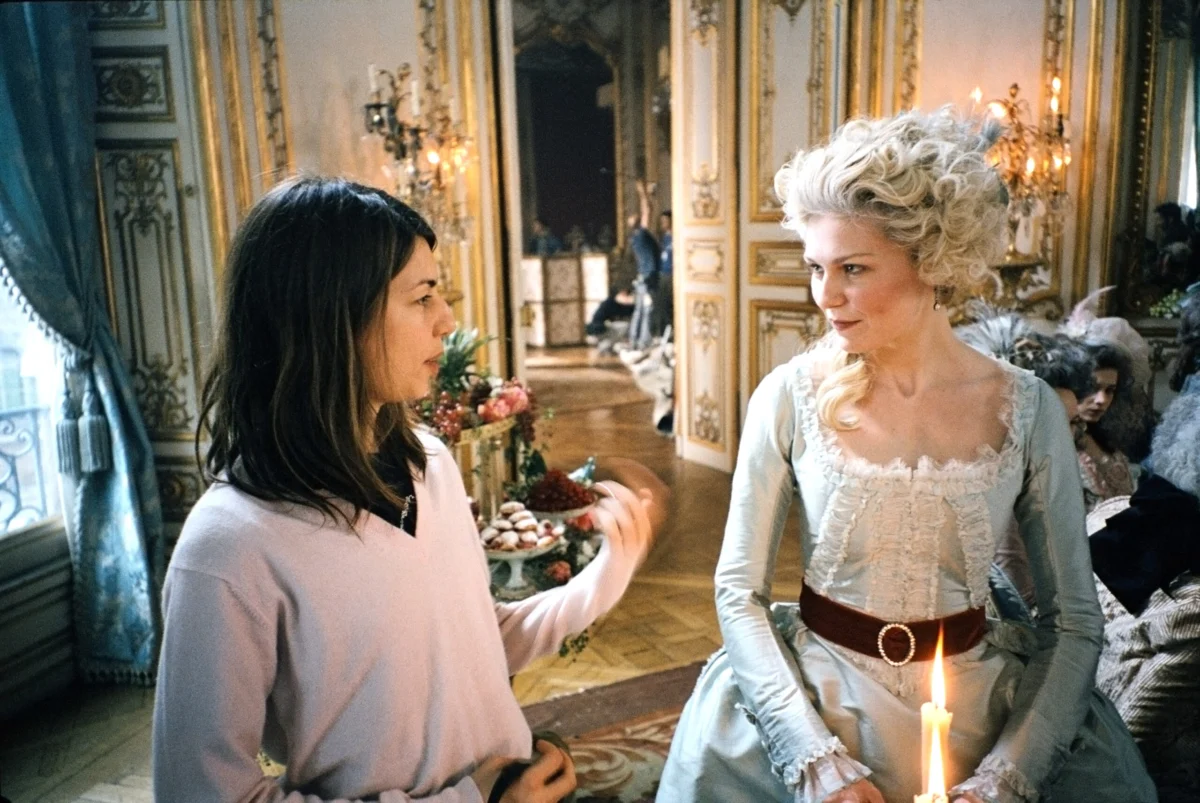
From "Girly Fluff" to Modern Masterpiece: Sofia Coppola’s Marie Antoinette at 20
Main Facts: The Critical Re-evaluation of a Millennial Touchstone
To an entire generation of millennial women, the cinematic catalog of SofiaCoppola serves as a masterclass in capturing the intense, frustrating, beautiful, and often suffocating realities of womanhood. Following the breakout success of her 1999 debut, The Virgin Suicides, and the widespread critical acclaim of 2003’s Lost in Translation, Coppola seemed untouchable.
However, that golden streak hit a sudden wall on October 20, 2006, with the theatrical release of her sweeping historical drama MarieAntoinette. Starring Kirsten Dunst as the ill-fated French queen, the $40 million studio-backed film was sharply polarized by contemporary critics. While it ultimately secured an Academy Award for Best Costume Design, its reception fell drastically short of the four Oscar nominations Lost in Translation enjoyed. Detractors dismissed the film as shallow, prioritizing aesthetics over narrative substance—a critique heavily laden with gendered dismissals of young women’s interior lives.
Two decades later, the narrative surrounding the film has undergone a seismic shift. As Marie Antoinette approaches its 20th anniversary, it is celebrated not as "girlyfluff," but as a visionary text that foreshadowed modern feminist cinema, digital aesthetics, and the enduring power of centering female autonomy. This renaissance is further cemented by a new Mubi documentary, Making Marie Antoinette—featuring archival behind-the-scenes footage filmed by Coppola’s late mother, Eleanor Coppola—alongside a forthcoming 4K Criterion Collection restoration.
Chronology: From Cannes Skepticism to Criterion Curation
1999–2003: The Ascent of an Auteur
Sofia Coppola establishes herself as a singular directorial voice with The Virgin Suicides, followed by Lost in Translation, which earns her the Academy Award for Best Original Screenplay and establishes a global cultural footprint.
October 2006: The Polarizing Premiere of Marie Antoinette
The film debuts to harsh critical pushback. Reviewers characterize it as a superficial pop-video exercise. In People magazine, Leah Rozen famously labels the movie "a pop video, with Kirsten Dunst as the doomed 18th century French queen acting like a teenage flibbertigibbet intent on being the leader of the cool kids’ club." Although it wins the Oscar for Best Costume Design, it is largely sidelined during awards season compared to Coppola’s previous work.
2006–2016: Quiet Resilience and Intervening Works
Coppola continues building her filmography, releasing Somewhere (2010) and The Bling Ring (2013), steadily exploring themes of isolation, celebrity, and female identity while navigating the shifting sands of Hollywood financing.
2016: The 10th-Year Cultural Awakening
Around the film’s decade mark, Coppola observes a radical shift. The picture has not faded into obscurity; rather, it has found a passionate second life among younger audiences, particularly mothers and daughters bonding over repeat viewings.
2024–Present: The 20th-Anniversary Renaissance
Coppola faces ongoing industry hurdles—such as Apple TV+ canceling her adaptation of Edith Wharton’s The Custom of the Country over executive anxieties surrounding an "unlikable" female lead. Simultaneously, however, digital subcultures embrace her aesthetic wholesale. The release of the documentary Making Marie Antoinette and the upcoming Criterion 4K restoration cement the film’s canonical status.
Supporting Data: Box Office, Accolades, and Cultural Footprint
Budget & Execution: Produced on a $40 million studio budget, Marie Antoinette was brought in on time and under budget by Coppola—a hallmark of her professional efficiency across all her features.
Awards Trajectory:
Lost in Translation (2003): 4 Academy Award nominations (Best Picture, Director, Original Screenplay, and Best Actor for Bill Murray), with Coppola winning for Screenplay.
Marie Antoinette (2006): 1 Academy Award win (Best Costume Design for Milena Canonero), notably missing out on major above-the-line nominations due to its chilly initial reception.
Digital Metrics & Modern Aesthetic: On social media platforms, Coppola’s cinematic fingerprints dominate aesthetic lexicon. Hashtags such as #sadgirl and #coquettecore accumulate billions of views, while contemporary pop icons like Olivia Rodrigo and Sabrina Carpenter openly emulate the dreamy, melancholy visual language pioneered by Coppola.
Official Responses and Reflections
Reflecting on the film’s rocky rollout two decades later, Sofia Coppola remains candid about the emotional toll of the initial backlash.
"It was disappointing when it first came out," Coppola tells Gold Derby. "We got a ton of bad reviews, and it got really dismissed as girly fluff or whatever."
Despite the noise, the passage of time brought validation. Coppola first noticed the tide turning around the film’s 10th anniversary in 2016.
"People were talking about it, and I was like, ‘Oh, wow, it wasn’t totally forgotten,’" she recalls. Pointing to the generational viewing habits that emerged, she notes, "Mothers and daughters were saying that they were bonding [while] watching it."
The release of Making Marie Antoinette—crafted from footage shot by her late mother, Eleanor Coppola (co-director of the legendary documentary Hearts of Darkness)—provided the director with an unexpected emotional time capsule. Watching the footage allowed Coppola to reconnect with the sheer majesty of securing unprecedented access to film on location in Versailles, while also confronting her younger self.
In one documentary sequence, Coppola discusses pushing back against studio notes suggesting she give more screen time to Jason Schwartzman as King Louis XVI, fiercely defending the queen’s central autonomy.
"It’s embarrassing because I see myself much younger and I’m not as comfortable asserting myself," Coppola reflects, noting how her tenacity has evolved. "I’m really stubborn, and when I have an idea in my head I’ll do anything to make it happen. I try to do it in a polite way, but if someone says no, then I’m going to ask again in a different way."
Implications: The Evolution of Female-Centric Storytelling in Hollywood
The journey of Marie Antoinette serves as a case study in the evolution of critical taste and industry gatekeeping. When Coppola began her career, she was routinely told by studio executives that young women did not constitute a viable, profitable cinematic audience. Today, that demographic commands massive cultural and economic influence.
Yet, systemic hurdles persist. Coppola’s recent struggle with Apple—which pulled funding from her planned television adaptation of Edith Wharton’s The Custom of the Country over fears that the protagonist was too "unlikable"—proves that Hollywood still grapples with how to present complex, morally gray female characters.
Nevertheless, Coppola remains optimistic, pointing to a broader paradigm shift. Financing entities are slowly realizing that contemporary audiences crave multifaceted women onscreen, citing recent successes like Netflix’s East of Eden adaptation and the appetite for unyielding, complex female protagonists.
Furthermore, the arrival of the film’s 4K restoration via the Criterion Collection elevates Marie Antoinette from a divisive pop-culture artifact to a preserved cinematic classic.
"It feels like it’s part of a body of classic films, which I’m so thrilled will live on," Coppola says. "That all the people that worked on it with me, that their work is preserved. It’s just being a responsible filmmaker to preserve your films."
Ultimately, the rehabilitation of Marie Antoinette offers a valuable lesson in artistic endurance. What was once dismissed by critics as superficial confectionary filmmaking has emerged as a defining masterpiece of 21st-century cinema—proving that time is often the ultimate arbiter of a visionary’s true worth.