
The Urban Canvas: Decoding James Gunn’s Gotham City Through ‘Clayface’

As the architectural blueprint of James Gunn and Peter Safran’s new DC Universe (DCU) begins to take shape, fans and critics alike have been searching for the definitive look of the franchise’s most iconic locale: Gotham City. While James Gunn’s Superman provided a vibrant, hopeful vision of Metropolis and the Supergirl projects have leaned into the cosmic expanse of the multiverse, the recent release of director James Watkins’ Clayface has finally pulled back the curtain on the dark, beating heart of the DCU.
Far from being a mere backdrop, the Gotham City depicted in Clayface is a character unto itself. By grounding the narrative in the tragic trajectory of Matt Hagen—played with visceral intensity by Tom Rhys Harries—the film offers a granular, street-level exploration of a city that feels simultaneously expansive, fractured, and terrifyingly real.
The Chronology of a Tragedy: From Stardom to Subterfuge
To understand the current state of Gotham, one must trace the arc of Matt Hagen, the man who would become the monstrous Clayface. Clayface functions as a character study, tracking Hagen’s meteoric rise from the impoverished streets of the Narrows to the glittering, superficial heights of Gotham’s elite social circles.
The narrative chronology is pivotal to the world-building of the DCU. We first meet Hagen as an aspiring actor, a man of modest means navigating the treacherous social mobility of a city built on extreme wealth disparity. His journey is cut short by a brutal encounter with a local crime syndicate, an event that leaves him physically disfigured and socially discarded.
The subsequent act—Hagen’s desperate attempt to reclaim his lost identity through experimental, illicit medical intervention—marks the transition from human drama to gothic horror. As the treatment takes hold, the film pivots. It no longer focuses on the "glitz" of downtown premieres, but rather on the claustrophobic, grimy reality of the city’s underbelly. This progression serves as a masterclass in environmental storytelling; as Hagen loses his grasp on his physical form, the audience loses their comfort in the stability of the city itself.

A Non-Unified Vision: Anatomy of a Metropolis
Historically, cinematic depictions of Gotham have leaned into singular, stylized visions. Tim Burton’s 1989 Batman presented a gothic, expressionist nightmare, while Joel Schumacher’s mid-90s entries transformed the city into a neon-soaked, Art Deco labyrinth. Christopher Nolan later pivoted toward a grounded, pseudo-Chicago aesthetic that prioritized structural realism.
James Watkins’ Clayface defies these binary labels. By eschewing a "unified" aesthetic, the film presents a Gotham that is, in the truest sense, a modern, sprawling American metropolis.
The Fractured Districts
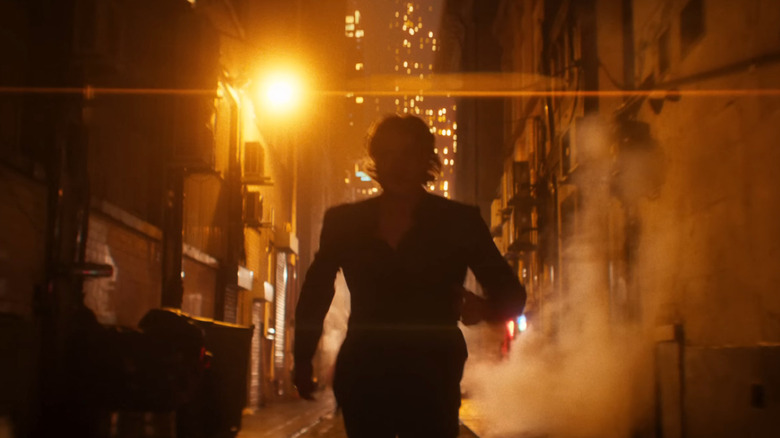
The Gotham of the DCU is a city of distinct, often conflicting, ecosystems. The film captures the stark contrast between the high-society night clubs where power is brokered and the neglected, crumbling slums where the law is often a suggestion rather than a mandate. Unlike previous iterations that depicted Gotham as a monolith of gloom, this version acknowledges that a city of millions cannot exist in a single shade of gray.
It feels like a close, troubled cousin to New York City. There are massive, sprawling cultural hubs, yet there are entire neighborhoods that the city’s power brokers have effectively erased from the map. This lack of homogeneity makes the city feel "lived-in." It is not just a stage for Batman’s battles; it is a functioning, albeit broken, machine that operates with or without the interference of costumed vigilantes.
Supporting Data: Why Gotham Matters to the DCU
The implications of the Clayface production design extend far beyond a single film. By establishing such a robust, detailed setting, DC Studios is signaling a long-term commitment to "place-based" storytelling.

- The "Ground-Level" Perspective: By focusing on an average citizen—albeit one who becomes a supervillain—the film provides a necessary perspective that superhero films often lack. We see how the corruption of the police force affects the common man; we see how wealth inequality creates the very monsters that the city eventually fears.
- The "Batman" Absence: One of the most striking creative choices in Clayface is the absence of Batman. This is not an oversight; it is a deliberate stylistic choice. The film posits that Gotham is a place of such immense suffering and chaos that a single individual, even one as capable as the Dark Knight, cannot possibly be everywhere at once. This aligns with the "Powerball" logic—most citizens are far more likely to encounter a corrupt cop or a local thug than they are the Caped Crusader.
- Room for Expansion: The sprawling nature of this Gotham provides a template for future projects. Whether it be a police procedural focused on the GCPD, a crime drama featuring the Penguin or Black Mask, or a horror-adjacent story involving the Rogues Gallery, the city is already built. The infrastructure is there, the neighborhoods are defined, and the atmosphere is set.
Official Responses and Creative Direction
James Gunn has been vocal about his desire to move away from the "one-size-fits-all" approach that characterized previous DC cinematic attempts. In recent interviews, the DC Studios co-CEO emphasized that the new DCU would focus on "stories first, shared universe second."
Clayface is the embodiment of this philosophy. While the film includes subtle nods to the wider universe—including a widely discussed Joker Easter egg that hints at a larger, darker history—it remains a self-contained, high-stakes drama. The studio has avoided overloading the film with "Easter eggs" at the expense of character depth, allowing the city’s atmosphere to breathe.
Furthermore, the creative team behind the DCU has acknowledged the distinction between this Gotham and the one presented in Matt Reeves’ The Batman universe. By keeping the DCU Gotham separate from the "Elseworlds" projects, Gunn provides filmmakers the freedom to explore the comic book source material without the constraints of a singular, pre-established tone. This allows for a more varied, textured, and ultimately more interesting cinematic landscape.
Implications: What This Means for the Future
The success of Clayface as a world-building exercise has profound implications for the upcoming The Brave and the Bold and the wider DCU slate.
1. The Decentralization of Batman
By introducing a fully realized Gotham before the arrival of the "main" Batman of the DCU, the studio is effectively building a "home base" for the character. When Bruce Wayne eventually arrives, he won’t be entering a blank slate; he will be entering a city that already has its own pulse, its own criminals, and its own unique horrors. This creates an immediate sense of history and consequence.
2. A Template for Future Rogues
The film proves that a "villain-centric" story can work without needing to rely on a hero to save the day. By treating Matt Hagen with the same narrative weight as a protagonist, the studio has set a precedent for how other members of Batman’s iconic Rogues Gallery might be handled. We don’t need a hero in every frame to understand the threat they pose to the city.
3. Genre Flexibility
The fact that Clayface is a horror-thriller, while Superman is a high-adventure epic, suggests that the DCU will maintain a level of tonal diversity that was previously missing. Gotham City is the perfect petri dish for this diversity. It can be a crime noir one day, a psychological thriller the next, and a high-octane action film the day after, all while maintaining a consistent visual identity.
Conclusion: The City that Never Sleeps (and Often Screams)
Clayface has succeeded where many superhero films fail: it has made the setting feel like a participant in the narrative. By avoiding the temptation to turn Gotham into a mere gothic caricature, the filmmakers have crafted a sprawling, complex urban environment that feels ripe for exploration.
As the DC Universe continues to expand, Gotham City will inevitably serve as the cornerstone of many of its darkest and most compelling stories. If Clayface is any indication, this is a city that has finally found its voice—a voice that is gritty, desperate, and hauntingly human. For fans of the DC mythos, the message is clear: the Gotham of the new DCU is not just a place where Batman fights crime; it is a living, breathing testament to the consequences of power, the fragility of the human condition, and the enduring, dark allure of a city that never stops changing.
