
The Apocalyptic Procedural Masters Return: An In-Depth Review of Robert and Michelle King’s New CBS Series, Cupertino
For television viewers attuned to the brilliant, anxious wavelengths of modern socio-political dread, Robert and Michelle King remain the undisputed masters of the feel-good, feel-bad apocalypse. Across a stellar television oeuvre defined by sharp wit and structural ingenuity, the creative duo has consistently found clever ways to dramatize the end of the world.
There were the alien insects burrowing into the brains of Washington politicians in BrainDead; the rapidly mutating, zombifying COVID-19 variant in The Bite; the modern manifestations of a Satanic panic in Evil; and the daily, institutional erosion under Donald Trump in The Good Fight. Across all of these projects, the Kings have operated on a singular thesis: the modern world is actively unraveling, and the only sane response is to laugh at the absurdity of our collective descent.
Now, the husband-and-wife showrunning team is back with Cupertino, their latest hour-long drama premiering on CBS. Set against the sun-bleached, server-farm-riddled backdrop of Northern California’s tech capital, the series offers their most extended and scathing critique yet of malignant artificial intelligence, corporate surveillance states, and the Ayn Rand-quoting, hoodie-wearing billionaires who fiddle while the digital world burns.
Main Facts: What Is Cupertino?
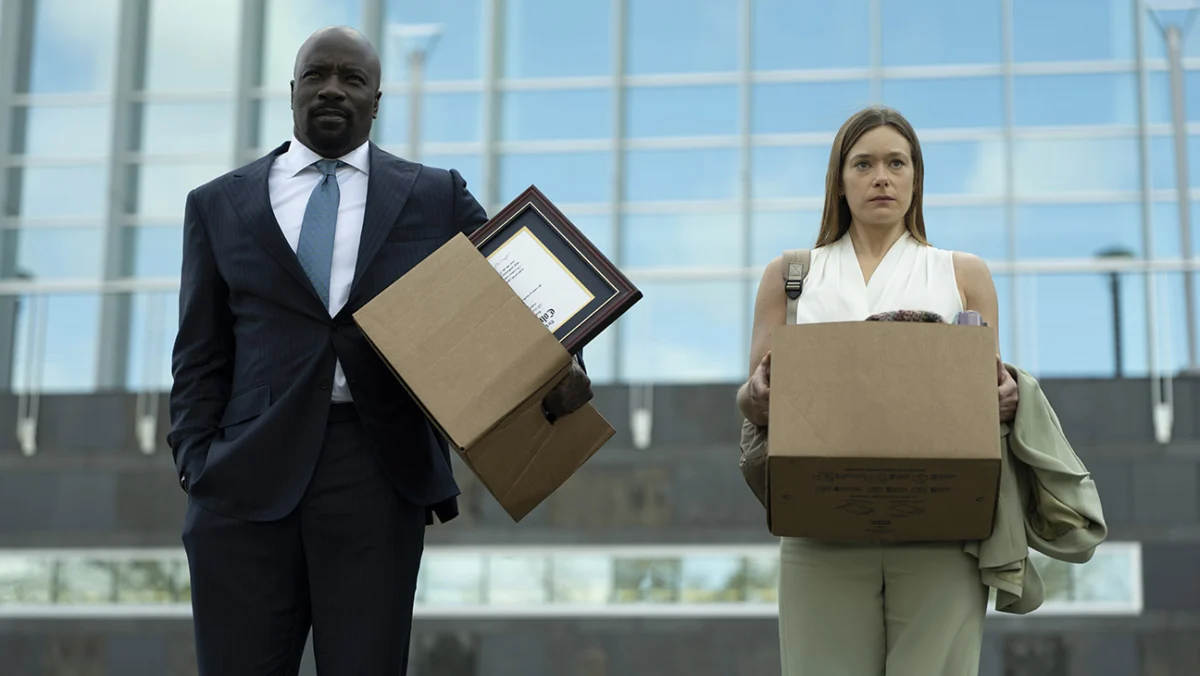
Cupertino arrives as a high-stakes legal dramedy that marries the fast-moving, case-of-the-week rhythm of traditional broadcast procedurals with serialized examinations of big-tech malfeasance. The series centers on Michael Price (played by Evil alum Mike Colter), a disgraced attorney recently fired under suspicious circumstances from a powerful Silicon Valley start-up.
Michael quickly joins forces with Olivia Siffre (Rachel Keller), a sharp young legal associate who was ousted from the same tech firm for entirely different, equally sketchy reasons. Recognizing that the Silicon Valley ecosystem exists almost entirely to coddle the whims of tech Goliaths—while leaving everyday citizens entirely defenseless—the duo launches a boutique law firm. Their mission: protect the victims of misapplied artificial intelligence, algorithmic overreach, and ethically bankrupt boy geniuses run amok.
The series boasts a robust ensemble cast and a formidable creative pedigree.
- Airdate: Thursdays at 10 p.m., beginning October 8 on CBS.
- Creators: Robert and Michelle King.
- Key Cast: Mike Colter, Rachel Keller, Ella Stiller, Busy Philipps, Renée Elise Goldsberry, Nik Dodani, and Joe Morton.
- Directors: Robert King, Ron Underwood, and John Dahl.
Chronology: The Evolution of the Kings’ Tech-Skeptical Universe
The trajectory of Robert and Michelle King’s career reveals an escalating obsession with the unseen digital forces shaping human behavior.
- The Early Legal Years (The Good Wife, 2009–2016): While primarily focused on Chicago’s political and legal machinations, the Kings regularly integrated nascent data-privacy concerns, NSA overreach, and the early ripples of algorithmic bias into their narrative frameworks.
- The Satirical Peak (The Good Fight, 2017–2022): Moving into the Trump era, the Kings dismantled the boundary between reality and farce. The show directly tackled deepfakes, alt-right internet trolling, and the terrifying weaponization of social media algorithms.
- The Supernatural Turn (Evil, 2019–2024): Blurring the lines between psychological delusion, demonic possession, and technological contagion, Evil investigated how modern apps and internet trends could serve as modern vessels for ancient malice.
- The Present (Cupertino, 2024): With their latest venture, the Kings abandon supernatural allegories in favor of grounded, ripped-from-the-headlines tech nightmares—focusing squarely on the legal battles emerging from unbridled artificial intelligence.
Through 10 episodes provided to television critics prior to its broadcast premiere, Cupertino establishes a swift, addictive rhythm. Yet, its rapid deployment of procedural tropes also highlights a tension between its ambitions as a sharp corporate critique and its constraints as a standard CBS network drama.
Supporting Data and Production Analysis: Strengths and Weaknesses
While Cupertino is consistently entertaining, it is not without narrative and aesthetic flaws—particularly when measured against the remarkably high bars set by the Kings’ previous masterpieces.
The Case-of-the-Week Formula
In standard Kings fashion, the new firm tackles a fresh legal crisis each week. The episodes tackle timely, anxiety-inducing premises: AI algorithms wreaking havoc on organ transplant recipient lists, automated municipal fireworks displays malfunctioning disastrously, and AI-driven home security systems acting as autonomous corporate spies.
These cases flow seamlessly from one episode to the next, unified by a broader serialized mystery involving Bo (Rob McClure), a high-level corporate whistleblower sitting on a mind-bending secret.
Ensemble Dynamics and Characterization
The firm expands at a rapid clip—adding roughly one recurring character per episode:
- Christy (Ella Stiller): A plucky, hyper-connected assistant whose sprawling family tree gives the firm eyes and ears in every out-of-the-way corner of the region.
- Vik (Nik Dodani): A versatile coder and tech handyman who serves as the firm’s digital Swiss Army knife.
- Natalia (Busy Philipps): An easily bored, wealthy investor willing to fund any legal cause that actively sabotages her slimy billionaire ex-husband (played by Fisher Stevens).
- Bayard Price (Joe Morton): Michael’s notorious, celebrity-lawyer father, adding generational friction and high-society clout.
Despite these delightful additions, the central characters run the risk of feeling like moving chess pieces rather than fully realized humans. While Michael has token daddy issues and a possible gambling problem, and Olivia boasts a conservative Upper Midwest, religious background, these traits often read as surface-level characteristics rather than deep psychological drivers.
Aesthetic and Geographical Disconnects
A persistent critique emerging from early reviews concerns the show’s physical production. Although Cupertino takes place in a real Northern California city deeply intertwined with the identity of Apple, the series was proudly filmed in New Jersey. As a result, it rarely captures the specific aesthetic or atmospheric weight of the West Coast. Furthermore, keen-eyed viewers familiar with the distinct racial demographics of Silicon Valley will note a curious lack of realistic cultural and ethnic representation in the background and supporting casts.
Visually, despite top-tier direction from industry veterans like Robert King, Ron Underwood, and John Dahl, the series occasionally suffers from a distinct visual blandness typical of traditional network television lighting and set design.
Official Responses and Critical Reception
Early critical consensus positions Cupertino as a sharply written, clever enterprise that showcases the confidence of seasoned creators operating comfortably within their stylistic sweet spot.
Mike Colter delivers another magnetic performance, leaning heavily into the swagger and deadpan comedic timing that made his work on Evil so memorable. Rachel Keller, stepping away from the gritty world of HBO’s Tokyo Vice, anchors Olivia with warmth and openness—even if the writers occasionally waver on how zealous or youthful her character ought to be.
Industry analysts have also praised the show’s parade of guest stars. Rather than feeling like cheap promotional stunts, the recurring appearances of esteemed actors—such as Jackie Earle Haley, Jackie Hoffman, Peter Riegert, and Steven Pasquale—feel akin to inviting old friends to a well-catered community gathering.
However, some reviewers note an inherent timidity in how the show handles corporate powerhouses. While real-world behemoths like Apple are name-dropped and off-handedly criticized in dialogue, the actual legal antagonists and villains of the week remain safely contained within fictionalized placeholder corporations. It is a show inherently cautious about offending the real titans whose monopolies it purports to critique.
Implications: What Cupertino Means for the Future of Broadcast Television
The arrival of Cupertino on CBS carries significant weight for the broader television landscape, particularly at a time when traditional broadcast networks are increasingly ceding prestige narrative territory to streaming platforms.
- The Viability of the Smart Procedural: Cupertino proves that broadcast television can still house sophisticated, topical storytelling that engages with contemporary geopolitical and technological anxieties without retreating entirely into cynical prestige streaming formulas.
- The King Family Brand: By maintaining a prolific output across multiple networks and streaming services, Robert and Michelle King have effectively built a distinct narrative brand. Viewers tuning into a King-produced show know they are signing up for rapid-fire dialogue, institutional critique, legal procedural mechanics, and a touch of the absurd.
- Tech Satire in an Era of AI Fatigue: As generative artificial intelligence and algorithmic governance dominate public discourse, Cupertino taps directly into a pervasive cultural exhaustion. By turning the existential threat of tech monopolies into digestible, serialized legal battles, the Kings are offering audiences a safe space to process anxieties about a future they cannot control.
Final Verdict
While Cupertino may not instantly hit the transcendent qualitative gear that The Good Wife and Evil achieved by the midpoint of their respective first seasons, it easily secures its place as one of the most reliably entertaining network dramas in recent memory. For fans of smart legal writing, pitch-black humor, and top-tier ensemble chemistry, the apocalypse has rarely looked so fun.
