
From Synchronization to Slaughter: Yūta Shimotsu Turns High School Gymnastics into a Dance of Death in J-Horror Arrival New Group
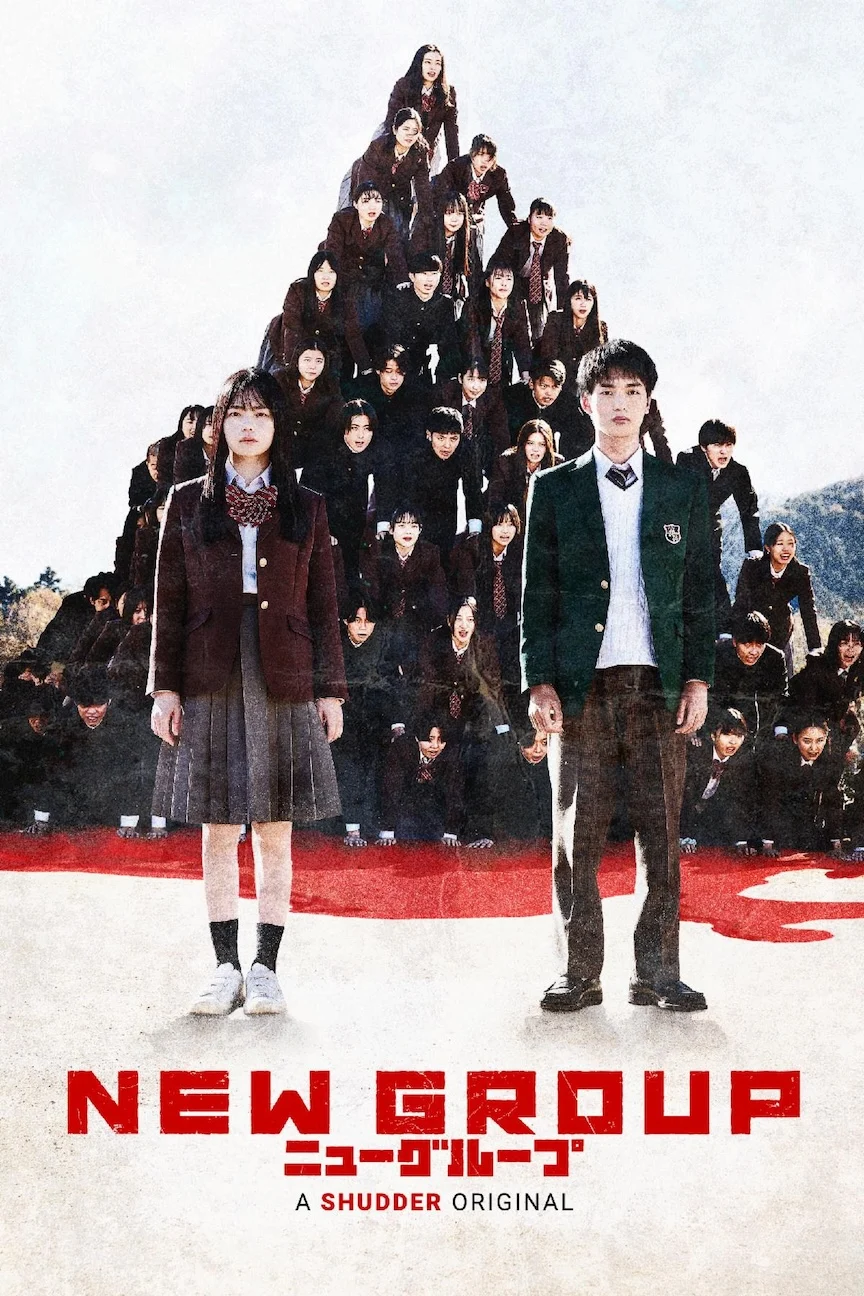
Main Facts
The landscape of Japanese horror is preparing to welcome a terrifying new entry that weaponizes the rigorous discipline of youth athletics. New Group, the highly anticipated second feature film from visionary writer-director Yūta Shimotsu, transforms a standard high school gymnastics routine into a waking nightmare of body horror and psychological terror. Slated for an official streaming premiere on horror-centric subscription platform Shudder on November 6, the film has already begun generating considerable buzz following a successful festival run that included high-profile screenings at the Fantasia International Film Festival and the Sitges Film Festival.
At the emotional and terrifying center of the narrative is a high school student named Ai, portrayed by rising star Anna Yamada. The plot unfolds as a suffocating, cult-like mentality insidiously infects the community and peers surrounding Ai. As this psychological contagion spreads, individuals are systematically stripped of their agency, transforming into mindless followers bound to a collective will. The narrative reaches its chilling apex when the school’s gymnastics squad performs a routine together—a display of athletic coordination that twists into a surreal and violent dance of death.
Alongside Yamada, the film boasts a stellar ensemble cast featuring performances by Yuzu Aoki and Pierre Taki. Written entirely by Shimotsu, New Group bridges the gap between biting social satire and visceral body horror. By choosing a high school gymnastics squad as the vehicle for his narrative, Shimotsu taps into an inherently synchronized environment where individuality is already discouraged, and bodies are expected to move as a singular, unbroken entity.
Chronology
The journey of New Group from concept to international streaming release reflects the calculated, festival-driven rollout strategy favored by modern horror distributors like Shudder. While the film is only now reaching the broader public, its trajectory began long before the November 6 streaming date was locked in.
- Early Development and Production (2024–2025): Following the reception of his feature-length debut, director Yūta Shimotsu set to work on his sophomore follow-up, retaining complete creative control as both writer and director. Backed by New Group Film Partners, production captured the stifling, institutional dread of school grounds and athletic facilities.
- International Film Festival Circuit (Mid-to-Late 2025): Before securing its commercial distribution footprint, New Group embarked on the prestigious genre festival circuit. The film made its theatrical waves at the Fantasia International Film Festival, captivating international audiences with its distinct brand of J-horror. Shortly thereafter, it traveled to Spain for a screening at the renowned Sitges Film Festival, cementing its reputation among global horror critics as one of the most inventive genre entries of the year.
- Theatrical and Promotional Buildup (October 2026): Shudder officially announced the acquisition and streaming date for New Group, releasing the official trailer, promotional poster, and first-look production stills to the public. The marketing campaign immediately drew attention for its striking juxtaposition of youthful athleticism and grotesque terror.
- Upcoming Streaming Premiere (November 6, 2026): New Group is scheduled to make its official subscription-video-on-demand debut on Shudder, opening the door for horror enthusiasts across North America and international territories to experience Shimotsu’s latest descent into madness.
Supporting Data
To fully appreciate the thematic weight of New Group, it is necessary to examine Yūta Shimotsu’s career trajectory and the specific structural elements that make his cinematic style unique within contemporary Japanese horror.

The Shimotsu Catalog: From Countryside Dread to Institutional Horror
Shimotsu first captured the attention of international horror enthusiasts with his 2024 feature directorial debut, Best Wishes to All. That film grounded its slow-burn dread in a deceptively simple premise: a young student’s visit to her grandparents’ home in the isolated Japanese countryside. What began as a familial visit gradually unraveled into a deeply unsettling exploration of generational trauma, isolation, and cosmic horror. Best Wishes to All opened theatrically in Japan in January 2024 before making its way to Shudder subscribers in the United States in June 2025.
With New Group, Shimotsu transitions away from rural isolation and into the hyper-visible, highly regulated confines of modern academic and athletic institutions. The statistical and developmental background of the project highlights a filmmaker rapidly refining his voice:
- Director/Writer: Yūta Shimotsu (noted for Best Wishes to All, 2024)
- Leading Cast: Anna Yamada, Yuzu Aoki, Pierre Taki
- Primary Platform: Shudder
- Release Date: November 6
- Key Festival Screenings: Fantasia International Film Festival, Sitges Film Festival
- Production Copyright: © 2025 New Group Film Partners
Thematic Mechanics: Gymnastics as a Metaphor for Conformity
Body horror and satirical social commentary are notoriously difficult genres to blend. Often, films lean too heavily into one, resulting in either mindless gore or a dry, unengaging lecture on societal pressures. New Group bypasses this trap by utilizing an ingenious structural concept: the high school gymnastics squad.
In a standard dramatic narrative, forcing characters into a synchronized group requires extensive exposition about mind control, brainwashing, or hypnosis. Shimotsu bypasses this hurdle by picking an environment where synchronization is already the baseline expectation. A gymnastics routine is, by its very definition, an exercise in conformity. Athletes must suppress their individual quirks, align their heart rates, match their breathing, and execute identical movements with microscopic precision. In the world of competitive gymnastics, stepping out of line is a failure; nobody is ever permitted to break from the routine.
By taking this real-world athletic demand and pushing it to its absolute, bloody logical extreme, Shimotsu creates a masterclass in atmospheric dread. The horror does not stem from external monsters invading the school, but from the institution’s own internal rules consuming the students from the inside out.

Official Responses
While the official promotional material and synopses provided by Shudder and New Group Film Partners emphasize the visceral nature of the film, industry responses and festival reactions have highlighted the deeper psychological currents running beneath the surface.
In promotional statements released alongside the official trailer, distributors have championed New Group as a defining evolution in modern Japanese horror. Shudder representatives have noted that the film continues the platform’s mission of bringing daring, internationally acclaimed horror voices directly to a global audience. The acquisition follows a proven trend of specialty streaming services curating films that challenge conventional storytelling boundaries—a strategy that previously paid dividends when Shudder picked up Shimotsu’s debut feature, Best Wishes to All.
Festival programmers from both the Fantasia International Film Festival and the Sitges Film Festival praised the film’s uncompromising tone during its initial exhibition run. Early critical reviews emerging from these festival screenings have frequently singled out Anna Yamada’s performance as the emotional anchor of the film. Playing Ai, Yamada reportedly navigates the shifting psychological states of her character with a restraint that makes the eventual descent into collective madness all the more jarring. Furthermore, supporting performances by Yuzu Aoki and industry veteran Pierre Taki provide a sturdy dramatic foundation, grounding the surreal, body-horror-infused second half of the film in a recognizable, albeit deeply unsettling, reality.
Implications
The release of New Group carries significant implications for the trajectory of contemporary J-horror, the career of Yūta Shimotsu, and the broader cultural conversation surrounding institutional conformity.
A New Wave of J-Horror
For decades, international perceptions of Japanese horror were largely defined by the supernatural ghost stories of the late 1990s and early 2000s—phenomena like Ringu, Ju-On: The Grudge, and Dark Water, which relied heavily on vengeful spirits, cursed videotapes, and atmospheric dread rooted in folklore. While those tropes remain foundational, contemporary J-horror has increasingly shifted its focus toward psychological realism, institutional abuse, and the horrors of modern societal pressures.

With New Group, Shimotsu positions himself at the vanguard of this new wave. By blending body horror with a critique of groupthink and athletic discipline, the film reflects contemporary anxieties regarding youth culture, academic stress, and the suffocating demand for uniformity in East Asian societies. It proves that J-horror does not need to rely on supernatural entities to terrify audiences; the systems humans build to police themselves are monstrous enough.
The Shudder Effect on International Cinema
The distribution path of New Group also underscores the vital role that specialty streaming platforms play in the global film ecosystem. Without dedicated curators like Shudder, adventurous international genre films risk remaining confined to domestic box offices or obscure festival loops. By providing a unified, accessible home for New Group in North America and beyond, Shudder ensures that visionary filmmakers like Shimotsu can build an international audience early in their careers. Following the successful cross-continental transition of Best Wishes to All, New Group cements Shimotsu’s status as a priority filmmaker for the platform, paving the way for future collaborations.
Cultural and Artistic Resonance
Ultimately, New Group speaks to a universal fear: the loss of self to the collective. Whether viewed as an allegory for the intense pressures placed on students in competitive academic and athletic environments, or as a broader statement on political and social conformity, the film transforms a familiar teenage milestone into a visceral nightmare. As viewers tune into Shudder on November 6 to watch Ai and her peers navigate the blood-soaked choreography of their final routine, they will be forced to confront an uncomfortable question: when society demands absolute synchronization, how much of yourself are you willing to sacrifice?
