
Expanding the Horizon of Destruction: Takashi Yamazaki’s Godzilla Minus Zero Deepens the Legacy of Post-War Kaiju Cinema
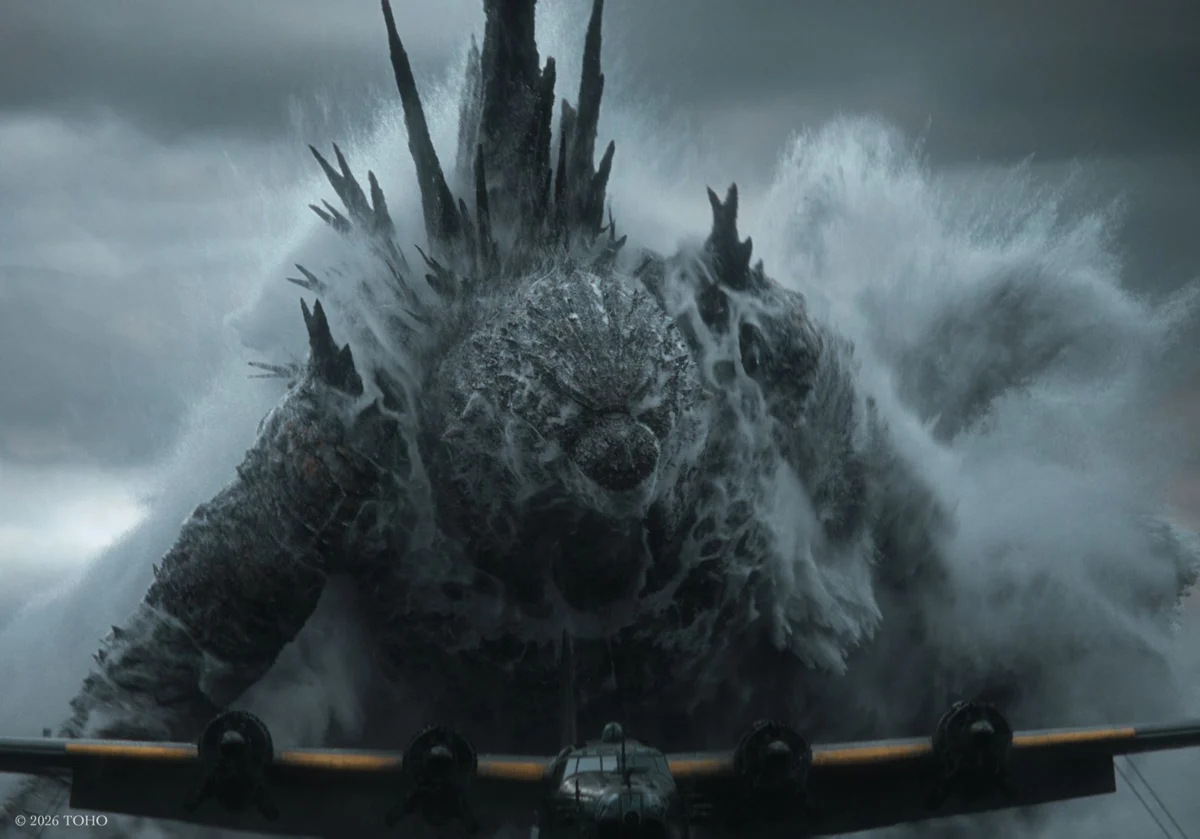
Main Facts
The landscape of modern blockbuster cinema has long been dominated by the faceless and the fictitious. Hollywood studios routinely construct interchangeable antagonists—faceless empires, shadowy syndicates, or rogue fictional nations hell-bent on hijacking nuclear launch codes or releasing biological agents—only for them to be swiftly dismantled by a weathered American action star.
Takashi Yamazaki’s Godzilla Minus Zero, the highly anticipated sequel to his critically acclaimed, Oscar-winning 2023 phenomenon Godzilla Minus One, shatters this comfortable cinematic template. Stepping far beyond standard monster-movie fare, Yamazaki crafts a narrative where the villains are distressingly tangible. The antagonists of Minus Zero range from the calculated geopolitical hostility of the American military and government apparatus to the apocalyptic, winged terror of the returning kaiju, King Ghidorah.
Set two years after the harrowing events of its predecessor, Godzilla Minus Zero returns audiences to a pulverized Japan still gasping for air beneath the combined wreckage of World War II and the atomic devastation inflicted by the United States. Rather than treating the era as mere window dressing, the film uses its geopolitical underpinnings as a sharp, uncompromising mirror of the long-term traumas born of armed conflict. Yet, for all its profound thematic weight, it remains fundamentally a Godzilla movie—one that Yamazaki scales up to blaring, symphonic, and earth-shattering proportions.
The film reunites audiences with its core ensemble of battle-hardened survivors. The disaster-response leadership returns, featuring disaster-response director Kenji Noda (portrayed by Hidetaka Yoshioka), brilliant biologist Kanji Murakami (Min Tanaka), and traumatized yet resolute pilot Kōichi Shikishima (Ryunosuke Kamiki). This time, however, the stakes are elevated to a global scale as they are forced to confront King Ghidorah—a massive, multi-headed flying beast capable of reducing major metropolitan areas to dust with a single, devastating breath.
Following its high-profile premiere at the 64th New York Film Festival, Godzilla Minus Zero is slated for a theatrical release on November 6, promising audiences an unmissable, room-shaking cinematic experience.
Chronology: The Evolution of Yamazaki’s Vision
To understand the artistic weight of Godzilla Minus Zero, one must trace the recent trajectory of Takashi Yamazaki within the Toho cinematic universe.
- Late 2023: Godzilla Minus One premieres, astonishing global audiences and critics alike by stripping the franchise back to its post-war origins. It focuses intimately on survivor’s guilt, societal abandonment, and the literal manifestation of atomic trauma in post-WWII Tokyo. The film goes on to achieve historic success, culminating in an Academy Award for Best Visual Effects—a first for the nearly 70-year-old franchise.
- 2024: Buoyed by critical adoration and a massive global box office take that proved international audiences hungered for grounded, period-piece monster films, Toho and Yamazaki quietly fast-track a sequel. Yamazaki assumes multiple critical roles once again, returning as writer, director, and lead visual effects supervisor.
- Fall 2025: Godzilla Minus Zero makes its world premiere at the prestigious 64th New York Film Festival. The screening draws immediate critical acclaim, praised for successfully marrying the grand-scale spectacle of a kaiju brawl with the somber, reflective pacing of a historical drama.
- November 6, 2025: The commercial theatrical release arrives, positioning the film as the premier cinematic event of the autumn season and inviting packed theater audiences worldwide to experience its symphonic destruction.
Supporting Data and Production Details
Behind the roar of the monsters and the sweeping orchestral scores lies a meticulously engineered production framework that elevates Godzilla Minus Zero far above standard CGI blockbusters.
- The Creative Force: Takashi Yamazaki remains the singular creative anchor of the project. By writing, directing, and personally overseeing the visual effects, Yamazaki ensures a rare stylistic and thematic consistency that Hollywood franchise filmmaking often loses across multiple directors and studios.
- Returning Cast & New Threats: The continuity of the human cast is central to the film’s emotional resonance. Hidetaka Yoshioka (Kenji Noda), Min Tanaka (Kanji Murakami), and Ryunosuke Kamiki (Kōichi Shikishima) reprise their roles, anchoring the narrative with seasoned, weary pathos. Meanwhile, the inclusion of King Ghidorah shifts the tactical dynamic from surviving a singular, unstoppable force to managing a multi-front, airborne apocalypse.
- The Domestic and International Scales: While Godzilla Minus One operated largely on a localized, domestic scale of desperation—focusing on a disarmed Japan defending its shores without naval or military backing—Minus Zero expands its canvas. The geopolitical pressures of a recovering nation caught between domestic rebuilding and international interference (specifically from the United States) create a dense web of tension that informs every tactical decision made by the characters.
- Visual Effects Mastery: Operating on a budget that is a fraction of typical Hollywood tentpoles, Yamazaki’s visual effects studio once again punches drastically above its weight class. The film boasts breathtaking, applause-inducing practical and digital fusions, rendering Ghidorah and Godzilla with staggering weight, texture, and kinetic energy.
Official Responses and Critical Reception
The reception of Godzilla Minus Zero at the 64th New York Film Festival established the film not merely as a successful genre entry, but as a towering artistic achievement.

Film critics have been particularly vocal in praising Yamazaki’s refusal to sanitize the horrors of war. Unlike many modern blockbusters that treat massive collateral damage with sterile indifference or video-game-like abstraction, Minus Zero adopts an unyielding gaze toward human suffering. Reviewers have highlighted how the camera frequently lingers on the injured, the dying, and the mourning, forcing the audience to grapple with the true human cost of violence.
"These characters haven’t just been through fighting Godzilla; they’ve been fighting and recovering for the past decade," notes early festival coverage. The emotional vulnerability injected into the monster genre by actors like Minami Hamabe (returning as Noriko) and child actress Sae Nagatani (playing Akiko) has been singled out as the emotional heartbeat of the film.
Furthermore, industry analysts have pointed to the film’s structural duality—seamlessly transitioning between intimate family drama and heart-racing, large-scale monster thriller—as a masterclass in pacing. Official statements from Toho emphasize that the studio gave Yamazaki the creative freedom to lean into the darker, more politically resonant themes that originally defined Ishirō Honda’s seminal 1954 masterpiece, ensuring that the franchise honors its solemn historical roots while pushing technological boundaries.
Implications: What Minus Zero Means for the Future of Franchise Cinema
The arrival of Godzilla Minus Zero carries profound implications for both the kaiju genre and the broader ecosystem of blockbuster filmmaking.
1. Challenging Hollywood’s Sanitized Destruction
For decades, Hollywood disaster and superhero films have utilized city-wide devastation as weightless spectacle. Skyscrapers crumble and millions are theoretically displaced, yet the narrative rarely pauses to count the human cost. Yamazaki’s approach subverts this convention entirely. By anchoring the sci-fi carnage in the very real, generational trauma of post-WWII Japan, Minus Zero proves that spectacle is exponentially more powerful when the audience is made to feel the visceral pain of the characters on screen. This raises the bar for competing studios, suggesting that audiences are increasingly fatigued by hollow CGI destruction and are hungry for narrative accountability.
2. The Power of Authorial Control
In an era where massive intellectual properties are routinely handed over to rotating committees of writers and directors, the success of Yamazaki’s duology serves as a powerful counter-argument. By retaining singular control over the writing, direction, and visual effects, Yamazaki has crafted a cohesive, singular vision that feels deeply personal. This model could encourage studios—both in Japan and internationally—to grant greater autonomy to visionary auteurs within franchise frameworks.
3. Geopolitical Nuance in Pop Culture
By casting the American military and government not as benevolent saviors, but as part of the historical and ongoing pressure weighing down a devastated Japan, Minus Zero introduces a mature geopolitical maturity rarely seen in contemporary creature features. It reminds global audiences that monsters are frequently born from human hubris, atomic experimentation, and imperial ambition. As the film prepares for its global theatrical rollout on November 6, it stands ready to provoke discussions not just about movie monsters, but about the cyclical nature of human conflict, resilience, and the enduring scars we leave upon the world.
