
The Ultimate Late-Night Showdown: How Emmy Rule Changes and Political Upheaval Have Ignited the 2026 Variety Race
The Primetime Emmy Awards are rarely short of drama, but the road to the September 14 ceremony represents a perfect storm of institutional restructuring, sudden rule shifts, and high-stakes political friction. While the main broadcast will hand out 23 golden statuettes across comedy, drama, and limited series categories—with nearly 100 more distributed during the Creative Arts ceremonies a week prior—all eyes are firmly fixed on the newly re-merged Variety Series category.
For the first time in years, late-night titans Stephen Colbert, Jimmy Kimmel, John Oliver, and NBC’s enduring sketch institution Saturday Night Live are locked in a high-voltage collision course. Amplifying the competition is a volatile political landscape that has dragged late-night television out of the studio and straight into the national crosshairs, transforming a standard industry awards race into a proxy battle for free speech and cultural resistance.
Chronology of Chaos: Category Shifts and Late-Night Upheavals
To understand the weight of this year’s Emmy race, one must look at how the Television Academy has continuously restructured the variety genre:
- 1951–2014: The variety category operated primarily as a single, sprawling entity. Talk shows, musical revues, and sketch comedy programs slugged it out on the same ballot, leading to decades of mismatched competition where late-night staples frequently crowded out smaller formats.
- 2015: The Academy split the genre into two distinct trophies: "Variety Talk Series" and "Variety Sketch Series." This era allowed Inside Amy Schumer and Key & Peele to shine early on, before Saturday Night Live settled into an uninterrupted six-year winning streak. Meanwhile, John Oliver’s Last Week Tonight dominated the talk series category with seven consecutive victories.
- 2023: In a controversial shake-up, Last Week Tonight was nudged out of the talk category and into "Scripted Variety Series," where it continued its winning ways by collecting three additional Emmys.
- 2026: The Academy has merged the categories once again. This sudden consolidation forces Last Week Tonight back into the ring against network late-night staples and SNL, setting up an unprecedented battle royale.
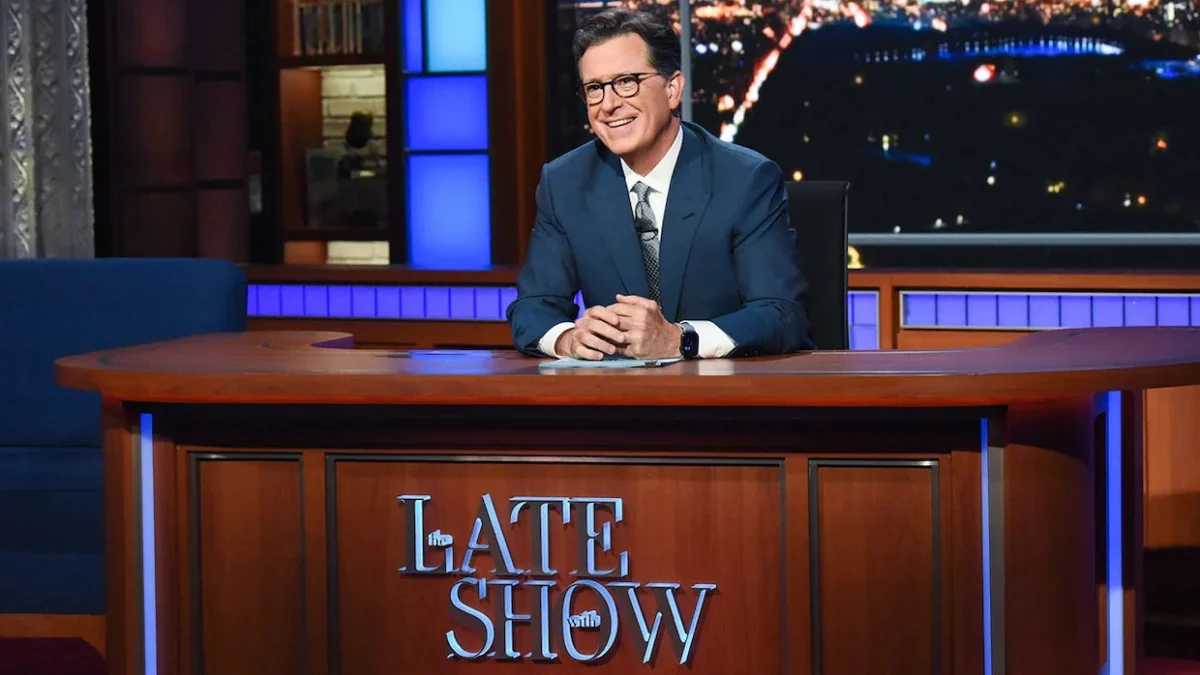
This structural upheaval arrived against a backdrop of unprecedented turmoil for late-night hosts. On May 21, 2026, CBS abruptly pulled the plug on The Late Show with Stephen Colbert after an 11-season run, ending a 33-year network institution. The official explanation from parent company Paramount—now under the control of David Ellison’s Skydance Media—was that the program was hemorrhaging $40 million annually.
However, industry skeptics immediately pointed to Colbert’s unyielding critiques of the Trump administration and the cozy ties between the Ellison family and the White House. Despite the bitter end, Colbert secured a historic victory last September, winning his first-ever talk series Emmy ahead of a final season defined by emotional guest retrospectives.
Just months later, the industry reeled from a second crisis. On September 17, 2026, Jimmy Kimmel Live! was temporarily pulled from the airwaves. The suspension followed immense pressure from the Trump administration and Federal Communications Commission (FCC) Chairman Brendan Carr, triggered by a controversial monologue remark regarding Charlie Kirk’s assassination. With conservative broadcast groups like Nexstar and Sinclair threatening to strip the show from their ABC affiliates, Kimmel’s future hung in the balance.
However, a swift and overwhelming public backlash—complete with threats of widespread audience boycotts—forced a dramatic reversal. Kimmel returned to the airwaves on September 23 to a staggering 6.26 million viewers, setting a series record, while his return monologue racked up 26 million views across social media.
Supporting Data: Disqualifications, Ratings, and Records
Navigating the Television Academy’s rulebook is notoriously difficult, particularly with the introduction of new compliance measures. A primary example this year is a strict rule preventing performers from competing as guest actors for roles in which they were previously nominated as leads or supporting actors.
This policy caught Hollywood off guard when Apple mistakenly submitted Jon Hamm in the guest actor category for The Morning Show. Because Hamm had already earned a 2024 supporting actor nomination for the exact same character, the submission violated the updated regulations, resulting in his disqualification (though he remains eligible for two separate Emmys elsewhere).
When examining the quantitative realities of the primary Variety Series nominees, the metrics tell a compelling story:
- $40 Million: The reported annual deficit cited by Paramount for the cancellation of The Late Show with Stephen Colbert.
- 11 Seasons: The duration of Stephen Colbert’s tenure anchoring CBS’s late-night franchise.
- 6.26 Million Viewers: The record-breaking audience tuning in for Jimmy Kimmel’s triumphant September 23 return to television following his brief suspension.
- 26 Million Views: The digital footprint achieved by Kimmel’s viral monologue addressing the FCC and network pressure.
- 12 Years: The span of consecutive nominations for Jimmy Kimmel Live! in the variety category, though the show has yet to take home the top prize.
- 51 Seasons: The milestone reached by Saturday Night Live, which recently celebrated its historic 50th-anniversary momentum alongside the surprise international hit debut of SNL UK.
Official Responses and Industry Reactions
The intersection of broadcast television and government oversight has drawn sharp commentary from institutional stakeholders, advocacy groups, and network executives.
Representatives for Skydance Media have maintained that the cancellation of The Late Show was purely a "fiduciary necessity" designed to right-size entertainment expenditures in a shifting media economy. Corporate leadership has consistently deflected suggestions of political censorship, emphasizing that linear late-night television faces structural economic headwinds that demand aggressive cost-cutting measures across all legacy networks.
Conversely, free-speech organizations and media watchdogs have condemned the sequence of events surrounding both Colbert and Kimmel. A coalition of entertainment guilds issued a joint statement following Kimmel’s suspension, warning that "the deployment of regulatory bodies and affiliate pressure to silence satirical commentary represents a clear and present danger to the foundational principles of American broadcast freedom."
FCC Chairman Brendan Carr defended the agency’s oversight role in public statements, asserting that broadcast licenses carry an intrinsic obligation to serve the public interest and that network executives must remain accountable for content that incites public division or crosses regulatory boundaries. Meanwhile, neither Colbert nor Kimmel have shied away from addressing the controversies, using their remaining platform space and digital channels to champion artistic independence and push back against corporate and political intimidation.
Implications: A Political Ballot and the Future of Late Night
As Emmy voters finalize their ballots, the implications of this year’s race extend far beyond industry prestige. The merged variety category forces a referendum on how the television academy views political satire, institutional resilience, and the changing definition of late-night entertainment.
- The Colbert Factor: The Late Show enters the race with immense narrative momentum. For many liberal-leaning Academy members, casting a ballot for Colbert is not merely a recognition of his final season, but a symbolic vote against political targeting and corporate capitulation. An acceptance speech from Colbert and his production team would undoubtedly serve as one of the evening’s most-watched cultural moments.
- Kimmel’s Redemption Arc: Despite receiving a dozen nominations over the years, Jimmy Kimmel Live! has never captured the variety series Emmy. The intense public defense of his show, combined with record-breaking ratings upon his return, positions him as a sympathetic and powerful contender, provided John Oliver’s analytical powerhouse doesn’t sweep the board once again.
- The SNL Alternative: For voters seeking a reprieve from heavy political discourse, Saturday Night Live offers a reliable, sketch-driven anchor. Having navigated the departure of fan-favorite Bowen Yang and expanded its brand overseas with SNL UK, Lorne Michaels’ creation relies on comedic absurdity rather than topical outrage, keeping it firmly in the hunt.
- The Wildcard: With The Daily Show operating under its successful multi-host format—anchored by Jon Stewart on Mondays—the legacy of political comedy remains well-represented on the ballot.
Ultimately, regardless of which program claims the trophy on September 14, the evening’s outcome is guaranteed to reverberate through the halls of Washington and the executive suites of Hollywood. As industry insiders gather to celebrate television’s finest achievements, the shadow of political censorship and the shifting economics of late-night television will ensure that this year’s Emmys are remembered long after the broadcast concludes.
