
Beyond the Shadow of the Maestro: A Deep Dive into Michele Soavi’s The Sect
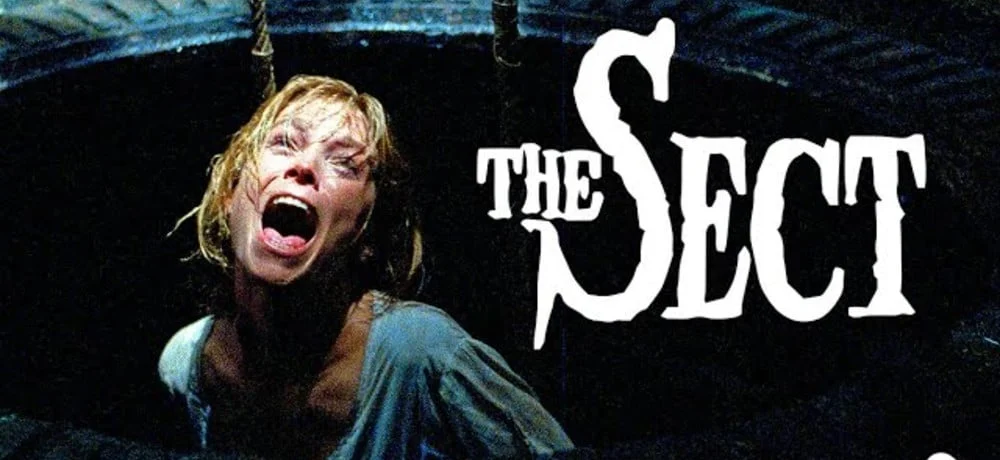
For aficionados of Italian horror, the lineage is sacred. While the titans—Dario Argento, Mario Bava, and Lucio Fulci—defined the landscape of macabre cinema, Michele Soavi occupies a unique, elevated position in that pantheon. Having served as a protégé and assistant director to Argento, Soavi faced the daunting task of carving his own identity from beneath the shadow of a master. He succeeded not by mimicry, but by refinement. Soavi’s filmography is marked by a rare combination of technical precision, atmospheric storytelling, and a refusal to rely solely on the gore-soaked tropes of his peers.
Perhaps nowhere is this artistic maturity more evident than in his 1991 cult masterpiece, The Sect (originally titled La Setta and later released as The Devil’s Daughter). A swirling, dreamlike descent into the mechanics of global satanic conspiracy, the film remains a high-water mark for the sub-genre. Where his subsequent work, Dellamorte Dellamore (1994), would lean into whimsical, surrealist zombie-comedy, The Sect stands as a pillar of profound, unsettling ambition.
The Chronology of a Satanic Conspiracy
The narrative architecture of The Sect is as complex as the occult web it depicts. The film opens in the sun-drenched, dusty plains of Southern California in 1970—a prologue penned by none other than Dario Argento. It is an era-defining tableau: a caravan of hippies, seemingly plucked from the height of the counterculture, lounge in the desert. They are blissfully unaware that they are mere players in a cosmic clockwork.
The peace is shattered by the arrival of a stranger named Damon. With a cadence that suggests a failed stage actor descending into a drug-fueled psychosis, Damon introduces a discordant note to the scene. He arrives spouting lyrics to The Rolling Stones’ "Sympathy for the Devil"—albeit with the wrong verses—and charms his way into the group’s dinner. As the hippies succumb to sleep, the true purpose of the encounter is revealed. Damon is the vanguard of a global satanic sect, and his guests are merely offerings. In a ritualistic purge, the encampment is razed, and Damon receives assurance from a mysterious, shadowy benefactor in a limousine: the gears of the apocalypse have begun to turn.
The story then leaps forward two decades to the cold, clinical streets of Frankfurt, Germany. Here, the narrative shifts from the open desert to the claustrophobic interiors of apartment life. We are introduced to Mary Crane—a nod to Hitchcock that signals the impending peril—who is brutally dispatched by a sect member, played by the legendary Giovanni Lombardo Radice. Her sin was simple: she sought to leave the organization.
Enter the film’s true protagonist: Miriam Kreisl, portrayed with haunting, grounded intensity by Kelly Curtis. A repressed schoolteacher, Miriam’s life is upended when she nearly strikes an elderly, cantankerous man with her car. This man is Moebius Kelly, played by the inimitable Herbert Lom. What begins as an act of altruism—taking the stranger into her home—spirals into a waking nightmare. As Miriam sleeps, Moebius initiates a series of rituals, including the insertion of a sacred, parasitic scarab into her nasal cavity. This act serves as the catalyst for the film’s increasingly abstract and hallucinatory dream sequences, marking Miriam as the unwilling vessel for a prophecy that will dictate the fate of humanity.
Supporting Data: Crafting the Aesthetic of Dread
The Sect is not merely a story; it is an exercise in visual sensory overload, anchored by the stunning cinematography of Raffaele Mertes. Mertes, who had previously worked on Trauma, collaborates with Soavi to create a visual language that balances elegance with inherent unease. The film’s palette—shifting from the warm, golden hues of the California desert to the steel-grey, claustrophobic tones of urban Frankfurt—creates a subconscious rhythm of isolation.
Central to the film’s success are the practical effects, helmed by the legendary Sergio Stivaletti. Known for his work on Demons 2 and various Argento collaborations, Stivaletti brings a tactile, visceral reality to the film’s more grotesque set pieces. From the disturbing "face-mask" sequence—where a mask of human skin is peeled away—to the surreal, nightmare-fueled sequences of the final act, the special effects serve to ground the film’s supernatural elements in a disturbing, organic reality.
Kelly Curtis’s performance cannot be overstated. Tasked with anchoring a narrative that frequently drifts into the surreal, she provides a center of gravity. While the audience may find moments where she echoes the iconic screen presence of her sister, Jamie Lee Curtis, this is undeniably Kelly’s performance. She navigates the character’s transformation from a sheltered schoolteacher to a woman fighting to reclaim her autonomy from a cosmic destiny with a fierce, quiet resolve. Opposite her, Herbert Lom provides a masterclass in the "weary villain." His performance as Moebius Kelly is one of bone-deep, fanatical conviction; he is not a mustache-twirling caricature, but a man who believes he is merely a servant to a higher, darker purpose.
Implications: The Legacy of Late-Stage Satanic Panic
The release of The Sect in 1991 arrived during the tail end of the "Satanic Panic," a period of intense cultural anxiety in the West regarding the presence of secret, malevolent cults. Soavi captures this zeitgeist and elevates it into a high-concept horror epic. By keeping the cult’s specific motivations and exact origin mysterious, he allows the viewer to project their own fears onto the screen. The sect is not a mere group of villains; they are a metaphor for the unseen, systemic forces that manipulate individual lives toward tragic ends.
The film also offers a compelling, albeit bleak, perspective on the agency of women within horror cinema. Miriam is positioned as a pawn—a vessel for the "Devil’s child"—yet the final act of the film hinges on her active choice. In a genre where the "final girl" is often defined by her survival against an external monster, Miriam’s battle is internal. She must reconcile her trauma, her body’s violation, and the terrifying responsibility of the life growing within her. The film avoids the easy, reductive ending, leaving the viewer to grapple with the ambiguity of her final decision.
Official Reception and Modern Re-evaluation
Upon its initial release, The Sect was received as a stylish, albeit polarizing, entry in the Italian horror canon. While critics praised its visual flair and the performances of its leads, some found the narrative density and the abrupt tonal shifts between the California prologue and the German main story to be disjointed.
However, in the decades since, the film has undergone a significant critical re-evaluation. It is now widely regarded as one of the most intellectually ambitious films of the Italian horror movement. It is no longer viewed as a "lesser" Soavi film, but as a crucial companion piece to his better-known work. The recent Blu-ray release from Severin Films has introduced The Sect to a new generation of horror enthusiasts, who have lauded the film’s commitment to "weird" cinema. It is a film that refuses to hold the audience’s hand, demanding instead that they surrender to its logic—a logic of shadows, rituals, and the relentless, creeping dread of the unknown.
Conclusion: A Tinfoil Hat Encrusted with Diamonds
The Sect is, in the final analysis, a triumph of atmosphere over pure narrative clarity. It is a film that embraces its own absurdity—whether it be a demon stalking a schoolteacher or a secret cave system located beneath a modern apartment complex—and wears it with absolute conviction.
Michele Soavi managed to take the familiar tropes of the "woman in peril" and the "satanic conspiracy" and infuse them with a sense of grandeur and melancholy. It is a film that demands to be watched not for its plot, but for its feeling. It is a cinematic relic of a time when Italian horror was pushing the boundaries of what could be shown, and what could be imagined. For those willing to venture into its depths, The Sect remains an essential, diamond-encrusted curiosity of the genre—a reminder that in the right hands, even the most outlandish occult premise can be transformed into a work of unsettling, enduring beauty.
