
From Slapstick to the Silver Lion: The Accidental Auteur Journey of Takeshi “Beat” Kitano
Main Facts: The Multifaceted Legacy of a Japanese Icon
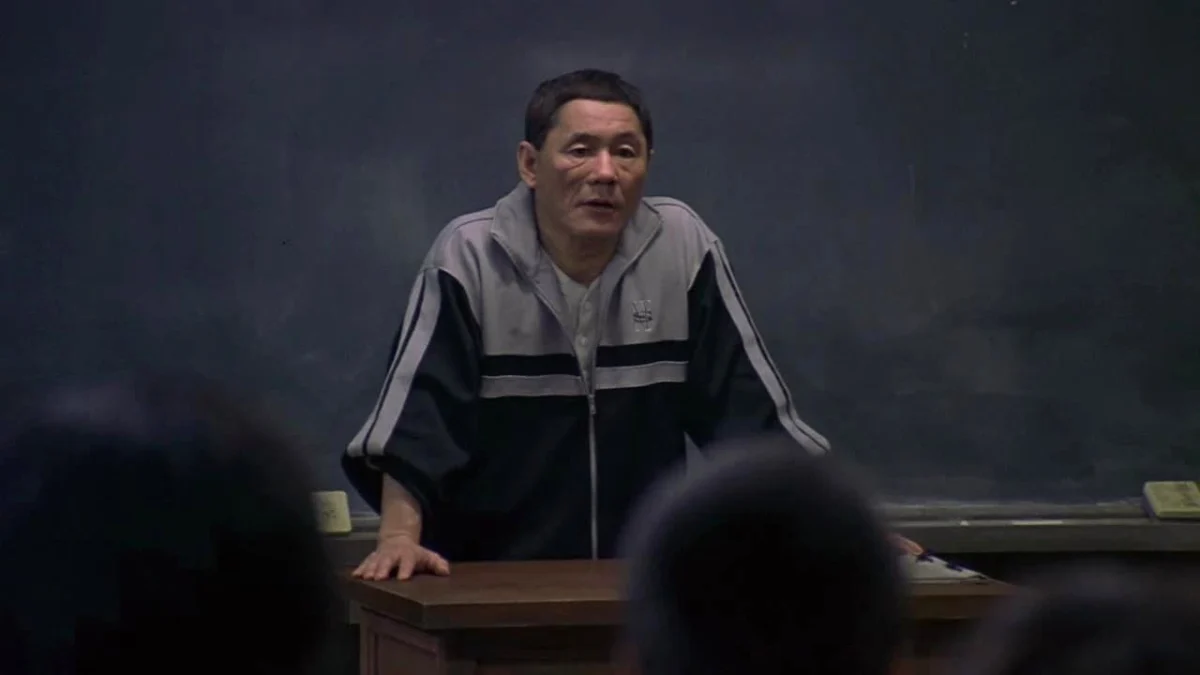
Takeshi Kitano—globally revered as “Beat” Takeshi—stands as one of the most singular figures in contemporary world cinema. Over a career spanning more than five decades, Kitano has defied simple categorization, transforming himself from a risqué, deadpan television comedian into an internationally celebrated cinematic auteur.

While best known in the West for his visceral, poetically violent yakuza crime dramas, Kitano’s creative footprint extends far beyond the underworld. He is a prolific television host, a bestselling novelist, an expressionist painter, a video game designer of legendary frustration (Takeshi’s Challenge), and an acclaimed dramatic actor who has worked alongside cinematic royalty like Nagisa Oshima and Kinji Fukasaku.
His directorial filmography—marked by minimalist framing, sudden eruptions of shocking violence, deadpan humor, and deep melancholy—has fundamentally reshaped the Japanese crime genre and inspired generations of filmmakers globally, from Quentin Tarantino to Martin McDonagh.

Chronology: A Life Shaped by Chance and Defiance
Early Life and Accidental Beginnings (1947–1970s)
Born in January 1947 in the working-class Adachi neighborhood of Tokyo, Kitano grew up amidst the postwar rebuilding of Japan’s capital. The son of a housepainter and a factory worker/teacher, Kitano recognized early that his environment offered limited trajectories. As he later recounted, he and his peers felt they had only two ways out: organized crime or baseball. Choosing a third path of defiance, he enrolled at the prestigious Meiji University to study engineering.
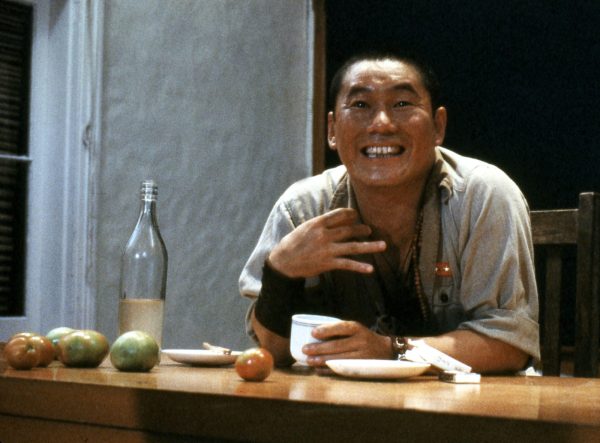
Academic boredom soon set in, leading him to drop out at age 19. Working odd jobs in a bar, Kitano was thrust onto the stage when a comedy act dropped out of the bill. This serendipitous moment ignited a calling. Moving to Tokyo’s Asakusa district in the early 1970s, he worked as a lift operator in a seedy venue while being mentored by resident comic Senzaburo Fukami. Alongside partner Kiyoshi Kaneko, he formed the comedy duo The Beats. Kitano played the deadpan straight man in an act known for pushing the boundaries of taste and acceptability.

Transition to Solo Stardom and Acting (1980s)
By the 1980s, Kitano split with Kaneko to pursue a solo career, dominating Japanese television as a prime-time comedy heavyweight and hosting the massive international hit game show Takeshi’s Castle. Late-night afterparties introduced him to real-life yakuza figures, providing invaluable material for his future cinematic endeavors.

Simultaneously, Kitano transitioned into serious dramatic acting. His watershed moment came in 1983, when Japanese cinema master Nagisa Oshima cast him as a brutal prisoner-of-war camp sergeant in the World War II drama Merry Christmas, Mr. Lawrence, starring alongside David Bowie and Tom Conti. This role challenged public perceptions of Kitano, though he continued balancing high-profile dramatic parts with mainstream comedic television work throughout the decade.

Directorial Breakthrough and International Acclaim (1989–1999)
Kitano’s entry into filmmaking happened purely by accident. In 1989, director Kinji Fukasaku cast him as the lead in the gangster film Violent Cop. When production delays clashed with Kitano’s heavy television schedule, Fukasaku stepped aside, advising Kitano to direct the film himself and rewrite the script.

Despite initial skepticism from the crew, Violent Cop emerged as a stylistic triumph, establishing Kitano’s signature directorial traits: an anti-hero protagonist, stationary camera setups, stark brutality, and dry, jet-black humor. He followed this with Boiling Point (1990) and the tender surf drama A Scene at the Sea (1991), which marked his historic first collaboration with master composer Joe Hisaishi.

With Sonatine (1993), Kitano achieved international critical breakthrough. Playing a disillusioned middle-aged yakuza hiding out in Okinawa, Kitano blended brutal bloodshed with Felliniesque surrealism and profound melancholy. Screened at the Cannes Film Festival and championed by critics like Roger Ebert, Sonatine introduced Western audiences to a fresh grammar of crime cinema.
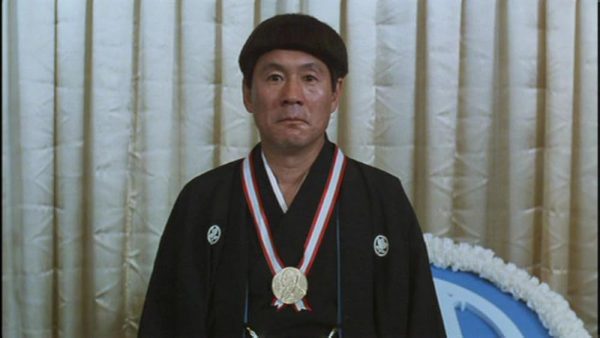
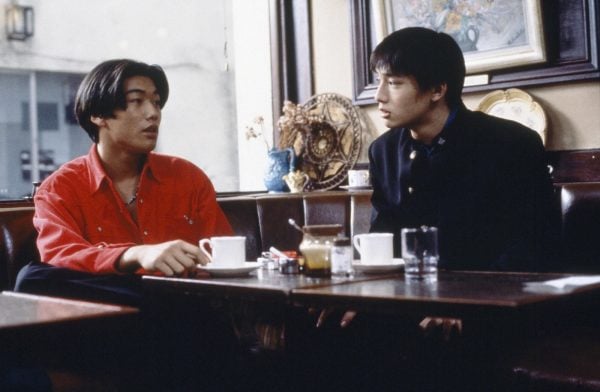
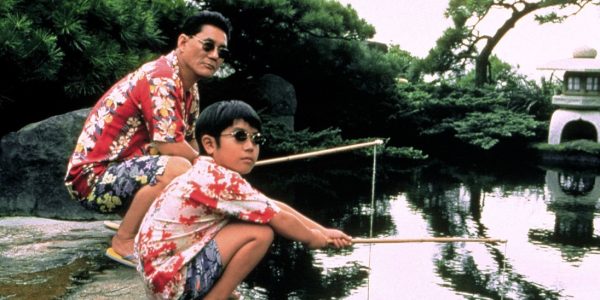
Following a near-fatal motorcycle accident in 1994 that left the right side of his face partially paralyzed, Kitano turned to painting during his recovery. He returned to filmmaking with Kids Return (1996), a poignant coming-of-age drama, before delivering his undisputed masterpiece, Hana-bi (Fireworks, 1997). Hana-bi won the prestigious Golden Lion at the Venice Film Festival, cementing Kitano’s status as a global master. He capped off the decade with the whimsical, tragic road-trip comedy Kikujiro (1999).
Global Ambitions and Genre Experimentation (2000–2009)
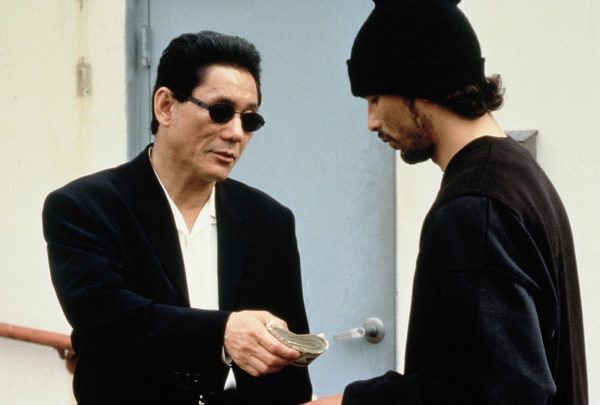
Seeking an international Hollywood crossover, Kitano directed Brother (2000), his first film shot outside Japan, tracking a yakuza heavy fleeing to Los Angeles. While featuring his trademark style, the film received mixed international reviews, leading Kitano to express regret over not capturing the mass Western audience he envisioned.
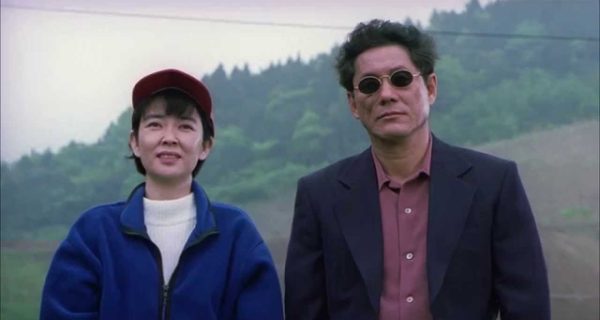
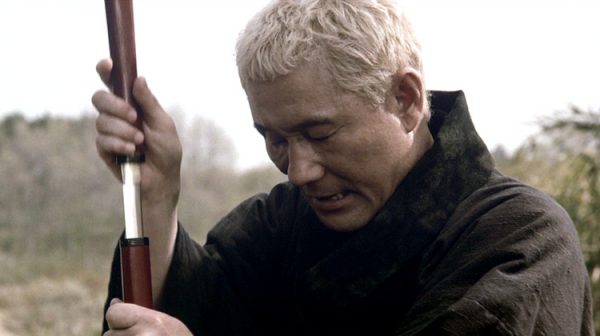
Returning to Japan, he explored unconventional paths. Dolls (2002) was a lavish, tragic anthology film inspired by traditional Bunraku puppet theater. He then revitalized Japanese pop culture with Zatoichi (2003), his inventive take on the legendary blind swordsman, which won him the Silver Lion for Best Director at Venice. Mid-decade saw a series of experimental, introspective flops (Takeshis’, Glory to the Filmmaker!), prompting a strategic pivot.
The Modern Master and Continuing Legacy (2010–Present)
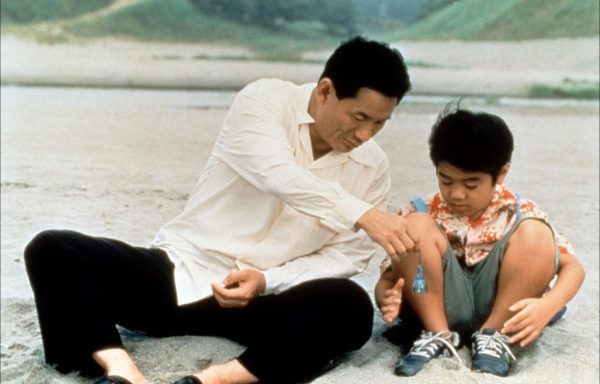
In 2010, Kitano returned to his roots with Outrage, a cynical, blood-soaked crime thriller designed as a commercial crowd-pleaser. The film was a major critical and box-office hit, spawning two successful sequels and proving that Kitano could seamlessly marry artistic integrity with commercial viability. To this day, Kitano remains an active cultural titan in Japan, directing films, writing, and appearing on television.
Supporting Data: Commercial and Critical Milestones
- Box Office & Commercial Reach: While early masterpieces like Sonatine underperformed domestically due to Japanese audiences pigeonholing Kitano as a television comedian, they dominated the international festival circuit. Later works struck a balance: Kids Return earned three Japanese Academy Award nominations, Outrage grossed 634 million Yen domestically, and Zatoichi became a massive global commercial success.
- Critical Accolades:
- Hana-bi (1997): Winner of the Golden Lion (Venice Film Festival) and Grand Prix (Belgian Syndicate of Critics).
- Zatoichi (2003): Winner of the Silver Lion for Best Director (Venice Film Festival) and Japan Academy Prize for Best Cinematography.
- Outrage (2010): Nominated for the Palme d’Or (Cannes Film Festival).
- Collaborative Synergy: Kitano’s partnership with composer Joe Hisaishi is frequently compared to legendary pairings like Hitchcock and Bernard Herrmann, or Leone and Ennio Morricone, providing the emotional backbone for nearly all of Kitano’s masterworks.
Official Responses and Industry Reception
Critical appraisal of Takeshi Kitano evolved dramatically over decades. Initially dismissed by domestic Japanese film critics as a television personality dabbling in a hobby, Kitano faced an uphill battle for artistic legitimacy in his home country. However, international champions shifted the narrative. Prominent Western critics, including Roger Ebert and Stephen Hunter of The Washington Post, regularly elevated Kitano’s work, praising his rejection of conventional, action-heavy Hollywood tropes in favor of existential stillness, precise framing, and emotional resonance.
Following his victories at Venice—first with Hana-bi and later with Zatoichi—the Japanese critical establishment underwent a paradigm shift, finally embracing Kitano as a national treasure and an authentic cinematic auteur. Peers across the globe have repeatedly cited his influence; modern transgressive crime media, ranging from manga series like The Fable to critically acclaimed video game franchises like Sega’s Yakuza, bear the unmistakable DNA of Kitano’s artistic vision.

Implications: The Importance of Defying Convention
Takeshi Kitano’s sprawling career serves as a masterclass in artistic reinvention. His trajectory demonstrates the vital necessity for creators to resist being pigeonholed by public image or industry expectations.
By refusing to remain exclusively a slapstick comedian, a television host, or a strict director of gangster pictures, Kitano forged a body of work that captures the full spectrum of the human condition. Films like Hana-bi, Kikujiro, and Sonatine continue to resonate precisely because they refuse easy answers, proving that human beings are inherently multi-faceted—capable of extreme cruelty, profound tenderness, and absurd humor all at once. In an era obsessed with rigid branding and algorithmic categorization, Kitano’s chaotic, accidental journey from the working-class streets of Adachi to the highest echelons of global cinema remains a defiant reminder of the power of artistic freedom.
