
Beyond Logic: How Leonard Nimoy Left an Indelible, Sinister Mark on the Transformers Franchise
Main Facts
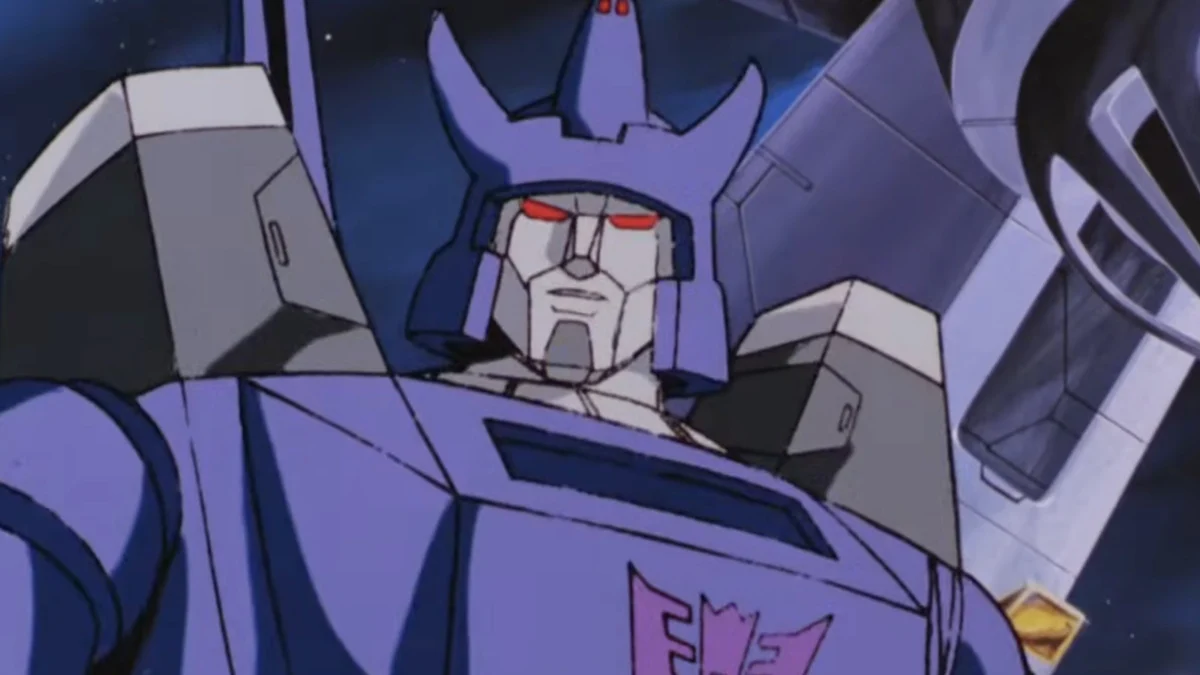
The 1986 animated feature film The Transformers: The Movie remains a touchstone of cult-classic 1980s science fiction. While the film is frequently remembered for its shockingly high body count—including the tragic demise of the Autobot leader Optimus Prime—it also broke new ground by enlisting a roster of Hollywood heavyweights for its voice cast. Alongside Judd Nelson as Hot Rod and the legendary Orson Welles in his final film role as the planet-consuming god Unicron, the production secured Star Trek icon Leonard Nimoy to voice the reborn Decepticon herald, Galvatron.
Departing significantly from his famous, hyper-logical portrayal of Mr. Spock, Nimoy delivered a booming, cavernous, and terrifyingly intense performance that permanently reshaped the Transformers mythos. Nimoy’s involvement did not stop in 1986; decades later, he returned to the franchise to voice Sentinel Prime in the 2011 live-action blockbuster Transformers: Dark of the Moon, a role that would stand as one of the final performances of his illustrious career before his passing in 2015.
Chronology: From the 1986 Masterpiece to the Live-Action Revival
1984–1985: The Toy-To-Television Phenomenon
Before The Transformers: The Movie hit theaters, the Transformers franchise began as a lucrative toy line backed by a syndicated cartoon series produced by Marvel Productions and Sunbow Entertainment. During this initial run, Frank Welker established the character of Megatron as the ruthless, handgun-transforming leader of the Decepticons. Unbeknownst to casual viewers, however, the foundational DNA of the franchise’s villains had already been touched by Leonard Nimoy’s legacy; the cold, calculating Decepticon scientist Shockwave was partially modeled after Nimoy’s iconic portrayal of Spock.
1986: The Birth of Galvatron
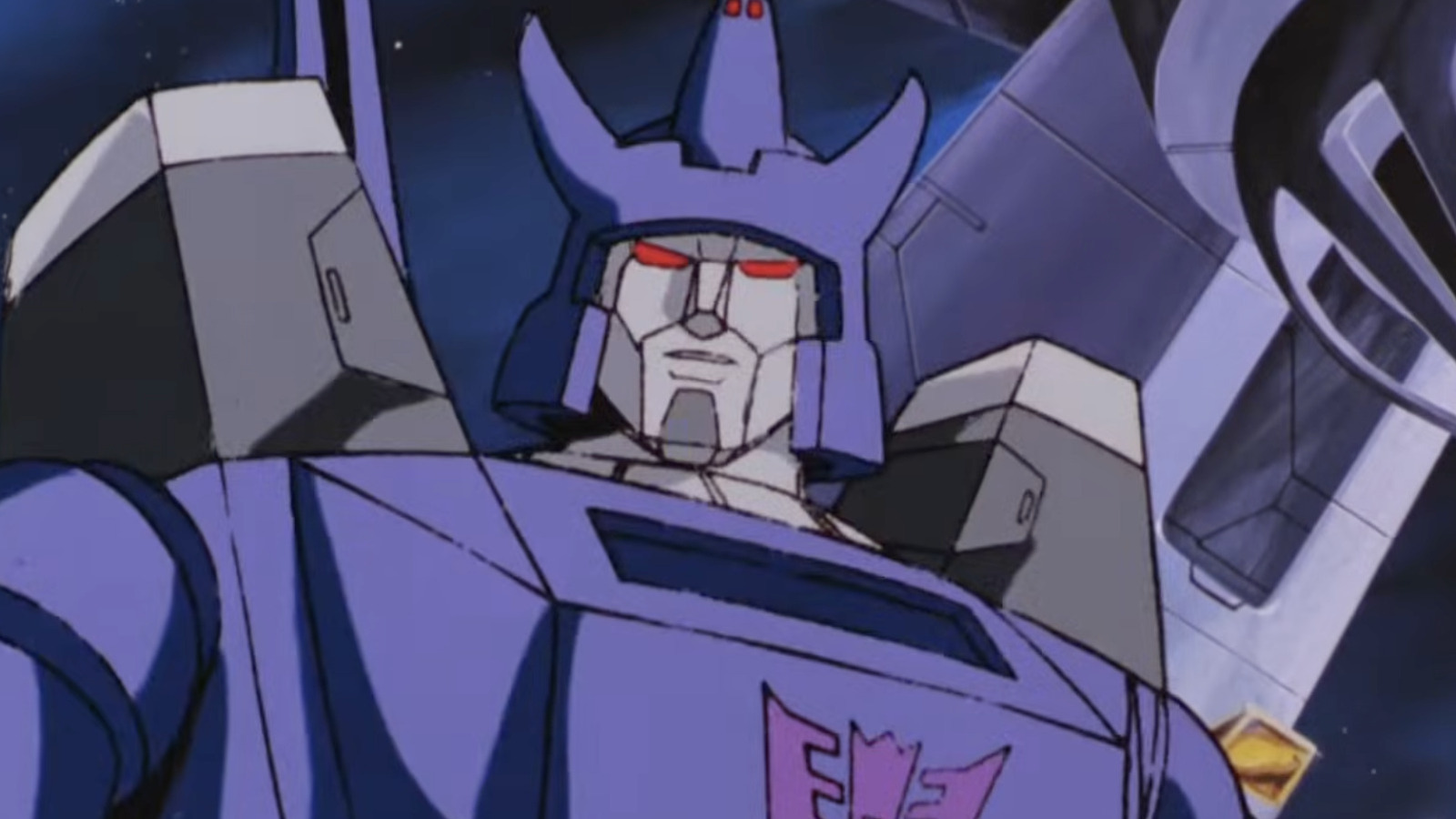
With Hasbro and Marvel pushing for a theatrical film to clear out older toys and introduce a new generation of characters, screenwriter Ron Friedman and the production team conceived a narrative that was remarkably dark for a children’s property. In a brutal clash, Megatron and Optimus Prime inflict mortal wounds upon one another.
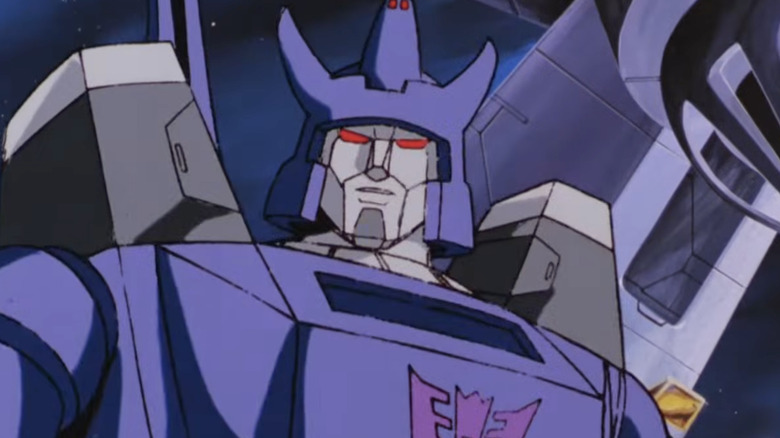
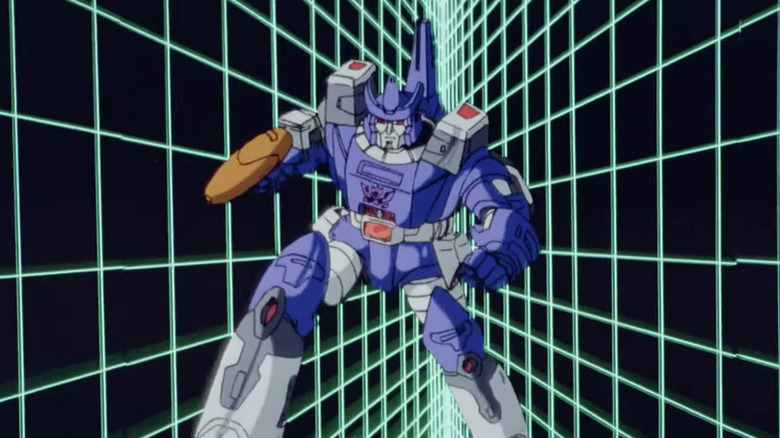
Left for dead in deep space by his treacherous second-in-command, Starscream, a battered Megatron is scooped up by the cosmic entity Unicron. Offered a new body and supreme power in exchange for absolute servitude, Megatron is forcefully resurrected into Galvatron. To bring this terrifying new antagonist to life, the filmmakers cast Leonard Nimoy, moving away from Welker’s campy inflection and introducing a grander, more menacing vocal profile.
Post-1986: The Animated Series and Mental Decline
Following the feature film, The Transformers animated series transitioned into its third season. Because retaining Nimoy for regular television production was financially and logistically unfeasible, Frank Welker returned to voice Galvatron. To explain the shift in vocal delivery—higher-pitched and increasingly unhinged—the series leaned into the narrative consequence of Galvatron being submerged in liquid plasma on the planet Trash. The character’s mind had shattered under Unicron’s psychological conditioning, culminating in bizarre episodes like "Webworld," where the Decepticon army temporarily commits their leader to a psychiatric facility.
2011: The Return of a Legend in Dark of the Moon
Twenty-five years after originating Galvatron, Leonard Nimoy made a triumphant return to the cinematic universe in director Michael Bay’s Transformers: Dark of the Moon. Rather than reprising his animated role, Nimoy was cast as Sentinel Prime, the predecessor to Optimus Prime and a legendary figure in Cybertronian history. This casting played brilliantly against audience expectations, leveraging Nimoy’s inherent gravitas as a wise mentor figure—only to pull the rug out from under viewers by revealing Sentinel as a desperate traitor who allied with the Decepticons to save their dying home planet at the expense of Earth.
Supporting Data and Production Insights
The creation of Galvatron and the casting of Leonard Nimoy were anchored in deliberate creative choices designed to signal a permanent shift in the Transformers universe.
- Philosophical Underpinnings: Screenwriter Ron Friedman explained at various fan conventions, including TFCon Toronto 2019, that he deliberately avoided simply killing off Megatron for a generic replacement. Instead, he approached the character through a philosophical lens: birth and death are both transformations. By having Megatron transform through death, the creative team stripped away his human-like bluster and replaced it with cold, efficient cruelty.
- The Faustian Bargain: Galvatron’s immediate reaction upon receiving his new lease on life was to vaporize Starscream during his coronation—an act of long-overdue vengeance. However, this introduced a tragic irony: by trading his independence to Unicron, Galvatron merely swapped one abusive master for a much worse one, shifting from a rebellious commander to an enslaved herald.
- Vocal Transformation: While Frank Welker’s Megatron was defined by a metallic snarl and theatrical scheming, Nimoy’s Galvatron was sculpted to sound as though his vocal cords had been scorched by hellfire. This gave the character an aura of divine punishment and unstoppable momentum.
- Cultural Legacy: The 1986 film’s handling of Galvatron’s creation proved so enduring that it was repeatedly paid homage in later iterations. Most notably, the 2010s animated series Transformers: Prime recreated this exact arc in its epilogue movie, Predacons Rising, where a deceased Megatron is once again resurrected and subjugated by Unicron.
Official Responses and Creative Perspectives
The evolution of the villains and the casting of high-profile actors were subjects of significant reflection by the creators behind the scenes.
When discussing the monumental shift in tone for the 1986 film, producers and writers noted that the corporate mandate to refresh the toy line forced them to take narrative risks that modern children’s animation rarely attempts. Killing off Optimus Prime and transforming Megatron into Galvatron were high-stakes gambles that permanently altered the cultural perception of the franchise.
Regarding his late-career turn in Transformers: Dark of the Moon, Leonard Nimoy expressed enthusiasm for returning to the science-fiction realm that had shaped much of popular culture. Director Michael Bay and the sound design teams sought out Nimoy specifically because his vocal authority could match—and at times overpower—the steadfast nobility of Peter Cullen’s Optimus Prime. The scenes shared between the two veteran actors provided the 2011 blockbuster with a surprising emotional anchor, elevating a standard CGI action sequence into a poignant tragedy of fallen brotherhood.
Implications for the Franchise and Pop Culture
Leonard Nimoy’s contributions to The Transformers transcend mere cameo appearances; they helped legitimize voice acting in western animation as a medium capable of delivering genuine Shakespearean tragedy.
- Redefining Villainy: Before Nimoy’s Galvatron, cartoon villains of the 1980s were frequently sidelined by comedic ineptitude. Galvatron established a template for the unstoppable, psychologically fractured warlord—a blueprint later utilized across numerous sci-fi and comic book adaptations.
- Bridging Generations: By casting actors of the caliber of Orson Welles, Judd Nelson, and Leonard Nimoy, the 1986 film bridged the gap between classic Hollywood prestige and modern pop culture merchandising. Nimoy’s return in 2011 further cemented the franchise’s ability to draw on nostalgia while appealing to contemporary audiences.
- The Duality of a Legend: To millions, Nimoy will forever be associated with the ultra-rational, peaceful Vulcan philosophy of Spock. Yet, his work as Galvatron and Sentinel Prime proved his extraordinary range, demonstrating that the actor who championed logic could equally command the screen—and the microphone—as a terrifying agent of chaos and tragic betrayal.
