
Surrealism Meets the Riviera: Tim Heidecker and Eric Wareheim Take Cannes with Quentin Dupieux’s Full Phil
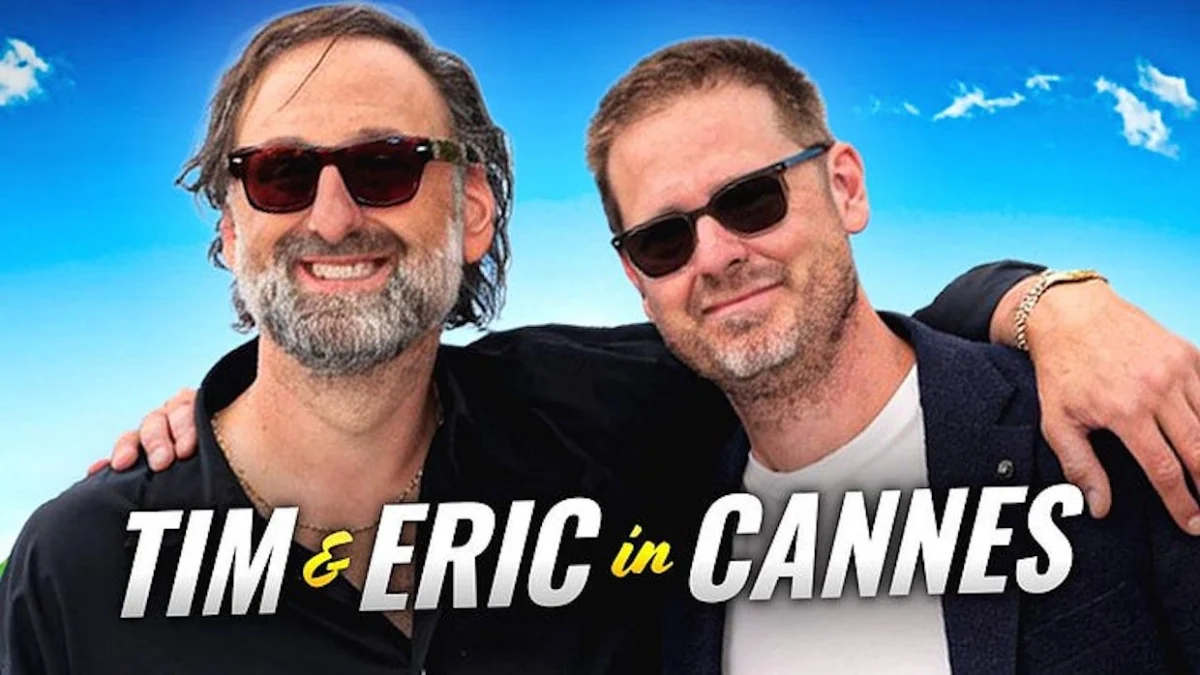
CANNES — In the dizzying, high-stakes ecosystem of the Cannes Film Festival—where sea-scented air mingles with millions of dollars in marketing capital, and red-carpet attendees don heavy tuxedos and shimmering, Barbie-cake evening gowns—few presences feel as jarringly, delightfully subversive as Tim Heidecker and Eric Wareheim.
The architects of a particular brand of chaotic, anti-comedy surrealism that permanently rewired millennial internet culture and American humor via Adult Swim’s Tim and Eric Awesome Show, Great Job! (2007–2010) are back together. No longer just cult figures beaming public-access style nightmares through a cracked funhouse mirror, the duo have landed on the grandest, most gilded stage in global cinema.
Their reunion takes place within Full Phil, one of two idiosyncratic offerings by prolific French provocateur and electronic musician Quentin Dupieux (better known as Mr. Oizo) premiering at this year’s festival. Described by its director as "Emily in Paris in hell," Full Phil features Heidecker and Wareheim doing what they do best: chewing the scenery with gleeful, unbridled abandon.
Main Facts: The Crossover of Vulgar Surrealists
The narrative of Full Phil centers on an ill-fated luxury excursion to the French capital, orchestrated by a wealthy father (played by Woody Harrelson) attempting to reconnect with his indifferent daughter (Kristen Stewart). Rather than indulge her father, Stewart’s character chooses to gorge herself on tender meats and cream-piled sweets while transfixed by a clunky portable DVD player playing a black-and-white horror film.
It is within this film-within-the-film that Heidecker and Wareheim emerge as Victor Frankenstein-esque mad scientists, relentlessly pursuing a Creature from the Black Lagoon-style reptilian monster that terrorizes cartoonish victims.
Ahead of the film’s midnight premiere at the festival’s grand theater, the comedy icons sat down for an expansive discussion regarding their arrival on the Riviera, their divergent artistic paths over the past 15 years, and their evolving relationship with Hollywood’s rigid machinery.
Chronology: From Temple University to Global Independent Icons
The partnership between Heidecker and Wareheim began decades ago as students at Temple University in Philadelphia. Over time, they forged a double-act for the ages, standing in a lineage of comedic greats alongside Laurel and Hardy, Martin and Lewis, and Nichols and May.
Following the massive cultural footprint of their Adult Swim era, the duo drifted into widely disparate solo ventures:
- Tim Heidecker: Paired up with Gregg Turkington to anchor the multimedia psychodrama On Cinema at the Cinema (2011–present), released six rock albums, and found himself thrust into major headlines as The Onion moved to wrest the InfoWars propaganda empire from Alex Jones. In April, Heidecker was announced as the new creative director of InfoWars, turning internet satire into a real-world media incubator.
- Eric Wareheim: Embraced the life of a bon vivant, authoring cookbooks, crafting wine, and reinventing himself as a botanical guru and bonsai importer, while keeping his toes in acting with upcoming indie horror projects like Adam Wingard’s Onslaught.
Their paths briefly reconvened on the sets of Dupieux’s previous features—including Wrong Cops (2013) and Reality (2014)—before culminating in this year’s Cannes showcase.
Supporting Data: Behind the Scenes of Full Phil
Shooting with Dupieux, a director notorious for rapid, stream-of-lined production methods, offered a welcome departure from traditional studio red tape. According to Heidecker and Wareheim, the production in Paris was remarkably concise.
"We just went over to Paris and shot for four days, something like that," Heidecker recalled. "Long lunches, short days. Quentin’s shooting everything. We’re intentionally bad in the movie, doing some big, ridiculous theatrical acting."
Working under Dupieux, however, came with its own distinct eccentricities. Dupieux famously writes his scripts in French and runs them through digital translators, leaving English-speaking actors to navigate translated phrasing without full context scripts.
"I don’t think we ever got the whole script," Heidecker noted. "Truly the last thing in the world I ever want to do is read a script. It’s the biggest drag."
Wareheim echoed the sentiment, noting how he has increasingly turned to audio file adaptations of scripts for projects like Onslaught simply because he is a slow reader. "I was in this other film called Onslaught… I couldn’t read this whole thing, so I made it into an audio file and drove around listening to it."
Official Responses: Navigating the Gilded Circus of Cannes
Arriving at the world’s most famous film festival provided a stark culture shock for creators whose careers have been defined by digital-first disruption and anti-establishment humor.
Earlier in the festival, Heidecker delivered an IndieWire keynote at the American Pavilion on the "Future of Filmmaking," where he and Wareheim—who founded their independent production company, Abso Lutely, back in 2007—were lauded as "progenitors of the creator economy."
Yet, experiencing the reality of Cannes left them oscillating between amusement and alienation.
"You get here and it’s like… this place is like [Los Angeles shopping mall] The Grove if it was the size of Disney World," Heidecker observed. "And the people are absurd, wearing these evening gowns… It seems really silly that you would wear a tuxedo to go see a movie."
Wareheim, meanwhile, found himself balancing the surrealism of the festival with his newfound appreciation for formal presentation, noting, "I do like the formality of it, because we’re so accustomed to watching everything at home in, like, our night clothes."
Implications: The Shift Toward Direct-to-Consumer Independence
The conversation inevitably drifted away from the red carpets and toward the structural realities of the modern entertainment industry. Both creators reflected on why they ultimately stepped away from traditional studio development hell and the day-to-day operations of their production company, Abso Lutely, which they eventually sold to Hollywood producer Jimmy Miller.
"With COVID, the way these networks made deals with production companies really changed," Heidecker explained. "A lot of stuff started happening in-house. There was a pretty big monthly nut to keep an office… so we looked for a way out."
This exhaustion with Hollywood’s bureaucratic development process has fueled a broader migration toward direct-to-consumer digital ecosystems. Heidecker pointed to the HEI Network—the platform built to host On Cinema—as a blueprint for future creative independence. That same philosophy informed his pivot to InfoWars under The Onion, which he views as a temporary, high-visibility sandbox to prove that alternative funding models can support uncompromised comedy.
"We would probably prefer to have big fat deals with studios where they give us too much money, but this is a good way to make the pure stuff," Heidecker said.
As for Wareheim, his days are increasingly occupied by importing rare trees from Australia and cultivating bonsai, signaling a peaceful exit from the high-overhead demands of traditional network television.
"We’ve made a great body of work, and we reached the next level—larger studios, bigger budgets—and we were tied up for years in that process, and it was not that fun," Wareheim summarized. "We’re hashtag-blessed that people let us do anything, but at this stage, we don’t want to do things that aren’t going to get made."
Whether they are being name-dropped by Alex Jones in bizarre online rants or chewing scenery for an absurdist French auteur on the Riviera, Tim and Eric remain entirely unbothered by whether the mainstream knows how to categorize them. They are too busy watching the crowd walk by, whispering to one another: "Whoa, look at that guy."
