
The Paradox of Pat: How a 90s Comedy Flop Became 2026’s Most Essential Documentary
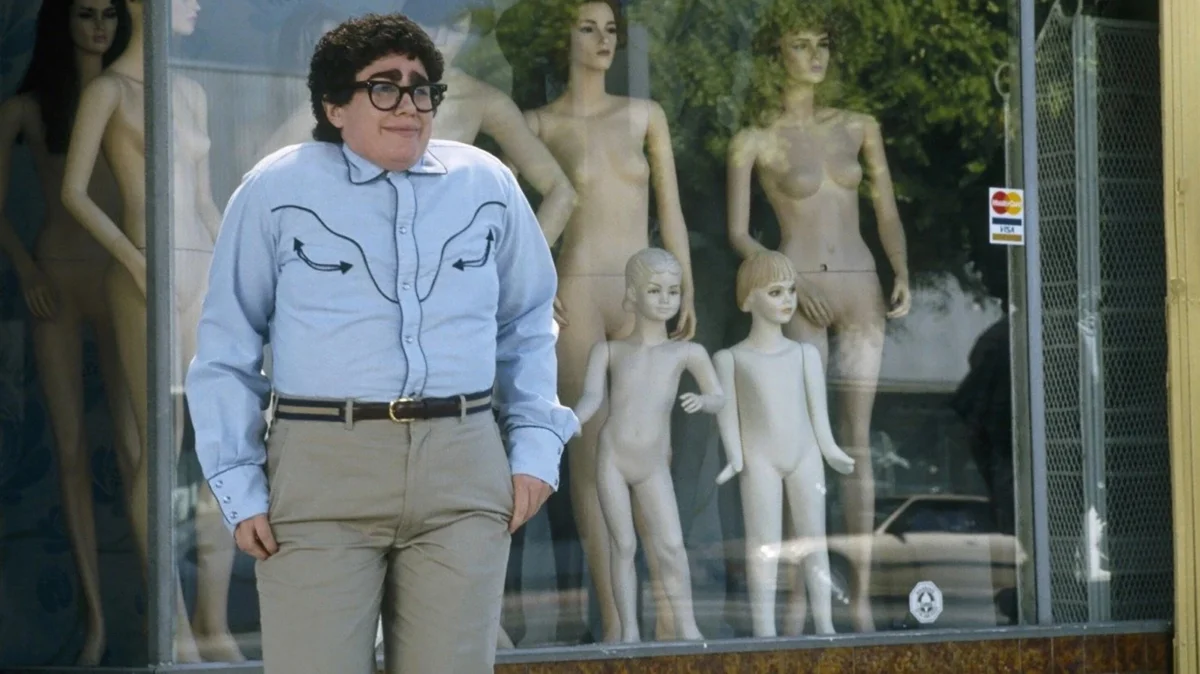
In the vast, often sanitized landscape of pop culture retrospectives, few documentaries dare to touch the third rail of "Saturday Night Live" history. We are accustomed to hagiographies—glossy, nostalgic tributes to the glory days of Studio 8H—or cynical takedowns of the show’s inevitable decline. However, Ro Haber’s 2026 documentary We Are Pat occupies a far more treacherous and rewarding middle ground. By centering on "It’s Pat," the 1994 feature film that holds a notorious 0% rating on Rotten Tomatoes, Haber has crafted a profound, uncomfortable, and deeply necessary examination of gender, authorship, and the shifting goalposts of comedy.
The Infamy of an Androgynous Icon
To understand the weight of We Are Pat, one must first reckon with the shadow cast by the character itself. Created by Julia Sweeney for "Saturday Night Live" in 1990, Pat was an androgynous figure whose sole comedic engine was the frustration of others. The sketch, and the subsequent feature film, relied on a singular, repetitive beat: people in Pat’s orbit would grow increasingly frantic, losing their composure as they failed to "clock" or categorize the character’s gender.
For decades, the character has been a lightning rod for criticism. Jill Soloway, the creator of Transparent, famously labeled the character an "awful piece of anti-trans propaganda." The 1994 film, which saw Pat navigating a workplace and a burgeoning relationship, was a commercial and critical disaster. It became a punchline, a shorthand for the insensitivity of 1990s television. Yet, as Haber’s documentary argues, dismissing Pat as a mere artifact of bigotry is a form of intellectual shorthand that misses a more complex, unsettling reality.
A Chronology of Controversy
The trajectory of Pat from a sketch comedy staple to a focal point of modern discourse follows a distinct cultural timeline:
- 1990–1994 (The Peak): Pat becomes a recurring, high-profile sketch on SNL. The character is embraced by mainstream audiences who, at the time, found the premise of gender ambiguity to be a safe, if crude, source of humor.
- 1994 (The Collapse): The release of It’s Pat: The Movie. Critics pan the film, citing a thin premise and a lack of heart. The "Pat" character begins to age poorly as public consciousness regarding gender identity begins a slow, arduous evolution.
- 2000s–2010s (The Backlash): As the LGBTQ+ rights movement gains mainstream momentum, "It’s Pat" is increasingly cited as an example of trans-coded bullying. The character is re-evaluated by queer scholars and comedians, often with vitriol.
- 2026 (The Re-evaluation): Ro Haber’s We Are Pat premieres, shifting the narrative from "cancellation" to "excavation." It invites the very people who were once the targets of the joke to reclaim the character’s legacy.
The Rorschach Test: Is It Funny, or Is It Harmful?
The brilliance of We Are Pat lies in its refusal to simplify the debate. Haber assembles a cohort of trans and gender-nonconforming comedians to treat the character not as a monster, but as a Rorschach test. The film posits a daring question: Is it possible for a character to be a source of transphobic harm while simultaneously serving as a bizarre, unintentional icon for gender non-conformity?
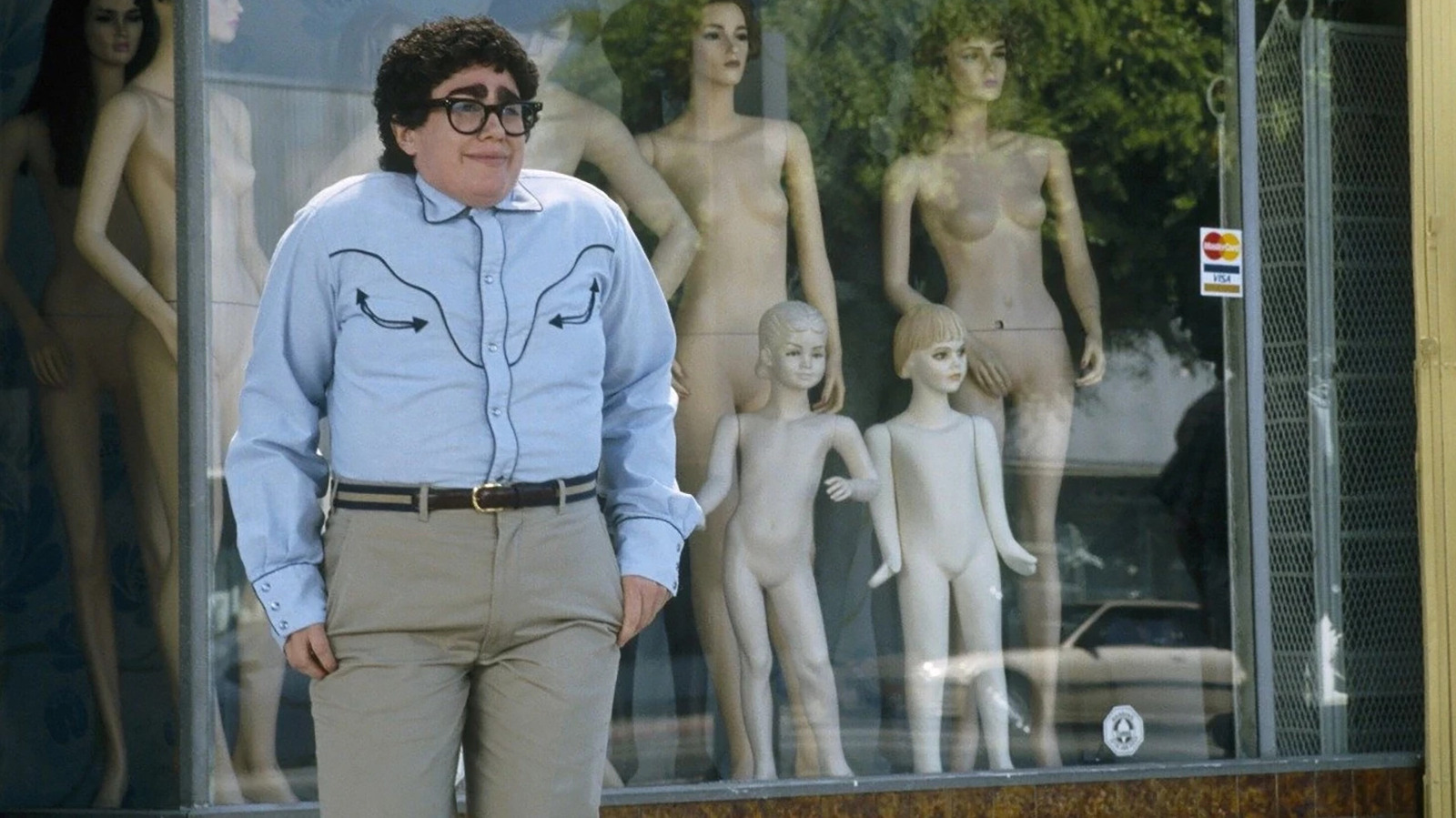
Comedian River Butcher provides the film’s thesis statement: "It is transphobic, it is very funny, and Pat is a non-binary icon. Can we not acknowledge that all three of these statements are true at once?"
This nuance is the film’s heartbeat. By acknowledging the pain the character caused, the documentary allows for a more sophisticated conversation about "coding." The interviewees reflect on the 90s, a time when gender nonconformity was largely presented in media as a threat or a nuisance. Yet, some participants admit that seeing a character exist outside the binary—even in a mocking context—was, for a younger, closeted version of themselves, a strange, flickering light in the dark.
Julia Sweeney: From Creator to Collaborator
Perhaps the most surprising element of We Are Pat is the vulnerability of Julia Sweeney. In an era where creators often double down when faced with criticism, Sweeney’s participation is an act of radical transparency. She does not defend the film as a masterpiece, nor does she offer a hollow apology. Instead, she opens a window into the "Saturday Night Live" writers’ room of the early 90s.
Sweeney explains that Pat was, in her mind, a reflection of her own frustrations with the rigid, hyper-feminine expectations placed upon women in Hollywood. She wanted to create a character who was entirely unbothered by the gender anxiety of others. However, as the character transitioned from her control to the machinery of the SNL writers’ room and the film industry, that intent was stripped away, leaving only the "joke."
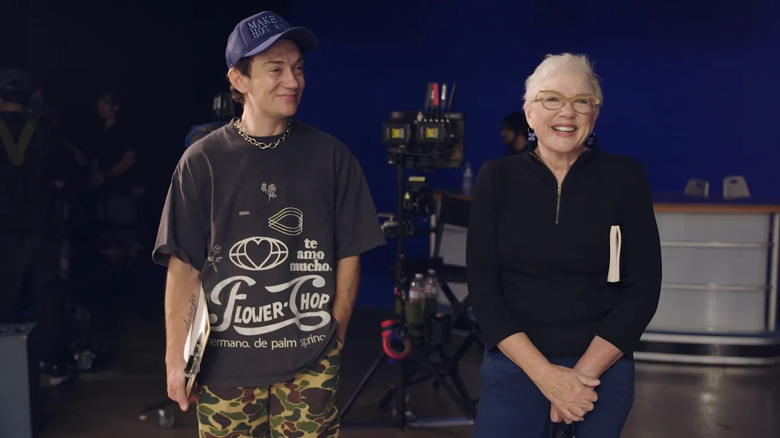
Haber captures a poignant "passing of the torch" moment where Sweeney works with comedian Grace Freud to refine the character’s physical mannerisms. Watching these two generations of comedians—one who birthed a problematic icon, and one who grew up in the world that icon helped shape—is a masterclass in humanizing the history of entertainment.
The Writer’s Room Experiment
Haber further enriches the documentary by tasking an all-trans comedy writers’ room with modernizing the Pat character. This segment does double duty: it showcases the immense talent of trans comedians who are often sidelined in mainstream industry rooms, and it highlights the "limits of reclamation."
Can the joke work today? The writers interrogate the premise, stripping away the transphobia and looking for the kernel of humor in the "unbothered protagonist." It is a profound demonstration of the craft of comedy. It reminds the audience that comedy is not static; it is a living, breathing mechanism that evolves as our social vocabulary expands.
Implications for the Future of Media
The implications of We Are Pat extend far beyond the legacy of a failed 90s film. The documentary asks us to consider our own relationship with the media of our youth. We are all consumers of art that has "aged badly," and the natural human instinct is often to discard it or censor it.
We Are Pat suggests a third path: archaeological engagement. We should not forget that this art existed, nor should we ignore the harm it inflicted. Instead, we should examine why it was produced, how it resonated, and how we can use those remnants to understand the trajectory of our culture.
The documentary serves as a facilitator for a broader, much-needed dialogue about growing up in a culture that treats those outside the binary as "fodder for punchlines." It is an invitation to move past the binary of "good/bad" and toward a more mature understanding of how media shapes our collective psyche.
Conclusion: A Rich Conversation
By the time the credits roll, We Are Pat has achieved something rare. It has transformed a universally mocked comedy failure into a lens through which to view the last 40 years of gender politics. Whether you are a fan of SNL history, a student of comedy, or someone simply interested in how we talk about our past, this film is essential viewing.
Ro Haber has not just made a movie about a character; they have made a movie about the act of watching, laughing, and evolving. We Are Pat is a testament to the idea that we can reconcile our past with our present, and that sometimes, the most profound insights come from the places we were told never to look.
We Are Pat is currently available on VOD.
