
The Future of Photography: Big Four Manufacturers Pivot Toward Modularity as AI Standoff Deepens
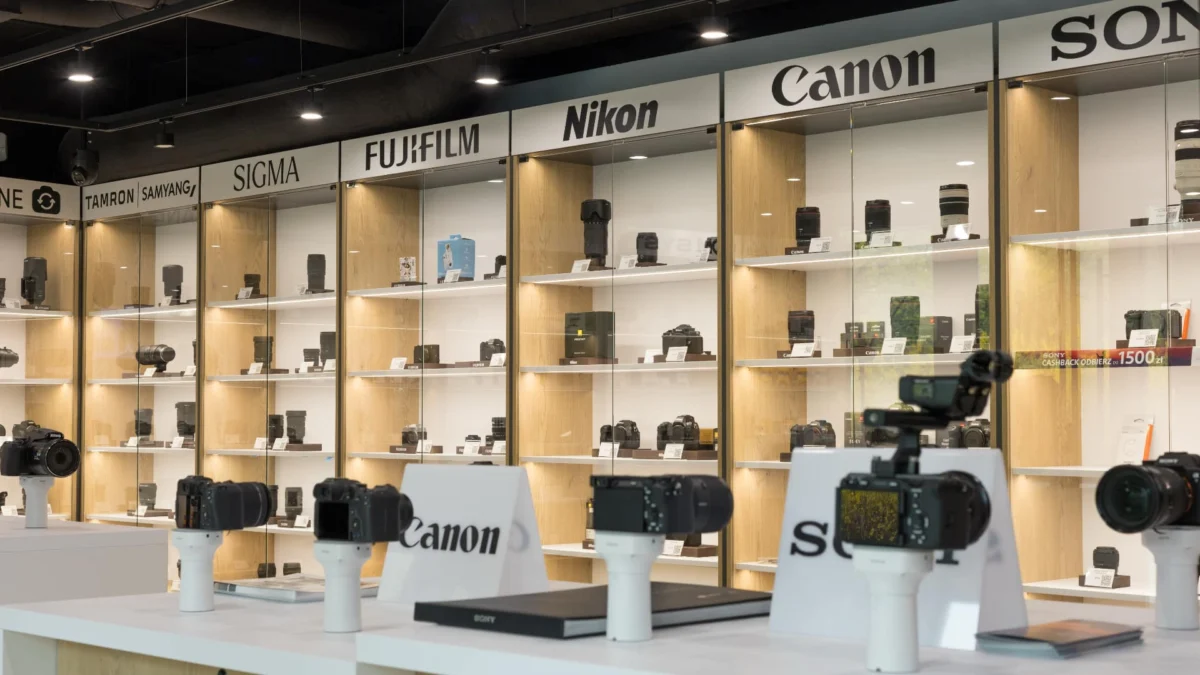
The landscape of professional and enthusiast photography is undergoing its most significant transformation since the transition from film to digital. As the boundaries between computational photography and generative AI continue to blur, the "Big Four" of the imaging world—Nikon, Canon, Sony, and Fujifilm—have broken their silence on the industry’s trajectory. A revealing series of interviews published by Japan’s Nikkei Shimbun offers a rare, high-level glimpse into the strategic boardrooms of these giants, highlighting a collective resolve to resist generative AI while simultaneously betting on modular hardware to future-proof their product lines.
The Core Conflict: Authenticity vs. Innovation
For years, the photography industry has operated on the bedrock of "capturing" reality. However, the rise of generative AI—capable of synthesizing photorealistic imagery from text prompts—has placed camera manufacturers in an existential bind.
During the CP+ 2026 trade show, the industry giants stood in rare, unified opposition to generative AI within their hardware. That stance has not wavered. Executives across the board have expressed deep-seated concerns that integrating generative models into cameras would irrevocably undermine the "authenticity" of photography. By creating images that do not exist in physical space, manufacturers fear they would erode the trust that defines the medium.
However, as we approach 2027, the pressure is mounting. With smartphones increasingly serving as the primary camera for the global population—heavily augmented by aggressive AI-driven image synthesis—the traditional camera manufacturers are walking a tightrope. They must satisfy consumer demands for "smart" features while maintaining the integrity of the professional capture process.
Nikon’s Modular Ambition: A New Architectural Paradigm
The most striking revelation from the Nikkei report concerns Nikon’s long-term hardware strategy. While competitors are doubling down on iteration, Nikon appears to be preparing for a radical shift toward a modular platform.
According to the interview, Nikon is investing heavily in a "next-generation framework" that effectively decouples the core components of a camera. By developing a standardized modular architecture, the company intends to allow various image processors, sensor modules, AI-specific chips, storage interfaces, and wireless communication hardware to be swapped or integrated in different combinations.
Why Modularity Matters
Historically, camera design has been monolithic. A camera’s capabilities were locked at the time of purchase. Nikon’s proposed shift suggests a future where a professional body could be updated with new sensor modules or specialized AI processors without requiring a total overhaul of the ecosystem. This approach could significantly reduce development cycles, allow for rapid hardware customization, and potentially create a more sustainable product lifecycle—a direct answer to the rapid innovation cycles seen in the smartphone industry.
Industry Perspectives: The Big Four’s Strategic Divergence
While all four manufacturers express skepticism toward generative AI, their approaches to computational AI—tools that assist rather than replace the photographer—reveal distinct corporate philosophies.
Canon: The Shift to the "Experience Economy"
Canon’s Vice President, Tsuyoshi Tokura, highlighted a demographic shift that has been brewing for several years. The growth in the compact camera market is no longer driven by technical specifications alone, but by a younger generation that prioritizes the "shooting experience."
Canon is acknowledging that its historical focus on raw performance metrics (megapixels, dynamic range, burst rates) is insufficient for today’s creators. The company is pivoting toward "style and experience," a move that fans hope will see the transition of concept devices—such as the ergonomic, waist-level cameras debuted at CP+ 2026—into mass-market reality. Furthermore, Canon is doubling down on its "V Series" ecosystem, specifically targeting the hybrid user who demands professional-grade optics for both high-end video production and still photography.
Sony: Leading with Authenticity and Verification
Sony occupies a unique position. As a dominant player in both the sensor market and the imaging space, they are the most aggressive in adopting computational AI while being the most vocal about the risks.
Sony’s strategy is twofold:
- Assistive AI: Utilizing deep learning for pose estimation and advanced subject recognition to ensure the photographer never misses the shot.
- Digital Provenance: Sony is leading the charge in implementing C2PA-compliant hardware, essentially creating a "digital birth certificate" for images. This technology is designed to verify that a file came directly from the camera sensor without undergoing generative manipulation, providing a critical layer of trust for photojournalists and news agencies in an era of "fake news" and synthetic imagery.
Fujifilm: Maintaining the "Pure" Distinction
Fujifilm’s Yuji Igarashi, General Manager of the Professional Imaging Group, remains a staunch defender of the traditional photographic process. Fujifilm’s stance is that AI should function strictly as an invisible assistant—improving autofocus speed, enhancing subject detection, and optimizing exposure—but it must never venture into the realm of image creation.
For Fujifilm, the distinction between a "captured" image and a "generated" one is sacred. The company is focused on ensuring that their cameras remain tools for photographers, not engines for content generation, maintaining a clear boundary that separates their devices from the software suites offered by companies like Adobe or OpenAI.
The Implications: A Looming Technological Watershed
The divergence between the "Big Four" and the Silicon Valley AI giants is becoming increasingly clear. While companies like OpenAI and Anthropic are looking for ways to integrate their models into the apps that accompany cameras, the hardware manufacturers are doubling down on the physical act of capture.
The Smartphone Paradox
The real battleground for 2027 will not be between camera manufacturers, but between the camera manufacturers and the smartphone industry. Smartphones have already integrated generative tools—Magic Erasers, generative fill, and AI-powered upscaling—that mirrorless users are starting to demand.
If Nikon, Canon, Sony, and Fujifilm refuse to offer these tools, they risk becoming "analog" artifacts. If they do offer them, they risk losing the very market of purists that keeps them in business.
The Roadmap to 2027
The move toward modularity, as proposed by Nikon, may be the industry’s best defense. By allowing for a hardware-level distinction between the "image sensor" (the source of truth) and the "AI processor" (the layer of convenience), manufacturers might be able to offer the best of both worlds.
The industry is entering a phase where the "camera" is no longer just an optical device; it is a computer with a lens. How these companies manage this transition will determine whether the next generation of photographers continues to reach for a dedicated camera or settles for the AI-assisted convenience of a smartphone.
Conclusion
The Nikkei interviews confirm that while the imaging industry is not blind to the technological revolution occurring around it, it is choosing a path of measured resistance. By focusing on hardware modularity, digital provenance, and an emphasis on the "human element," the Big Four are attempting to preserve the sanctity of the photograph. However, as AI continues its rapid advancement, the industry’s resolve will be tested. Whether Nikon’s modularity or Sony’s authenticity-first approach will be enough to hold the line remains to be seen, but one thing is certain: the camera of 2030 will look fundamentally different from the camera of today.
