
The Last Laugh: How The Comeback and Hacks Mirror the Existential Crisis of Modern Television
Main Facts
Television has always possessed a mirror, but rarely has it looked quite as exhausted, anxious, or fiercely resilient as it does today. HBO’s enduring meta-satire The Comeback and Max’s Emmy-winning juggernaut Hacks find themselves occupying the same cultural crossroads. As both series tackle their respective final innings, they have inadvertently become the theatrical canaries in Hollywood’s coal mine.
Centering on veteran female entertainers—Lisa Kudrow’s dogged, humiliatingly desperate sitcom star Valerie Cherish and Jean Smart’s sharp-tongued, glass-ceiling-shattering stand-up icon Deborah Vance—these shows offer a masterclass in industry self-reflection. In their latest seasons, both series confront the twin specters defining modern media: the encroachment of generative artificial intelligence and the systemic corporate contraction that threatens to render human-driven storytelling extinct.
These programs do more than entertain; they diagnose an era where algorithms dictate creative risks, where the definition of "prestige" has been stretched to its breaking point, and where the artists who built the medium are increasingly viewed as legacy costs rather than foundational assets.
Chronology: A History of Crisis and Comebacks
The Comeback: From Reality TV to the Algorithm
When creators Michael Patrick King and Lisa Kudrow introduced Valerie Cherish to the world in 2005, the television landscape was bracing for the dawn of the reality TV boom. The Comeback positioned itself as a biting, ahead-of-its-time satire skewering the cheapening of television through unscripted taboos and manufactured drama. Initially dismissed by mainstream audiences, the series gained a fierce, protective cult following.
When HBO revived the show for a second season in 2014, the industry had evolved: reality television had achieved corporate legitimacy, but the streaming wars were looming. Execs were flooding the market with so-called "prestige" content, stripping the word of its meaning.
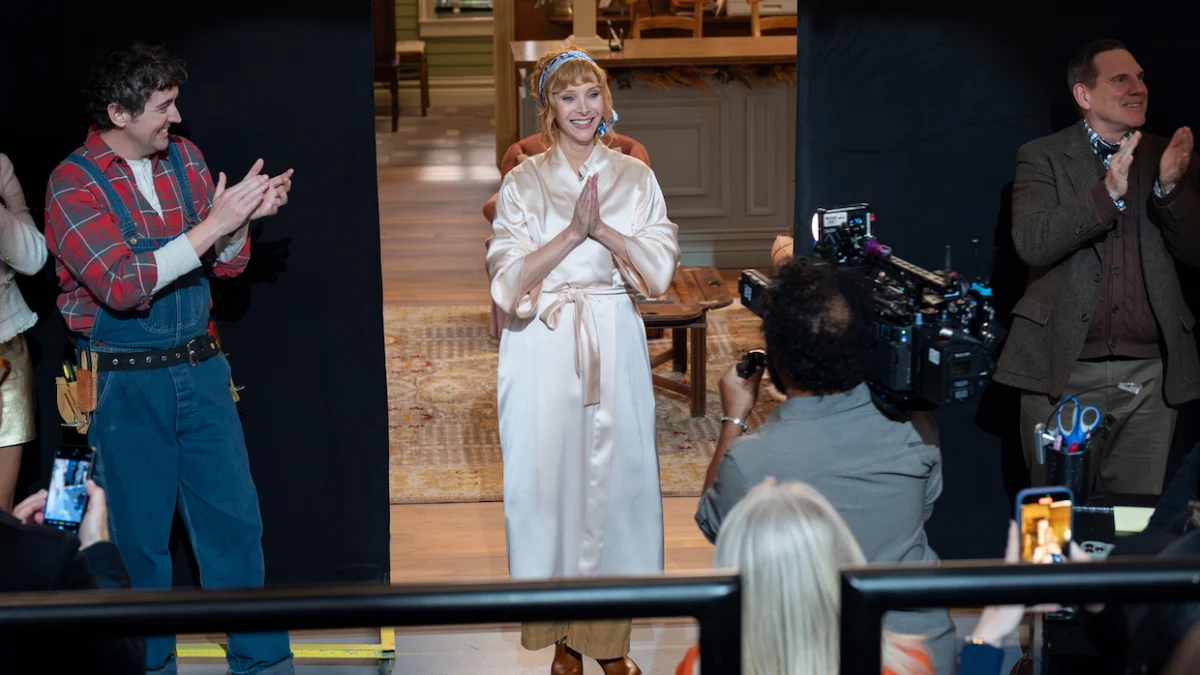
Now, a dozen years later—having weathered a global pandemic, dual Hollywood strikes, and unprecedented corporate mergers—Kudrow returns for Valerie’s ultimate swan song. In its third and final season, the mockumentary format is dropped in favor of a more propulsive narrative where Valerie books the lead role on How’s That?!, the first multi-cam sitcom written entirely by an AI program named Allassist.
Hacks: Breaking Ceilings and Battling Non-Competes
Parallel to Valerie’s journey is the trajectory of Hacks, created by Lucia Aniello, Paul W. Downs, and Jen Statsky. Over its run, the Max comedy has tracked the symbiotic, tumultuous relationship between aging comedian Deborah Vance and her Gen-Z head writer, Ava Daniels (Hannah Einbinder).
After spending seasons trying to break the ultimate late-night glass ceiling, Deborah achieved her goal of hosting a late-night show, only to walk away rather than fire Ava at the network’s behest. The fifth and final season finds Deborah silenced by a restrictive corporate non-compete clause, echoing real-world contractions. Notably, the season four finale chronicling Deborah’s corporate downfall aired just weeks before CBS canceled The Late Show with Stephen Colbert, giving the show’s exploration of corporate censorship an uncanny, headline-ripping urgency.
Supporting Data: The Convergence of Satire and Reality
The thematic overlap between The Comeback and Hacks highlights a shared anxiety across the entertainment industry regarding technological replacement and labor devaluation.
- The AI Threat: In Hacks, the AI bogeyman rears its head when a tech venture capitalist attempts to license Deborah’s likeness and material for a large language model called "QuikScribbl." Ava responds with a blistering monologue diagnosing the tech industry’s forced narrative of inevitability, noting the insult of suggesting a machine can replicate the sweat and toil of a seasoned comic.
- The Reality of AI in Writers’ Rooms: In The Comeback, the critique of AI is more institutionalized. Valerie’s AI-written sitcom churns out stale, predictable jokes. When a joke bombs in front of a live studio audience, the machine offers an endless cascade of algorithmic variations, none of which carry human resonance.
- The Verdict from Veterans: The illusion of algorithmic efficiency is punctured when legendary TV director James Burrows—appearing as himself—tells Valerie after shooting the pilot: "I saw every one of those jokes coming, and so did you. Surprising only comes from a group of writers huddled in a corner, beating themselves up to beat out a better joke."
- Awards Recognition: The cultural resonance of these shows is mirrored in their critical standing. Hacks has established itself as an awards darling with 12 Emmy wins, including Best Comedy Series for Season 3 and four consecutive Best Actress trophies for Jean Smart. Meanwhile, The Comeback has historically been an awards underdog, though Kudrow’s career-defining work has consistently earned her Best Actress nominations.
Official Responses and Industry Perspectives
The creative teams behind both series have not hidden the fact that their fictional worlds are direct commentaries on the contemporary corporate-driven Hollywood machine.
Industry analysts and guilds have increasingly pointed to the themes in The Comeback and Hacks as accurate artistic representations of post-strike anxieties. While studio executives often champion AI and automation as tools for cost-cutting and streamlined production, creators and union representatives have consistently pushed back, arguing that stripping the human element from comedy and drama destroys the soul of the medium.
Though studio executives have publicly praised technological innovation in production workflows, the writers and actors working on the ground view these advancements with deep skepticism. The fictional worlds of Valerie Cherish and Deborah Vance articulate a collective industry sentiment: that efficiency is a poor substitute for empathy, and data points can never replace lived experience.
Implications: An Endangered Species of TV Icons
The parallel arcs of Valerie Cherish and Deborah Vance point to a larger, more melancholic truth about the current television ecosystem: women like them—complex, flawed, relentlessly ambitious, and battle-scarred veterans of the entertainment trenches—are an endangered species.
Their star status is perpetually precarious. They are characters who cannot afford to rest on their laurels because the institutions that profited off their youth are quick to discard them the moment they demand creative autonomy or fair compensation. Yet, beneath the cringe comedy of The Comeback and the fast-paced insult humor of Hacks, there is an indomitable optimism.
Both shows use laughter as an act of resistance against industry collapse. They remind viewers that while networks contract, algorithms miscalculate, and corporate entities merge into faceless conglomerates, the beating heart of television remains rooted in human vulnerability.
As The Comeback and Hacks face their respective final bows—and potentially find themselves pitted against one another in a bittersweet Emmy race—they leave behind a legacy of survival. Whether Jean Smart and Lisa Kudrow share an imaginary celebratory meal at the Polo Lounge remains the stuff of fan fiction, but their characters have already achieved something rarer: they have looked the machine in the eye, told it a joke it couldn’t compute, and lived to tell the tale.
