
From Sketch Comedy to Horror: Bill Hader’s Evolution into Feature Filmmaking
Bill Hader’s path to the director’s chair has been anything but a straight line. For years, the Saturday Night Live alum and Emmy-winning creator of HBO’s Barry was viewed as one of the most prominent cinephiles in Hollywood, a reputation solidified by his deep-cut knowledge of world cinema and his multiple, legendary appearances in the Criterion Closet. Yet, despite his technical mastery of the small screen and his long-standing reputation as a student of film, the jump to feature-length directing remained a looming, unreached goal.
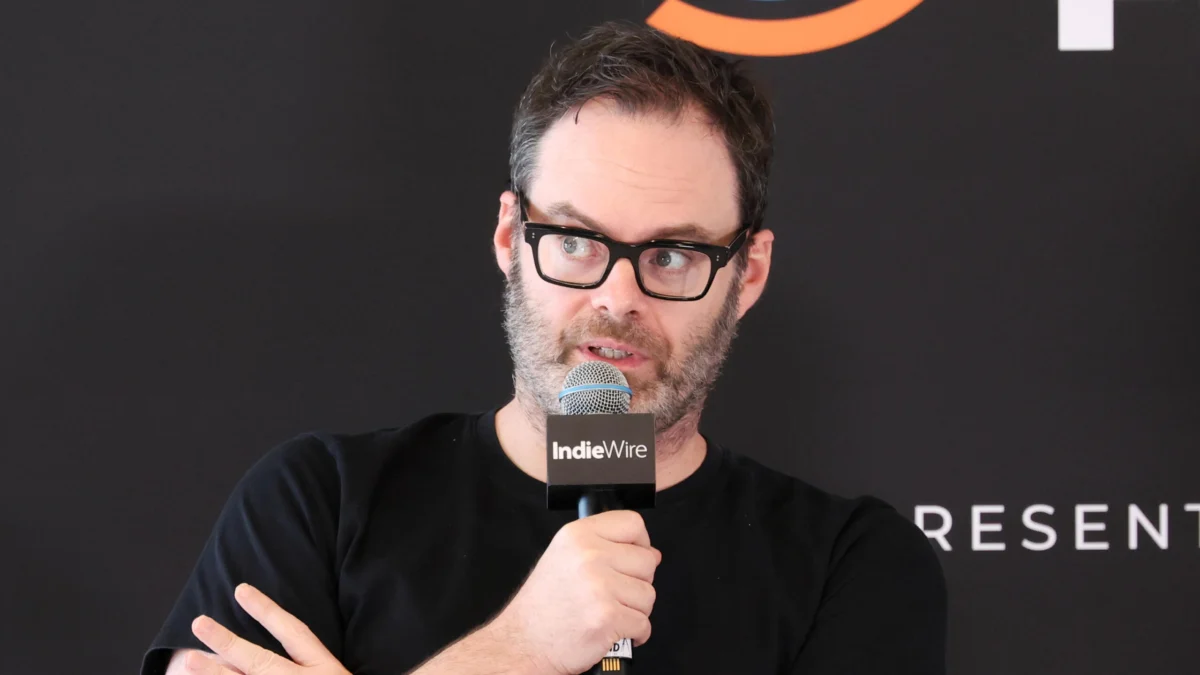
That changed this past May, when Hader wrapped production on They Know, his debut feature film. Speaking at IndieWire’s 2026 Future of Filmmaking Summit in Los Angeles, Hader finally pulled back the curtain on the grueling, circuitous, and deeply personal journey of his transition from sketch comedian to feature horror director.
The Long Road to "They Know"
"That was the dream forever. I just took the most circuitous way to get there," Hader remarked during his keynote session, titled "What No One Tells You About Directing Your First Feature." With his signature self-deprecating wit, he joked about the unconventional career path that mirrors his own: "I think Kurosawa did that? Didn’t he go to a sketch comedy show for eight years? Wasn’t he in Trainwreck?"
The levity hides a profound shift in Hader’s artistic trajectory. After a storied tenure on SNL and a pivot toward starring roles in films like The Skeleton Twins and Trainwreck, Hader’s work on Barry proved he possessed the visual language and narrative control required for the big screen. He didn’t just star in the series; he directed many of its most acclaimed episodes, eventually earning a Directors Guild of America award in 2019. Despite this success, the leap to a feature film felt like a mountain he was still learning to climb.
They Know, produced by MRC, is a departure from his past work. The film, which also stars Linda Cardellini, explores the unsettling dynamics of a divorced father who begins to suspect that his ex-wife’s mysterious new partner is exerting a dark, inexplicable influence on his children. It is a foray into the horror genre, a transition that has become a hallmark of contemporary comedic auteurs looking to explore the mechanics of tension and dread.
The Genesis of Fear: Personal Roots and Artistic Discovery
The premise of They Know was not born in a writers’ room, but in the vulnerable, late-night conversations between Hader and his longtime creative partner, Duffy Boudreau.
"We’re both divorced," Hader explained to IndieWire’s VP of features strategy, Chris O’Falt. "We were talking about how lucky we were that we were on really good terms with our ex-wives, and we have kids with them. We started talking about the worst-case scenarios of, ‘Oh, my god, this person is going through this and this person is going through that.’ And then this idea came up."
However, translating that anxiety into a screenplay was a process of trial and error. Hader admitted that he nearly abandoned the project entirely. Every iteration of the script, he felt, suffered from a lack of originality, ultimately falling into the trap of "every other horror movie."

The breakthrough came from an unlikely source. While watching the 2025 release Cloud, directed by the legendary Japanese filmmaker Kiyoshi Kurosawa, something clicked. "I went to the Nuart [Theater] by myself and I saw the movie Cloud," Hader recalled. "And [my movie] is nothing like that movie. But, for some reason, I saw that movie and I walked out and I was like, ‘I think I know how to do it.’ You would never see this movie and think Cloud, but that’s where it’s at."
Cultivating the Director’s Mindset: The Value of Doubt
One of the most compelling aspects of Hader’s discussion was his candid admission regarding the impostor syndrome that continues to plague him, even at the height of his career. He credits his time at SNL—a high-pressure environment where ideas were routinely rejected—for building a thick skin and a reliance on gut instinct.
" SNL helped with that. You would just get shot down constantly. It was horrible," Hader said. "But, in doing that, you are working on instinct."
Hader’s philosophy on directing is built upon the rejection of ego. He argues that the most dangerous directors are those who project absolute certainty. Instead, he advocates for an environment where the director is willing to be vulnerable and open to the collaborative process.
"The doubt is always there. And that’s good though. If you’re not scared, then you’re fucked," Hader said, citing an anecdote about a colleague who had worked with Martin Scorsese. The takeaway was simple: the greatest director in history often started his day by questioning his own approach. "I met someone who worked with Scorsese. He said the best thing about it was that he would start a day and go, ‘I don’t know what I’m doing. I don’t know what this is.’ And that’s just freeing."
This mindset allowed Hader to treat the production of They Know as a laboratory. Whether he was testing lenses on location scouts or debating shot lists with his editor in pre-production, he prioritized the "scary" act of questioning the status quo.
The Philosophical Shift: Embracing Failure
The crux of Hader’s advice to the next generation of filmmakers attending the summit was a radical call to embrace failure. He noted that his own terror of "looking like an idiot" had previously held him back from taking risks.
"Don’t be afraid to be wrong. That’s the thing that screwed me up. I was so terrified of looking like an idiot," Hader told the audience. "Be wrong as fast as you can be. Like, this is all wrong, but it doesn’t matter. We’re just going to. We’re going to be OK. Just keep moving."

This philosophy of "failing fast" is becoming increasingly vital in an industry where budgets are tighter and the pressure for immediate, franchise-ready success is suffocating. By stripping away the fear of the "wrong" choice, Hader found that he could actually move faster and more confidently toward the right one.
Implications for the Future of Independent Film
The 2026 IndieWire Future of Filmmaking Summit, presented by AT&T, served as a microcosm of the current state of the industry. Beyond Hader’s keynote, the event featured insights from industry titans such as Phil Lord and Chris Miller, who discussed the complex production challenges of the sci-fi epic Project Hail Mary.
The summit also honored emerging talent, such as writer/director Curry Barker, who received the inaugural Future of Filmmaking award for his work on Obsession. This intersection of established veterans like Hader and up-and-coming voices like Barker highlights a changing of the guard, where the boundaries between television and feature film, and between comedy and genre-horror, are becoming increasingly porous.
For Hader, They Know is currently in the sound-mixing stage as the team prepares to begin the search for distribution. While the film is not yet available for public consumption, the buzz surrounding his transition is significant. Hader has proven that he can handle the serialized, long-form storytelling of Barry; now, he is looking to prove that he can master the tight, pressurized narrative of a feature-length horror film.
If his career trajectory is any indication, Hader is likely to succeed—not because he has all the answers, but because he is the rare filmmaker who is perfectly comfortable admitting that he doesn’t, and finding the truth in the middle of that uncertainty. As he prepares to share his first feature with the world, the industry is watching closely, waiting to see how the man who mastered the sketch will handle the shadows.
The IndieWire Future of Filmmaking 2026 Summit is supported by AT&T Untold Stories, a collaboration between AT&T and the Tribeca Festival. The initiative continues to provide $1.2 million, mentorship, and logistical support to filmmakers, fostering a new era of diverse and ambitious cinematic voices.
