
The Battle for the Airwaves: Musicians, Broadcasters, and the Resurgence of the Performance Rights Debate
Introduction: The Age-Old Conflict Resurfaces
The halls of Capitol Hill are once again bracing for a high-stakes legislative showdown that has pitted the recording industry against traditional terrestrial broadcasters for decades. At the heart of the controversy is a fundamental question of economic equity in the digital and broadcast age: Should musical artists and recording labels be compensated when their songs are played on traditional AM/FM radio stations?
While satellite radio, digital streaming platforms, and internet radio services already compensate performers for the right to play their sound recordings, traditional terrestrial broadcasters have historically enjoyed a blanket exemption under U.S. copyright law. Songwriters and composers receive royalties through performing rights organizations like ASCAP, BMI, and SESAC when their compositions are broadcast, but the actual performing artists—the vocalists and musicians who bring those tracks to life—walk away empty-handed from AM/FM airplay.
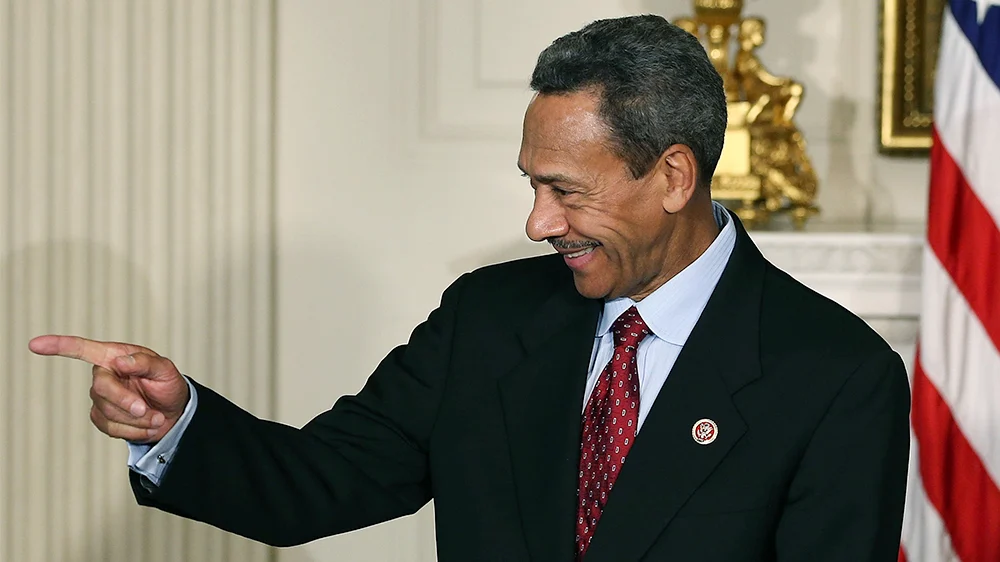
This long-standing discrepancy is poised to face renewed legislative scrutiny. During a House Judiciary Committee hearing on copyright reform, Rep. Mel Watt (D-N.C.), serving as the ranking member of the Subcommittee on Intellectual Property, Competition and the Internet, announced his intention to introduce a bill that would formally establish a performance right for sound recordings. If successful, the legislation would compel traditional radio stations to negotiate directly with artists and labels for the right to broadcast their music.
Chronology of the Legislative Battle
To understand the weight of Rep. Watt’s impending announcement, one must look back at the historical trajectory of copyright legislation in the United States and the repeated attempts to close this statutory loophole.
- Pre-Digital Era: For nearly a century, U.S. copyright law maintained a distinct separation between the underlying musical composition (the notes and lyrics) and the sound recording (the specific recorded performance). While copyright acts evolved to protect sound recordings from unauthorized duplication and digital distribution, terrestrial broadcasting remained uniquely protected under an exemption that viewed radio airplay as free promotional marketing for the music industry.
- The Digital Milestones: The legal landscape began to shift with the advent of digital delivery systems. Congress passed the Digital Performance Right in Sound Recordings Act of 1995, followed by the Digital Millennium Copyright Act (DMCA) of 1998. These measures established a performance right for digital audio transmissions and satellite radio, creating a revenue stream for artists on platforms like Pandora, SiriusXM, and internet webcasters—while leaving AM/FM broadcasters entirely untouched.
- 2009 Legislative Push: Four years prior to Watt’s latest announcement, lawmakers made a concerted bipartisan push to establish a terrestrial performance right. Legislation was introduced in both chambers of Congress, managing to advance through the House and Senate Judiciary committees. However, the momentum ultimately collapsed in the face of fierce, well-funded opposition from the broadcasting lobby, demonstrating the formidable political influence of local radio stations.
- The Present Day: Declaring that patience has run thin, Rep. Watt signaled a shift in strategy. During the copyright reform hearing, he stated bluntly, "We have been talking about this for a while, but it is time for us to act on it." Watt indicated that he plans to formally introduce the legislation before Congress departs for its summer recess, compressing the timeline for both lobbying camps to mobilize their forces.
Main Facts and Legislative Mechanics
The upcoming bill drafted by Rep. Watt introduces a distinct regulatory framework compared to previous, failed legislative attempts.
- No Statutory Royalty Rate: Unlike past bills that sought to establish a government-mandated royalty structure or board to set fees, Watt’s proposed legislation takes a market-driven approach. It merely establishes the legal recognition of a performance right for sound recordings on terrestrial radio.
- Encouraging Good-Faith Negotiation: By legally recognizing this right without dictating a rigid pricing schedule, the bill aims to force broadcasters and rights holders to the negotiating table. "This will incentivize the parties to negotiate in good faith," Watt explained during the hearing.
- Global Disparity: Proponents point out that the United States is one of the few developed nations—alongside countries like Iran, North Korea, and China—that does not recognize a terrestrial performance right for sound recordings. Because the U.S. lacks this reciprocal right, American artists miss out on millions of dollars in performance royalties collected overseas when their American-made music is played on foreign radio stations.
Supporting Data and Industry Landscape
The economic arguments surrounding the performance right debate are backed by starkly different sets of data and industry realities, reflecting a deeply polarized media ecosystem.
The Pro-Performance Right Perspective
Advocates for the legislation, spearheaded by coalitions like the musicFIRST Coalition, argue that the current legal framework is an anachronism that deprives working musicians of vital income. Ted Kalo, executive director of musicFIRST, highlighted the isolation of the AM/FM sector in the modern media landscape: "AM/FM radio stands alone among all forms of radio in refusing to pay music creators for airing their performances."
Furthermore, supporters emphasize the growing economic precarity for artists in the streaming era, where physical sales have plummeted and digital streaming payouts per-play remain fractions of a cent. For legacy artists, session musicians, and independent creators, terrestrial radio airplay represents a massive audience reach with zero financial return.
The Broadcaster Perspective and Alternative Deals
Conversely, the National Association of Broadcasters (NAB) and its allies argue that traditional radio provides an irreplaceable promotional engine that drives music sales, concert attendance, and digital streaming numbers. Broadcasters maintain that forcing them to pay performance fees would fundamentally destabilize the business model of hometown radio.
Pointing to shifting industry dynamics, broadcasters note that the market is already capable of finding private solutions without government intervention. For instance, media giant Clear Channel (now iHeartMedia) recently struck direct licensing agreements with independent record labels to compensate them for airplay, proving that voluntary market mechanisms can work without a legislative mandate.
To counter the threat of Watt’s bill, broadcasters have mobilized around alternative legislation known as the Local Radio Freedom Act. This resolution explicitly opposes the imposition of any "performance fee, tax, royalty, or other charge" on local radio stations for broadcasting music. The measure has demonstrated significant legislative backing, securing 143 co-sponsors in the House and 11 co-sponsors in the Senate, serving as a legislative firewall against the performance right movement.
Official Responses and Stakeholder Positions
The announcement of Watt’s impending bill immediately drew sharp, polarized reactions from key stakeholders across Washington and the entertainment industry.
- The National Association of Broadcasters (NAB): NAB spokesperson Dennis Wharton launched a swift counter-offensive, branding the proposed legislation as a job-killing measure. In an official statement, Wharton argued that the bill is essentially a "performance tax that would kill jobs at America’s hometown radio stations while diverting millions of dollars to offshore record labels." Broadcasters continue to frame the debate as an existential threat to community-based broadcasting, which often relies on tight operating margins, particularly in rural and mid-sized markets.
- The musicFIRST Coalition: Representing a broad alliance of major and independent record labels, performing rights organizations, and artists, musicFIRST doubled down on its commitment to passing the bill. Executive Director Ted Kalo emphasized that rectifying this copyright loophole is essential not only for domestic fairness but also for securing international revenues that rightfully belong to American creators.
- Political Hurdles and Uncertainties: Beyond the direct industry lobbying, observers note significant political variables that could impact the bill’s trajectory. Securing bipartisan co-sponsorship in a deeply divided House remains a formidable challenge. While past iterations of the bill found champions across the aisle—such as Rep. Darrell Issa (R-Calif.) and Rep. Marsha Blackburn (R-Tenn.)—the current political climate complicates coalition-building.
Compounding these legislative hurdles is Rep. Watt’s own political future. Pending Senate confirmation for his nomination to direct the Housing Finance Agency, Watt’s departure from the House could leave the bill without its primary legislative champion, forcing other lawmakers to pick up the mantle.
Implications for the Future of Music and Broadcasting
The outcome of this legislative battle carries profound implications for the future of both the American music industry and the terrestrial radio ecosystem.
If the performance right legislation successfully navigates Congress, it would permanently alter the economic relationship between audio creators and broadcasters. Terrestrial radio would no longer be shielded from the copyright obligations borne by every other digital and electronic media platform. For working musicians, it could unlock a critical, recurring revenue stream. However, for independent and smaller-market radio stations, the added financial overhead could accelerate consolidation, reduce local programming, or force stations to alter their music curation strategies to minimize licensing costs.
Conversely, should the broadcasters successfully defeat the bill and advance the Local Radio Freedom Act, the status quo will remain entrenched. Terrestrial radio will retain its unique exemption, cementing a decades-old policy that treats broadcast airplay strictly as promotional collateral rather than a licensable intellectual property asset.
As Rep. Watt prepares to introduce the bill ahead of the summer recess, artists, record executives, and radio executives alike are digging in for a fierce legislative war. The upcoming weeks will test the political influence of two entrenched industries, determining whether copyright law will finally adapt to reflect the economic realities of modern audio entertainment.
