
A Seismic Shift in Digital Cinema: Blackmagic Design Slashes Prices on 6K Full-Frame Lineup
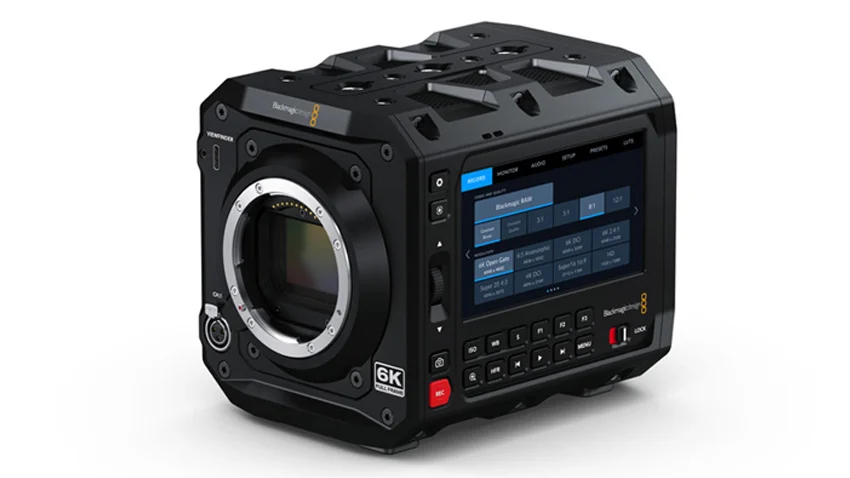
In an industry where the barrier to entry for professional-grade cinema hardware has historically been defined by five-figure investments, Blackmagic Design has just fundamentally altered the landscape. By announcing a permanent price reduction of over $1,000 across its full-frame 6K Cinema Camera and PYXIS 6K lineups, the company is not merely launching a sale; it is effectively democratizing access to high-end, full-frame RAW acquisition for a new generation of independent filmmakers, owner-operators, and production houses.
This strategic move marks one of the most significant value-proposition shifts in recent memory. By leveraging improved component sourcing, Blackmagic Design has managed to bring the cost of a full-frame 6K cinema camera—complete with DaVinci Resolve Studio—down to a price point that rivals consumer-grade mirrorless cameras.
Main Facts: The New Economics of Full-Frame Acquisition
The core of this announcement is a comprehensive price restructuring. The Blackmagic Cinema Camera 6K, previously positioned as a premium entry-level option, has seen its price plummet to $1,595—a staggering $1,120 reduction. Similarly, the versatile, modular PYXIS 6K series has seen price drops ranging from $1,070 to $1,085, depending on the lens mount configuration.
The New Pricing Structure
- Blackmagic Cinema Camera 6K: Now $1,595 (down from $2,715)
- Blackmagic PYXIS 6K (L-Mount): Now $1,995 (down from $3,080)
- Blackmagic PYXIS 6K (EF-Mount): Now $1,995 (down from $3,070)
- Blackmagic PYXIS 6K (PL-Mount): Now $2,195 (down from $3,265)
These figures are effective immediately at authorized retailers worldwide. It is crucial to note that this is not a temporary promotional campaign or a holiday discount; Blackmagic Design has characterized this as a permanent repositioning of the product line, made possible by optimized manufacturing and supply chain efficiencies.
Chronology: From Premium to Accessible
To understand the weight of this announcement, one must look at the trajectory of Blackmagic’s recent hardware releases. The original Blackmagic Cinema Camera 6K and the PYXIS 6K were introduced as the flagship standard for modern, affordable, full-frame digital cinema.
When these cameras first hit the market, they were praised for their sensor performance, but they occupied a price bracket that still required significant capital for small-scale productions. Over the last year, as the competition in the mirrorless and cinema-hybrid market intensified, the demand for "Cinema-First" workflows—specifically those utilizing Blackmagic RAW—continued to grow.
By early 2025, Blackmagic Design successfully renegotiated component contracts and manufacturing logistics. Rather than hoarding the increased margins, the company opted to pass the savings directly to the consumer. This sequence of events—from the initial high-performance launch to the recent aggressive price adjustment—highlights a business model that prioritizes market penetration and ecosystem growth through DaVinci Resolve.
Supporting Data: Technical Capabilities at a New Price
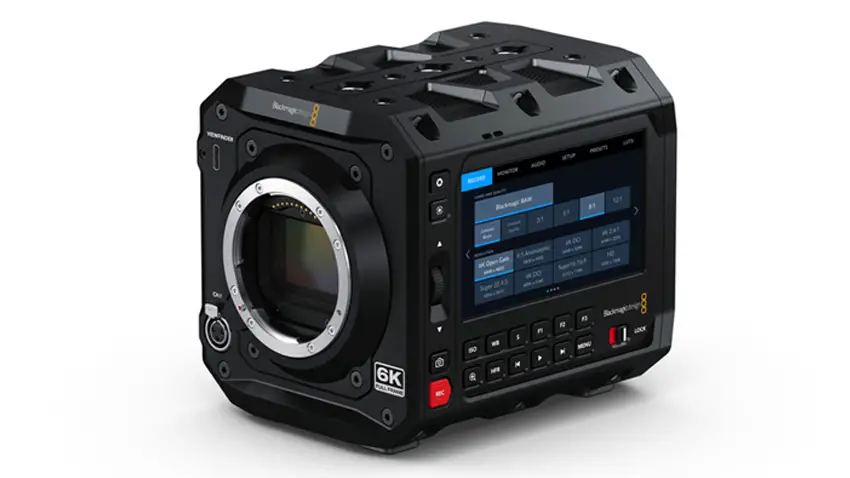
Despite the lower price tag, the hardware remains identical to the high-performance units that earned critical acclaim upon their release. The value is found in the combination of a 36 x 24mm full-frame sensor and the robust 12-bit Blackmagic RAW codec.
Sensor and Imaging Power
Both the Cinema Camera 6K and the PYXIS 6K utilize a sensor capable of 6048 x 4032 resolution. This high-resolution ceiling allows for incredible versatility:
- Open Gate (3:2): Captures the full sensor area for maximum vertical resolution, perfect for reframing for social media, vertical video, or creative cropping in post.
- Anamorphic Flexibility: With native support for 6:5 anamorphic capture, filmmakers can utilize vintage or modern anamorphic glass without needing expensive external adapters or heavy cropping.
- Dual Native ISO: Featuring base ISOs of 400 and 3200, these cameras remain highly usable in low-light environments, maintaining 13 stops of dynamic range across varying lighting conditions.
Workflow Integration
The inclusion of DaVinci Resolve Studio with every camera purchase adds approximately $295 in intrinsic value, effectively lowering the "real" cost of the camera body even further. Furthermore, the ability to record to CFexpress cards or directly to external USB-C drives—while simultaneously generating H.264 proxy files—streamlines the post-production workflow for editors using DaVinci Resolve.
Official Responses and Strategic Intent
In discussions surrounding the price drop, Blackmagic Design representatives have emphasized that the change is a result of operational success rather than a response to declining interest. By securing better pricing on key imaging components, the company has managed to lower the "bill of materials" cost significantly.
"Our goal has always been to make professional cinema tools available to everyone," a company spokesperson suggested in the wake of the announcement. "By optimizing our production lines and negotiating better component rates, we are able to pass those savings directly to the filmmakers who rely on our tools every day."
This move also signals a broader commitment to the "Blackmagic Ecosystem." By making the camera hardware more accessible, the company naturally funnels more users into the DaVinci Resolve workflow, which remains the industry standard for color grading and professional post-production.
Implications: The Multi-Camera Revolution
The most profound impact of this price reduction will be felt in the multi-camera production sector. Historically, a production looking to shoot with a "B-Cam" that matches their "A-Cam" had to spend thousands of dollars on a second body.
Impact on Independent Production
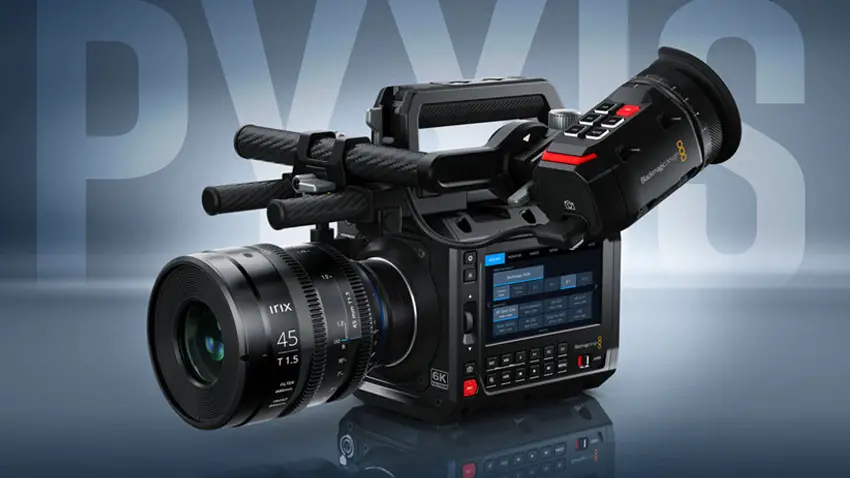
For a documentary filmmaker or a wedding videographer, the prospect of owning two full-frame 6K cinema cameras for under $4,000 (total) was previously unthinkable. With the new pricing, a production team can now build a two-camera rig with identical sensors and color science for the price of a single high-end consumer mirrorless body.
The Lens Mount Advantage
The PYXIS 6K, with its L-Mount, EF, and PL-mount options, is particularly well-positioned to leverage existing lens inventories. For rental houses or production companies already invested in a library of PL-mount glass, the PYXIS 6K PL at $2,195 represents an incredibly low-cost entry point into a professional-grade digital cinema workflow.
Redefining "Entry-Level"
This move effectively kills the "hybrid" debate. Many filmmakers were previously opting for consumer mirrorless cameras because they were "cheaper." With a dedicated cinema camera now sitting at $1,595, the trade-off between the superior image processing of Blackmagic RAW and the convenience of a mirrorless camera has become much harder for the consumer to justify. The convenience argument is now outweighed by the sheer power of the RAW workflow and the professional-grade ergonomics of the Cinema Camera 6K and PYXIS 6K.
Conclusion: A New Standard of Value
The announcement from Blackmagic Design is a rare instance where the value of a product increases while the cost decreases. It is important to reiterate that these are not "lite" versions of the cameras; they are the exact same high-performance machines that were, until yesterday, priced significantly higher.
For the aspiring filmmaker, this is a massive win. For the veteran professional, it is an opportunity to expand their kit without significantly inflating their overhead. As we look toward the future of digital cinema, the line between "prosumer" and "professional" hardware continues to blur, and Blackmagic Design has just made the strongest argument yet for the supremacy of the independent cinema workflow.
Whether you are filming a feature-length independent movie, a series of music videos, or high-end corporate commercials, the economic barriers to 6K full-frame acquisition have effectively been dismantled. With the savings generated by this price cut, filmmakers can now reallocate their budgets toward better lighting, superior glass, or more time in post-production—the true pillars of high-quality filmmaking. In the world of Blackmagic Design, the democratization of cinema is no longer just a mission statement; it is a current market reality.
