
The Magic of Independence: A Retrospective on Hayao Miyazaki’s Kiki’s Delivery Service
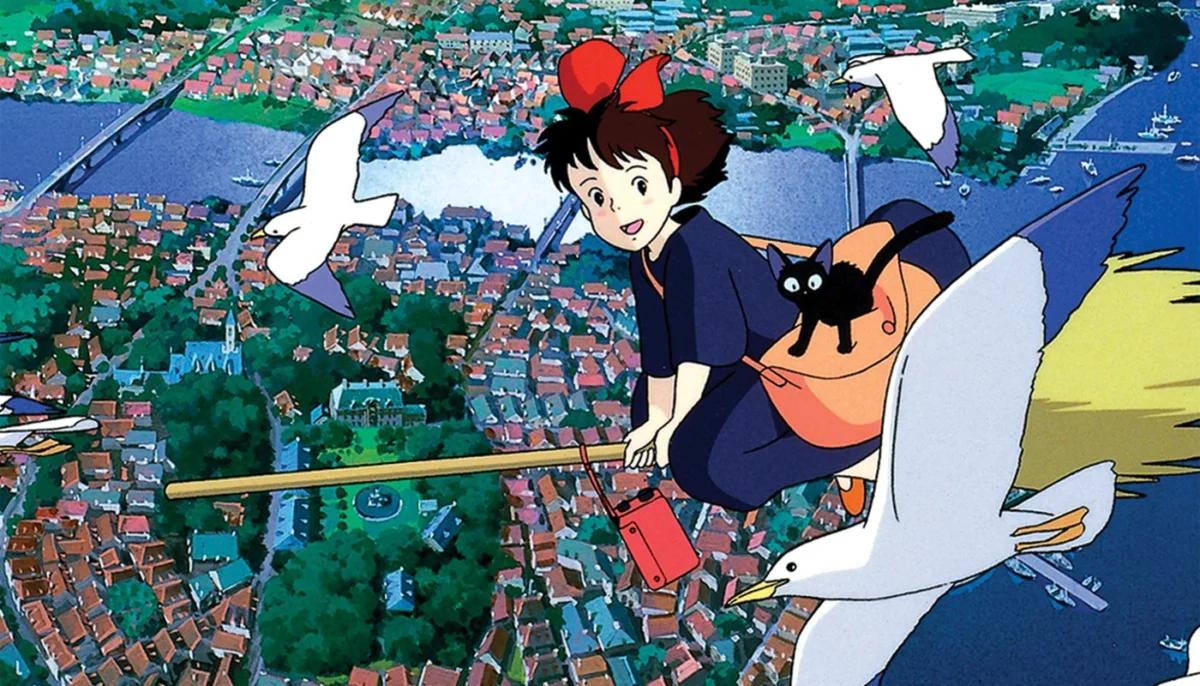
It is the season of shadows, falling leaves, and the lingering enchantment of the occult. As the calendar turns toward the witching hour, cinephiles often find themselves revisiting the works of Studio Ghibli. Among the most evocative of these treasures is Hayao Miyazaki’s 1989 masterpiece, Kiki’s Delivery Service. While often categorized as a children’s film, the story of a thirteen-year-old witch navigating the transition into adulthood serves as a profound meditation on creative burnout, the necessity of independence, and the quiet magic inherent in the mundane.
Main Facts: A Rite of Passage in the Skies
At its core, Kiki’s Delivery Service is a coming-of-age narrative centered on Kiki, a young witch who, in accordance with tradition, must leave her family home at the age of thirteen to spend a year in a city where no other witches reside. This period of isolation is not merely a vacation; it is a fundamental trial of competence.
The film explores the tension between inherited identity and individual agency. Kiki is a witch, yet her magic is limited—she possesses the innate ability to fly, but lacks the alchemical knowledge of potion-making that defines her mother’s practice. This limitation forces Kiki to define herself not by what she is, but by what she can do. She establishes a courier service, utilizing her broomstick as a logistical tool rather than a mystical artifact.
The title itself has been a point of minor contention among fans and linguists. While the North American English-dubbed release refers to the film as Kiki’s Flying Delivery Service, the original Japanese title, Majo no Takkyūbin, translates more directly to The Witch’s Express Home Delivery. The addition of "Flying" in the Western marketing was a pragmatic choice, intended to immediately clarify the film’s fantastical elements for audiences unfamiliar with the original source material.
Chronology: The Arc of a Witch’s Year
The narrative follows a deliberate, seasonal structure that mirrors the psychological development of its protagonist:
- Departure: Kiki leaves home under a full moon, armed with her mother’s broom, her father’s radio, and her sardonic, feline confidant, Jiji. The departure is marked by the trepidation of a child stepping into an adult-sized world.
- Settlement: Kiki arrives in the coastal city of Koriko. The initial wonder of the city quickly gives way to the harsh realities of urban life: finding shelter, securing food, and navigating a bureaucracy that has no precedent for a teenage girl on a broomstick.
- The Professional Struggle: Kiki finds work with Osono, a local baker. The rhythm of the film shifts here, focusing on the mechanics of labor. We see Kiki balance the "joy and struggle" of flying—not as a magical act, but as a profession requiring maintenance, endurance, and navigation of weather patterns.
- The Crisis of Faith: Midway through the film, Kiki suffers from what can only be described as a creative and existential collapse. Her magic begins to fade, her flight becomes sluggish, and her ability to communicate with Jiji vanishes.
- Rebirth: Through her friendship with the artist Ursula, Kiki learns that magic and creativity are linked. When inspiration evaporates, forced labor only deepens the void. Kiki recovers her power not through sheer willpower, but through rediscovering the joy of flight for its own sake.
Supporting Data: The Symbolism of the Familiar
A central component of the witching tradition in the Ghibli universe is the presence of a familiar. Jiji, Kiki’s black cat, is more than a pet; he is an anchor. Throughout the first two acts, Jiji serves as the audience’s window into Kiki’s internal state. When Jiji speaks, it is a manifestation of Kiki’s connection to her own magic.
The loss of Jiji’s voice in the third act is a brilliant narrative device. It signifies a transition: Kiki is no longer a child relying on an external, magical crutch to interpret the world. By the time the credits roll, Jiji has settled into the life of a domestic cat, his silence permanent. Yet, in the final shots, we see the birth of a new generation. Jiji’s own kittens—a mix of ordinary white cats and one "witchy" black kitten—suggest that the magic is not a static inheritance but a biological, living thread that continues regardless of whether or not the protagonist still "hears" it.
The inclusion of the "plushie" subplot—involving a delivery gone wrong and the subsequent assistance of a stoic dog named Jeff—serves to ground Kiki’s magic. The toy cat is indistinguishable from the real Jiji at a glance, highlighting the film’s thesis: the mundane world often demands we act as proxies for our own authenticity.
Official Perspectives: The Creator’s Intent
Hayao Miyazaki has often spoken about the film as a tribute to the "liminal" state of adolescence. In various interviews, the director has noted that Kiki’s Delivery Service was intended to portray the specific, fragile pride of young women at a turning point.
The film’s depiction of the "broom" as a piece of technology is also significant. Miyazaki portrays the broomstick not as a weightless wonder, but as an object with its own temperament. Much like a young, untrained horse, a new broom is difficult to handle. It requires a rider to develop a rapport with the object. This metaphor for skill acquisition—the idea that even magic must be "ridden" with patience—remains one of the most grounded depictions of talent in animation history.
Implications: The Enduring Legacy of Kiki
The cultural impact of Kiki’s Delivery Service extends far beyond its box-office performance. It has become a touchstone for the "cozy" genre, yet it avoids the trap of being saccharine. By allowing Kiki to fail, to lose her powers, and to be overwhelmed by the cynicism of the city, Miyazaki grants her the dignity of a complete human experience.
The Question of Magic and Genetics
The "Mendelian easter egg" observed in the film’s conclusion—where the litter of kittens reflects the parentage of the familiar—opens a fascinating discussion about the Ghibli world-building. Are witches a genetic anomaly, or is magic a contagious, environmental state? If a cat can produce a "witch’s cat" through cross-breeding, it implies that magic in this universe is a physical, perhaps even evolutionary, trait. This elevates the stakes of Kiki’s journey: she is not just a girl leaving home; she is a carrier of a fading, rare tradition in a world that is rapidly modernizing.
A Lesson for the Modern Audience
In an era of relentless professional pressure, Kiki’s arc regarding burnout remains startlingly relevant. Her conversation with Ursula, the artist living in a cabin in the woods, provides the film’s most poignant takeaway: "If you hit a wall, you have to change your approach." Kiki’s magic returns only when she stops viewing her gift as a commodity and starts viewing it as an extension of her own happiness.
As the leaves turn and the air grows crisp, Kiki’s Delivery Service remains essential viewing. It reminds us that whether we are thirteen or eighty, the "most wonderful time of year" is not found in grand gestures, but in the small, reliable acts of service—and the occasional, glorious flight into the unknown.
