
Beyond the Galaxy: How ‘Ahsoka’ Season 2 Plans to Redefine Star Wars Mythology
The Star Wars galaxy is on the precipice of a seismic shift. As Lucasfilm continues to refine its approach to live-action storytelling, the spotlight has fallen squarely on the shoulders of Dave Filoni’s Ahsoka. While the franchise has seen a reduction in the sheer volume of Disney+ releases compared to the rapid-fire output of previous years, the anticipation surrounding the return of Ahsoka Tano has only intensified. With Ahsoka Season 2 now confirmed as the primary focus of the Star Wars television slate, fans are bracing for a narrative that promises to bridge the gap between the grounded political maneuverings of the Empire and the high-concept, cosmic mysticism that defines the very foundation of the Force.
The State of the Galaxy: A Delayed Return
The path to Ahsoka Season 2 has been anything but conventional. Originally slated for a summer release, the production timeline has undergone significant adjustments, with the series now slated to arrive in April 2027. This extended hiatus is, for many, a test of patience, especially considering the dramatic cliffhangers that concluded the inaugural season.
The status quo at the end of Season 1 is fraught with uncertainty. Grand Admiral Thrawn, the tactical genius of the Imperial Remnant, has successfully navigated his way back to the main Star Wars galaxy. His arrival signals a terrifying new era for the New Republic, effectively setting the stage for a conflict that will likely bridge the gap between the fall of the Empire and the eventual rise of the First Order.
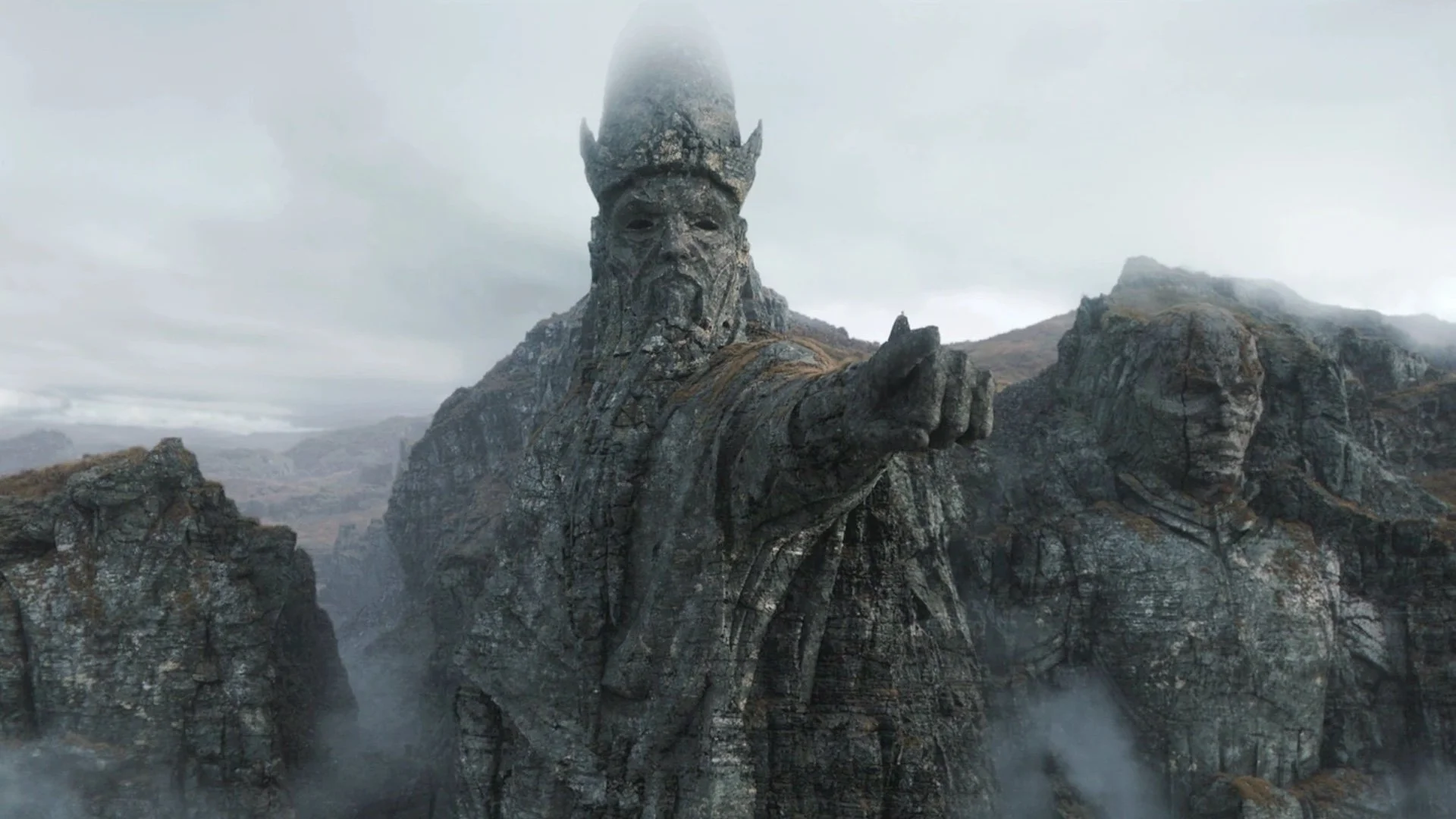
Half a galaxy away, Ahsoka Tano and Sabine Wren find themselves stranded on the distant, desolate world of Peridea. It is here that the narrative takes a turn into the supernatural, as the Force Ghost of Anakin Skywalker remains a silent observer, a spectral tether to the past that complicates the heroes’ isolation. However, the most compelling thread involves the late Baylan Skoll, whose quest across the ruins of Peridea led him to the colossal statues of the Mortis Gods—the Father, the Daughter, and the Son.
Chronology and Context: From Animation to Live-Action
To understand the gravity of the Mortis Gods’ arrival in Ahsoka, one must look back to Star Wars: The Clone Wars. It was in that seminal animated series that Dave Filoni first introduced the trio, establishing them as entities who serve as the physical embodiment of the Force. The Father represents balance, while the Daughter and the Son represent the Light and the Dark sides, respectively.
Their appearance in The Clone Wars was one of the most polarizing and fascinating arcs in the franchise’s history, pushing the Star Wars lore into a realm of pure, almost psychedelic mythology. For years, these figures were considered a relic of the animated medium—too abstract for the more grounded, boots-on-the-ground aesthetic of live-action films.
However, Filoni has spent his career at Lucasfilm systematically breaking down the barriers between animation and live-action. By bringing the Mortis Gods into the Ahsoka storyline, Filoni is not merely providing a cameo; he is signaling that the fundamental rules of the Star Wars universe are subject to change. The inclusion of these beings suggests that the upcoming season will delve into the origins of the Force itself, potentially explaining why these entities were worshipped on a world as far-flung as Peridea.
The Nightsister Connection: A New Prop Reveals All
The most recent development in the lead-up to Season 2 comes via a leaked set photo, which has sent shockwaves through the fan community. The image showcases a prop depicting Nightsisters engaged in an act of worship toward the Mortis Gods. This is a revelation of monumental proportions.
The Nightsisters of Dathomir have always been defined by their unique, esoteric brand of Magick—a power that sits uncomfortably alongside the traditional Jedi and Sith understanding of the Force. By linking the Nightsisters to the Mortis Gods, the narrative suggests that the ancient Dathomirian culture may have been drawing from a source of power far more primal than anyone previously realized.
If the Nightsisters—who were already a major antagonistic force in Season 1 through their alliance with Thrawn—have a history rooted in the worship of the Mortis entities, it recontextualizes their entire presence on Peridea. It suggests that Baylan Skoll is not just wandering through a graveyard of ancient statues; he is walking into a temple of a forgotten religion. If the Nightsisters understood the nature of the Mortis Gods, Baylan’s journey may be less about finding an artifact and more about uncovering a secret that could rewrite the history of the Force.
Official Responses and Creative Vision
Dave Filoni, now a central architect of the Star Wars universe, has been transparent about his desire to bridge the gap between generations of fans. His confirmation that the Mortis Gods are “definitely a thing” in Season 2 serves as a definitive departure from the ambiguity of Season 1.
In previous interviews, Filoni has emphasized that his goal is to bring the expansive, imaginative spirit of the Clone Wars era into the current, live-action timeline. By moving the Mortis Gods to the forefront, Filoni is challenging the audience to embrace a "weirder" version of Star Wars.
"We are looking to unify the lore," a source close to the production noted. "The goal isn’t just to reference the past, but to explain how the cosmic entities of the Force interact with the political reality of the galaxy. The Mortis Gods are the key to that connection."
The decision to lean into this mythology is a calculated risk. While some fans prefer the gritty, war-torn aesthetic of Andor, Filoni is doubling down on the "Space Fantasy" roots of the franchise. By integrating the supernatural into the central narrative of Ahsoka Tano’s journey, he is ensuring that the show remains distinct from other Disney+ offerings, positioning it as the primary vessel for the franchise’s most ambitious world-building.
Implications: The Future of the Force
What does this mean for the future of the Star Wars canon? The implications are twofold. First, it suggests that the "Death" of the Mortis Gods in The Clone Wars was not the end of their story. Given that these beings are conduits of the Force, they exist beyond the binary of life and death as understood by mortals. Whether they appear as memories, visions, or something more corporeal remains the season’s greatest mystery.
Second, the connection between the Nightsisters and the Mortis Gods suggests that the dark side, as practiced by the Dathomirians, may have a direct line to the "Son"—the aspect of the Force that represents the unchecked dark side. If Baylan Skoll—a character who rejects both Jedi dogma and Sith tyranny—is seeking to harness the power of these gods, he may be looking to tap into a reservoir of energy that predates the Republic, the Empire, and even the Jedi Order.
This narrative direction elevates the stakes of Ahsoka Season 2 significantly. It is no longer just a story about a master and her apprentice trying to escape a distant planet; it is a story about the potential unbalancing of the Force itself. As the Star Wars franchise looks toward the future, the integration of these high-concept elements ensures that the galaxy far, far away remains as mysterious and unpredictable as it was when it first graced the silver screen in 1977.
A "Wild and Interesting Ride"
As production continues, the wait for April 2027 feels both daunting and necessary. The scale of what Filoni is attempting requires a level of polish that few shows can match. For fans of the weirder, more esoteric side of Star Wars, the wait is likely to be rewarded with a series that treats the mythology with the reverence it deserves.
The convergence of the Nightsisters, the Mortis Gods, and the legacy of Anakin Skywalker suggests that Ahsoka Season 2 will be a masterclass in narrative connectivity. It is a bold move to bring such abstract concepts into the live-action fold, but if any creator is equipped to handle the weight of that ambition, it is Filoni.
As we look toward the horizon, one thing is certain: the Star Wars galaxy is about to get much larger, much stranger, and infinitely more profound. Whether the Mortis Gods prove to be saviors, destroyers, or merely silent, ancient observers of the chaos, their influence will undoubtedly define the next chapter of the Ahsoka saga. Fans should prepare themselves—the path to Peridea is one that will change our understanding of the Force forever.
