
The Crucible of Collaboration: The High-Stakes Chaos Behind "Who’s Afraid of Virginia Woolf?"
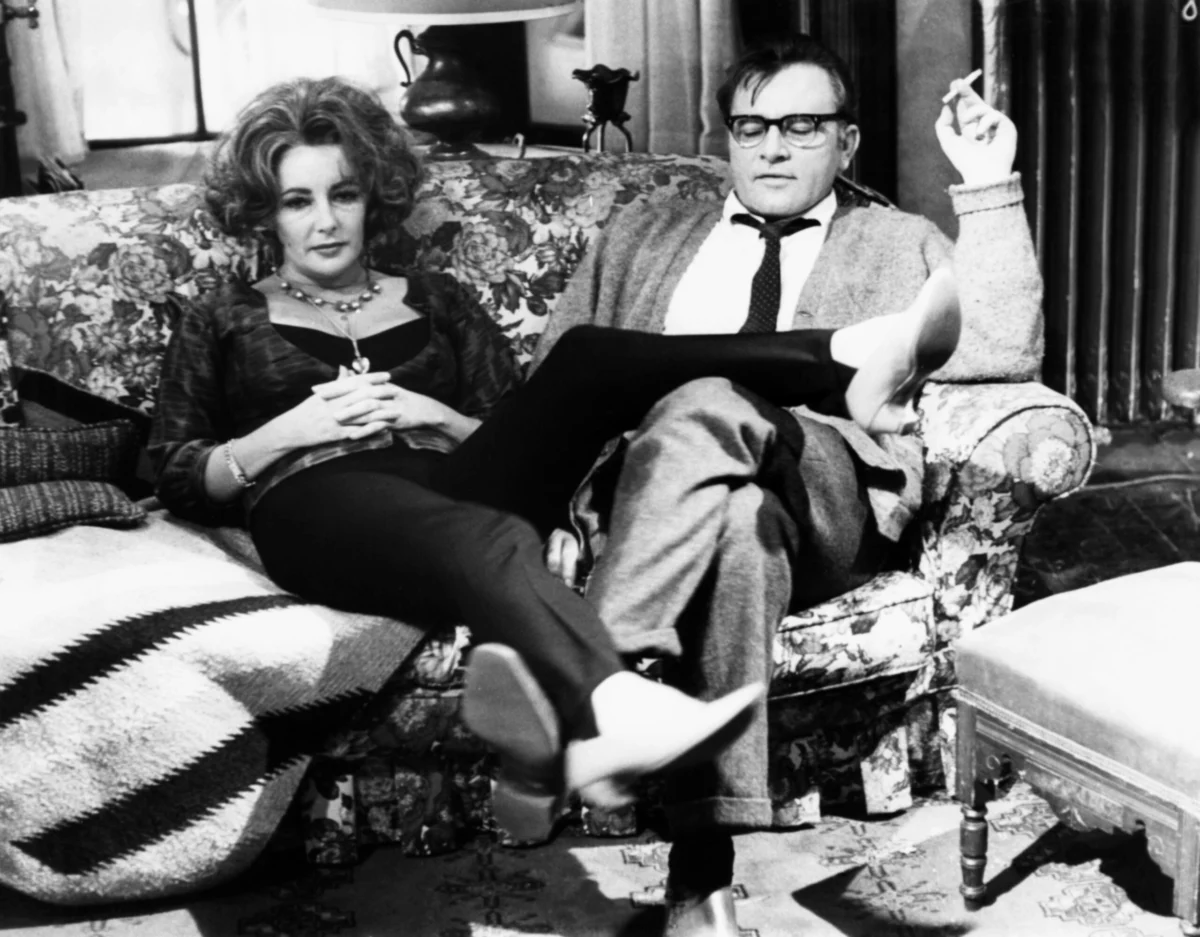
When the cameras rolled on the 1966 adaptation of Edward Albee’s seminal play, Who’s Afraid of Virginia Woolf?, the project was far more than a prestigious literary adaptation. It was a pressure cooker of professional ambition, bruised egos, and the radical transition of Hollywood’s "Old Guard" into the gritty, psychological realism of the New Hollywood era.
The stakes were existential for everyone involved. For Elizabeth Taylor, the role of the middle-aged, venom-tongued Martha was a terrifying pivot away from her status as a glamorous starlet; it was her first genuine attempt to prove her mettle as a serious character actress. For Ernest Lehman, the veteran screenwriter of classics like North by Northwest, the film represented his maiden voyage as a producer—a move that could solidify his standing or render him obsolete. And for Mike Nichols, the "boy genius" of the Broadway stage, the project was his feature film directorial debut. Success would cement his legend; failure would brand him a theatrical interloper who didn’t understand the cinematic medium.
The Battle for the Aesthetic: Fighting the Studio System
The film’s production was defined by a constant, grinding friction between the creative vision of its leads and the rigid bureaucracy of Warner Bros. The most contentious early decision was the choice to film in stark black-and-white. In 1966, color was the industry standard for "prestige" pictures; to shoot in monochrome was seen by studio head Jack Warner as an archaic, stubborn, and ultimately commercial-suicide decision.
Nichols and Lehman spent weeks in pre-production locked in a cold war with Warner, refusing to compromise on the film’s visual identity. This was emblematic of the wider power struggle. The production was a lightning rod for controversy, particularly regarding the casting. While Bette Davis famously lobbied for the role of Martha, Lehman held firm, choosing Taylor and her then-husband Richard Burton. It was a risky gamble that transformed the film from a standard drama into an uncomfortable, hyper-realistic mirror of the stars’ own turbulent public lives.

Chronology of a Breakdown: The Crisis of Early 1966
The simmering tensions finally boiled over in early 1966, centering on a series of deadlines that threatened to dismantle the film’s artistic integrity.
- January 5, 1966: Jack Warner issued a memo to Lehman and Nichols, mandating that the final cut be delivered by March 1 to satisfy tax obligations. Warner claimed composer Alex North had agreed to this truncated schedule—a claim that proved to be entirely fabricated.
- The Confrontation: Upon learning he had been lied to, Nichols launched into a tirade in Warner’s office, threatening to abandon the film and go public with a tell-all interview if the studio forced the deadline.
- The Internal Rift: The fallout from the meeting spilled into Lehman’s office. Nichols, still in a state of high-octane rage, turned his fire on his producer. He accused Lehman of being self-serving, insecure, and manipulative—ironically displaying the very traits he was projecting onto his colleague.
- The Musical impasse: The relationship between Nichols and composer Alex North rapidly deteriorated. Despite North’s legendary status—having scored A Streetcar Named Desire and Spartacus—Nichols demanded he play themes on the piano for approval before composition. North, sensing a lack of professional respect, felt the director was encroaching on his artistic domain.
- February 8, 1966: Faced with mounting pressure, Jack Warner demanded the editing be finished by February 15 to meet the scoring window. Without consulting Lehman, Nichols unilaterally fired North.
- The Breaking Point: Nichols attempted to replace North with André Previn, and subsequently his friend Leonard Bernstein. This unauthorized power play—ignoring the contract already signed with North—was the final straw for the studio. Nichols was, for a period, removed from the lot.
Psychological Projection and the "Producer-Director" Dynamic
The dynamic between Nichols and Lehman offers a masterclass in the psychology of creative control. As documented in Philip Gefter’s Cocktails with George and Martha, the two men operated in a state of constant, volatile negotiation. Nichols’ accusations against Lehman—that he was "sneaky and dishonest" for using guilt as a weapon—were mirror images of Nichols’ own behavior.
Editor Sam O’Steen recalled these months as a period of relentless, high-pressure toil. The cutting room became a war zone where the film was essentially being sculpted by the friction between the director’s uncompromising vision and the logistical realities of a studio-backed production. Nichols operated on a philosophy of confrontation, believing that the end justified the means, even if it meant alienating his collaborators and endangering his own employment.
Supporting Data: The Cost of Brilliance
The film’s eventual success at the box office and the Academy Awards (winning five Oscars, including Best Actress for Taylor) often masks the financial and emotional toll of the production. Warner Bros. had invested heavily in a project that was, by the standards of the time, an experiment in extreme intimacy.

The decision to limit the musical score to a sparse, modern, and minimal arrangement was a hard-fought victory for Nichols. By avoiding a full orchestral treatment, he maintained the claustrophobic, "chamber-drama" atmosphere of the original play. Yet, this "minimalist" approach to music led directly to the hostility with North, whose career had been built on sweeping, symphonic scores. The irony of the film’s success is that it was built on the wreckage of these professional relationships.
Official Responses and Industry Perspectives
At the time, the industry was baffled by Nichols’ behavior. Warner Bros. executives viewed his disregard for protocol—specifically the firing of a high-profile composer without studio authorization—as a breach of contract that warranted immediate termination.
However, looking back through the lens of history, the "madness" of the set is now viewed as the birth of a new era of auteur filmmaking. By fighting Jack Warner, Nichols was effectively signaling the death of the old studio system, where the producer and the studio head held absolute sway over the creative product. While the methods were often unprofessional and, at times, cruel, the result was a film that redefined American cinema’s approach to adult relationships and psychological truth.
The Implications: A Legacy of "Difficult" Genius
The production of Who’s Afraid of Virginia Woolf? serves as a cautionary tale and a blueprint for the "difficult genius" archetype in Hollywood. The conflict between Nichols and Lehman remains one of the most documented examples of how creative tension can yield masterpiece-level art while simultaneously destroying the interpersonal foundations of a production.

The film stands as a testament to the fact that greatness is rarely achieved in a harmonious environment. The "riskier paths" taken by Nichols, Lehman, and their team—choosing black-and-white, casting against type, and demanding musical minimalism—were the very factors that made the film an enduring classic. The price of that success was the volatile, ego-driven chaos that defined their daily lives on set.
Ultimately, the power plays behind the scenes of Virginia Woolf were as dramatic as the film itself. The battle was not just about a movie; it was a transition of power. When Mike Nichols won his fight, he didn’t just save his film; he helped usher in a decade where the director, rather than the studio, would define the face of American film.
