
The Masterpiece That Held Japan Hostage: Kazuhiko Hasegawa’s The Man Who Stole the Sun Emerges from Obscurity with a Stunning 4K Restoration
For nearly five decades, a cinematic leviathan has lurked in the deep shadows of international film history. Long whispered about among cinephiles, rare-print collectors, and Japanese New Wave scholars, Kazuhiko Hasegawa’s 1979 anarchist masterpiece, The Man Who Stole the Sun (Taiyo o Nusunda Otoko), is finally stepping into the blinding light it deserves.
Boasting a breathtaking new 4K restoration that made its domestic debut on October 16, this audacious blend of high-stakes thriller, pitch-black political satire, and apocalyptic tragedy is primed for a global reckoning. With industry eyes now turned toward Toho to facilitate a wide U.S. theatrical and home video release, a brand-new trailer has arrived, offering a tantalizing glimpse into a film that many critics argue is not only one of the greatest films ever made in Japan, but a towering achievement in world cinema.
Main Facts: The Nuclear Anarchy of The Man Who Stole the Sun
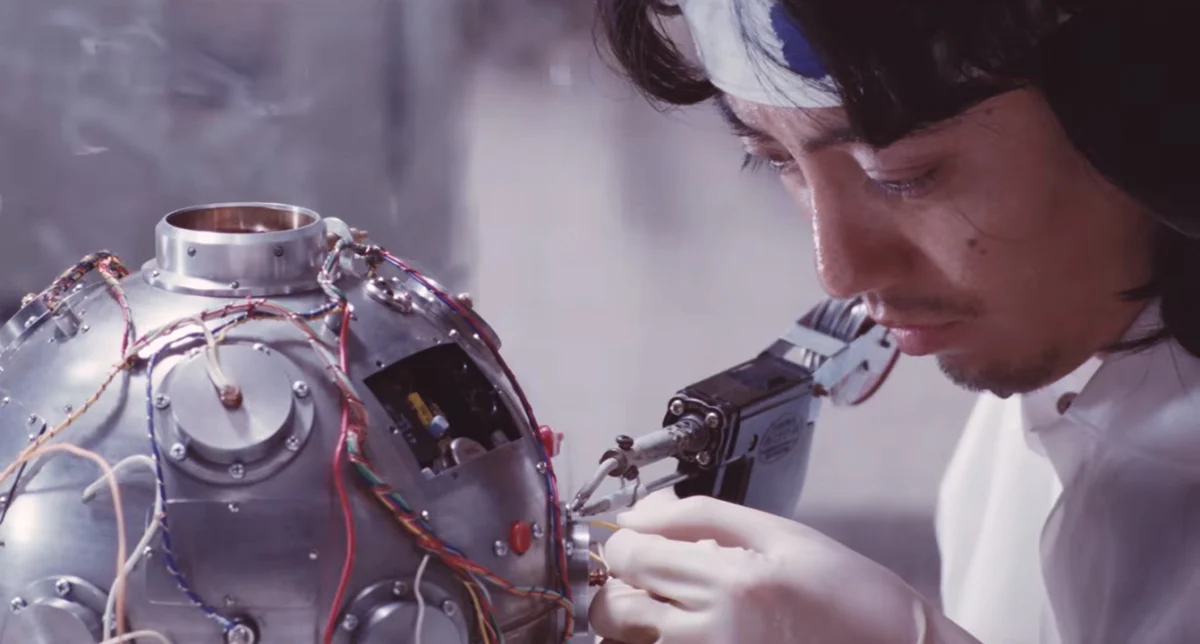
At its core, The Man Who Stole the Sun is a film of terrifyingly simple, provocative premise: What happens when a thoroughly disillusioned individual decides to steal enriched plutonium from a heavily guarded nuclear power plant, smuggle it into a cramped Tokyo apartment, and build an operational atomic bomb by hand?
The film centers on Makoto Kido, played with hypnotic, gender-fluid charisma by legendary Japanese pop star Kenji Sawada. Kido is a gum-chewing, long-haired high school science teacher who looks less like a domestic terrorist and more like a burnt-out youth of the late-1970s counterculture. Yet, armed with his DIY weapon of mass destruction, Kido begins holding the entire nation of Japan hostage—not for ideological liberation or immense financial ransom, but for increasingly absurd, petty, and deeply human demands.
Standing in his way is Inspector Yamashita, portrayed with weary, strait-laced gravity by veteran actor Bunta Sugawara. Yamashita is the quintessential hard-boiled cop with a flattop haircut, representing the stoic, institutional weight of Japanese law and order. Their ensuing cat-and-mouse game spirals outward from a personal psychological duel into a sprawling, chaotic examination of national trauma, consumerism, and the lingering shadow of the nuclear age.
Director Kazuhiko Hasegawa approaches this weighty subject matter with a radical, fearless balance. He injects the narrative with kinetic, guerrilla-shot set pieces filmed illegally or semi-gonzo style across iconic Tokyo locations—including the National Diet, the Imperial Palace, and the Shibuya Tokyu Department Store. The result is a film that refuses to be neatly categorized. Equal parts white-knuckle actioner, biting dark comedy, and momentous, crushing tragedy, The Man Who Stole the Sun argues that we are all, inherently, victims and prisoners of the nuclear age.
Chronology: From Leonard Schrader’s Notebooks to a 4K Awakening
To understand the miraculous survival and current resurgence of The Man Who Stole the Sun, one must trace a cinematic lineage spanning continents and decades.
Phase 1: The Genesis (The Mid-1970s)
The story of the film began not in Tokyo, but in the mind of American screenwriter Leonard Schrader. Brother to acclaimed filmmaker and writer Paul Schrader (the mastermind behind Taxi Driver and First Reformed), Leonard was living and working in Japan during the 1970s. Drawing inspiration from the cultural anxieties of the post-war era, Schrader conceived the original idea for a cinematic narrative concerning a rogue citizen holding a major metropolis hostage with a homemade atomic bomb.
Phase 2: Hasegawa’s Vision and Guerrilla Production (1978–1979)
Leonard Schrader’s concept caught the attention of director Kazuhiko Hasegawa and producer Seiji Fujita. Hasegawa, a vital voice of the late Japanese New Wave who had previously served as an assistant director alongside luminaries like Shohei Imamura, seized the material and transformed it into a Japanese-language script.
Production on The Man Who Stole the Sun was nothing short of legendary. Refusing to rely entirely on soundstages, Hasegawa and his crew utilized guerrilla filmmaking tactics to capture the pulsating, restless energy of late-70s Tokyo. Crew members included future cinematic titans; assistant director Shinji Sōmai and production staffer Kiyoshi Kurosawa both cut their teeth on this chaotic, high-tension set, absorbing lessons in spatial tension and psychological dread that would inform their own celebrated directorial careers.
Phase 3: Relative Obscurity and Cult Status (1980–2020s)
Upon its release in late 1979 in Japan, The Man Who Stole the Sun was both a critical talking point and a commercial entity that challenged audiences. However, due to various international rights issues, music licensing hurdles, and shifting cinematic landscapes, the film largely failed to secure a consistent, widespread distribution pipeline in the West. For decades, it remained a legendary "lost" masterpiece—viewable mostly through fuzzy bootleg VHS tapes, rare international festival screenings, and sporadic, highly coveted 35mm repertory cinema presentations hosted by institutions like the Japan Society.
Phase 4: The 4K Restoration and Global Discovery (Present)
The tide finally turned as archival film organizations recognized the urgent need to preserve and restore Hasegawa’s masterwork. The meticulous 4K restoration breathes vibrant, grainy life back into the cinematography, highlighting the brilliant pop-art color palette, the gritty Tokyo streetscapes, and the explosive energy of the action sequences. With its domestic debut rolling out in October, and international rights holders eyeing a proper U.S. rollout facilitated by Toho, the film is stepping out of the shadows to claim its rightful place in global cinema history.
Supporting Data: The DNA of a Masterpiece
To fully grasp the cultural weight of The Man Who Stole the Sun, it is helpful to examine the artistic ecosystem that birthed it and the critical framework that elevates it:
- The Creative Lineage: The film serves as a vital cross-pollination between American noir-inflected screenwriting (Leonard Schrader) and Japanese New Wave radicalism (Kazuhiko Hasegawa). Its DNA shares bloodlines with Paul Schrader’s alienation-heavy character studies (Taxi Driver), the visceral societal critiques of Yukio Mishima, and the existential dread found in Michel Houellebecq’s literary corpus.
- The Production Scale: Unlike standard studio thrillers of the era, The Man Who Stole the Sun utilized high-risk, unauthorized guerrilla filming locations. Capturing scenes directly outside the National Diet and within bustling commercial hubs like the Shibuya Tokyu Department Store lent the film an urgent, documentary-style authenticity that completely grounds its absurd premise.
- The Behind-the-Scenes Talent Pool: The film acted as a finishing school for the next generation of Japanese cinematic masters. The presence of assistant director Shinji Sōmai and production staffer Kiyoshi Kurosawa ensured that the film’s visual grammar—characterized by long takes, spatial disorientation, and mounting psychological pressure—would ripple outward into 1980s and 1990s Japanese cinema.
- The Cast: Kenji Sawada’s casting was a stroke of genius. As an androgynous pop idol, Sawada brought an innate theatricality and disarming charm to Makoto Kido, making a character who commits heinous, terroristic acts weirdly magnetic. Opposite him, Bunta Sugawara provided the ballast of traditional cinematic masculinity, creating an unforgettable dynamic of unstoppable force meeting immovable object.
Official Responses and Archival Acclaim
As word of the 4K restoration has spread through film communities, cultural institutions and critics have rushed to praise a movie they believe has been unjustly sequestered from the international canon for too long.
In a recent comprehensive presentation of a flawless 35mm archival print, the Japan Society issued a statement that effectively encapsulates the film’s mythic status:
“Starring androgynous pop star Kenji Sawada, Hasegawa’s sprawling, anarchic masterpiece—featuring guerrilla-shot set pieces at the National Diet, Imperial Palace and Shibuya Tokyu Department Store—broaches his own personal history with the irradiating atom bomb… Equal parts actioner, black comedy and momentous tragedy, The Man Who Stole the Sun suggests that we are all victims of the nuclear age.”
Film historians and curation teams at prominent international festivals have echoed these sentiments, noting that the film’s critique of state power, individual alienation, and the omnipresent threat of nuclear annihilation feels infinitely more relevant in the 2020s than it did in the late 1970s.
While studio giant Toho has kept official announcements regarding a wide U.S. theatrical and home media distribution timeline tightly under wraps, industry insiders report that negotiations are heavily underway to secure a comprehensive North American rollout following the October domestic 4K debut.
Implications: Why The Man Who Stole the Sun Matters Today
The resurrection of Kazuhiko Hasegawa’s masterwork is far more than a routine victory for repertory film preservationists; it is a profound cultural correction. For decades, global film histories have drawn neat, predictable lines around the Japanese New Wave, often tapering off as the studio system shifted in the late 1970s. The Man Who Stole the Sun shatters those tidy boundaries, proving that Japanese cinema of that era was capable of producing works of monumental scale, formal audacity, and savage political wit that rivaled—and often surpassed—anything being made in Hollywood during the height of the New Hollywood movement.
Furthermore, the film’s thematic preoccupations speak directly to contemporary anxieties. In an era defined by renewed nuclear posturing, widespread institutional distrust, the glorification of individual disruption, and an increasingly digital, hyper-connected alienation, Makoto Kido’s descent into apocalyptic nihilism feels chillingly prophetic. Kido does not want money or political change; he wants to feel seen in a society that has rendered the individual invisible, utilizing the ultimate equalizer—the atom bomb—to force the world to pay attention.
As audiences stream the film’s newly mastered soundtrack and marvel at the breathtaking 4K trailer, The Man Who Stole the Sun is finally shedding its status as an obscure cinephile secret. It stands ready to ignite a new generation of admirers, cementing Kazuhiko Hasegawa’s legacy not as a footnote of film history, but as a visionary titan who captured the terrifying, exhilarating heartbeat of a world living on borrowed time.
